
Uncontrollable Anger Issues: Causes, Types, and Treatment

Uncontrollable anger issues involve repeated, intense outbursts of rage that are wildly out of proportion to whatever triggered them. The clearest clinical example is intermittent explosive disorder (IED), a mental health condition defined by impulsive anger outbursts that cause real distress and disrupt work, relationships, and daily life. Episodes typically last under 30 minutes, strike with little warning, and leave the person feeling guilty or embarrassed afterward. This is not garden-variety frustration. It is a pattern, and it tends to worsen without treatment.
Key traits that separate uncontrollable anger from a bad day:
- Outbursts are impulsive, not planned, and happen rapidly after provocation
- The reaction is grossly disproportionate to the triggering event
- Episodes cause significant distress or real-world consequences (job loss, legal trouble, damaged relationships)
- The person is aware the anger is excessive but feels unable to stop it
- Between episodes, behavior is typically normal
- Diagnostic criteria for IED involve frequent episodes of verbal or physical aggression or several severe incidents involving property damage or physical injury over time
Untreated anger disorders raise the risk of self-harm, relationship breakdown, and legal problems. Early diagnosis changes that trajectory.
What types of anger disorders look like in practice
Uncontrollable anger is not one condition. Several distinct disorders share explosive or dysregulated anger as a core feature, each with its own symptom profile and diagnostic logic.
Intermittent explosive disorder (IED)
IED is the most direct diagnosis for severe, repeated anger episodes with no other explanation. Road rage, throwing objects, physical fights, and threatening behavior all appear in the symptom list. The outbursts are impulsive and anger-based, not premeditated.
Symptoms include:
- Temper tantrums and shouting
- Verbal threats or heated arguments
- Slapping, shoving, or physical assault
- Property destruction (slamming doors, breaking objects)
- Domestic violence or road rage incidents
- Feeling relief after the episode, then guilt or shame
Borderline personality disorder (BPD)
BPD involves intense emotional swings, a deep fear of abandonment, and anger that can erupt in response to perceived rejection. Unlike IED, the anger in BPD is tied to identity instability and relationship patterns. People with BPD often describe their anger as feeling uncontrollable precisely because it is fused with fear and shame.
Symptoms include:
- Explosive anger triggered by interpersonal conflict
- Rapid mood shifts lasting hours to days
- Impulsive behavior during emotional episodes
- Chronic feelings of emptiness
Disruptive mood dysregulation disorder (DMDD)
DMDD is diagnosed in children and adolescents. The defining feature is a persistently irritable or angry mood with severe, frequent temper outbursts that are out of proportion to the situation. Where IED episodes come and go, DMDD involves a near-constant baseline of irritability.
Symptoms include:
- Severe tantrums occurring three or more times per week
- Persistent irritable or angry mood between outbursts
- Symptoms present in at least two settings (home, school, peers)
Oppositional defiant disorder (ODD)
ODD centers on a pattern of angry, defiant, and vindictive behavior directed at authority figures. It is most common in children but can persist into adulthood. The anger in ODD is often reactive and argumentative rather than explosive in the IED sense.
Symptoms include:
- Frequent loss of temper
- Arguing with adults or authority figures
- Deliberately annoying others
- Blaming others for mistakes or misbehavior
- Spitefulness or vindictiveness
“The main sign of intermittent explosive disorder is a pattern of outbursts of anger that are out of proportion to the situation or event that caused them. People with IED are aware that their anger outbursts are inappropriate but feel like they can’t control their actions during the episodes.” — Cleveland Clinic
Differentiating these disorders matters because the treatment approach shifts depending on which one is driving the behavior. A clinician will rule out medical conditions, substance use, and other psychiatric diagnoses before landing on any of these.
What causes uncontrollable anger and what makes it worse
Uncontrollable anger rarely has a single cause. It typically reflects a combination of biological vulnerability, life history, and environmental stress, often compounded by other mental health conditions.
Underlying causes and risk factors:
- Childhood trauma or exposure to violence and chaotic households
- Neurological factors, including differences in how the brain regulates impulse control
- Substance use (alcohol and stimulants lower the threshold for aggression)
- A family history of mood or impulse-control disorders
- Chronic stress or ongoing interpersonal conflict
Triggers vary from person to person but commonly include frustration, perceived disrespect, traffic, financial pressure, and conflict with close relationships. Recognizing your specific triggers is one of the first practical steps in managing anger before it escalates.
Common comorbid conditions:
- Depression and anxiety (both increase emotional reactivity)
- ADHD (impulsivity overlaps significantly with anger dysregulation)
- Post-traumatic stress disorder
- Personality disorders, particularly BPD
Comorbid mental health conditions complicate diagnosis and worsen outcomes when left untreated. Someone managing IED alongside untreated depression, for example, faces a much steeper climb toward stability. Treatment planning has to account for the full picture, not just the anger.
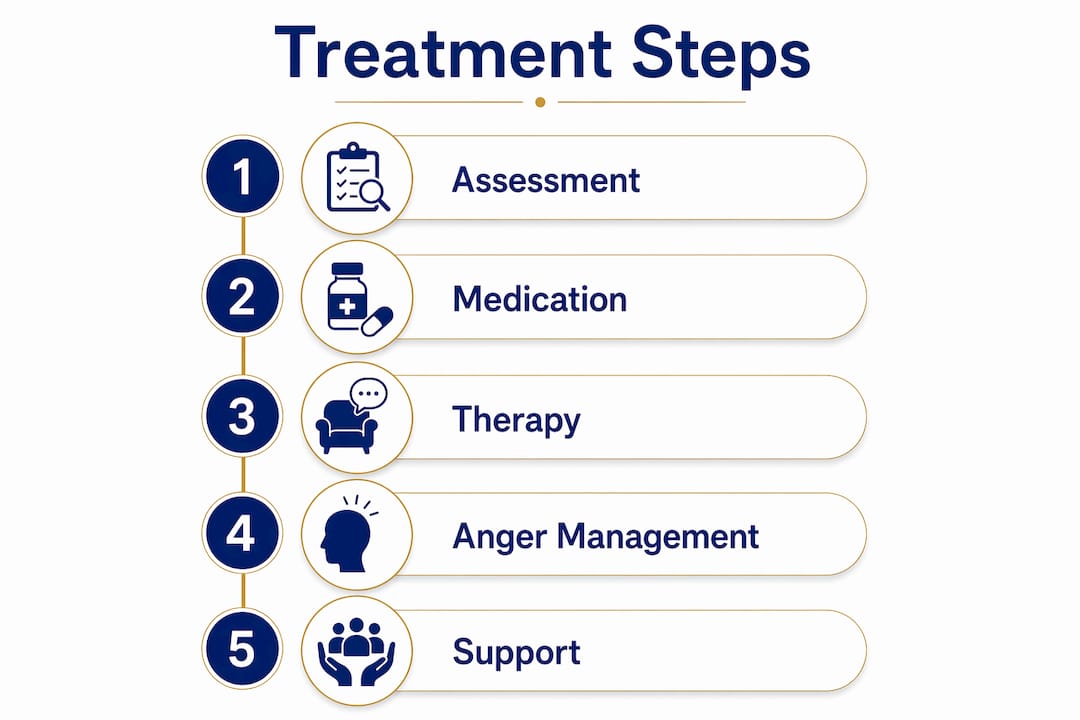
Treatment options that actually reduce severe anger
The good news: uncontrollable anger disorders respond well to treatment. The goal, as Cleveland Clinic describes it, is remission or substantial improvement in the number, intensity, and frequency of outbursts. For people who do not reach full remission, stabilizing safety and reducing severity is a meaningful and achievable target.
Psychotherapy approaches:
- Cognitive behavioral therapy (CBT): Teaches people to recognize and change the negative thought patterns that fuel explosive reactions. CBT for anger specifically targets cognitive distortions like “always/never” thinking.
- Cognitive restructuring: Challenges faulty assumptions about threatening situations and replaces them with more accurate interpretations.
- Relaxation training: Deep breathing and progressive muscle relaxation reduce physiological arousal before it tips into aggression.
- Coping skills training: Role-playing high-risk situations and practicing responses like walking away or using “I” statements.
- Relapse prevention: Reframes a return of impulsive behavior as a lapse rather than a failure, keeping people engaged in treatment.
Medication: Depending on age and symptom severity, a psychiatrist may recommend medication to reduce the frequency or intensity of outbursts. Medication is typically used alongside therapy, not as a standalone fix.
Anger management programs: Structured classes build the same skills as individual therapy but in a group format. They work best when combined with individual clinical support, particularly for people whose anger affects managing anger in relationships or workplace functioning.

Treatment should be individualized. What works for IED may not be the right fit for someone whose anger is rooted in BPD or PTSD. A thorough clinical assessment is the starting point.
Research-backed strategies for managing severe anger day to day
Professional treatment sets the foundation. These evidence-based strategies support that work between sessions and during the moments when anger spikes.
The most important insight from positive psychology research: matching the strategy to the moment matters more than picking one technique and sticking with it. Grounding works best when your body is already in a high-arousal state. Cognitive reframing is more useful for the chronic, simmering irritability that builds between episodes.
Strategies backed by research:
- Emotional labeling: Naming what you feel before the anger takes over. The University of California San Francisco’s emotion regulation framework identifies labeling as the first step in gaining any control over intense emotions.
- Mindfulness and grounding: Focusing on physical sensations (breath, feet on the floor) interrupts the automatic escalation from trigger to outburst.
- Cognitive reappraisal: Deliberately reinterpreting a frustrating situation. Instead of “they always disrespect me,” try “they might be having a bad day.”
- Distress tolerance: Accepting that discomfort is temporary without acting on it. Emotional regulation skills like distress tolerance reduce impulsive reactive behavior over time.
- Time-outs: Physically removing yourself from a triggering situation before the point of no return. Tell the people in your life about this strategy in advance so it does not read as avoidance.
- Assertive communication: The APA emphasizes that suppressing anger is not the answer. Expressing needs clearly and directly, without aggression, is the target. Suppression carries its own health costs, including elevated blood pressure.
Pro Tip: Build a personal trigger map. Write down the last three times you lost control and note what happened in the hour before. Patterns emerge fast, and spotting them early gives you a window to intervene before the anger peaks.
For people managing anger at work specifically, workplace anger strategies often require a different set of tools than what works at home. The power dynamics, the inability to simply leave, and the professional stakes all change the equation.
Key Takeaways
Uncontrollable anger issues, when rooted in a diagnosable condition like IED, require both professional treatment and consistent daily practice of evidence-based coping strategies.
| Point | Details |
|---|---|
| IED has clear diagnostic criteria | Episodes must be impulsive, disproportionate, and meet frequency thresholds: frequent verbal or physical aggression episodes, or several severe incidents involving property damage or physical injury over time. |
| Multiple disorders involve severe anger | IED, BPD, DMDD, and ODD each have distinct symptom profiles that require different treatment approaches. |
| Comorbidities complicate treatment | Depression, anxiety, ADHD, and PTSD frequently co-occur with anger disorders and worsen outcomes when untreated. |
| CBT is the core psychotherapy | Cognitive restructuring, relaxation training, coping skills, and relapse prevention are the primary evidence-based components. |
| Strategy matching improves outcomes | Grounding techniques work best for acute episodes; cognitive reframing is more effective for chronic irritability. |
Ready to get a professional assessment?

If you recognize these patterns in yourself or someone you care about, a professional evaluation is the clearest next step. Masteringconflict offers clinical anger assessments and a full range of clinical services for individuals, couples, and families dealing with severe anger. Dr. Carlos Todd and the Masteringconflict team work with clients in North Carolina, South Carolina, Florida, and online, bringing an evidence-based approach to anger management that goes well beyond generic advice. Booking is straightforward at masteringconflict.com.