
Managing anger at work: proven strategies & steps

TL;DR:
- Workplace anger is common but manageable with self-awareness and effective strategies.
- Recognizing triggers and physical signs helps prevent reactive outbursts.
- Professional support and structured programs enhance long-term anger regulation.
Workplace anger is more common than most people admit. 51% of US workers experience daily stress, and 18% report feeling angry on the job. Left unchecked, that anger chips away at team trust, stalls productivity, and can seriously damage your career. It also takes a toll on your physical health, raising blood pressure and disrupting sleep. The good news is that anger is manageable. This guide walks you through practical, evidence-based steps to recognize your triggers, interrupt the anger cycle, and build healthier working relationships starting today.
Table of Contents
- Understanding anger in the workplace
- Preparing to manage anger: Self-awareness and triggers
- Step-by-step strategies to manage workplace anger
- Avoiding common pitfalls: What not to do
- Staying on track: Verifying progress and seeking support
- A fresh perspective on anger: Not always the enemy
- Get professional support for lasting change
- Frequently asked questions
Key Takeaways
| Point | Details |
|---|---|
| Anger is common at work | Recognizing your anger and its triggers is the first step to positive change. |
| Use adaptive coping strategies | Pause, reframe thoughts, and communicate assertively to manage anger productively. |
| Avoid maladaptive responses | Suppressing or ruminating on anger usually makes things worse, not better. |
| Track your progress | Monitor your responses and seek support if anger continues to impact your work. |
| Professional help is effective | Structured anger management programs can reduce conflict and improve workplace relationships. |
Understanding anger in the workplace
Anger is a normal human emotion. It signals that something feels unfair, threatening, or out of your control. The problem is not the feeling itself. The problem is what happens when anger goes unexamined or gets expressed in ways that hurt people around you.
Researchers distinguish anger from aggression by drawing a clear line: anger is an internal emotional state, while aggression is outward behavior intended to harm or intimidate. You can feel angry without acting aggressively. That distinction matters enormously in professional settings, where how you express frustration can define your reputation.
Aggression at work does not always look loud or obvious. Passive-aggressive behavior is far more common and often harder to address. It shows up as sarcasm, deliberate delays, withholding important information, or giving someone the cold shoulder after a disagreement. These behaviors quietly erode trust and make collaboration painful.
Anger can also serve a purpose when handled well. It can sharpen your focus, signal that a boundary has been crossed, or motivate you to push for a change that benefits the whole team. The key is channeling it adaptively rather than letting it spill out reactively.
Here are the most common ways anger shows up at work:
- Overt anger: Raised voice, sharp criticism, slamming objects, or storming out of meetings
- Passive-aggressive behavior: Sarcasm, eye-rolling, ignoring emails, or subtle sabotage
- Internalized anger: Ruminating silently, withdrawing from the team, or developing physical symptoms like headaches
- Displaced anger: Taking frustration from one situation out on an unrelated colleague
“Anger becomes destructive not when it is felt, but when it is expressed in ways that harm others or damage relationships.”
Understanding which pattern fits your experience is the foundation of change. For practical anger management tips that apply directly to professional settings, it helps to start with honest self-reflection before jumping to techniques.
Preparing to manage anger: Self-awareness and triggers
Once you understand anger and its forms, the next step is to prepare yourself by getting to know your own triggers. A trigger is any situation, comment, or event that activates your anger response. Knowing yours gives you a split-second advantage before the reaction takes over.
Common workplace triggers include receiving harsh criticism, feeling overlooked for a promotion, dealing with unrealistic deadlines, or watching a colleague take credit for your work. These situations feel personal because they often touch on core needs like respect, fairness, and recognition.

Tracking your triggers through journaling, monitoring your lifestyle habits, and identifying provocations before they escalate are among the most effective preparation strategies available. A mood journal does not need to be elaborate. Even a few sentences after a frustrating meeting can reveal patterns you would otherwise miss.
Physical warning signs are equally important to recognize. Tension in your jaw, a tight chest, a flushed face, or a racing heart are your body’s early alerts. Catching these signals early gives you time to choose your response rather than react on autopilot.
Here is a simple four-step process to build self-awareness:
- Notice the physical signal. Where do you feel anger in your body first?
- Name the trigger. What specifically happened right before the feeling spiked?
- Write it down. Record the trigger, your emotion level (1 to 10), and your response.
- Look for patterns. Review your notes weekly to spot recurring themes.
Pro Tip: Poor sleep, skipped meals, and high caffeine intake all lower your irritation threshold. Managing your physical state is one of the fastest ways to reduce how often you get triggered at work.
| Lifestyle factor | Impact on anger | Simple fix |
|---|---|---|
| Sleep deprivation | Raises emotional reactivity | Aim for 7 to 9 hours nightly |
| Poor nutrition | Lowers frustration tolerance | Eat balanced meals at regular intervals |
| Physical inactivity | Increases tension buildup | Add 20 minutes of movement daily |
| High caffeine intake | Amplifies anxiety and irritability | Limit to 1 to 2 cups before noon |
Exploring anger management training for employees can help you formalize this self-awareness process with professional guidance. Understanding the benefits of anger management early in the process also builds motivation to stay consistent.
Step-by-step strategies to manage workplace anger
With your triggers in mind, you are ready to apply strategies that actually work in real-life situations. Evidence-based approaches give you a reliable toolkit rather than guesswork.
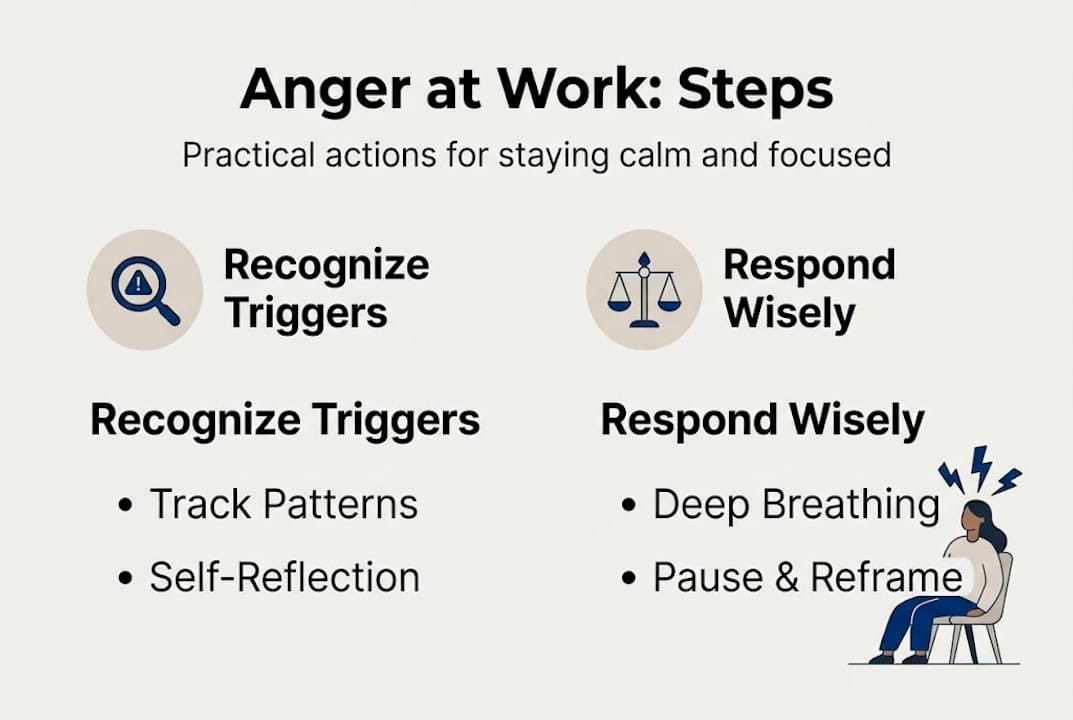
Core anger management strategies include deep breathing, assertive communication, cognitive restructuring, physical exercise, relaxation practices, setting boundaries, and seeking professional support when needed. Each one targets a different part of the anger cycle.
Here is a step-by-step sequence you can use in the moment:
- Pause. Before you say or do anything, stop. Even two seconds creates space between trigger and response.
- Breathe. Take four slow breaths in through your nose and out through your mouth. This activates your body’s calming system.
- Reframe the thought. Ask yourself: “Is my interpretation of this situation accurate?” Cognitive restructuring means replacing catastrophic thinking with a more balanced view.
- Use assertive communication. Speak in “I” statements. “I felt frustrated when the deadline changed without notice” lands very differently than “You always do this.”
- Set a boundary. If the conversation is escalating, it is appropriate to say “I need a few minutes before we continue.”
Pro Tip: Anger management exercises like progressive muscle relaxation and guided visualization are not just for therapy sessions. Practicing them daily builds the emotional muscle memory you need when pressure spikes.
| Coping strategy | Type | Outcome |
|---|---|---|
| Deep breathing | Adaptive | Lowers physiological arousal quickly |
| Cognitive reappraisal | Adaptive | Reduces intensity and duration of anger |
| Assertive communication | Adaptive | Preserves relationships and resolves issues |
| Suppression | Maladaptive | Increases internal stress and resentment |
| Rumination | Maladaptive | Prolongs anger and worsens mood |
Anger management programs reduce dysfunctional behaviors, particularly criticism of others, which is one of the most damaging patterns in team environments. Structured programs that use cognitive behavioral therapy (CBT) show especially strong results. Reviewing anger reduction techniques for relationships and evidence-based anger management strategies can deepen your practice beyond the basics. For industry-specific guidance, anger management for employees offers targeted frameworks.
Avoiding common pitfalls: What not to do
It is as important to know what not to do as it is to learn new strategies. Many people unknowingly make their anger worse by relying on coping habits that feel natural but backfire.
Empirical data shows that anger correlates positively with maladaptive emotion regulation strategies like suppression and rumination. In other words, the more you bottle things up or replay the situation obsessively, the more intense your anger becomes over time.
Common pitfalls to watch for:
- Venting at the wrong time or person: Unloading on a colleague who was not involved rarely helps and often creates new conflict
- Bottling up emotions: Suppressing anger does not make it disappear. It resurfaces later, often stronger
- Avoiding the issue entirely: Hoping a problem resolves itself usually allows resentment to build quietly
- Using anger as justification: Feeling angry does not make aggressive or passive-aggressive behavior acceptable
- Ruminating: Replaying a conflict in your head for hours drains your mental energy and keeps your stress response activated
“Ruminative coping leads to resource depletion and makes it harder to reach your goals at work.”
Ruminative coping depletes resources and actively interferes with goal attainment, which means it hurts not just your mood but your actual performance. This is why addressing anger directly and constructively is always more effective than avoidance.
If you notice yourself falling into these patterns regularly, practicing anger management relaxation techniques can interrupt the cycle before it gains momentum. The goal is not to eliminate anger but to stop it from running your decisions.
Staying on track: Verifying progress and seeking support
To make anger management sustainable, it is vital to check your progress and know when to ask for help. Behavior change is not linear. There will be setbacks, and that is expected.
Self-monitoring tools like mood journals, weekly check-ins, or even a simple 1 to 10 anger rating after challenging situations give you concrete data. Over time, you will see whether your average intensity is dropping, whether you are recovering faster, and whether certain triggers are losing their grip.
Ongoing self-monitoring and structured programs make a measurable difference in reducing workplace conflict and dysfunctional behavior. Progress looks like shorter recovery times, fewer regrettable reactions, and stronger relationships with coworkers.
Signs that professional support is the right next step:
- Anger episodes are increasing in frequency or intensity despite your efforts
- Colleagues or supervisors have raised concerns about your behavior
- You are experiencing physical symptoms like chronic tension, headaches, or sleep disruption
- Anger is affecting your home life or personal relationships
- You feel unable to stop replaying conflicts even when you want to
| Progress indicator | Early stage | Consistent progress |
|---|---|---|
| Anger intensity (1 to 10) | 8 to 10 regularly | 4 to 6, with faster recovery |
| Recovery time | Hours to days | Minutes to an hour |
| Relationship quality | Frequent friction | Improved communication |
| Physical symptoms | Regular tension or headaches | Noticeably reduced |
Employee Assistance Programs (EAPs), therapy, and structured anger management classes are all proven resources. Incorporating mindfulness for anger into your daily routine also supports the kind of sustained awareness that prevents relapses.
A fresh perspective on anger: Not always the enemy
Most workplace advice tells you to suppress anger, stay calm at all costs, and never let frustration show. That approach sounds professional, but it often backfires. Suppression is a maladaptive strategy, and research consistently shows it increases internal stress rather than resolving it.
Here is the more useful truth: anger can motivate positive change when handled adaptively. When you express frustration clearly, directly, and respectfully, you give your team valuable information. You signal that something is not working. That kind of honest communication builds more trust than a forced smile ever could.
Workplace cultures that treat all anger as a problem to be hidden tend to accumulate unspoken resentment. Teams that allow for respectful, direct expression of frustration actually resolve conflict faster and collaborate more effectively. The goal is not to become emotionless. It is to become skilled at using your emotions as useful data, including the uncomfortable ones. Investing in workplace harmony starts with accepting that anger is part of the human experience at work, not a character flaw to be ashamed of.
Get professional support for lasting change
Building real, lasting change in how you handle anger takes more than reading a guide. Structured support makes the difference between short-term improvement and genuine transformation.
At Mastering Conflict, we offer anger management classes designed for real-world professional challenges, not generic advice. Our anger management courses provide the structure, accountability, and clinical expertise that self-help alone cannot replicate. For those who prefer flexibility, our teletherapy counseling connects you with a licensed counselor from wherever you work. Whether you are managing a short fuse under deadline pressure or navigating a difficult team dynamic, professional guidance personalizes every strategy to your specific situation and industry.
Frequently asked questions
What is the difference between anger and aggression in the workplace?
Anger is an internal feeling, while aggression is outward behavior that may hurt others or disrupt the work environment. You can feel angry without acting aggressively.
How can I quickly calm down if I feel angry at work?
Pause and take deep breaths before responding, counting to ten if needed. This simple technique lowers your physiological arousal and gives you time to choose a measured response.
What should I avoid doing when I am angry at work?
Avoid venting impulsively, ruminating on the situation, or using passive-aggressive behavior. Maladaptive strategies like rumination and avoidance consistently worsen anger outcomes over time.
When should I seek professional help for anger management?
Seek help if anger is harming your relationships, affecting your health, or you cannot control it despite consistent effort. Anger management programs are proven to reduce dysfunctional behaviors and improve workplace functioning.
Recommended
- Anger Management Training for Employees: Improving Workplace Harmony – Mastering Conflict
- Anger Management for Employees: Building Workplace Harmony – Mastering Conflict
- Best Ways to Manage Anger: Proven Tips for 2025 – Mastering Conflict
- Mindfulness for Anger: 7 Evidence-Based Practices That Work – Mastering Conflict
- How to Calm Racing Thoughts — The Caia Journal