
Anger Management Training for Employees: Improving Workplace Harmony

Over one third of American employees admit their workplace anger goes unaddressed, often with serious consequences for team performance and morale. When emotions run high on the job, unchecked frustration can quietly undermine productivity and trust. Understanding why anger arises at work and how to manage it can make the difference between a tense office and a cooperative, resilient team. This guide highlights practical methods to deal with workplace anger before it escalates.
Table of Contents
- Defining Anger Management in the Workplace
- Common Triggers and Employee Anger Patterns
- Key Methods Used in Employee Training
- Workplace Scenarios and Practical Applications
- Risks of Unaddressed Anger at Work
- Benefits and Outcomes of Effective Training
Key Takeaways
| Point | Details |
|---|---|
| Workplace Anger Management is Essential | Addressing workplace anger proactively is crucial for maintaining organizational productivity and employee well-being. |
| Identify and Address Triggers | Understanding common triggers of workplace anger, such as perceived unfairness and performance pressure, helps in formulating effective management strategies. |
| Invest in Comprehensive Training | Implementing advanced training methods like simulation-based learning enhances emotional intelligence and equips employees to handle conflicts better. |
| Monitor and Evaluate Effectiveness | Regular assessments of emotional well-being and management strategies contribute to a healthier workplace culture and improved conflict resolution outcomes. |
Defining Anger Management in the Workplace
Workplace anger represents a complex emotional response that can significantly disrupt organizational harmony and productivity. Unlike personal anger, workplace anger emerges within professional environments and requires strategic, systemic approaches to effectively manage and mitigate potential negative consequences. Workplace anger involves emotional reactions triggered by professional interactions, workplace stressors, interpersonal conflicts, and systemic organizational challenges.
Research indicates that workplace anger management strategies are critical for maintaining organizational effectiveness. These strategies go beyond simple emotional control, encompassing comprehensive approaches that address root causes, communication patterns, and systemic organizational dynamics. Effective anger management in professional settings involves recognizing emotional triggers, developing healthy communication skills, and creating supportive environments that promote emotional intelligence and professional respect.
The core components of workplace anger management include understanding individual emotional responses, developing communication techniques, and implementing organizational policies that support emotional regulation. Managers and leaders play a crucial role in creating environments that minimize anger-inducing situations by promoting transparent communication, fair treatment, and proactive conflict resolution mechanisms. Comprehensive approaches to workplace anger recognize the complex interplay between individual emotions and organizational culture.
Pro Tip: Emotional Intelligence Assessment: Conduct regular self-assessments and organizational evaluations to identify potential anger triggers and develop targeted intervention strategies that promote workplace harmony and individual well-being.
Common Triggers and Employee Anger Patterns
Workplace anger emerges from a complex network of interpersonal dynamics, organizational structures, and individual psychological experiences. Identifying the primary triggers of workplace anger reveals critical insights into organizational behavior and employee well-being. These triggers are not random occurrences but systematic patterns rooted in workplace interactions, communication breakdowns, and unresolved professional tensions.
The most prevalent anger triggers in professional environments include performance-related stress, perceived unfairness, lack of recognition, communication breakdowns, and power dynamics. Employees frequently experience anger when they encounter situations involving unequal treatment, micromanagement, unrealistic expectations, or insufficient resources to complete assigned tasks. Research demonstrates that worker dissatisfaction and frustration often stem from perceived mischief or manipulative behaviors by supervisors and colleagues.
Understanding employee anger patterns requires a nuanced examination of individual and systemic factors. Different roles and organizational levels experience anger differently, with managers and front-line workers encountering distinct emotional challenges. Some employees might express anger through passive-aggressive behaviors, while others might display more direct confrontational responses. Contextual elements such as workplace culture, leadership style, and organizational communication protocols significantly influence how anger manifests and is processed within professional settings.
Here is a summary of common workplace anger triggers and recommended responses:
| Trigger Type | Typical Workplace Example | Recommended Management Response |
|---|---|---|
| Performance Pressure | Unrealistic project deadlines | Adjust expectations, provide support |
| Perceived Unfairness | Unequal recognition or rewards | Promote transparent policies |
| Communication Breakdown | Misunderstood directions | Encourage clarifying feedback |
| Power Imbalance | Micromanagement by supervisors | Coach on empowering leadership |
| Insufficient Resources | Limited tools for tasks | Review and allocate resources appropriately |
Pro Tip: Emotional Trigger Mapping: Develop a confidential employee survey to systematically identify and categorize workplace anger triggers, enabling targeted interventions and proactive conflict resolution strategies.
Key Methods Used in Employee Training
Employee anger management training encompasses a sophisticated array of methodological approaches designed to enhance emotional intelligence and interpersonal communication skills. Interactive training systems utilizing advanced language models have emerged as powerful tools for simulating communication scenarios and providing real-time feedback. These innovative approaches move beyond traditional lecture-based training, creating immersive learning experiences that allow employees to practice emotional regulation and conflict resolution in controlled environments.
Key training methods include role-playing exercises, simulation-based learning, cognitive behavioral techniques, and interactive communication workshops. Conflict resolution training now incorporates sophisticated simulation technologies that enable employees to practice de-escalation strategies with believable interactive scenarios. These methods focus on developing critical skills such as active listening, emotional recognition, empathy building, and strategic communication techniques that help employees manage potentially volatile workplace interactions.

Modern anger management training programs typically integrate multiple learning modalities to address the complex nature of workplace emotional dynamics. These approaches often combine theoretical instruction with practical skill-building exercises, psychological assessments, and ongoing coaching. Techniques may include mindfulness training, stress management workshops, communication skills development, and personalized intervention strategies that help employees understand their unique emotional triggers and develop healthier response mechanisms.
The table below compares traditional and advanced anger management training approaches:
| Aspect | Traditional Approach | Advanced Interactive Approach |
|---|---|---|
| Delivery Mode | Lecture-based sessions | Simulation-based scenarios |
| Feedback Style | General instructor feedback | Real-time scenario feedback |
| Skill Focus | Theoretical knowledge | Practical emotional regulation |
| Customization | Generic content | Tailored to workplace context |
Pro Tip: Scenario Skill Mapping: Design customized training scenarios that reflect your specific workplace environment, allowing employees to practice anger management techniques in contexts directly relevant to their professional experiences.
Workplace Scenarios and Practical Applications
Workplace anger management requires practical, context-specific training that prepares employees to navigate complex interpersonal challenges. Interactive simulation technologies now enable realistic scenario-based learning that helps professionals develop nuanced emotional regulation skills. These advanced training approaches allow employees to experience and respond to potential conflict situations in a controlled, supportive environment before encountering similar challenges in real-world professional settings.
Typical workplace scenarios used in anger management training include performance review interactions, team conflict resolution, communication breakdowns, and high-stress collaborative projects. Simulation-based training platforms provide employees opportunities to explore multiple conversational paths and receive immediate feedback on their emotional responses. These scenarios might involve challenging situations such as addressing perceived unfair treatment, managing disagreements with supervisors, navigating cultural misunderstandings, or de-escalating potentially heated team discussions.
Practical applications of anger management training extend beyond individual skill development to broader organizational benefits. Effective training helps create a more resilient workplace culture by equipping employees with tools to communicate effectively, manage emotional triggers, and transform potential conflicts into constructive dialogue. The most successful programs integrate real-world context, provide personalized feedback mechanisms, and offer ongoing support to help employees internalize and apply emotional regulation strategies consistently.
Pro Tip: Scenario Customization: Develop training scenarios that directly reflect your specific workplace dynamics, using actual communication challenges and interaction patterns unique to your organizational environment.
Risks of Unaddressed Anger at Work
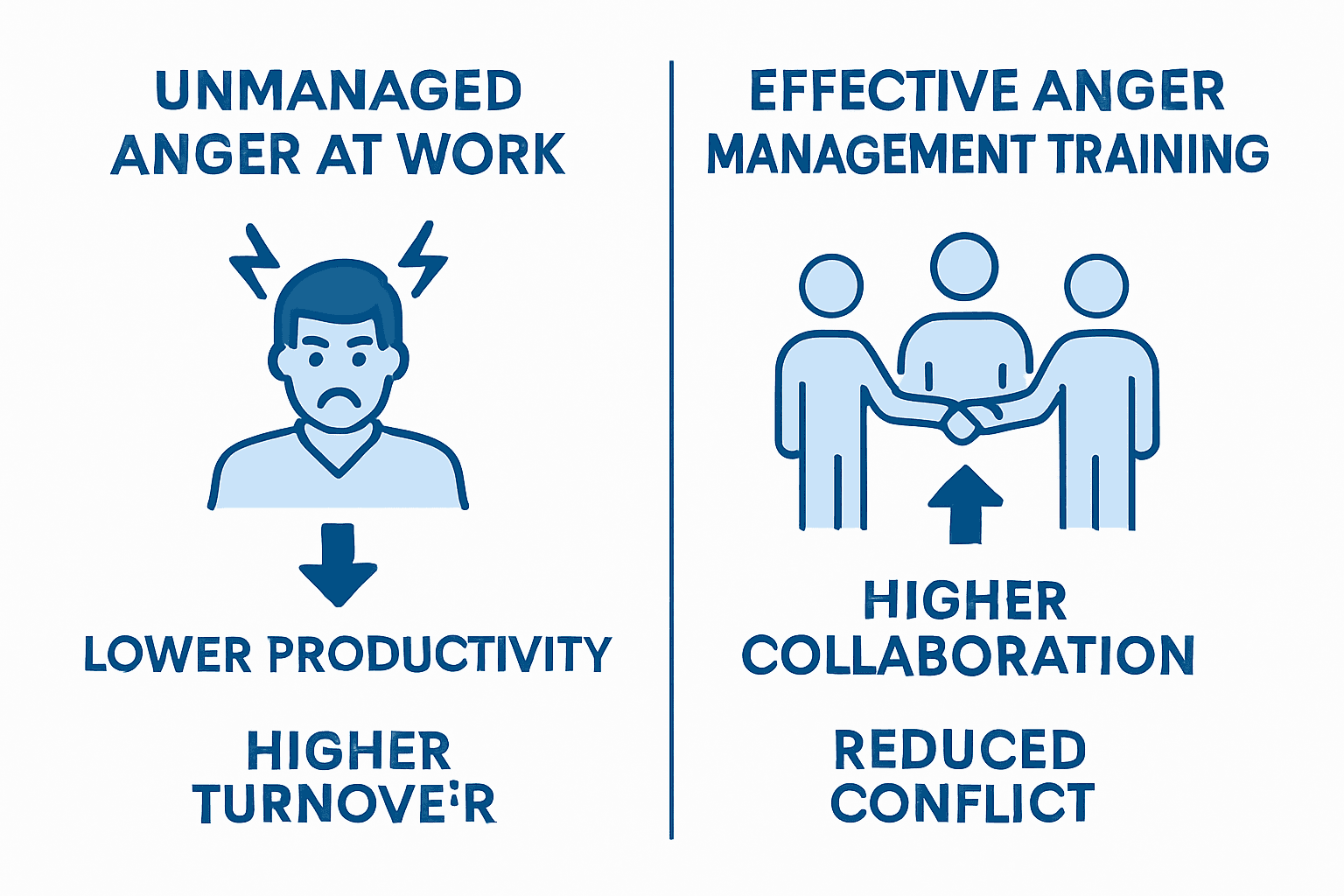
Workplace anger represents a significant organizational challenge with far-reaching consequences that extend beyond individual emotional experiences. Research demonstrates that unmanaged anger contributes to substantial productivity losses, increased workplace absenteeism, and potential escalation toward workplace violence. These risks create a toxic environment that undermines team cohesion, organizational effectiveness, and individual professional development.
Unaddressed workplace anger dramatically impairs employees’ cognitive abilities, particularly their capacity to understand alternative perspectives and engage in constructive conflict resolution. Employees experiencing persistent anger frequently demonstrate reduced problem-solving skills, decreased emotional intelligence, and compromised interpersonal communication. This emotional dysfunction can lead to decreased team performance, increased interpersonal conflicts, and a progressive breakdown of collaborative workplace dynamics.
The multifaceted risks of unmanaged anger encompass psychological, professional, and organizational dimensions. Psychological impacts include increased stress levels, potential mental health challenges, and erosion of personal resilience. Professional consequences involve potential career limitations, reduced promotional opportunities, and professional reputation damage. Organizationally, unaddressed anger can result in higher turnover rates, diminished employee engagement, increased workplace grievances, and substantial financial costs associated with conflict management and potential legal interventions.
Pro Tip: Emotional Checkpoint System: Implement monthly confidential emotional wellness surveys that allow employees to anonymously report workplace stressors and potential anger triggers, enabling proactive intervention and systemic support.
Benefits and Outcomes of Effective Training
Anger management training represents a transformative intervention with profound organizational and individual benefits. Advanced simulation technologies demonstrate significant improvements in participants’ self-efficacy and emotional regulation capabilities. These training programs go beyond simple skill acquisition, fundamentally reshaping how employees perceive and manage workplace emotional challenges.
Research reveals that comprehensive conflict resolution training produces measurable shifts in interpersonal interaction strategies, notably reducing competitive behaviors and increasing cooperative approaches. The outcomes extend across multiple dimensions, including enhanced communication skills, improved team dynamics, reduced workplace tension, and increased organizational resilience. Participants typically experience substantial personal growth, developing more nuanced emotional intelligence, better self-awareness, and more effective conflict navigation techniques.
The comprehensive benefits of effective anger management training manifest through tangible organizational improvements. These include decreased workplace grievances, lower employee turnover rates, improved productivity, enhanced team collaboration, and reduced potential for workplace conflicts. Individual outcomes encompass increased emotional self-regulation, better stress management, improved professional relationships, and greater personal confidence in handling challenging interpersonal scenarios. The long-term organizational impact involves creating a more supportive, empathetic workplace culture that values emotional intelligence and constructive communication.
Pro Tip: Performance Integration Strategy: Develop a structured follow-up mechanism that tracks and measures the practical application of anger management skills through periodic performance reviews and 360-degree feedback assessments.
Unlock Workplace Harmony Through Expert Anger Management Solutions
Workplace anger disrupts productivity and damages team cohesion. The article highlights the urgent need for effective strategies to manage triggers like performance pressure, communication breakdowns, and power imbalances. If you are seeking practical, evidence-based support to improve emotional regulation and create a harmonious work environment, specialized training and counseling can make all the difference.
Discover how Mastering Conflict offers clinical anger management classes and tailored coaching programs that address these exact challenges. Our services are designed to help employees and leaders build emotional intelligence, improve communication skills, and develop resilience against workplace stressors. Act now to enhance team dynamics and reduce conflict with expert guidance and proven interventions. Explore personalized options and book your first session through our comprehensive therapy and training programs today.
Frequently Asked Questions
What is anger management training for employees?
Anger management training for employees focuses on enhancing emotional intelligence and communication skills, helping individuals learn to recognize and regulate their emotional responses in workplace settings.
What are common triggers of workplace anger?
Common triggers of workplace anger include performance-related stress, perceived unfairness, communication breakdowns, power dynamics, and insufficient resources to complete tasks.
How can organizations implement anger management strategies effectively?
Organizations can implement effective anger management strategies by promoting open communication, establishing clear policies for conflict resolution, and providing regular training that incorporates real-world scenarios and feedback mechanisms.
What are the benefits of effective anger management training?
Effective anger management training leads to improved communication skills, enhanced team dynamics, reduced workplace tension, increased emotional regulation, and a more supportive workplace culture that values constructive dialogue.
Recommended
- 7 Reasons Anger and Conflict Still Exist with in the Workplace
- Top 20 Benefits of Anger Management – Mastering Conflict
- Top 20 Benefits of Anger Management – Mastering Conflict
- Anger Management Exercises And Relaxation Techniques
- Make Up Your Mind to Manage Your Mind – Luxury Apartments for Rent in Boca Raton | Premium Boca Raton Apartments | Aapartments Boca Raton