
Anger Reduction Techniques: Building Healthier Relationships

Over half of American adults report that uncontrolled anger harms their daily lives and relationships. In North Carolina and South Carolina, balancing demanding jobs with family commitments adds extra pressure, often making emotional reactions harder to manage. The ability to recognize and respond to anger effectively is crucial for building stronger connections and protecting your overall well-being. Discover practical, research-backed tools that help you turn anger into healthier personal habits and more productive family conversations.
Table of Contents
- Defining Anger And Its Impact On Well-Being
- Types Of Anger And Effective Interventions
- How Anger Reduction Techniques Work
- Evidence-Based Strategies For Managing Anger
- Common Pitfalls And Myths To Avoid
Key Takeaways
| Point | Details |
|---|---|
| Understanding Anger | Anger is a natural emotional response rooted in survival, with chronic unmanaged anger leading to serious health issues. |
| Anger Styles | There are four main styles of anger: aggressive, passive, passive-aggressive, and assertive, each affecting relationships differently. |
| Effective Interventions | Personalized strategies like cognitive restructuring and assertive communication can help manage anger effectively. |
| Common Myths | Misconceptions about anger, such as the belief that suppression is beneficial, can hinder emotional growth and healthy communication. |
Defining Anger and Its Impact on Well-Being
Anger is a complex emotional response deeply rooted in our biological survival mechanisms. At its core, anger emerges as a neurochemical reaction triggered by perceived threats or injustices, preparing our bodies for potential confrontation through the fight-or-flight response. Physiological reactions to anger involve the release of stress hormones like cortisol and adrenaline, which heighten our sensory awareness and physical readiness.
While anger itself is a natural human emotion, its expression can significantly impact personal well-being and interpersonal relationships. Different anger styles emerge based on individual experiences and psychological conditioning, ranging from aggressive outbursts to passive-aggressive behaviors. Understanding anger’s complex mechanisms reveals that these varied expressions stem from a combination of biological predispositions and learned behavioral patterns developed throughout one’s life.
The potential consequences of unmanaged anger extend beyond immediate emotional reactions. Chronic anger can lead to serious mental and physical health complications, including increased stress levels, cardiovascular problems, weakened immune function, and deteriorating social connections. Recognizing anger as a signal rather than a destructive force allows individuals to transform this powerful emotion into a constructive tool for personal growth and effective communication.
Pro tip: Practice immediate self-awareness by pausing and taking three deep breaths when you feel anger rising, which can help interrupt the automatic stress response and create space for more intentional reactions.
Types of Anger and Effective Interventions
Anger is not a monolithic emotion, but a complex psychological experience manifesting in multiple distinct styles. Neurological mechanisms underlying anger reveal four primary expressions: aggressive, passive, passive-aggressive, and assertive. Aggressive anger involves direct, often hostile confrontations, characterized by raised voices, threats, and potentially violent behaviors. Passive anger emerges through indirect communication, where individuals suppress their true feelings, leading to underlying tension and potential relationship damage.

Passive-aggressive anger represents a nuanced communication style where individuals disguise their anger through subtle undermining actions, sarcasm, or intentional non-cooperation. In contrast, assertive anger provides a healthy alternative, allowing individuals to express their emotions directly, respectfully, and constructively. Evidence-based anger management interventions typically focus on cognitive-behavioral techniques that help individuals recognize emotional triggers, develop self-regulation skills, and replace destructive responses with productive communication strategies.
Here’s a quick comparison of the four main anger styles and their potential relationship outcomes:
| Anger Style | Typical Behavior | Relationship Impact | Healthy Alternative |
|---|---|---|---|
| Aggressive | Hostile confrontation | Fear and resentment | Assertive communication |
| Passive | Suppressed feelings | Tension and misunderstanding | Open emotional expression |
| Passive-Aggressive | Subtle undermining | Confusion and distrust | Direct, respectful honesty |
| Assertive | Clear, respectful talk | Trust and collaboration | Encouraged and reinforced |
Effective intervention approaches are highly personalized, tailored to an individual’s specific psychological profile and underlying emotional dynamics. Therapeutic strategies may include cognitive restructuring, where individuals learn to challenge and reframe negative thought patterns, relaxation techniques like deep breathing and mindfulness, and communication skills training that emphasizes emotional intelligence and empathetic listening. Professional counseling can provide structured environments for individuals to explore the root causes of their anger, develop healthier emotional responses, and build more resilient interpersonal relationships.
Pro tip: Practice the “pause and reflect” technique by creating a personal five-second mental buffer between feeling anger and responding, allowing your rational mind to engage before emotional reactivity takes over.
How Anger Reduction Techniques Work
Neurological mechanisms of anger management reveal a complex process of emotional regulation that involves multiple brain regions working in sophisticated coordination. The orbital frontal cortex acts as a critical “emotional brake,” modulating the intense reactive responses generated by the amygdala. This neurological intervention allows individuals to interrupt automatic anger responses, creating a critical space between emotional trigger and behavioral reaction.
Cognitive behavioral techniques provide structured approaches to rewiring emotional responses. By systematically identifying anger triggers, challenging underlying thought patterns, and developing alternative interpretations of provocative situations, individuals can gradually reshape their neurological and psychological responses. These techniques focus on breaking automatic stress cycles by introducing deliberate, mindful interventions that interrupt the typical escalation of anger.
Effective anger reduction strategies incorporate multiple intervention levels, including physiological, cognitive, and behavioral components. Anger management interventions typically involve teaching relaxation techniques like deep breathing and progressive muscle relaxation, cognitive reframing skills to challenge negative thought patterns, and communication strategies that promote assertive yet non-aggressive expression of emotions. The goal is not to eliminate anger but to transform it into a constructive signal for addressing underlying needs and concerns.
Pro tip: Create a personal “anger interruption” toolkit with specific techniques like deep breathing, counting to ten, or using a predetermined calming phrase that helps you pause and reset during emotionally charged moments.
Evidence-Based Strategies for Managing Anger
Psychological treatments for anger demonstrate remarkable effectiveness through comprehensive, multifaceted intervention approaches. Clinical research reveals that standardized, structured therapeutic methods can significantly reduce maladaptive anger responses, with cognitive behavioral therapy emerging as a particularly powerful intervention strategy. These approaches systematically address the complex psychological mechanisms underlying anger, targeting both emotional regulation and behavioral patterns.
Evidence-based anger management strategies incorporate several key components. Cognitive restructuring helps individuals challenge and reframe irrational thought patterns that fuel angry responses. Relaxation techniques such as deep breathing, progressive muscle relaxation, and mindfulness meditation provide physiological interventions that reduce the body’s stress response. Effective anger management techniques also emphasize developing assertive communication skills that allow individuals to express their needs and emotions constructively without aggressive or passive behaviors.
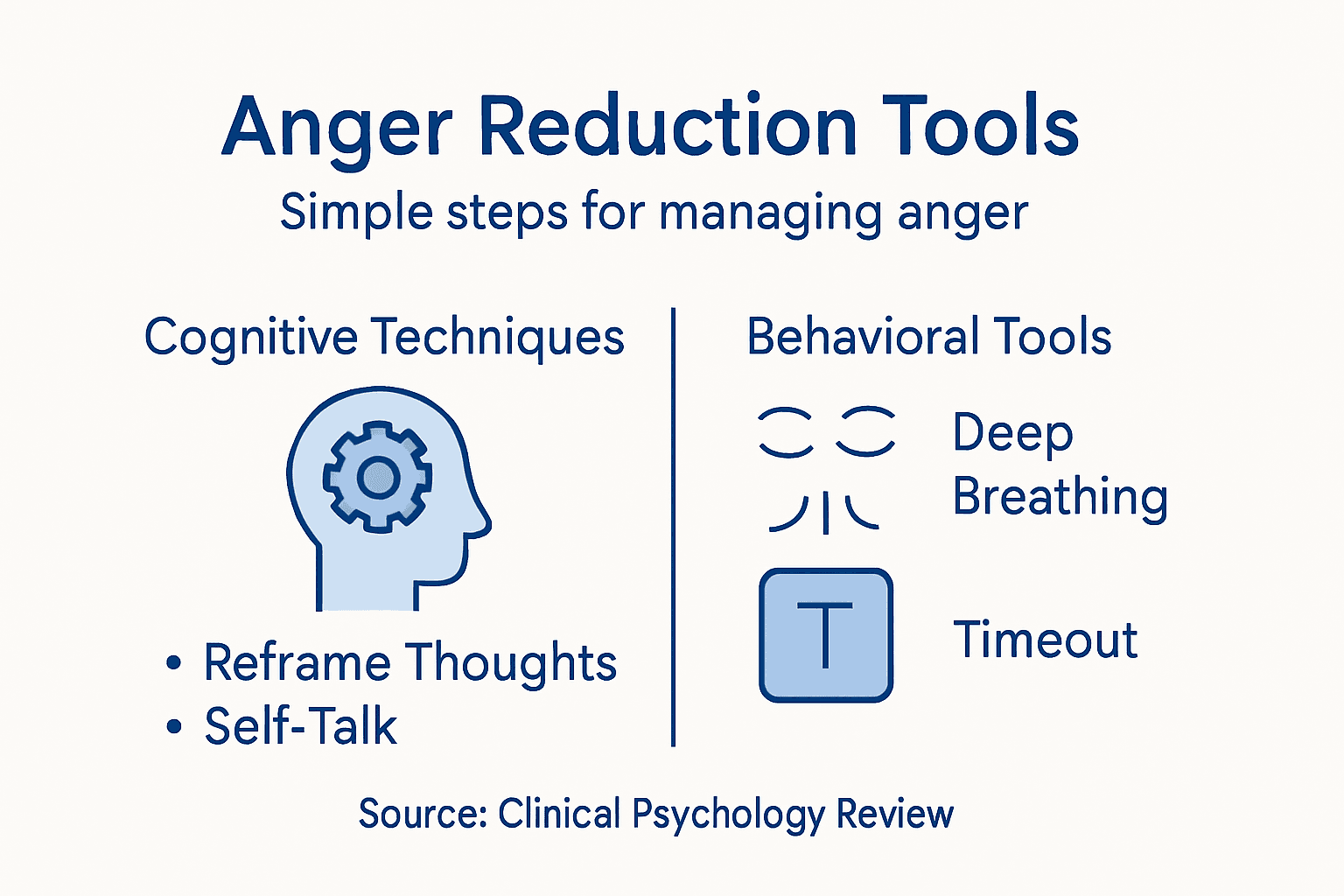
Multicomponent treatment approaches have shown particularly promising results in anger management. These comprehensive strategies integrate physiological, cognitive, and behavioral interventions, recognizing that anger is a complex emotional experience requiring nuanced treatment. Physical activity, emotional intelligence training, and skills-based interventions complement traditional therapeutic approaches, providing individuals with a robust toolkit for managing emotional responses and building healthier interpersonal relationships.
The table below summarizes effective anger management components and their primary benefits:
| Strategy Component | Main Benefit | Example Technique |
|---|---|---|
| Cognitive Restructuring | Reduces irrational thoughts | Reframing negative beliefs |
| Relaxation Techniques | Lowers physiological stress | Deep breathing exercises |
| Assertive Communication | Improves emotional clarity | Using “I” statements |
| Emotional Intelligence | Enhances self-awareness | Mindfulness practices |
| Physical Activity | Relieves tension | Aerobic exercise |
Pro tip: Develop a personal “anger interruption” strategy by identifying your unique triggers and creating a specific, step-by-step plan to pause, breathe, and respond mindfully when those triggers emerge.
Common Pitfalls and Myths to Avoid
Many individuals harbor misconceptions about anger that can significantly hinder their emotional growth and interpersonal relationships. Workplace anger perceptions challenge the common myth that expressing anger demonstrates strength or authority. Contrary to popular belief, uncontrolled anger often leads to negative perceptions, suggesting incompetence and a lack of emotional intelligence rather than power or assertiveness.
One prevalent myth suggests that suppressing anger is always beneficial. In reality, both extreme suppression and unrestrained expression are harmful. Suppressed anger can lead to chronic stress, passive-aggressive behaviors, and unresolved emotional tension. Similarly, the belief that “venting” anger through aggressive outbursts provides emotional relief is scientifically unfounded. Research indicates that such expressions typically escalate emotional distress and damage relationships rather than providing genuine emotional resolution.
Another significant misconception involves the idea that anger is an inherently negative emotion that should be eliminated. Anger is a natural, potentially constructive emotional response when properly understood and managed. The key lies not in eradicating anger but in developing sophisticated emotional regulation skills. Healthy anger can signal important boundaries, motivate positive change, and communicate genuine needs when expressed assertively and thoughtfully. Recognizing anger as an informative emotional signal rather than a destructive force is crucial for personal growth and effective interpersonal communication.
Pro tip: Create a personal “anger awareness journal” to track your emotional triggers, typical responses, and more constructive alternative reactions, helping you develop greater self-understanding and emotional regulation.
Transform Your Anger Into Healthier Relationships Today
Managing anger is not just about stopping outbursts. It is about understanding your unique anger style, gaining control over impulsive reactions, and learning assertive communication to rebuild trust and reduce tension. If you have found yourself struggling with aggressive, passive, or passive-aggressive patterns, or simply want to develop healthier emotional regulation skills this article highlights powerful techniques that can change how you engage with conflict.
Take the first step toward lasting personal growth and stronger connections by exploring professional support at Mastering Conflict. Whether you need targeted anger management classes, individualized counseling, or coaching programs tailored for your specific needs, expert services led by Dr. Carlos Todd offer scientifically backed methods to interrupt unhealthy anger cycles and build emotional intelligence. Don’t wait for frustration to damage your relationships seek help now and start turning anger into constructive dialogue with anger management resources and therapy designed to restore balance and confidence in your life.
Frequently Asked Questions
What are some common techniques for anger reduction?
Effective anger reduction techniques include deep breathing exercises, progressive muscle relaxation, cognitive restructuring, and assertive communication skills. These methods help individuals manage emotional responses and promote healthier interactions.
How can I recognize my anger triggers?
Recognizing anger triggers involves self-awareness and reflection. Keeping an anger awareness journal can help track situations that provoke anger, patterns in emotional responses, and potential strategies for more constructive reactions.
Why is it important to express anger assertively?
Expressing anger assertively allows individuals to communicate their feelings and needs clearly and respectfully, which fosters trust and collaboration in relationships. It prevents the negative consequences often associated with aggressive or passive behaviors.
Are there myths about anger that I should be aware of?
Yes, common myths include the belief that expressing anger shows strength and that suppressing it is always beneficial. Both misconceptions can lead to negative outcomes; healthy anger management requires understanding anger as a natural emotion that can be constructively expressed.