
When to Use Self Care vs Clinical Help for Stress and Anxiety

Stress is your body’s response to an identifiable demand, a deadline, a bill, a difficult conversation, and it usually fades once that demand passes. Anxiety is persistent, excessive worry that can show up even without a clear trigger, and it can start interfering with work, sleep, and relationships. When worry outlasts the situation that caused it, that pattern is worth a closer look.
TL;DR:
- Ongoing stress can alter brain responses, increasing the likelihood of developing an anxiety disorder if stressors are prolonged and avoidance behaviors persist.
- Physical symptoms like racing heart and tense muscles are shared by stress and anxiety, but persistent worry and interference with daily life distinguish anxiety disorders from normal stress.
- Short-term stress usually responds well to lifestyle changes such as regular exercise and paced breathing, while anxiety typically requires therapy or medication for effective treatment.
- Warning signs of an anxiety disorder include worry that continues after the stressful event and recurring panic attacks, signaling the need for professional assessment.
- A clinical evaluation distinguishes situational worry from a diagnosable disorder, focusing on symptom duration, impact, and patterns, with therapy focusing on reducing avoidance and reshaping catastrophic thoughts.
Table of Contents
- What is stress and what typically causes it?
- What is anxiety and when does it become a disorder?
- Why stress and anxiety feel so similar
- Key differences at a glance
- Can ongoing stress turn into an anxiety disorder?
- How to manage stress now and treat anxiety long term
- What a clinical assessment for anxiety actually looks like
- How Mastering Conflict supports people managing chronic stress and anxiety
- Sources
- FAQ
What is stress and what typically causes it?
Stress is a normal biological and psychological reaction to a demand or threat. In short bursts, it sharpens focus and helps you meet a deadline or handle a difficult moment. The World Health Organization describes stress as a normal human response to external challenges, noting that what counts as stressful varies from person to person because coping styles and resources differ.
Common triggers include work deadlines or a heavy workload, caregiving responsibilities, financial pressures, discrimination, or unsafe living conditions. Acute stress is short lived and resolves once the demand ends, like before a presentation. Chronic stress can persist for a prolonged period and may wear on the body through headaches, fatigue, and irritability.
What is anxiety and when does it become a disorder?
Anxiety is a persistent, excessive, and often uncontrollable sense of worry or dread, according to the National Institute of Mental Health. What separates everyday anxiety from an anxiety disorder is the intensity, duration, and its effect on daily life.
Common anxiety disorders include:
- Generalized anxiety disorder: constant worry about several areas of life
- Panic disorder: sudden, intense episodes of fear with physical symptoms
- Social anxiety disorder: fear of judgment in social situations
Unlike stress, anxiety can appear without any obvious cause. Someone with generalized anxiety disorder might feel dread on an ordinary day with nothing pressing happening at all, which is one of the clearest signals that worry has become disconnected from any real event.
Why stress and anxiety feel so similar
Stress and anxiety both activate the body’s fight-or-flight response, so a racing heart, rapid breathing, tense muscles, and disrupted sleep can show up in either state. This happens because both trigger the sympathetic nervous system and the HPA axis, the pathways that flood the body with adrenaline and cortisol whether the threat is a work deadline or an imagined one.
Stress and anxiety trigger nearly identical physical symptoms, according to the American Psychological Association, which is exactly why people confuse the two. The clearest way to tell them apart is not the symptom itself but its pattern: stress symptoms rise and fall with an external event, while anxiety symptoms can persist or return without one.
Key differences at a glance
Stress and anxiety diverge in a few practical ways once you look past the shared physical symptoms.
- Origin: stress comes from an external demand; anxiety often runs on internal, self-perpetuating worry.
- Duration: stress tends to track a specific event, while anxiety can persist for weeks regardless of what is happening.
- Mental focus: stress usually centers on solving a problem; anxiety leans toward catastrophic thinking about things that have not happened.
- Function: stress can mobilize you to perform, meet the deadline, prepare for the interview, while anxiety is more likely to interfere with performance and daily tasks.
- Treatment emphasis: stress often responds to practical coping and lifestyle changes; anxiety disorders typically call for structured psychotherapy or medication.
The APA frames this as a fine line rather than a hard boundary: both states share physical wiring, but one is tied to a trigger and the other tends to outlast it.
Can ongoing stress turn into an anxiety disorder?
Prolonged stress can change how the body and brain respond to everyday demands, and that shift can raise the risk of developing an anxiety disorder over time. Clinical observation suggests that ongoing stressors combined with avoidance behavior, sidestepping the source of stress instead of addressing it, often contribute to anxiety that outlasts the original problem, according to a clinical interview on the difference between stress and anxiety.
Watch for these warning signs:
- Worry that persists even when the stressful situation has passed
- Noticeable interference with work, school, or relationships
- Ongoing sleep loss or exhaustion
- Panic attacks or sudden waves of intense fear
Any of these patterns are a reasonable cue to seek a professional assessment rather than wait for things to improve on their own.
How to manage stress now and treat anxiety long term
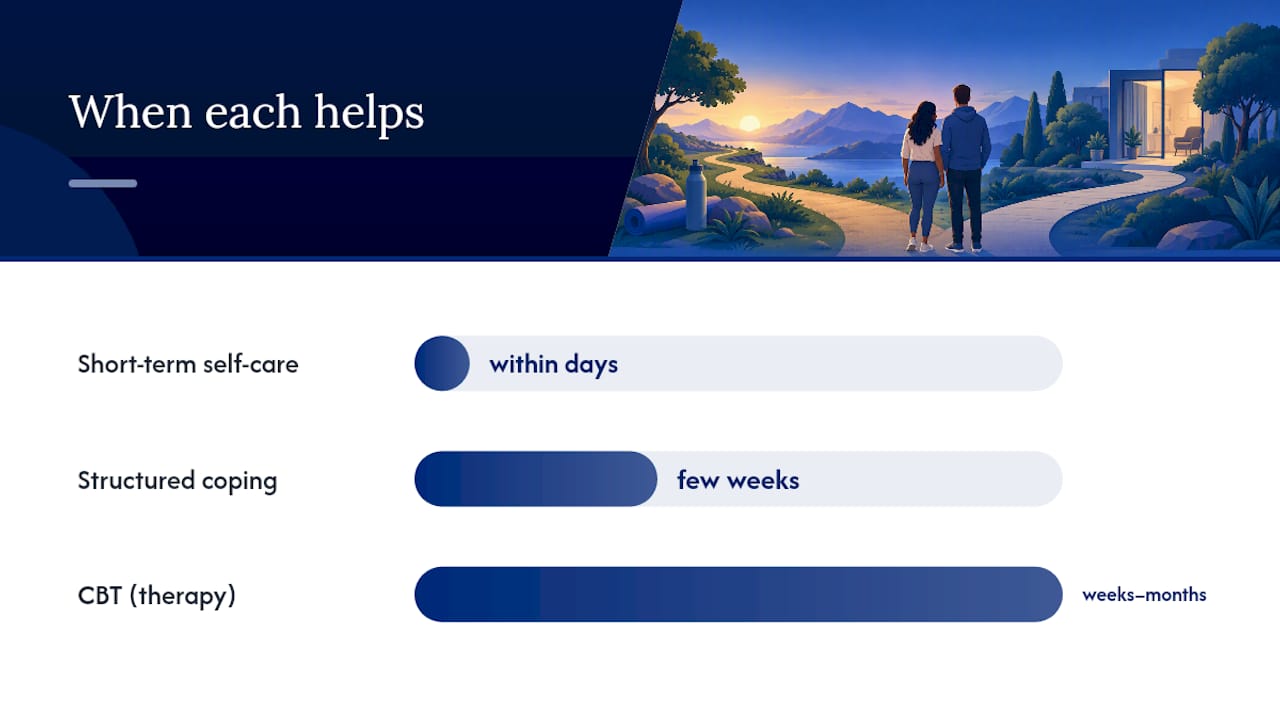
Short-term stress often responds well to basic self-care. Paced breathing, regular exercise, consistent sleep, and simply organizing the problem in front of you can ease symptoms within days.
- Keep a consistent sleep schedule, even on weekends.
- Build in short exercise breaks, even a 10-minute walk helps.
- Practice paced breathing when tension spikes.
- Break overwhelming tasks into a short, concrete plan.
These steps and a few stress reduction exercises are often enough when the stress is tied to a passing situation. Anxiety disorders usually need more than lifestyle changes. The WHO fact sheet on anxiety disorders notes that cognitive-behavioral therapy, which includes cognitive restructuring and gradual exposure to feared situations, is effective for many anxiety disorders and can bring measurable improvement within weeks to months. Medication is sometimes used alongside therapy when symptoms are severe. For milder or situational anxiety, structured coping techniques can help before things escalate.
Pro Tip: If a coping strategy that used to work stops helping after a few weeks, treat that as a signal to get an evaluation rather than trying harder at the same technique.
What a clinical assessment for anxiety actually looks like
Clinicians typically start with a brief screening, a history of the symptoms, and a look at how long the pattern has lasted and how far it reaches into daily life. That assessment separates situational worry from a disorder that needs structured care.
Therapy for anxiety focuses less on relaxation and more on reducing avoidance, building tolerance for uncomfortable physical sensations, and reshaping the catastrophic thoughts that keep the worry cycle going. Some skills, like slowing a racing heart during a panic moment, can improve within a few weeks. Fuller symptom reduction, the kind that changes how someone relates to worry day to day, usually takes months of consistent work.
— Carlos
How Mastering Conflict supports people managing chronic stress and anxiety
Chronic stress and anxiety both respond better to structured support than to willpower alone. There are individual counseling options available for men and women, along with online resources for anger and stress-related concerns, so you can start working through the pattern instead of just riding it out.
If your stress has started to feel constant, or worry shows up without a clear reason, an initial session can map out what is driving it and what kind of support fits. You can review clinical services and book an appointment directly to get started.
This article is general information, not a substitute for advice from a qualified doctor. Consult a qualified healthcare professional about your own circumstances before acting on anything here.
Sources
- Generalized Anxiety Disorder: What You Need to Know – National Institute of Mental Health (NIMH)
- Stress – World Health Organization (WHO)
- Stress and anxiety: What’s the difference? – American Psychological Association (APA)
- How to tell the difference between stress and anxiety – Healthcare Utah
FAQ
Is stress and anxiety the same thing?
No. Stress is usually a reaction to a specific external demand and tends to ease once that demand passes, while anxiety is persistent worry that can continue, or even appear, without a clear trigger. Both produce similar physical symptoms, which is why they are often confused, according to the American Psychological Association.
What are the physical symptoms shared by stress and anxiety?
Both states can cause a racing heart, rapid breathing, tense muscles, and disrupted sleep because they activate the same fight-or-flight response in the body. The difference usually shows up in duration and pattern rather than in the symptoms themselves.
How do I know if my stress has turned into an anxiety disorder?
A useful sign is when worry persists after the original stressor is gone, or when it starts interfering with sleep, work, or relationships. If that pattern continues for weeks along with symptoms like panic attacks, a professional evaluation, such as those offered through Mastering Conflict’s clinical services, can clarify what is happening.
What treatments work for anxiety versus stress?
Stress often improves with practical coping tools like exercise, sleep routines, and paced breathing. Anxiety disorders typically respond to structured approaches like cognitive-behavioral therapy, which the WHO fact sheet on anxiety disorders describes as effective for many people, sometimes alongside medication.
When should I seek professional help instead of managing it myself?
Self-care is often enough for stress tied to a passing situation. Professional help is worth considering once worry becomes constant, disrupts daily functioning, or brings on panic attacks, since early care-seeking tends to lead to better outcomes.