
How to Control Anger Issues in a Relationship Easily

Arguments can quickly spiral when anger takes control, leaving couples in North Carolina and South Carolina feeling misunderstood and disconnected. Tackling anger as a signal rather than an enemy opens the door to relationship growth and healthier communication. With evidence-based strategies for emotional awareness and regulation, partners can recognize triggers early, manage heated moments, and rebuild trust. This guide offers practical steps rooted in research to help couples transform conflict into opportunities for deeper understanding.
Table of Contents
- Step 1: Prepare Your Mindset for Constructive Change
- Step 2: Identify Triggers and Early Warning Signs
- Step 3: Apply Effective Communication Techniques Calmly
- Step 4: Use Emotional Regulation Skills in Heated Moments
- Step 5: Strengthen the Relationship Through Accountability
Quick Summary
| Key Point | Explanation |
|---|---|
| 1. Shift your mindset about anger | View anger as a signal for growth and understanding, not an enemy to suppress. |
| 2. Identify your unique triggers | Create an inventory of personal triggers and their early warning signs to gain self-awareness. |
| 3. Communicate effectively and calmly | Use respectful language and active listening to foster a safe environment for dialogue. |
| 4. Regulate your emotions during conflict | Implement breathing techniques and mindfulness to manage anger and maintain composure. |
| 5. Establish mutual accountability in relationships | Create frameworks for personal responsibility and shared growth to enhance trust and communication. |
Step 1: Prepare Your Mindset for Constructive Change
Shifting your mindset is the foundation for transforming anger from a destructive force into a pathway for relationship growth. When you understand anger not as an enemy but as a signal, you unlock powerful opportunities for connection and healing.
The first step involves developing radical self awareness about your emotional triggers. Constructive communication strategies emphasize recognizing what specifically provokes your anger. Is it feeling dismissed? Experiencing perceived disrespect? Feeling powerless? By mapping these emotional landscapes, you gain strategic insight into your reactions.
This process requires honest self reflection. Pause and ask yourself: What underlying emotions fuel my anger? Are these responses protecting me or pushing my partner away? Journaling can be an excellent tool for unpacking these complex emotional patterns. Write without judgment. Observe your thoughts like a curious researcher studying a fascinating subject.
Remember that changing your mindset is not about suppressing anger but understanding and channeling it productively. Your anger carries important information about your needs, boundaries, and emotional world. Learning to decode these messages transforms conflict from a battleground into fertile ground for mutual understanding.
Pro tip: Create a personal “anger map” where you document your triggers, typical reactions, and potential alternative responses to build emotional intelligence gradually.
Step 2: Identify Triggers and Early Warning Signs
Successfully managing anger begins with becoming a detective of your own emotional landscape. Your mission is to uncover the specific signals that indicate anger is brewing before it erupts into a full blown confrontation.
Anger warning signs manifest differently for everyone. Physical symptoms often emerge first your heart races, muscles tense, and breathing becomes rapid. Cognitive cues might include racing thoughts, difficulty concentrating, and an internal narrative that feels increasingly agitated. Behaviorally, you might notice yourself becoming irritable, withdrawing from communication, or feeling an impulse to argue.
Start by creating a personal inventory of your unique anger signals. Pay attention to your body. Do your fists clench? Does your jaw tighten? Do you feel heat rising in your chest? Tracking these physical reactions provides crucial early warning information. Consider keeping a journal where you document these experiences documenting the trigger, your physical response, and your subsequent actions. This self awareness transforms anger from an uncontrollable force into a manageable emotional experience.
Recognizing triggers is about understanding patterns. Common relationship triggers include feeling dismissed, experiencing perceived disrespect, or encountering unmet expectations. The goal is not to eliminate these feelings but to develop strategies for processing them constructively.

Compare these common anger triggers and their typical early warning signs:
| Trigger | Common Physical Sign | Likely Behavioral Reaction |
|---|---|---|
| Feeling dismissed | Heart racing | Withdrawing from dialogue |
| Perceived disrespect | Jaw clenching | Increased irritability |
| Unmet expectations | Muscle tension | Urge to argue |
Pro tip: Create a digital or physical “anger log” where you systematically record triggers, physical sensations, and your initial reactions to build comprehensive self understanding.
Step 3: Apply Effective Communication Techniques Calmly
Transforming conflict into connection requires mastering the art of calm communication. Your goal is to express yourself authentically while creating a safe emotional space for genuine dialogue with your partner.
Relationship communication skills fundamentally depend on respect and emotional intelligence. Start by focusing on your body language make direct eye contact, maintain an open posture, and speak in a measured tone. When sharing your feelings, use specific statements that describe your experience without attacking your partner. Instead of saying “You always ignore me,” try “I feel disconnected when we don’t have meaningful conversations.”
Practice the art of active listening. This means truly hearing your partner without preparing your defensive response. Give them your full attention, validate their emotions, and ask clarifying questions. Resist the impulse to interrupt or counter their perspective. Your aim is understanding, not winning an argument. Frame your requests as collaborative suggestions rather than demands. For instance, “I wonder if we could find a time to discuss this when we’re both feeling calm” works better than “We need to talk right now.”
Remember that effective communication is a skill that improves with practice. Some conversations will feel challenging, but each interaction is an opportunity to build deeper intimacy and mutual understanding.
Pro tip: Practice your communication approach in low stress moments by role playing difficult conversations with a trusted friend or therapist to build confidence and refine your technique.
Step 4: Use Emotional Regulation Skills in Heated Moments
When emotions run high, your ability to stay calm becomes your most powerful relationship tool. Emotional regulation is not about suppressing feelings but strategically managing them to prevent destructive interactions.
Emotional regulation strategies provide a critical framework for maintaining composure during intense moments. Start by recognizing your physiological stress signals rapid heartbeat, clenched muscles, shallow breathing. These are your body’s early warning signs that you are approaching an emotional threshold. When you notice these symptoms, pause and engage in focused breathing. Inhale deeply through your nose for four counts, hold for two, then exhale slowly through your mouth for six counts.
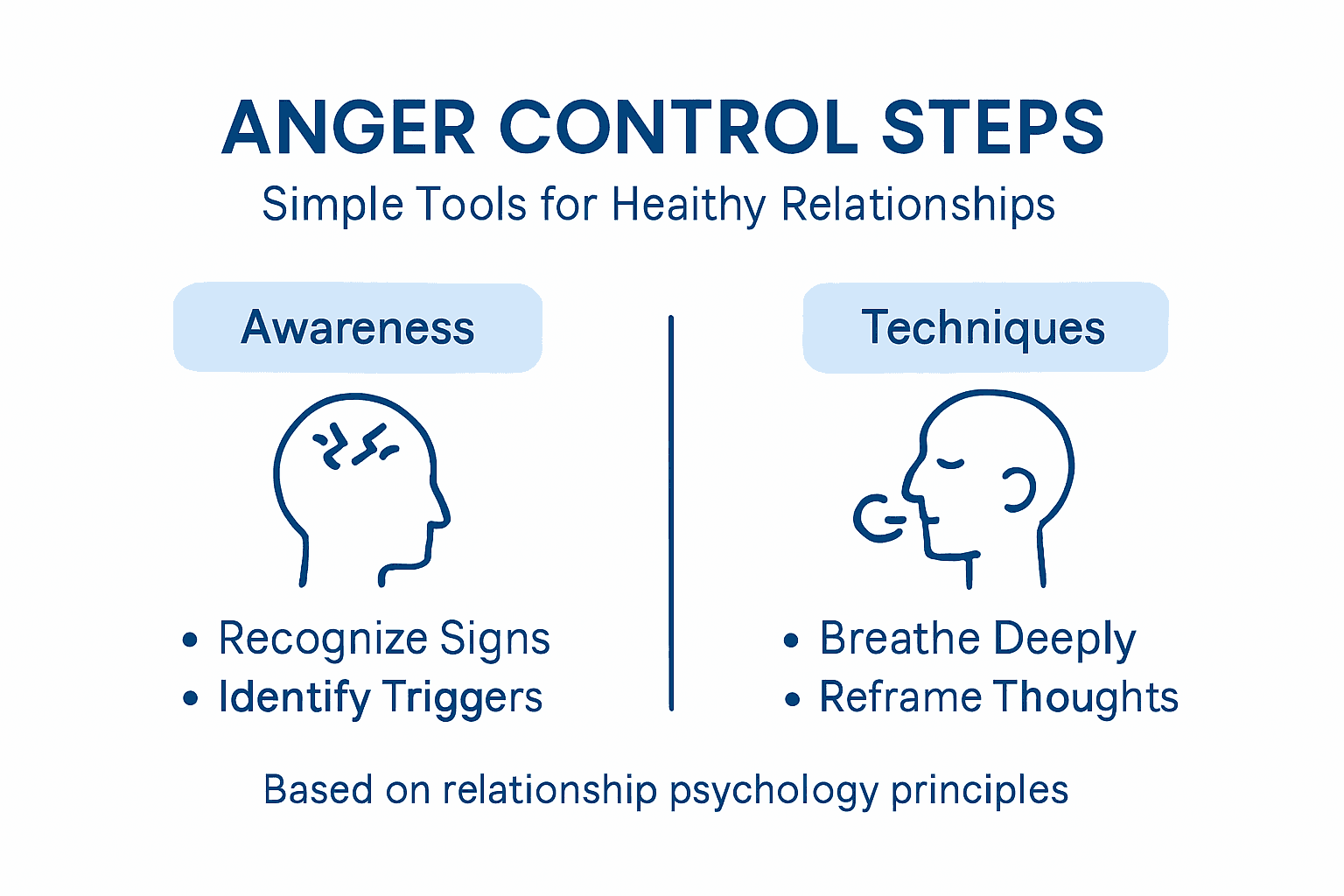
Cognitive reappraisal becomes your secret weapon in heated exchanges. This means consciously reframing the situation from a perspective of curiosity rather than confrontation. Ask yourself questions like “What is my partner really trying to communicate?” or “What underlying need might be driving their reaction?” This approach transforms potential conflict into an opportunity for deeper understanding. Remember that your goal is not to win an argument but to maintain connection and mutual respect.
Practice mindfulness techniques that ground you in the present moment. When you feel anger rising, focus on your immediate sensory experience. Notice the texture of your clothing, the temperature of the room, or the sound of your breathing. These techniques interrupt the cycle of escalating emotional reactivity and create space for more thoughtful responses.
Pro tip: Create a personal “emotional regulation toolkit” with specific techniques you can quickly access when feeling overwhelmed, such as a brief meditation script or a list of calming mantras.
Step 5: Strengthen the Relationship Through Accountability
Accountability transforms relationship dynamics from blame and defensiveness to mutual growth and understanding. Your commitment to personal responsibility becomes the cornerstone of healing and rebuilding trust.
Healthy relationship practices require both partners to own their actions and emotional responses. Start by acknowledging your role in conflicts without deflecting or minimizing your contributions. This means moving beyond surface level apologies to genuine reflection on how your behaviors impact your partner.
Develop a personal accountability framework that includes regular self examination. Schedule weekly check ins with yourself where you honestly assess your communication patterns, emotional triggers, and areas for personal improvement. During these reflections, ask yourself challenging questions: Have I been fully honest? Am I listening more than defending? Where have I potentially contributed to misunderstandings?
Create mutual accountability agreements with your partner. These are not punitive contracts but collaborative frameworks for growth. Discuss and establish clear expectations about communication, emotional support, and conflict resolution. Be specific about what accountability means to each of you. For some, it might involve sharing feelings openly. For others, it could mean taking a timeout when emotions escalate.
Pro tip: Maintain a shared journal where both partners can transparently document personal insights, growth goals, and reflections to promote ongoing mutual understanding and accountability.
Here’s a quick summary of the five-step anger transformation process:
| Step | Main Goal | Key Benefit | Useful Tool |
|---|---|---|---|
| 1 | Shift mindset | Self-awareness of triggers | Journaling |
| 2 | Identify triggers | Early warning recognition | Anger log |
| 3 | Communicate calmly | Improved connection | Role play |
| 4 | Regulate emotions | Prevent destructive reactions | Breathing techniques |
| 5 | Build accountability | Deepen trust | Shared journal |
Take Control of Anger and Strengthen Your Relationship Today
Managing anger in relationships can feel overwhelming when triggers and emotional responses spiral out of control. This article highlights key challenges such as recognizing emotional triggers, developing self awareness, and communicating calmly to prevent conflict from damaging your connection. If you want to move beyond the struggle and transform anger into constructive growth, professional support can make all the difference.
Mastering Conflict offers expert mental health and conflict resolution services designed to help you apply the very strategies discussed here. With personalized anger management classes, compassionate couples therapy, and coaching for emotional regulation, you can finally build the skills needed to handle anger effectively. Start your journey to a healthier relationship by visiting Mastering Conflict and scheduling an appointment today. Do not wait for another argument to find peace. Take action now and regain control with the support you deserve.
Frequently Asked Questions
How can I shift my mindset to better manage anger in my relationship?
To shift your mindset, start by recognizing anger as a signal rather than an enemy. Engage in self-reflection to identify your emotional triggers and consider journaling your thoughts to uncover deeper patterns.
What are some effective techniques to identify my anger triggers?
Develop a personal inventory of your unique anger signals by paying attention to physical and emotional reactions when anger arises. Track these responses in a journal, noting the triggers and your subsequent actions to better understand your patterns.
How can I communicate calmly during heated moments?
Practice calm communication by maintaining open body language and using “I” statements to express your feelings without blame. Role-play challenging conversations with a trusted friend to build confidence in your approach.
What are some emotional regulation skills I can use when anger flares up?
Utilize breathing techniques such as inhaling deeply for four counts and exhaling slowly for six counts to regain composure. Recognize physiological symptoms of anger, and implement mindfulness practices to ground yourself in the present.
How do I involve my partner in building accountability in our relationship?
Create mutual accountability agreements with your partner that define expectations for communication and conflict resolution. Schedule regular check-ins to assess each other’s emotional needs and growth goals to foster trust and mutual understanding.