Find the best marriage counselor in Charlotte, NC

TL;DR:
- Evidence-based methods like EFT and Gottman yield high success rates of 75-90% for couples.
- Early intervention, preferably before pattern entrenchment, significantly improves counseling outcomes.
- Finding a culturally responsive, credentialed therapist with a good fit is key to effective marriage counseling.
Marriage counseling has a reputation problem. Many couples assume it’s a last resort that rarely delivers real results. But EFT and Gottman Method show 70 to 90% success in relationship satisfaction and stability, which tells a very different story. Charlotte, NC has a growing network of skilled, evidence-based counselors ready to help couples work through even the most entrenched problems. Whether you’re navigating communication breakdowns, rebuilding trust, or just feeling disconnected, the right counselor makes all the difference. This guide walks you through exactly how to find that person.
Table of Contents
- Why couples seek marriage counseling in Charlotte, NC
- Evidence-based methods: Gottman, EFT, and traditional approaches
- How to choose the right marriage counselor in Charlotte
- Leading marriage counselors and centers in Charlotte
- What most couples miss: The real keys to successful marriage counseling
- Next steps: Start your relationship transformation in Charlotte
- Frequently asked questions
Key Takeaways
| Point | Details |
|---|---|
| Evidence-based methods work | EFT and Gottman Method offer much higher success rates than traditional approaches. |
| Therapist fit matters | Connecting with the right counselor dramatically improves your chances of positive outcomes. |
| Early intervention is key | Getting help before issues worsen leads to better, longer-lasting results. |
| Local expertise in Charlotte | Charlotte has many skilled providers specializing in research-backed marriage counseling. |
Why couples seek marriage counseling in Charlotte, NC
Charlotte is one of the fastest-growing cities in the Southeast. With rapid growth comes real pressure on relationships. Couples here face a familiar mix of financial stress, demanding work schedules, cultural transitions, and parenting challenges. These pressures don’t just create tension. They quietly erode the foundation of a relationship over time.
The most common reasons couples seek couples counseling in Charlotte include:
- Communication breakdown where conversations turn into arguments or silent standoffs
- Infidelity or betrayal that has shattered trust and created emotional distance
- Life transitions like job changes, having children, or relocating
- Recurring conflicts that keep cycling without resolution
- Emotional disconnection where partners feel more like roommates than partners
Charlotte’s diversity is a strength, but it also means couples sometimes need culturally aware therapists who understand their specific community context. A counselor familiar with local norms, family structures, and cultural values is far more effective than a generic approach.
One factor that’s often overlooked is how much the therapist-client fit influences whether someone even stays in counseling. Many couples show up once and never return, not because counseling doesn’t work, but because the fit was wrong from the start.
“Up to 31% drop out after just one counseling session if the fit isn’t right.”
That statistic should push you to be intentional about who you choose. If you have common marriage counseling questions before you even book a session, that’s completely normal. Getting answers upfront helps set the right expectations and lowers the chances of an early dropout.
The good news: Charlotte has a wide enough provider base that finding the right fit is very achievable. You just need to know what to look for.
Evidence-based methods: Gottman, EFT, and traditional approaches
Not all marriage counseling is created equal. The method your counselor uses directly shapes your results. Two approaches stand above the rest in terms of research-backed outcomes.
Emotionally Focused Therapy (EFT) was developed by Dr. Sue Johnson and targets the emotional bonds between partners. It works by identifying negative cycles, understanding the underlying emotions driving those cycles, and reshaping how partners respond to each other. The focus is on attachment. When couples feel safe with each other again, conflict naturally reduces.
The Gottman Method is built on decades of research by Drs. John and Julie Gottman. It uses measurable assessments to identify specific risk factors in a relationship and applies structured interventions to address them. It’s practical, goal-oriented, and rooted in data.
Both methods have earned their reputation. Gottman Method and EFT show 75 to 90% improvement rates, while traditional therapy without a structured framework produces much lower success rates and higher dropout numbers.
| Approach | Success rate | Key feature | Best for |
|---|---|---|---|
| Gottman Method | 75 to 90% | Data-driven assessments | Conflict patterns, communication |
| EFT | 75 to 90% | Attachment-focused | Emotional disconnection, trust |
| Traditional therapy | Lower and variable | Talk-based, less structured | Mild, early-stage issues |
If you want to strengthen your relationship before serious problems develop, exploring early marriage therapy is one of the smartest moves you can make. Proactive couples who address patterns early have significantly better outcomes than those who wait.
Beyond these methods, good marriage counseling methods also incorporate practical skills around listening, conflict resolution, and rebuilding intimacy. Resources like relationship building tips can supplement what you learn in sessions.
Pro Tip: Ask any potential counselor directly about their training in EFT or the Gottman Method before booking. A trained practitioner will be specific about their credentials, not vague.
How to choose the right marriage counselor in Charlotte
Knowing which methods work is one thing. Translating that knowledge into a real decision about a local provider is another. Here’s how to approach it.
Start with licensure and credentials. Look for therapists with an LMFT (Licensed Marriage and Family Therapist), LCSW (Licensed Clinical Social Worker), or a licensed counselor with specific couples training. These credentials signal formal education and supervised clinical hours.

Beyond credentials, therapist-client match is a critical factor in counseling outcomes. A brilliant therapist who doesn’t feel like the right fit for your relationship can still produce poor results. Trust your gut during the first consultation.
Here’s a numbered list of questions to ask on your first call:
- What specific training do you have in EFT or the Gottman Method?
- How do you handle sessions when only one partner is willing to come?
- What does a typical treatment plan look like for a couple like us?
- How do you measure progress?
- What is your experience working with couples facing infidelity or betrayal?
- Do you offer online sessions for flexibility?
Also consider cultural fit. Charlotte has a vibrant and diverse population. If your background, faith, or cultural identity plays a significant role in your relationship, finding a counselor who honors that matters. Mastering Conflict offers diverse therapist options specifically designed for Black and African American individuals and couples who want culturally grounded support.
For families dealing with conflict that extends beyond the couple, family counseling in Charlotte addresses the broader system that affects your relationship.
Pro Tip: Waiting over 6 years before seeking help lowers your success rate by up to 40%. If something feels off in your relationship right now, early action is one of the most powerful choices you can make.
Leading marriage counselors and centers in Charlotte
Charlotte has no shortage of options, but a few providers consistently stand out for their evidence-based approach and local reputation.
| Provider | Credentials | Specialty | Notable feature |
|---|---|---|---|
| Clear Creek Counseling | Licensed therapists | EFT, couples therapy | Strong community reputation |
| Modern Era Counseling | LMFT, LCSW | Gottman Method | Structured 60-day treatment plan |
| Sally Harris LCSW | LCSW | Gottman Method trained | Lake Norman area specialist |
| Mastering Conflict | Dr. Carlos Todd, LCMHC | EFT, conflict resolution, diverse populations | Online and in-person, Charlotte and beyond |
Charlotte’s evidence-based providers like Clear Creek Counseling, Modern Era, and Sally Harris LCSW have built strong local reputations for structured, results-focused care.
What sets the best providers apart:
- Structured treatment plans that set clear goals and timelines instead of open-ended sessions
- Specialized Gottman or EFT training rather than generalist talk therapy
- Culturally responsive care for Charlotte’s diverse communities
- Flexible formats including both in-person and virtual sessions
- Transparent communication about costs, session frequency, and expected outcomes
If you’re curious about the physical setup before committing, you can preview our counseling office options to see how sessions are structured locally. Some couples also benefit from intensive formats, and couples retreats in Charlotte can offer concentrated support in a shorter period.
The key is finding a provider whose credentials, method, and personality align with where you and your partner actually are right now.
What most couples miss: The real keys to successful marriage counseling
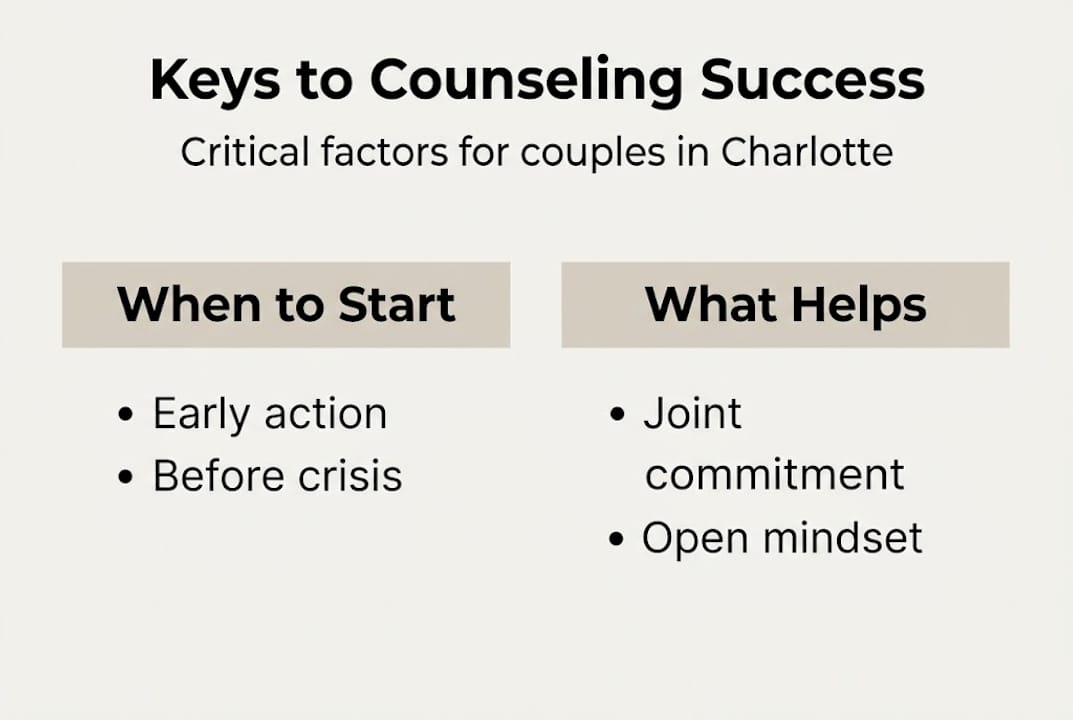
After reviewing the methods, the providers, and the statistics, here’s the honest truth that most articles skip over: the tool matters far less than the timing.
We see it consistently. Couples who enter counseling early, before resentment has calcified into contempt, make faster progress and sustain it longer. Couples who wait until they’re essentially roommates managing a household together face a much steeper climb. Waiting an average of 6 years drastically lowers success rates, and that’s not a judgment. It’s a practical reality about how deeply patterns become wired over time.
Charlotte’s broad provider base is genuinely impressive. But access to great counselors doesn’t cancel out late action. A skilled therapist can only work with what you bring into the room. The more entrenched the patterns, the more sessions you’ll need, and the harder the emotional work becomes.
The couples who succeed in counseling share three things: they started before things felt desperate, at least one partner was genuinely committed to the process, and they explored premarital counseling benefits or similar proactive tools early. That combination beats the best therapist in the city every time.
Next steps: Start your relationship transformation in Charlotte
Reading about the right methods and local providers is a solid start. But insight only becomes change when you take action.
At Mastering Conflict, we offer evidence-based couples therapy, conflict resolution coaching, and individual support for both partners. Whether you’re looking for men’s marriage counseling to support a partner who struggles to engage, teletherapy options that fit a busy Charlotte schedule, or structured counseling courses to build skills between sessions, we have pathways designed for real couples with real challenges. Dr. Carlos Todd and the Mastering Conflict team bring clinical depth, cultural awareness, and a direct, results-focused approach. Your next step is simply booking a first session.
Frequently asked questions
What marriage counseling method works best in Charlotte, NC?
EFT and Gottman Method show the highest improvement rates for couples, making them the gold standard in Charlotte and nationally.
How early should couples seek marriage counseling?
As early as possible. Waiting significantly lowers the odds of therapy success, with delays beyond 6 years reducing effectiveness by up to 40%.
What is the typical cost for a marriage counselor in Charlotte, NC?
Most sessions in Charlotte range from $100 to $200 per hour, and several clinics offer sliding-scale rates based on income to make access more equitable.
Does marriage counseling work for severe issues like infidelity?
Yes. EFT and Gottman both show strong outcomes even for severe cases like infidelity, especially when both partners are committed to the process.