
Common Marriage Counseling Questions That Transform Relationships

Recurring arguments can leave couples in North Carolina and South Carolina feeling stuck and unheard. When honest conversations turn into misunderstandings, even strong relationships begin to unravel. Marriage counseling offers a path toward stronger connection by addressing the roots of conflict and building real communication skills. This guide breaks down the important questions asked in counseling and highlights how effective questioning techniques can help you and your partner move forward with clarity and trust.
Table of Contents
- What Are Common Marriage Counseling Questions
- Key Areas Addressed In Sessions
- How Effective Questions Improve Communication
- Mistakes To Avoid In Couples Therapy
Key Takeaways
| Point | Details |
|---|---|
| Counseling Questions Are Essential | Couples are often encouraged to share specific concerns that unveil underlying issues in their relationship. These questions can lead to improved communication and deeper understanding. |
| Effective Communication Techniques | Counselors teach strategies for vulnerable expression and empathetic listening, which help reduce misunderstandings and emotional conflict. |
| Commitment to the Process Is Crucial | Mutual willingness to engage in therapy is necessary for effective outcomes; one-sided commitment can undermine progress. |
| Avoid Common Pitfalls | Couples should stay committed and honest throughout the counseling journey, avoiding defensive reactions to feedback and unrealistic expectations. |
What Are Common Marriage Counseling Questions
Marriage counseling opens the door to understanding your relationship on a deeper level. Couples typically arrive with questions about communication, trust, and how to move forward together. These questions aren’t signs of failure; they’re the first steps toward transformation.
Most couples wonder about the fundamentals of their relationship. Understanding communication breakdowns, trust issues, and intimacy concerns forms the foundation of effective counseling work. Your counselor will help you explore these core areas through structured conversations and evidence-based techniques.
Here are the questions you’ll likely encounter in marriage counseling:
- How did we get here? Understanding the pattern of conflicts and disconnection over time.
- Why can’t we communicate? Identifying barriers to honest, vulnerable conversation between partners.
- Is trust fixable? Exploring whether betrayal can be healed and what rebuilding requires.
- What about intimacy? Addressing emotional or physical disconnection in your marriage.
- How do we handle parenting differently? Resolving conflicts about child-rearing approaches and family decisions.
- When should we have sought help earlier? Recognizing signs that counseling could have prevented escalation.
Beyond these core questions, couples often ask practical ones. When should you start counseling? What happens during sessions? How long does transformation take? These questions reflect legitimate concerns about investing time and resources in your relationship.
Most couples benefit from counseling at any stage, from premarital preparation through decades of marriage, because the tools and insights work regardless of relationship age.
Your counselor will focus on providing you with concrete conflict resolution tools and strategies to strengthen your emotional bond. Rather than dwelling on past problems, the work emphasizes building new patterns of connection. You’ll learn how to express needs clearly, listen without defensiveness, and rebuild trust through consistent actions.
Many couples ask whether counseling means their relationship is in trouble. The reality? Seeking help shows strength and commitment. Partners who enter counseling willingly create space for honest conversations that rarely happen at home.
Other common questions address expectations. What can we actually achieve? Will this fix everything? How will we know if it’s working? Your counselor will set realistic goals, measuring progress through improved communication quality, reduced conflict frequency, and increased emotional safety.
Pro tip: Before your first session, write down three specific situations where communication broke down—this gives your counselor concrete examples to work with and helps you get maximum value from early sessions.
Key Areas Addressed in Sessions
Marriage counseling doesn’t follow a one-size-fits-all playbook. Your counselor focuses on the specific challenges your relationship faces, which means sessions adapt to your unique situation. Understanding what typically gets addressed helps you prepare mentally and set realistic expectations.

Communication patterns form the backbone of most counseling work. Many couples struggle with communication difficulties without realizing they’re using the same ineffective approaches repeatedly. Your counselor will help you identify these negative patterns and teach you how to speak vulnerably without triggering defensiveness in your partner.
Financial conflict ranks among the most common issues couples face:
- Money disagreements about spending priorities, debt, or financial goals
- Income disparity and how earnings affect power dynamics
- Debt management and shared responsibility for financial obligations
- Savings versus spending philosophies that create tension
Parenting challenges consume significant counseling time, especially when partners disagree on discipline, expectations, or involvement levels. These conflicts intensify during life transitions like having a first child or managing teenagers.
Trust and intimacy issues often drive couples to seek help. Whether dealing with infidelity, substance abuse, or simply emotional disconnection, your counselor creates a safe space to address these painful topics. Rebuilding trust requires honesty, accountability, and consistent actions over time.
Sessions target how you interact during conflict, not just what you fight about—changing your patterns transforms everything else.
Your counselor will also explore conflicting expectations about your relationship. Many couples never explicitly discussed what marriage should look like or what roles each partner would play. Clarifying these expectations prevents resentment from building silently.
Life stage transitions—retirement, empty nesting, health crises—often destabilize relationships that seemed stable. Your counselor helps you navigate these shifts together rather than drifting apart during vulnerable periods.
Emotional connection and stress management typically receive attention too. When couples understand how stress affects their mood and behavior, they become less reactive to each other’s struggles.
Here is a summary of how marriage counseling addresses various relationship challenges:
| Key Focus Area | Counseling Approach | Typical Outcomes |
|---|---|---|
| Communication | Teaches active listening and vulnerable expression | Reduces misunderstandings |
| Financial Disputes | Aligns priorities and goals | Promotes shared responsibility |
| Parenting | Balances discipline and involvement | Minimizes parenting conflict |
| Trust & Intimacy | Fosters honesty and safe sharing | Strengthens emotional bond |
| Life Transitions | Supports adaptation together | Increases relationship resilience |
Pro tip: Come to your first session with a list of 3-5 topic areas you’d most like to address, ranked by urgency—this ensures your counselor prioritizes what matters most to your relationship.
How Effective Questions Improve Communication
Questions are the hidden power in marriage counseling. Most couples think counseling is about talking, but it’s really about asking the right questions—ones that open doors instead of closing them. When your counselor asks thoughtful questions, something shifts in how you listen to your partner.
Effective questioning works because it slows down the automatic responses that fuel conflict. Instead of reacting defensively, you pause and actually think about what your partner is asking. This creates space for vulnerability that rarely happens at home.
Your counselor uses effective questioning techniques to guide you both toward honest expression and mutual understanding. These aren’t interrogations—they’re invitations to explore what’s really happening beneath the surface conflict. Questions help identify communication blocks and emotional triggers that sabotage your connection.
Here’s how strategic questions transform communication:
- “What were you feeling when that happened?” Moves conversation from blame to emotion.
- “Can you tell me what you need from me?” Clarifies unspoken needs driving the conflict.
- “How did that make you feel about yourself?” Reveals self-worth issues connected to arguments.
- “What would help you feel heard right now?” Shifts focus to solutions instead of problems.
- “When did this pattern start between us?” Uncovers the roots of recurring conflicts.
These questions work because they demand honesty. You can’t answer them with surface-level deflections. Your partner has to articulate feelings they’ve maybe never expressed, which changes everything about how you understand each other.
Questions teach partners to listen for emotion and need beneath the words, not just the literal complaint.
Your counselor also uses questions to teach empathetic listening. Instead of planning your comeback while your partner speaks, you’re asked to reflect back what you heard. This simple practice—asking clarifying questions before responding—prevents misunderstandings from turning into arguments.
Another powerful technique involves asking about intentions versus impact. You might discover your partner’s hurtful comment wasn’t meant to wound; they were trying to express something else entirely. Understanding this distinction softens resentment and opens the door to repair.
Questions also help couples identify their own contribution to problems. Rather than blaming, you examine your role—which actually gives you power to change the dynamic. This accountability, when mutual, rebuilds trust.
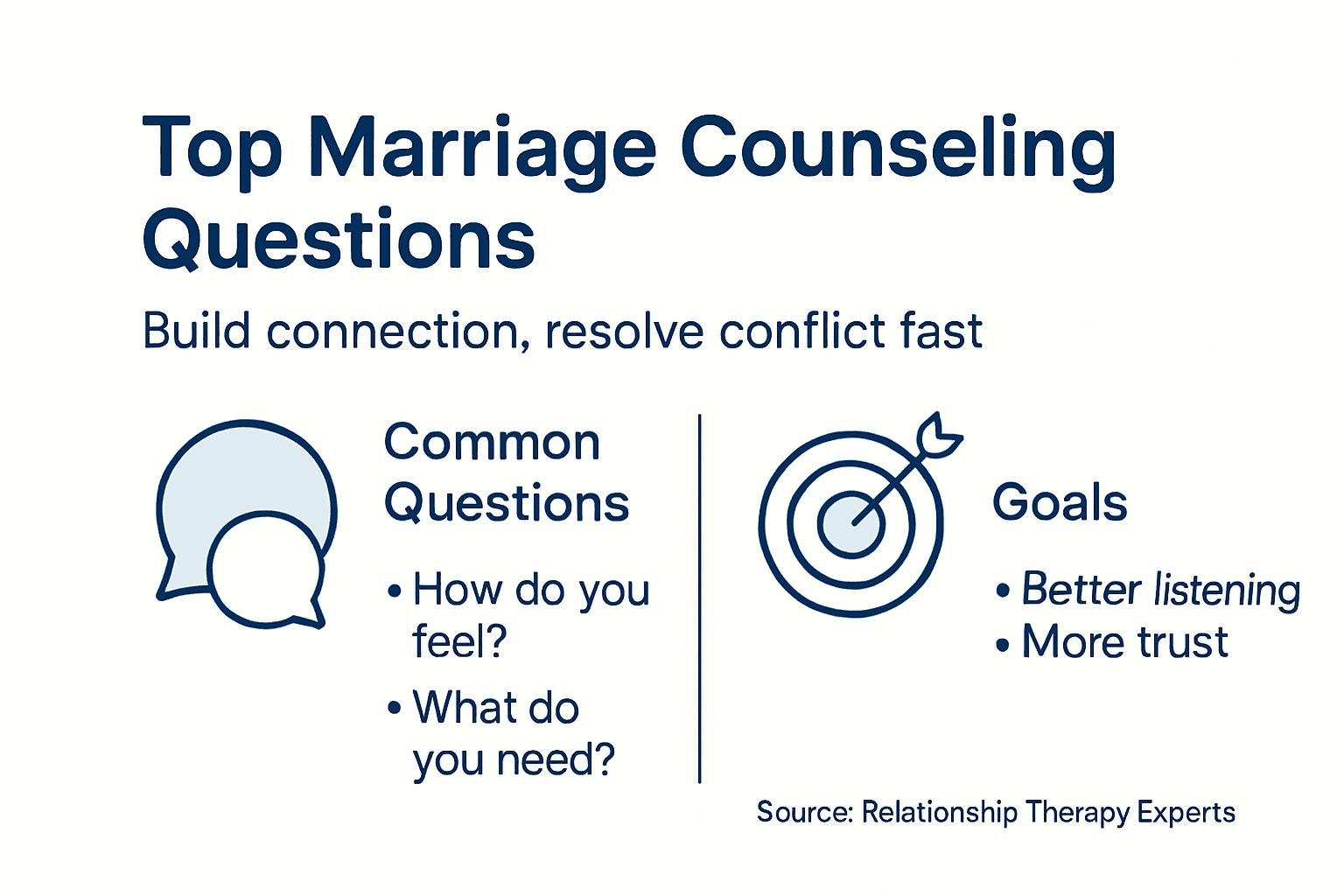
Pro tip: Practice asking one reflective question per conversation this week—“What do you think I didn’t understand about that?” or “How are you feeling right now?”—and notice how your partner’s response deepens.
Mistakes to Avoid in Couples Therapy
Couples therapy fails not because the approach doesn’t work, but because couples make predictable mistakes that undermine progress. Knowing what to avoid positions you for genuine transformation. Many of these pitfalls are preventable with awareness and intentional effort.
The biggest mistake? Waiting too long to seek help. Couples often arrive after years of resentment have hardened into walls. By then, negative patterns run so deep that change requires significantly more work. Early intervention prevents entrenched behaviors from defining your relationship.
One-sided commitment destroys therapy before it begins. If only one partner truly wants counseling, the other shows up physically but emotionally checks out. Both of you must want change, even if you disagree about everything else. Without mutual commitment, your counselor can’t facilitate the vulnerability required for healing.
These common mistakes sabotage progress:
- Expecting therapy to fix everything without effort from you between sessions
- Denying the problem exists or minimizing how serious things have become
- Refusing vulnerability because admitting pain feels dangerous
- Resisting your counselor’s observations when they hit too close to home
- Comparing your progress to other couples instead of tracking your own improvement
- Skipping sessions or canceling repeatedly when topics get uncomfortable
Having unrealistic expectations about pace and outcomes derails many couples. Therapy isn’t magic; transformation takes consistent work over months, not weeks. You won’t wake up completely different, but you’ll gradually notice shifts in how you respond to conflict.
The couples that succeed in therapy are those who show up, stay uncomfortable long enough to change, and trust the process even when progress feels invisible.
Another critical mistake involves defensive reactions to feedback. Your counselor might point out a pattern you’re perpetuating. Instead of getting defensive, stay curious. Ask yourself why that observation stung. That discomfort often signals exactly where you need to grow.
Couples also fail by keeping secrets or withholding information. If you’re dealing with infidelity, addiction, or major decisions, your counselor can’t help you navigate these without knowing. Honesty in the counseling room is non-negotiable.
Finally, don’t abandon counseling the moment things improve. Many couples stop therapy as soon as they feel better, then find themselves repeating old patterns within months. Continuing a few more sessions after improvement solidifies your new skills.
The table below compares helpful and unhelpful behaviors in couples therapy:
| Behavior Type | Example Action | Impact on Progress |
|---|---|---|
| Helpful | Regular session attendance | Builds momentum and trust |
| Helpful | Open sharing of feelings | Deepens emotional connection |
| Unhelpful | Skipping or canceling sessions | Stalls or reverses progress |
| Unhelpful | Withholding important issues | Limits counselor effectiveness |
| Unhelpful | Comparing to other couples | Reduces focus on real growth |
Pro tip: Commit to attending at least 8-12 sessions before evaluating whether therapy is working; meaningful change typically requires this minimum timeframe to establish new patterns.
Unlock New Ways to Strengthen Your Relationship with Expert Guidance
Navigating common marriage counseling questions such as communication barriers, rebuilding trust, and managing parenting conflicts can feel overwhelming. If you recognize these challenges in your relationship, you are not alone. Understanding key concepts like emotional connection, active listening, and conflict resolution can open the door to lasting transformation. At Mastering Conflict, we specialize in clinical and evidence-based approaches that help couples create healthier communication patterns and rebuild intimacy with confidence.
Don’t wait until problems feel insurmountable. Take control now by exploring personalized couples therapy, anger management tools, and conflict coaching designed for real-life situations. Our founder Dr. Carlos Todd and his experienced team provide compassionate support tailored to your unique needs. Start your journey toward renewed trust and connection today at Mastering Conflict and discover how effective counseling answers your most pressing marriage questions.
Frequently Asked Questions
How does marriage counseling help improve communication?
Marriage counseling helps by teaching couples effective communication patterns. Counselors guide partners to identify negative communication habits and promote active listening and vulnerable expression, which reduces misunderstandings and strengthens emotional connection.
What should we expect in our first marriage counseling session?
In your first session, expect to discuss your reasons for seeking help, your relationship’s challenges, and what goals you hope to achieve. You may also be asked to share specific situations where communication broke down, which helps the counselor tailor the sessions to your needs.
How can we rebuild trust after infidelity in marriage counseling?
Rebuilding trust after infidelity involves creating a safe environment for honest discussions about feelings and needs. The counselor will facilitate conversations focusing on accountability, consistent actions, and mutual respect to help partners work through their emotional pain and rebuild their bond.
What are some common mistakes couples make in therapy?
Common mistakes include waiting too long to seek help, one partner being less committed, and skipping sessions. Additionally, defensiveness when receiving feedback or comparing progress to other couples can hinder advancement in therapy. It’s important to remain open, committed, and consistent for meaningful transformation.
Recommended
- Marriage Counseling: Transforming Couples’ Communication – Mastering Conflict
- Marriage Counseling Before Marriage: Strengthening Relationships Early – Mastering Conflict
- When to Seek Couples Counseling: Signs, Solutions, and Options – Mastering Conflict
- Premarital Counseling: Everything You Need to Know – Mastering Conflict