
Marriage Counseling Before Marriage: Strengthening Relationships Early

Over half of American couples who complete premarital counseling report stronger relationships and fewer conflicts down the road. With marriage bringing exciting opportunities and unpredictable hurdles, it makes sense to prepare well before the big day. This guide breaks down how marriage counseling before marriage can help American partners build lasting connections, tackle tough conversations early, and set the stage for a healthier future together.
Table of Contents
- Defining Marriage Counseling Before Marriage
- Common Types of Premarital Counseling Programs
- Key Benefits for Couples Considering Marriage
- Process and What to Expect in Sessions
- Potential Pitfalls and How to Avoid Them
Key Takeaways
| Point | Details |
|---|---|
| Premarital Counseling Focus | It aims to strengthen relationship foundations by teaching communication strategies and conflict resolution skills. |
| Types of Counseling Programs | Options include traditional, faith-based, and online programs, each catering to different couple dynamics and preferences. |
| Key Benefits | Couples gain enhanced communication, aligned expectations, and emotional resilience, leading to stronger partnerships. |
| Preparedness for Sessions | Participants should approach counseling with openness, mutual engagement, and realistic expectations for growth. |
Defining Marriage Counseling Before Marriage
Marriage counseling before marriage is a proactive approach designed to help couples build strong foundations before they tie the knot. Unlike traditional therapy, premarital counseling provides knowledge and skills-based training aimed at sustaining and improving relationship dynamics.
This specialized form of guidance focuses on equipping couples with communication strategies, conflict resolution techniques, and realistic expectations about married life. Counselors help partners explore potential challenges, understand each other’s emotional needs, and develop tools for navigating future obstacles. By addressing potential friction points early, couples can create more resilient partnerships that are prepared to weather life’s complexities.
Premarital counseling is not about determining whether couples should marry, but rather about strengthening their existing connection. It involves structured conversations about critical topics like financial management, family dynamics, personal goals, intimacy, and shared values. Professional counselors facilitate these discussions, helping partners develop deeper mutual understanding and develop collaborative problem-solving skills.
Pro Tip for Relationship Success: Schedule premarital counseling sessions at least 3-6 months before your wedding to allow sufficient time for meaningful conversations and skill development.
Common Types of Premarital Counseling Programs
Couples seeking to strengthen their relationship have multiple options when it comes to premarital counseling programs, each designed to address unique relationship needs and preferences. These programs range from traditional in-person counseling to specialized approaches that cater to diverse couple dynamics.
Traditional Counseling Programs represent the most common form of premarital support, where licensed therapists work directly with couples to develop communication skills, resolve potential conflicts, and explore relationship expectations. These sessions typically involve structured conversations about critical topics like financial management, intimacy, family planning, and personal goals. Professional counselors use evidence-based techniques to help partners understand each other’s emotional landscapes and develop collaborative problem-solving strategies.
Faith-Based Counseling Programs offer a unique approach for couples who want to integrate spiritual perspectives into their relationship preparation. Religious counselors blend psychological insights with moral and spiritual guidance, helping couples align their relationship with shared religious values. These programs often include discussions about commitment, mutual respect, and long-term relationship vision through a spiritual lens. Some religious institutions offer comprehensive premarital counseling that combines theological teachings with practical relationship skills.
Online Counseling Programs have gained significant popularity, providing flexible and accessible options for couples with busy schedules or geographic limitations. Virtual premarital counseling platforms offer interactive workshops, video consultations, and self-guided modules that couples can complete at their own pace. These digital programs often include assessment tools, communication exercises, and personalized feedback to help partners develop stronger relationship foundations.
Here’s a quick comparison of common premarital counseling program types and their unique features:
| Program Type | Format & Setting | Special Focus |
|---|---|---|
| Traditional | In-person sessions with a licensed counselor | Communication skills, conflict resolution |
| Faith-Based | Guided by religious leaders or spiritual mentors | Spiritual beliefs, shared values |
| Online | Video calls, self-paced digital modules | Flexibility, convenience, remote access |
Pro Tip for Couples: Research and select a premarital counseling program that aligns with your relationship goals, communication styles, and personal preferences to maximize the potential for meaningful growth and understanding.
Key Benefits for Couples Considering Marriage
Couples preparing for marriage can gain tremendous advantages by exploring premarital counseling benefits that strengthen relationship foundations before making a lifelong commitment. These proactive interventions offer couples strategic insights and tools to navigate potential challenges more effectively.
Communication Enhancement represents a critical benefit of premarital counseling. Partners learn advanced communication techniques that help them express feelings, needs, and concerns more authentically and constructively. By developing skills like active listening, emotional validation, and conflict resolution, couples create more resilient communication patterns that can withstand future relationship stressors. These skills help partners move beyond surface-level discussions to deeper, more meaningful conversations that build mutual understanding and emotional intimacy.
Expectation Alignment is another significant advantage of premarital counseling. Many relationship conflicts emerge from unspoken or misaligned expectations about marriage, finances, career goals, family planning, and personal growth. Professional counselors guide couples through structured conversations that help them articulate and reconcile their individual expectations, creating a shared vision for their future. This proactive approach minimizes potential misunderstandings and helps partners develop realistic, collaborative strategies for managing life’s complexities.
Mental Health and Relationship Resilience emerge as profound long-term benefits of premarital counseling. Couples therapy techniques provide partners with emotional tools to support each other’s mental well-being, recognize potential stress triggers, and develop healthy coping mechanisms. By addressing potential psychological challenges early, couples build a strong support system that can help them navigate future personal and relational challenges more effectively.
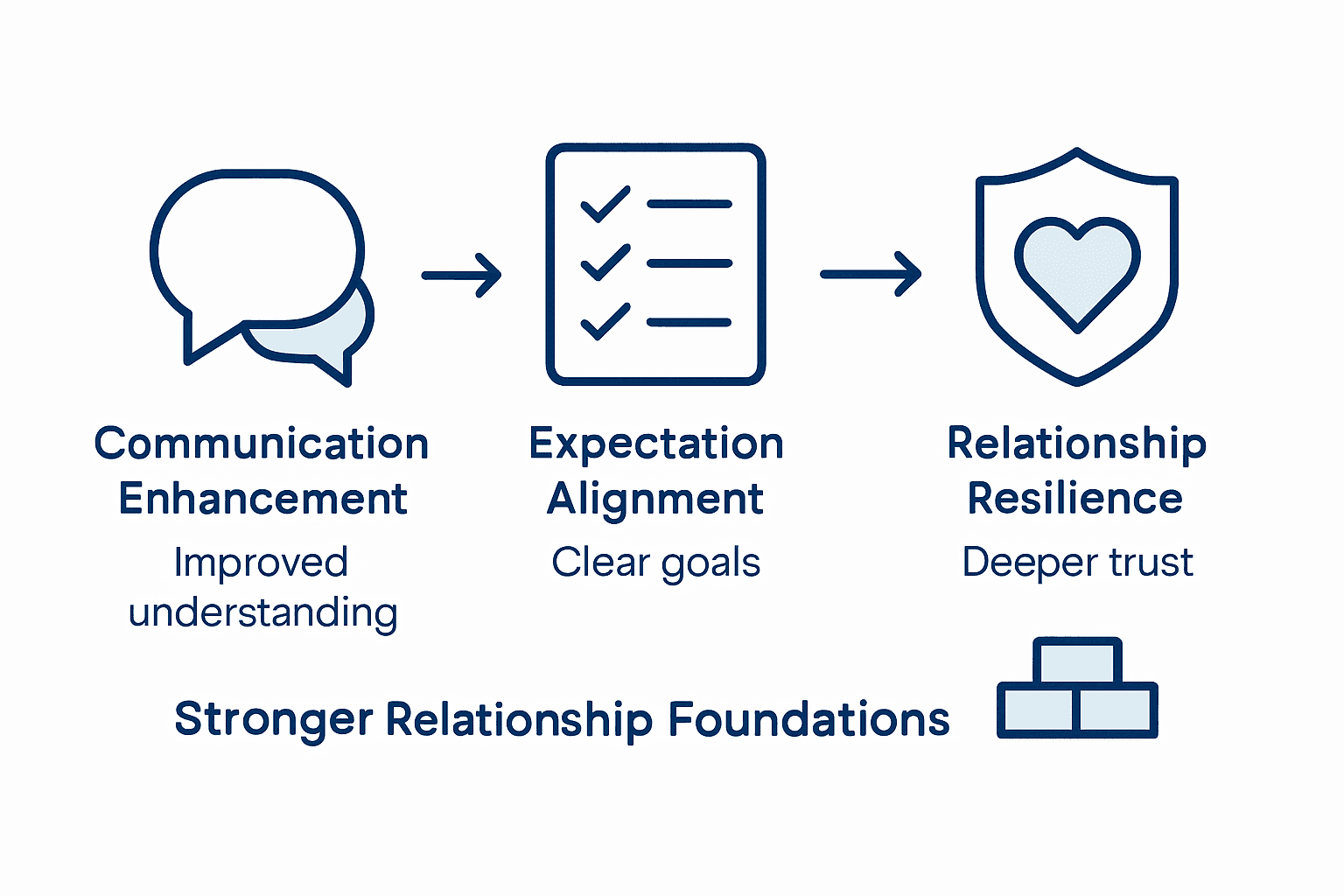
The table below summarizes the core benefits couples gain from premarital counseling:
| Benefit Area | What Couples Gain | Long-Term Impact |
|---|---|---|
| Communication Skills | Deeper, more honest conversations | Fewer misunderstandings later |
| Expectation Setting | Shared vision for major life areas | Improved mutual decision-making |
| Emotional Resilience | Coping tools for relationship stress | Better support during challenges |
Pro Tip for Relationship Success: Schedule comprehensive premarital counseling sessions at least 4-6 months before your wedding, allowing sufficient time for meaningful conversations and skill development.
Process and What to Expect in Sessions
Premarital counseling sessions are designed to provide a structured, supportive environment for couples to explore their relationship dynamics and prepare for marriage. The duration of counseling varies depending on the couple’s specific needs, typically ranging from a few weeks to several months, with most programs offering 4-8 comprehensive sessions.
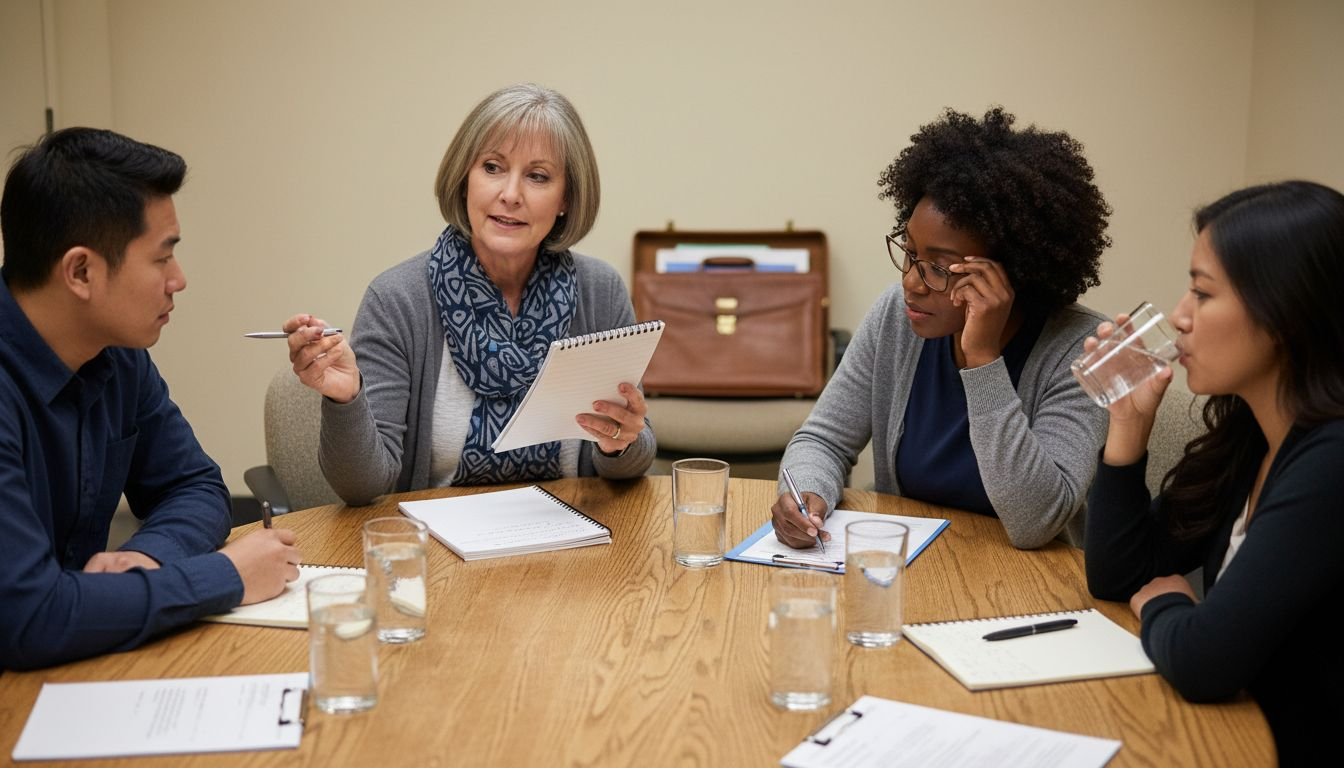
Initial Assessment typically begins with individual and joint interviews where counselors gather background information about each partner’s family history, communication styles, emotional patterns, and relationship expectations. Couples complete comprehensive questionnaires that help identify potential areas of conflict, strengths, and areas requiring deeper exploration. These initial assessments create a roadmap for subsequent counseling sessions, allowing therapists to tailor their approach to the couple’s unique relationship dynamics.
Structured Conversation Topics form the core of premarital counseling sessions. Professional counselors guide couples through discussions about critical relationship domains, including financial management, intimacy, communication strategies, conflict resolution, family planning, career goals, and personal values. Interactive exercises and dialogue techniques help partners develop deeper mutual understanding, practice active listening, and learn constructive ways of expressing needs and concerns. These structured conversations enable couples to address potential challenges proactively and develop shared strategies for navigating future relationship complexities.
Skill-Building Workshops are integral to the premarital counseling process. Couples therapy techniques focus on developing practical communication skills, emotional intelligence, and collaborative problem-solving strategies. Partners learn techniques for managing disagreements, expressing vulnerability, and supporting each other’s personal growth. Role-playing exercises, communication drills, and reflective practices help couples internalize these skills, creating more resilient relationship foundations that can withstand future challenges.
Pro Tip for Session Preparation: Come to each counseling session with an open mind, willingness to be vulnerable, and commitment to listening and learning from each other.
Potential Pitfalls and How to Avoid Them
Navigating premarital counseling requires awareness of potential challenges that can undermine the process. Couples therapy strategies highlight the importance of understanding and proactively addressing common roadblocks that may emerge during relationship preparation.
Defensiveness and Resistance represent significant barriers to effective premarital counseling. Couples often enter sessions with preconceived notions, feeling vulnerable or judged, which can lead to emotional shutdowns or confrontational responses. To counteract this, partners must cultivate a mindset of genuine curiosity and openness. Approaching counseling as a collaborative growth opportunity rather than a critique requires emotional maturity, active listening, and a willingness to explore uncomfortable conversations with empathy and mutual respect.
Unequal Engagement can derail the counseling process when one partner appears more committed to the process than the other. This imbalance creates tension and may signal deeper relationship incompatibilities. Successful couples recognize that premarital counseling demands mutual investment, requiring both partners to actively participate, share vulnerabilities, and demonstrate commitment to personal and relational growth. Professional counselors can help identify and address underlying reasons for unequal engagement, such as fear, past traumas, or communication barriers.
Unrealistic Expectations frequently emerge as a critical pitfall in premarital counseling. Many couples enter sessions with idealized visions of marriage, expecting immediate resolution of complex relationship dynamics. Realistic couples understand that counseling is a process of gradual understanding, skill-building, and mutual exploration. Embracing imperfection, acknowledging individual growth trajectories, and developing patience become crucial strategies for transforming counseling insights into sustainable relationship practices.
Pro Tip for Relationship Success: Approach premarital counseling as a collaborative journey of mutual discovery, not a problem-fixing exercise, and commit to genuine, compassionate communication.
Strengthen Your Relationship Foundations with Expert Guidance Today
Preparing for marriage brings exciting opportunities but also challenging conversations about communication, expectations, and emotional resilience. If you want to build the skills and insights needed to navigate these complexities before you say “I do” then tailored premarital counseling can be a crucial step. Whether you are struggling with defensiveness, unequal engagement, or the pressure of unrealistic hopes, professional support is available to help you create a strong connection based on honest communication and shared values.
Take advantage of the expert counseling and clinical interventions offered at Mastering Conflict where services like couples therapy and conflict resolution address critical relationship dynamics with proven, evidence-based techniques. Do not wait until stress and misunderstandings grow. Visit Mastering Conflict now to book sessions that provide communication tools, expectation alignment coaching, and emotional resilience strategies designed specifically for couples preparing to marry. Start your journey toward a healthier relationship with professional support that values your growth and mutual understanding.
Frequently Asked Questions
What is marriage counseling before marriage?
Marriage counseling before marriage is a proactive approach where couples work with counselors to strengthen their relationship foundations before tying the knot. It focuses on enhancing communication skills, conflict resolution techniques, and addressing future challenges.
What types of programs are available for premarital counseling?
Common types of premarital counseling programs include traditional in-person counseling with licensed therapists, faith-based counseling that incorporates spiritual perspectives, and online counseling programs that offer flexible and accessible options for busy couples.
What are the key benefits of premarital counseling?
Premarital counseling offers several benefits, including improved communication skills, aligned expectations about marriage, and enhanced emotional resilience. These advantages help couples navigate potential challenges more effectively and create a stronger partnership.
What can couples expect during premarital counseling sessions?
Couples can expect structured conversations about critical relationship topics, skill-building workshops focused on communication and conflict resolution, and personalized assessments that help identify their unique dynamics and areas for growth.