
Natural Treatment for Anxiety and Depression: What Works

The natural approaches with the best evidence for anxiety and depression are not teas or capsules. They are sleep, movement, regular meals, stress-reduction skills and structured self-help, ideally used alongside therapy and checked by a licensed clinician. Herbal supplements are the weakest part of the picture: results are mixed, and some carry real risks. Below we sort what holds up from what doesn’t, and how to use the good parts safely.
TL;DR
- “Natural” is not the opposite of “clinical.” Sleep, exercise, regular meals and psychological self-help are core parts of evidence-based care.
- The FDA has not approved any natural product for treating depression. St. John’s wort can interact dangerously with prescription medicines, and kava has been linked to liver damage.
- Structured approaches such as cognitive behavioral therapy (CBT), including digital CBT, are the WHO-recommended path for anxiety and work well alongside lifestyle changes.
- Do not swap a diagnosis for supplements. Get a professional screening first, then build a plan that fits you.
- If you are in crisis or thinking about suicide, call or text 988 in the US right now.
Table of Contents
- Why “natural” and “clinical” are not opposites
- What has real evidence behind it
- Supplements and herbs: what to know before you buy
- The risk of going it alone
- How therapy and natural approaches work together
- Our perspective
- Getting started with us
- Frequently asked questions
- Sources
Why “natural” and “clinical” are not opposites
Most people who search this phrase want one of two things: a way to feel better without medication, or something to do in addition to treatment. Both are reasonable. The trouble starts when “natural” is treated as “safe and sufficient.”
The National Center for Complementary and Integrative Health (NCCIH) says there is a growing body of research on how some complementary approaches may help reduce anxiety or help people cope with it. That wording is careful for a reason: some approaches show modest benefit, others show nothing, and none replace a proper evaluation.
A useful way to think about it: lifestyle changes and psychological self-help are not alternatives to clinical care. They are part of it. The most effective natural strategies are the ones a clinician would also prescribe.
What has real evidence behind it
Sleep, movement and regular meals
The NIMH depression guide points to the basics for people with milder symptoms: regular physical activity, a consistent sleep routine of roughly seven to nine hours, and regular, healthy meals. These are unglamorous, which is why people skip them. They are also the habits that act on the biology of stress and mood directly.
The WHO physical activity fact sheet states that regular physical activity provides significant physical and mental health benefits. You do not need a gym. A 30-minute daily walk is a realistic starting dose, and consistency matters more than intensity.
A practical starting plan:
- Fix your wake time first. Pick one time and keep it, including weekends. Bedtime tends to follow.
- Walk 30 minutes a day. Split it into two 15-minute walks if that is easier to start.
- Eat at regular times. Skipped meals and long gaps can worsen irritability, jitteriness and low energy.
- Track one thing. A simple note each evening on mood, sleep and activity shows whether it is working.
Vigorous exercise, including boxing
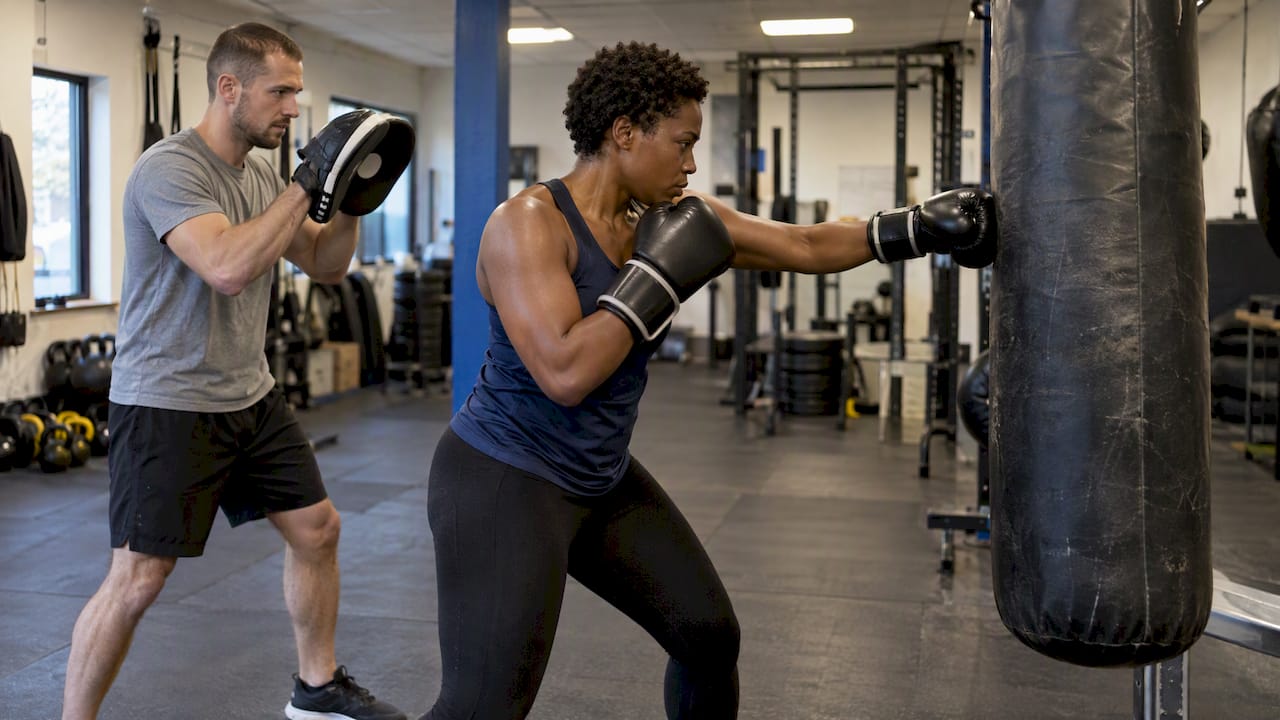
Some people find that structured, higher-intensity exercise helps them discharge tension. If that sounds like you, this overview of research on boxing for stress relief covers short sessions and what the studies suggest. Treat it as one tool inside a broader plan, and check with your doctor first if you have a heart condition, an injury or other health concerns.
Mindfulness, meditation and yoga
According to the NCCIH summary of the science on anxiety, meditation has been shown to be of small to modest benefit for anxiety-related symptoms. The NCCIH anxiety page also notes some studies showing yoga helps manage anxiety symptoms. Small to modest is honest: these practices help many people, but they are rarely enough alone for moderate or severe symptoms.
Stress-management skills
The NIMH stress fact sheet explains that learning what triggers your stress and which coping techniques work for you can reduce anxiety. It also admits this may take trial and error. That is where a counselor saves time: they help you test techniques systematically instead of guessing. For a practical list, see our post on managing anxiety naturally.
Guided self-help and digital CBT
This is the most underrated “natural” option. The WHO describes psychological self-help interventions as a proven, scalable way to expand access to care, especially for depression and anxiety. These are structured programs built around habit change, sleep, and learning to challenge unhelpful thoughts, not loose collections of tips.
In its 2023 guideline update, the WHO added a module on anxiety disorders and recommended psychological interventions, with CBT-based approaches among them, delivered in person, in groups or digitally. Online formats are legitimate clinical options, not a lesser version.
Supplements and herbs: what to know before you buy
This is where the top search results focus, and where caution matters most. Lemon balm, chamomile, magnesium, ashwagandha and others are widely marketed. The evidence is thin or mixed for most, and “natural” does not mean “free of effects.” Every active substance changes your biology.
| Option | What the evidence says | Main caution |
|---|---|---|
| St. John’s wort | Studied for mild-to-moderate depression, with inconsistent findings | Limits the effectiveness of many prescription medicines, and combined with certain antidepressants can cause a potentially life-threatening rise in serotonin |
| Kava | Studied for anxiety | Linked to liver toxicity with long-term use |
| Omega-3 supplements | Uncertain whether useful for depression; some small effects as an add-on | Discuss dose with your doctor, especially if you take blood thinners |
| SAMe, inositol | No evidence supporting use for depression, per the NCCIH | Cost and side effects without proven benefit |
The NCCIH notes that the FDA has not approved any natural product for treating depression. It also points out that supplements in the US are held to less strict standards than prescription or over-the-counter drugs, so the label may not tell you the whole story about what is in the bottle.
Three rules if you still want to try one
- Tell your prescriber and pharmacist first. Interactions are the biggest hidden risk, particularly with antidepressants, birth control, blood thinners and other long-term medicines.
- Never stop a prescribed medication on your own. Changes to antidepressants or anti-anxiety medicines should be planned with the prescriber.
- Change one thing at a time. If you start a supplement, a new workout routine and a new sleep schedule in one week, you will not know what helped or what caused side effects.
The risk of going it alone
The biggest pitfall is using natural remedies instead of care, not alongside it. Depression and anxiety are medical conditions. NIMH describes treatment as typically involving psychotherapy, medication or both, with brain stimulation as an option when those do not reduce symptoms enough. Months of trial and error with supplements can delay a diagnosis and let symptoms deepen. They can also mask something else: a thyroid problem, sleep apnea, trauma, substance use or grief, for example.
See a doctor or licensed mental health professional soon if:
- low mood or worry lasts most days for two weeks or more;
- sleep, appetite, work or relationships are clearly affected;
- you have panic attacks, or you are using alcohol or other substances to cope;
- your symptoms are getting worse despite lifestyle changes.
If you are having thoughts of suicide or self-harm, do not wait for an appointment. Call or text 988, the Suicide and Crisis Lifeline, or call 911 in an emergency.
How therapy and natural approaches work together
The NIMH find help page recommends starting with a professional evaluation, because anxiety and depression need a personalized plan. That plan may combine therapy, lifestyle changes and, for some people, medication under clinical supervision.
The WHO’s self-care guidance describes self-help working best inside a stepped-care model: a clinician monitors progress and adjusts the plan if symptoms are not improving. In practice, that might look like this:
| Stage | What it looks like |
|---|---|
| Mild symptoms | Sleep, activity and meal routines, guided self-help, a screening appointment |
| Moderate symptoms | Weekly psychotherapy such as CBT, plus lifestyle habits you track together |
| Severe or persistent symptoms | Therapy plus a medical evaluation for medication or other treatments |
Psychotherapy itself is well defined. NIMH explains that talk therapy helps a person identify and change troubling emotions, thoughts and behaviors, and that most of it takes place one-on-one with a licensed mental health professional.
For a wider view of treatment options, our clinical guide to the best treatment for anxiety and depression walks through them. If you are comparing providers, counseling near me for depression and anxiety explains what to look for.
Our perspective
We hear a version of the same story often. Someone has spent months on supplements, apps and willpower, and arrives exhausted, not because they failed, but because nobody told them what to try first or how to tell if it was working.
Our view is simple. Natural strategies deserve to be taken seriously, which means treating them like clinical interventions. Sleep, movement and regular meals get a dose, a schedule and a way to measure results. Stress skills get practiced, not just read about. Thinking patterns get examined, not just distracted from.
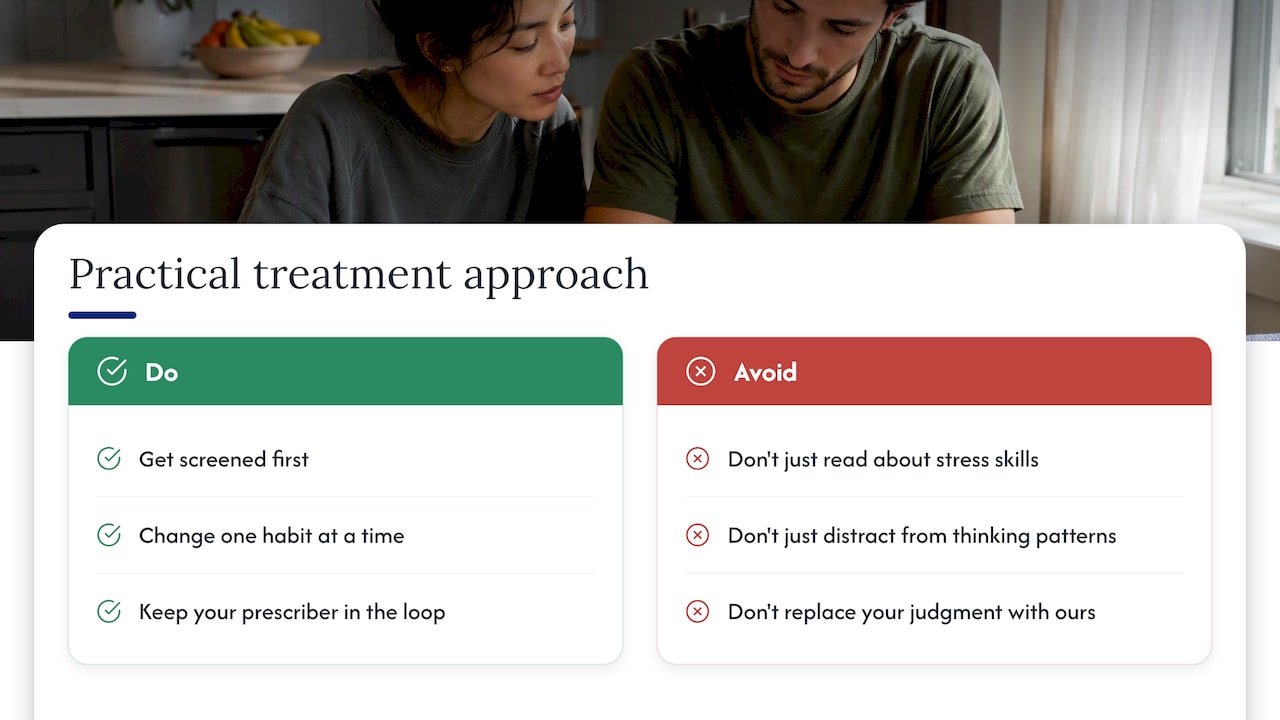
We also see anxiety and depression rarely stay in one place. They show up as irritability, shutdowns, arguments with a partner, a short fuse with the kids. That is why we work across individual, couples and family counseling, with doctoral-level clinical expertise behind the practical tools. The goal is to help you find out what improves your daily functioning, not to replace your judgment with ours.
If you want one piece of advice: get screened first, change one habit at a time, and keep your prescriber in the loop on anything you swallow.
— Carlos
Getting started with us
If you would like a licensed professional to help you build and monitor a plan, our clinical services include counseling for women, counseling for men, teen counseling and couples counseling, with online therapy available. If anger or irritability is a big part of how anxiety or depression shows up for you, our anger management classes are a structured place to practice new skills. You can also read about why assessment matters before your first appointment.
Frequently asked questions
Can anxiety and depression be treated naturally without medication?
Some people with milder symptoms improve with lifestyle changes, stress-management skills and psychotherapy, without medication. Whether that is enough for you is something a licensed clinician should assess. Do not stop or reduce any prescribed medication without your prescriber’s guidance.
What is the best natural supplement for anxiety?
No supplement has strong enough evidence to be called the best. The NCCIH describes the research on herbal and dietary products as limited or mixed, and kava has been linked to liver toxicity. Talk to your doctor or pharmacist before trying any product, especially if you take other medicines.
How long do lifestyle changes take to help?
It varies from person to person, and no honest source can promise a timeline. Tracking sleep, activity and mood for a few weeks gives you real information. If you see no improvement or things get worse, book an appointment rather than adding more products.
Is online therapy as good as in-person therapy?
The WHO lists digitally delivered psychological interventions as valid options for anxiety and depression, alongside group and in-person formats. The best format is the one you will actually attend consistently, with a clinician who is licensed in your state.
Sources
- Depression, NIMH
- Find help for mental illnesses, NIMH
- I’m So Stressed Out! Fact Sheet, NIMH
- Psychotherapies, NIMH
- Anxiety and Complementary Health Approaches, NCCIH
- Anxiety and Complementary Health Approaches: What the Science Says, NCCIH
- Depression and Complementary Health Approaches: What the Science Says, NCCIH
- 8 Things To Know About Depression and Complementary Health Approaches, NCCIH
- St. John’s Wort and Depression: In Depth, NCCIH
- Psychological self-help interventions, WHO
- WHO issues new and updated recommendations on treatment of mental, neurological and substance use conditions, WHO
- Self-care interventions for health, WHO
- Physical activity fact sheet, WHO