
Anger Management Programs for Youth: How to Choose One

The best anger management programs for youth teach concrete skills (spotting early body cues, calming down, solving problems, speaking up without attacking), practice them with feedback and homework, and bring parents into the work. Cognitive behavioral therapy (CBT) has the strongest research behind it. Format matters less than fit: your child’s age, how severe the anger is, and whether your child is willing to take part.
This guide shows what the research supports, how individual, group, online and residential options differ, and which warning signs mean a class is not enough.
TL;DR
- Look for a program built on CBT: a CrimeSolutions review of the research reports medium effects on aggression, anger and self-control.
- Choose programs that practice skills (role-play, feedback, homework) and include caregivers, not lectures alone.
- A teen’s readiness to change often predicts results as much as the curriculum does, so involve your teen in the choice.
- Sudden mood shifts, deep withdrawal or any mention of self-harm call for a licensed mental health professional right away, not a class.
- Parents’ own reactions are part of the intervention. Plan to change your side of the conflict too.
Table of Contents
- What actually works in youth anger management
- Readiness matters as much as the curriculum
- Compare the main program formats
- Why parents have to be part of the program
- How to evaluate a program before you pay
- When a class is not enough
- Build the daily habits that make skills stick
- Our perspective
- Getting help with us
- FAQ
- Sources
What actually works in youth anger management
Anger is a normal emotion. The problem is what happens next: yelling, throwing things, shutting down, fighting, or stewing for days. A good program does not try to remove anger. It builds a skill set around it.
CBT is the best-supported approach
CBT helps a person notice the thoughts and beliefs that feed problem behavior and change them. The CrimeSolutions practice profile from the National Institute of Justice summarizes meta-analytic evidence (as of 2019) with effect sizes in the range of about 0.63 to 0.72 for anger, aggression and self-control. In plain terms, that is a medium effect: young people in CBT programs did noticeably better than comparison groups, though not every child improved equally.
An earlier meta-analysis of CBT for anger in children and adolescents pooled 21 published and 19 unpublished reports, which is a good sign that the finding is not a fluke of a few studies.
The skills a good curriculum covers
UNICEF’s Helping Adolescents Thrive facilitators guide draws on a meta-analysis finding that skill-building in emotional regulation, problem-solving, interpersonal skills, mindfulness and assertiveness supports adolescent mental health. Translated into what you should see on a program outline:
- Body awareness. Recognizing the racing heart, tight jaw or hot face before the blow-up.
- Emotion naming. Finding the feeling under the anger: embarrassment, fear, rejection, exhaustion.
- Calming strategies. Breathing, timeouts the teen chooses, physical release.
- Thinking traps. Catching “she did that on purpose” or “everyone is against me” and testing it.
- Assertive communication. Saying “I’m not okay with that” without threats or silence.
- Problem-solving. Planning what to do next time, not just what to avoid.
If a program is mostly a lecture on “consequences of anger,” or a single trick like counting to ten, it is thin.
Multimodal beats single-technique
Programs that combine behavioral rehearsal, relaxation and cognitive restructuring generally outperform those that lean on one method, and research on adolescent anger treatment has pointed to elements such as modeling, feedback and homework as helpful ingredients. Practically, ask: will my child practice these skills in the session, get coaching on how it went, and take something home to try?
Cognitive bias training is an add-on, not a replacement
Some programs train teens to notice how they read hostile intent into neutral events. A systematic review of cognitive bias modification for anger and aggression examined these methods. They can be a useful addition, but such approaches have tended to show smaller effects than full CBT, so be wary of any program that sells them as the whole answer.
Readiness matters as much as the curriculum
Parents often hunt for the single best class. A mixed-methods study comparing a CBT group with a personal development group looked at both efficacy and what adolescents themselves preferred. The practical lesson is that how a teen experiences the program, including group dynamics and willingness to change, shapes the outcome.
What this means at home:
- Ask before you enroll. A teen who was ordered into a class will often sit through it and change nothing. Offer two or three options and let your teen pick.
- Frame it as skills, not punishment. A UNICEF Innocenti brief on adolescent programming to prevent violence notes growing evidence that prevention programming works for adolescents and their caregivers. Teens who see a program as a life skill rather than a penalty are easier to engage.
- Name the goal in your teen’s words. “Fewer fights with your brother” or “keeping your spot on the team” motivates more than “stop being angry.”
Compare the main program formats
| Format | Best for | Watch for |
|---|---|---|
| Individual counseling | Anger tied to anxiety, trauma, depression, ADHD, or family conflict; teens who shut down in groups | Needs a licensed therapist; schedule and cost vary |
| Group program | Teens who benefit from peers practicing skills together; milder to moderate anger | Group fit and size; make sure there is real practice, not only talk |
| Online program or teletherapy | Rural families, busy schedules, teens comfortable on screens | Needs a private space and a parent available nearby; check who supervises |
| Family counseling | Conflict loops between parent and teen, divorce or blended-family stress | Everyone must show up and be willing to change |
| School or community life-skills program | Prevention and early help | Usually less intensive; not enough for serious aggression |
| Residential or wilderness programs | Safety concerns or failed outpatient care | Highest cost and disruption; ask about aftercare and licensing |
Most families do not need the top of this table. A few outpatient sessions combined with parent coaching resolve many cases. Residential care is for situations where safety is at stake and outpatient help has not worked.
Why parents have to be part of the program
A teen can learn to calm down in a room with a therapist and then walk back into a house where every disagreement becomes a shouting match. UNICEF’s guidance on parenting programs for violence prevention points to caregiver support as a way to reduce violence against children and improve family communication, and the WHO’s Early Adolescent Skills for Emotions (EASE) program pairs seven group sessions for young people with three for their caregivers. EASE targets stress, anxiety and low mood in 10 to 15 year olds rather than anger specifically, but it shows how seriously global health bodies take the caregiver component.
Here is what that looks like at home:
- Stay calm first, talk second. A teen in a rage cannot reason. Wait until everyone is regulated, then talk.
- Use consistent, non-violent consequences. Logical consequences you can actually follow through on work better than threats.
- Notice the good moments. Say what you saw: “You walked away and came back to talk. That was hard.”
- Model what you want. Kids copy how adults handle frustration.
We write more on this in our guides to managing teen anger step by step, teen anger management with parent support and anger management techniques for parents.
How to evaluate a program before you pay
Use these questions on the phone or on the program’s website.
- Who runs it? A licensed counselor, psychologist or social worker, or a trained facilitator under clinical supervision?
- What is the method? You want to hear CBT, skills practice, emotion regulation. Vague answers such as “we build character” are a warning.
- Is there practice and homework? Skills improve with rehearsal and feedback.
- Are parents involved? Look for caregiver sessions, updates or coaching.
- How do they handle a crisis or a teen who needs more? A good provider has a referral path.
- What does completion mean? If a court, school or probation officer requires a certificate, confirm the program is accepted before you enroll. Requirements vary by state and court.
- Does the age band fit? A program built for 8 year olds will lose a 16 year old in five minutes.
Price alone is a poor guide. A cheap online certificate may satisfy a requirement but teach little, while a few sessions of individual therapy can be money well spent when the anger is a symptom of something else.
When a class is not enough
Anger management classes address anger. They do not treat depression, trauma, substance use or suicidal thoughts. Contact a licensed mental health professional promptly if your child shows:
- Sudden, extreme changes in mood or personality
- Persistent withdrawal from friends, family or activities
- Any mention of self-harm or not wanting to be alive
- Violence that injures others or threatens safety
- Anger that appears alongside heavy substance use
The UNICEF facilitators guide cited above describes these as red flags that call for a licensed professional. If your child may be in immediate danger, call or text 988 or chat at 988lifeline.org. The 988 Suicide & Crisis Lifeline is free, confidential and available 24/7. For a medical emergency or immediate physical danger, call 911.
Build the daily habits that make skills stick
A program gives a teen the tools. Daily life decides whether they get used. Anger flares more easily when a teen is exhausted, overloaded or behind on schoolwork. Helping your teen plan homework, sleep and downtime reduces the number of pressure points. This practical guide to time management for teens, written for Quebec parents, covers planning habits that carry over to families anywhere.
On the emotional side, our guides on emotional regulation skills for teens, anger management activities for teens and conflict resolution for adolescents give you exercises to try between sessions.
Our perspective
We see the same pattern again and again. A family arrives convinced the teen is “the problem,” and the first real progress comes when the whole system gets a little calmer: the teen learns a skill, a parent changes one reaction, and the loop of escalation loosens.
Our approach is built on evidence-based frameworks and blends clinical rigor with tools a family can use that same evening. We pay attention to who is in the room. Teens, women, men and Black and African American families do not all experience anger, stress or help-seeking in the same way, and a program that ignores that will miss people.
Three things we tell parents:
- Start with the skill, not the label. “Angry kid” is not a diagnosis. Find out what the anger is protecting, whether that is shame, fear or exhaustion.
- Do not outsource it entirely. A weekly session helps, but the other 167 hours matter more.
- Ask for more help early. If something does not feel like ordinary teenage storminess, trust that instinct and talk to a professional.
— Carlos
Getting help with us
We offer counseling for teen boys and girls, family counseling, and anger management counseling, including online sessions, through our clinical services. These services do not have a published price, so contact us for current fees and availability. Our family counseling practice is based in Charlotte, NC, and we also serve clients in South Carolina and Florida, with online options for families elsewhere.
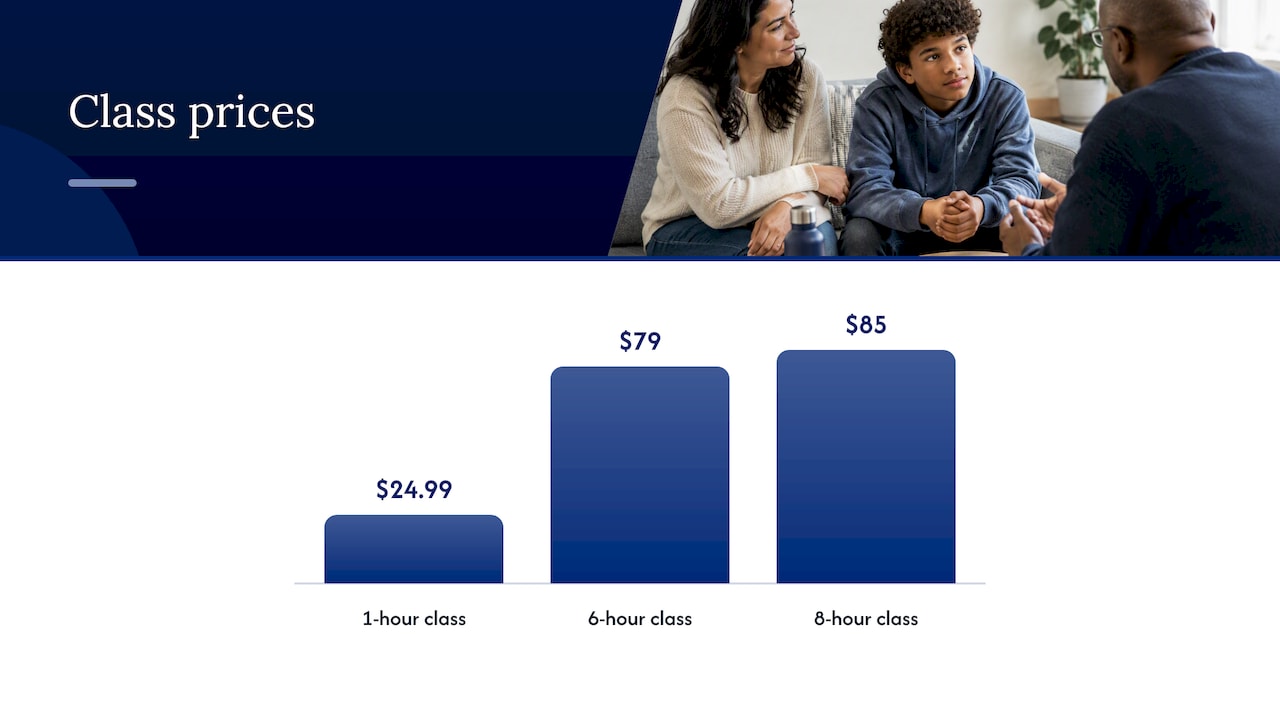
If you are also looking at your own reactions, we publish anger management classes with listed prices: $24.99 for the 1 hour class, $79 for the 6 hour class and $85 for the 8 hour class. Ask us whether a given class suits your child’s age before you enroll. For a quick overview of our approach, see our evidence-based anger management strategies.
FAQ
At what age can a child start an anger management program?
Children can start as soon as they can name feelings and follow simple strategies, often around age 6 to 8 with play-based, parent-involved work. Younger children rely heavily on the caregiver, so expect parent coaching to be the core of the program. Teens can use more traditional CBT and group formats.
Are online anger management programs good for teens?
They can be, especially for families with limited local options or busy schedules. Look for live interaction with a qualified clinician, practice and feedback, and a parent available nearby. A passive video series with a certificate at the end teaches less than a live program.
How long does it take to see results?
There is no universal timeline. Some teens show change within weeks of regular practice, while anger linked to trauma or depression takes longer. Short courses teach the basics, but the skills need repeated use at home and school to stick. If nothing improves after several weeks, tell the provider and consider a different approach.
Will my teen’s anger management class count for school or court requirements?
Not automatically. Schools, courts and probation officers each set their own rules about accepted hours and providers. Ask the requiring agency for written criteria before you enroll.
Sources
- CrimeSolutions: CBT for anger-related problems in children and adolescents
- Meta-analysis of CBT for anger in children and adolescents (ScienceDirect)
- UNICEF Helping Adolescents Thrive facilitators guide
- Cognitive bias modification for anger and aggression (PMC)
- Anger management groups for adolescents: a mixed-methods study (PubMed)
- UNICEF Innocenti: adolescent programming to prevent violence
- UNICEF: designing parenting programmes for violence prevention
- WHO: Early Adolescent Skills for Emotions (EASE)
- 988 Suicide & Crisis Lifeline