
Anger Management Techniques for Parents: Building Family Resilience

Every American parent in North Carolina and South Carolina knows that raising resilient children is not always simple, especially when tempers flare at home. More than sixty percent of American families struggle with emotional outbursts that affect both kids and parents. These moments matter because small patterns can shape future family harmony or tension for years to come. If you want smarter, effective ways to respond to anger while building emotional strength for your minority family, you are in the right place.
Table of Contents
- What Is Parental Anger Management?
- Common Triggers And Misconceptions
- Evidence-Based Techniques For Parents
- Emotional Regulation In Family Dynamics
- Avoiding Common Pitfalls And Mistakes
Key Takeaways
| Point | Details |
|---|---|
| Parental Anger Management is Essential | Parents must develop emotional regulation skills to positively influence their children’s psychological development. |
| Recognizing Triggers is Key | Identifying personal emotional triggers helps in managing responses to challenging child behaviors effectively. |
| Evidence-Based Techniques can Transform Interactions | Techniques like cognitive restructuring and mindful communication foster healthier family dynamics and emotional literacy. |
| Avoiding Common Pitfalls is Crucial | Consistent and supportive disciplinary strategies can prevent emotional dysregulation and strengthen family relationships. |
What Is Parental Anger Management?
Parental anger management is a strategic approach to understanding and regulating emotional responses when confronting challenging child behaviors. At its core, this process involves developing self-awareness and emotional control techniques that help parents respond constructively rather than react impulsively. Emotional regulation strategies are critical in preventing negative outcomes in children’s academic and social development.
Understanding parental anger management requires recognizing that parents’ emotional responses significantly impact their children’s psychological development. Emotional dysregulation can create cycles of negative interaction where children learn maladaptive emotional coping mechanisms. Research indicates that poor parental anger regulation can lead to increased child temper loss and weaker self-regulation skills, highlighting the profound importance of parents developing healthy emotional management techniques.
Typically, parental anger management involves several key strategies. These include recognizing personal emotional triggers, practicing mindfulness techniques, developing communication skills, and learning de-escalation methods. Parents learn to pause before responding, understand the underlying emotions driving their anger, and model healthy emotional expression for their children. Professional interventions like counseling and emotional literacy training can provide structured support in developing these crucial skills.
Pro Tip: Practice a 30-second pause technique when feeling overwhelmed: take three deep breaths, mentally step back from the situation, and consciously choose your response instead of reacting automatically.
Common Triggers and Misconceptions
Parental anger can stem from a complex array of emotional and environmental factors that parents often misunderstand. Common triggers include challenging child behaviors, personal stress levels, and unresolved early-life experiences that unconsciously influence emotional responses. Many parents mistakenly believe that expressing anger forcefully is an effective disciplinary technique, when in reality, such approaches can significantly damage child emotional development and family relationships.
Contrary to popular belief, anger itself is not inherently negative. Research suggests that regulated and constructive expressions of anger can actually be part of healthy emotional communication between parents and children. The key distinction lies in how parents manage and express their emotional responses. Developmental challenges, perceived child misbehavior, and personal stress frequently contribute to emotional escalation, making it crucial for parents to develop nuanced emotional regulation skills.
Some persistent misconceptions about parental anger include the idea that suppressing emotions is preferable to expressing them, or that children should never see their parents experiencing anger. In reality, modeling healthy emotional processing involves demonstrating appropriate ways to acknowledge, understand, and constructively manage intense feelings. Parents who can articulate their emotions without aggression teach their children valuable emotional intelligence skills that will serve them throughout their lives.
Pro Tip: Create a personal “anger temperature scale” where you rate your emotional intensity from 1-10, helping you recognize and interrupt escalating emotional states before they become unmanageable.
Here’s a comparison of common parental anger triggers and recommended approaches to address them:
| Trigger Type | Typical Example | Harmful Response | Constructive Approach |
|---|---|---|---|
| Challenging child behavior | Defiance or tantrums | Shouting or punitive action | Pause, validate feeling, set boundaries |
| Personal stress overload | Work fatigue impacting parenting | Impulsive reactions | Self-care, stress management first |
| Unresolved past experiences | Emotional wounds from own childhood | Projecting anger on children | Seek support, reflect, reframe beliefs |
Evidence-Based Techniques for Parents
Parent management training and cognitive-behavioral therapy represent foundational evidence-based approaches for addressing parental anger and improving family dynamics. These scientifically validated techniques focus on equipping parents with practical skills to manage emotional responses, understand underlying behavioral patterns, and create more positive interactions with their children. By learning structured methods of emotional regulation, parents can transform potentially volatile situations into opportunities for growth and connection.
The core components of evidence-based anger management techniques typically involve several key strategies. Cognitive restructuring helps parents recognize and reframe negative thought patterns that escalate anger, while positive reinforcement techniques encourage constructive behaviors in both parents and children. Learning problem-solving skills allows parents to approach challenging situations more methodically, reducing impulsive emotional reactions. These approaches emphasize understanding the root causes of anger rather than simply suppressing or expressing it destructively.
Implementing these techniques requires consistent practice and self-awareness. Parents learn to develop emotional intelligence by identifying personal triggers, practicing mindful breathing techniques, and creating structured communication strategies. Cognitive-behavioral interventions provide systematic approaches to breaking negative emotional cycles, teaching parents how to respond rather than react to stressful parenting moments. The goal is not to eliminate anger, but to transform it into a constructive tool for understanding and guiding child behavior.
Pro Tip: Create a “pause and reflect” journal where you document emotional triggers, your initial reactions, and how you could respond more effectively in future similar situations.
This table summarizes evidence-based anger management techniques and their impact on family relations:
| Technique | Key Method | Positive Impact on Family |
|---|---|---|
| Cognitive restructuring | Reframe negative thoughts | Reduces escalation, encourages empathy |
| Positive reinforcement | Reward desirable behavior | Builds trust, strengthens connection |
| Mindful communication | Use “I” statements | Improves understanding, lowers tension |
| Problem solving | Step-by-step strategy | Enhances teamwork, models calm solutions |
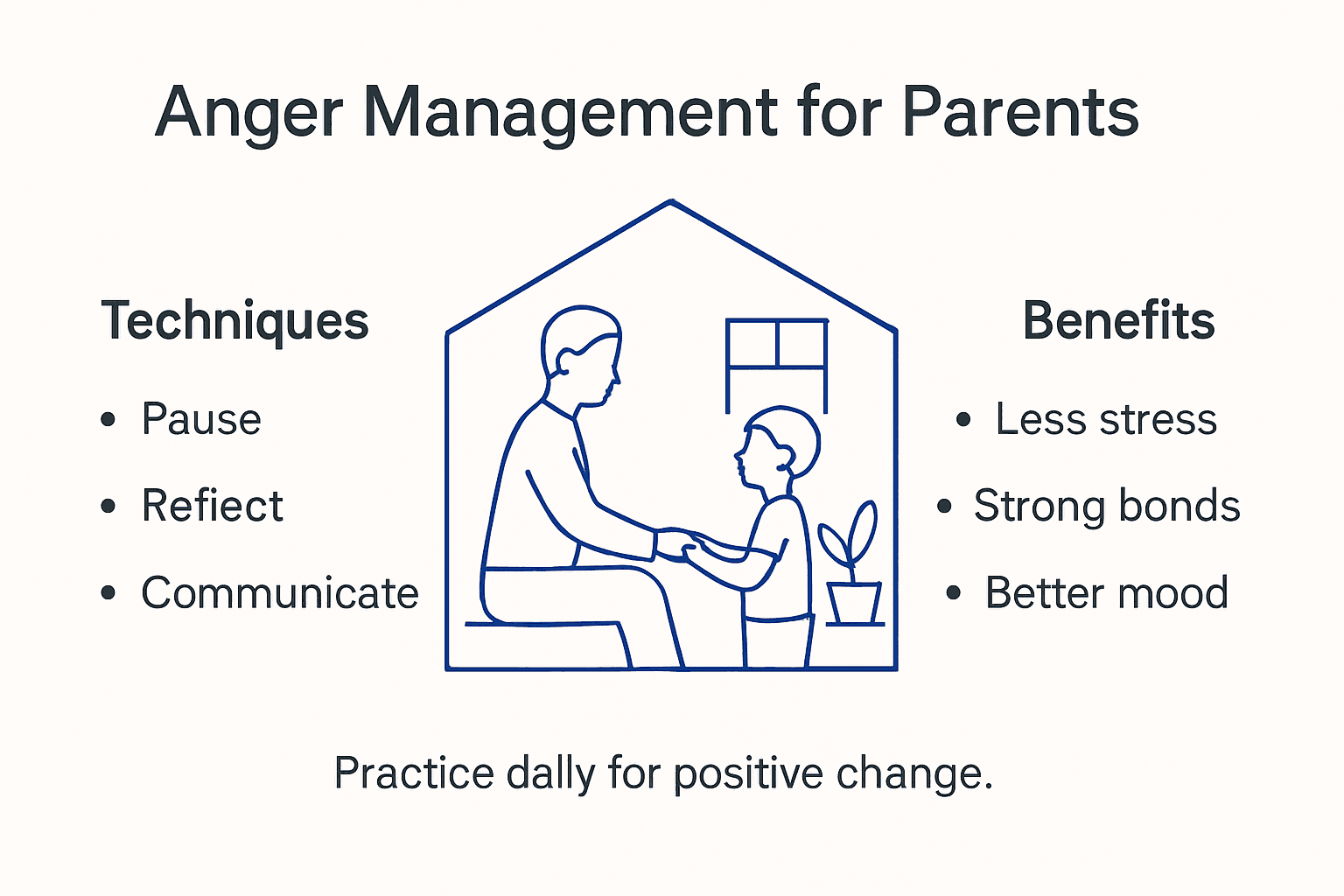
Emotional Regulation in Family Dynamics
Emotional regulation represents a critical bidirectional process that fundamentally shapes parent-child relationships and overall family mental health. This complex psychological mechanism involves parents’ ability to recognize, understand, and manage emotional responses in ways that create supportive and stable family environments. Unlike traditional disciplinary approaches, emotional regulation focuses on building connection, understanding, and mutual emotional intelligence within the family unit.
Research demonstrates that parents’ emotional management directly influences their children’s behavioral and psychological development. Emotional modeling becomes a powerful mechanism through which children learn to understand, express, and regulate their own emotions. Family dynamics are profoundly affected by parents’ capacity to maintain empathy, recognize emotional triggers, and respond mindfully during challenging interactions. When parents successfully navigate their emotional landscapes, they create resilient family systems that can withstand significant external and internal stressors.

Practical emotional regulation strategies involve developing self-awareness, practicing mindful communication, and creating intentional emotional responses. This might include techniques like deep breathing when feeling overwhelmed, using “I” statements to express feelings without blame, and creating family rituals that promote emotional sharing and understanding. The ultimate goal is transforming potential conflict moments into opportunities for growth, learning, and deeper connection, where emotions are viewed as informative signals rather than threats to be suppressed or attacked.
Pro Tip: Develop a family “emotion check-in” routine where each member shares their current emotional state without judgment, helping everyone practice emotional literacy and mutual understanding.
Avoiding Common Pitfalls and Mistakes
Parental anger management requires recognizing and avoiding critical mistakes that can undermine family relationships and child emotional development. Many parents unconsciously repeat destructive patterns learned from their own childhood experiences, perpetuating cycles of emotional dysregulation. Understanding these common pitfalls is the first step toward creating a more supportive and emotionally healthy family environment.
One of the most significant errors parents make is adopting inconsistent or harsh disciplinary approaches. Punitive responses can create long-term emotional damage, increasing child aggression and reducing trust within the family system. Neglecting personal stress management is another critical mistake that directly impairs parents’ ability to respond effectively to challenging behaviors. When parents are emotionally overwhelmed, they are more likely to react impulsively, creating negative interaction patterns that can persist across generations.
Successful anger management requires a proactive approach to identifying and interrupting destructive behavioral patterns. This involves developing self-awareness, practicing emotional regulation techniques, and creating consistent, supportive communication strategies. Parents must learn to distinguish between setting appropriate boundaries and using punishment as a primary mode of interaction. Recognizing personal emotional triggers, seeking professional support when needed, and maintaining a compassionate approach to both self and children are crucial steps in breaking potentially harmful family dynamics.
Pro Tip: Create a personal “emotional trigger map” that identifies specific situations, thoughts, and physical sensations that lead to anger, allowing you to develop targeted intervention strategies before losing emotional control.
Take Control of Your Parental Anger and Build Stronger Family Bonds
Managing difficult emotions like anger when parenting can feel overwhelming. This article highlights how recognizing triggers, practicing emotional regulation, and adopting evidence-based anger management techniques empower parents to respond with calm and empathy rather than frustration or impulsive reactions. If you are struggling to break cycles of anger or want to create healthier family dynamics through mindful communication and emotional awareness, professional support can make a powerful difference.

Discover personalized strategies and proven clinical interventions by visiting Mastering Conflict. Whether you need targeted anger management classes, family counseling, or coaching to develop emotional resilience, our expert team led by Dr. Carlos Todd is here to guide you. Don’t wait until stress and negative patterns deepen. Act now to transform your family relationships and model the emotional intelligence your children need for lifelong success. Start your journey today at Mastering Conflict.
Frequently Asked Questions
What are some effective anger management techniques for parents?
Effective anger management techniques for parents include recognizing personal emotional triggers, practicing mindfulness techniques, employing problem-solving skills, and using cognitive restructuring to reframe negative thoughts. Techniques that promote emotional regulation such as deep breathing, pausing before reacting, and structured communication strategies can also be highly beneficial.
How can emotional regulation impact my child’s development?
Emotional regulation plays a crucial role in shaping a child’s behavioral and psychological development. Parents who manage their emotions effectively create a supportive environment in which children learn to understand, express, and regulate their own feelings, leading to healthier emotional and social outcomes.
What should I do when I feel overwhelmed as a parent?
When feeling overwhelmed, parents can practice a 30-second pause technique by taking deep breaths and mentally stepping back from the situation before choosing their response. This slowing down helps in preventing impulsive reactions and allows for more constructive interactions with children.
How can I avoid common pitfalls in managing parental anger?
To avoid common pitfalls such as inconsistent discipline or responding harshly, parents should focus on developing self-awareness of their emotional triggers, practicing emotional regulation techniques, and establishing clear, supportive communication strategies with their children.