
Healthy Ways to Deal with Anger: Evidence-Based Strategies

The healthiest ways to deal with anger are to lower your bodily arousal, reframe the thoughts that fuel it, express your needs assertively, and either solve the problem or step away from it. The American Psychological Association identifies three core approaches: expressing anger assertively (the healthiest route), suppressing and redirecting it, and calming your internal arousal. All four action tracks below draw from that framework.
Your four-track roadmap:
- Calm your body — Take several slow diaphragmatic breaths the moment you feel your chest tighten. Do this soon after noticing anger rising.
- Reframe the thought — Replace “This is completely unfair” with “This is frustrating, but I can handle it.” Do this early before the story in your head escalates.
- Express assertively — Use an “I” statement: “I feel [emotion] when [situation] because [impact].” Do this within 5–10 minutes, once your arousal has dropped enough to speak clearly.
- Solve or step away — Either name one concrete next step toward fixing the problem, or call a timeout and return to it later. Practice this daily until it becomes your default.
Key Takeaways
Lowering physiological arousal before attempting to express or resolve anger is the single most reliable first step, supported by research across more than 150 studies.
| Point | Details |
|---|---|
| Lower arousal first | Breathe or use progressive muscle relaxation before speaking; venting raises arousal and reinforces aggression. |
| Reframe the thought | Catch automatic hostile interpretations early using a 1–10 anger meter and swap them for accurate alternatives. |
| Use “I” statements | Structure expression as “I feel [emotion] when [behavior] because [impact]” to communicate without escalating. |
| Build lifestyle habits | Sleep, low-arousal exercise, and reduced alcohol use lower baseline reactivity over days to weeks. |
| Masteringconflict support | Dr. Carlos Todd’s clinical services and structured courses offer personalized, evidence-based anger management for adults. |
Table of Contents
- What are the healthiest ways to deal with anger right now?
- How do you change the thoughts that fuel anger?
- How to express anger without making things worse
- Behavioral and lifestyle changes that lower your baseline anger
- What do structured anger management programs actually look like?
- The clinical model that ties it all together
- When should you get professional help for anger?
- The 3 R’s of anger management: a one-minute algorithm
- What actually works versus what sounds good in theory
- Masteringconflict offers structured support for lasting change
- Sources
What are the healthiest ways to deal with anger right now?
The first 10 minutes after anger spikes are the highest-leverage window you have. Your heart rate climbs, your thinking narrows, and your body is primed to fight or flee. The goal in this window is not to express anything yet. It is to bring your physiology back down.
Diaphragmatic breathing (4-7-8 pattern):
- Sit or stand with your feet flat on the floor.
- Inhale slowly through your nose for a count of 4.
- Hold for a count of 7.
- Exhale completely through your mouth for a count of 8.
- Repeat several cycles. The whole sequence takes a few minutes.
Progressive muscle relaxation (abbreviated version):
- Starting at your feet, tense each muscle group firmly for 5 seconds.
- Release completely and notice the contrast for 10 seconds.
- Move upward: calves, thighs, abdomen, hands, shoulders, face.
- The full sequence runs 10–15 minutes; even a 5-minute version covering shoulders and hands is useful mid-conflict.
A large review of over 150 studies found that arousal-decreasing activities like deep breathing, mindfulness, and slow-flow yoga reduce anger more reliably than arousal-increasing activities such as jogging or hitting a punching bag. Venting by screaming or intense exercise can actually reinforce aggressive responses by keeping physiological arousal elevated. That finding runs counter to decades of pop-psychology advice, and it matters.
Pro Tip: Set a phone alarm labeled “Breathe” and pair it with a physical anchor — pressing your thumb and forefinger together. After two weeks of pairing the anchor with your breathing routine, the physical cue alone can begin to trigger a calming response, even in high-stress moments when you can’t reach your phone.
For a deeper library of calming exercises you can use immediately, the Masteringconflict resource center has step-by-step scripts organized by situation.
How do you change the thoughts that fuel anger?
Anger rarely starts with an event. It starts with an interpretation. Cognitive restructuring, the core technique in cognitive behavioral therapy (CBT), targets that interpretation before it locks in.
The process works in three steps: catch the automatic thought, test it against the facts, and replace it with a more accurate one. Here is what that looks like in practice:
- Catastrophizing: “This always happens to me” → “This happened today. It’s annoying, not a pattern I can’t change.”
- Personalizing: “They did that on purpose to disrespect me” → “I don’t know their intent. I can ask instead of assume.”
- Demanding: “They should know better” → “I’d prefer they acted differently. I can say so directly.”
- Magnifying: “This ruined everything” → “This is one setback. What’s the one thing I can do next?”
A simple anger meter helps you catch escalation early. Rate your anger on a 1–10 scale the moment you notice it. At a 4 or below, cognitive reframing works well. At a 7 or above, your prefrontal cortex is too flooded for reasoning to stick — return to the breathing techniques first, then reframe once you’re back below a 5.
Keep a brief trigger checklist on your phone: situation, automatic thought, body sensation, and behavior urge. Reviewing it after an anger episode, not during, builds pattern recognition over time. Most people discover their triggers cluster around two or three recurring themes: feeling dismissed, losing control of a situation, or perceived injustice. Knowing your cluster lets you prepare a reframe in advance.
How to express anger without making things worse
Assertive expression is not the same as venting, and the difference is structural. Venting dumps emotion without direction. Assertive expression names the emotion, ties it to a specific behavior, and points toward a need. The Mayo Clinic’s clinician-endorsed framework recommends “I” statements as the foundation of non-escalating communication.

The “I” statement structure: “I feel [emotion] when [specific behavior] because [impact on me]. I need [specific request].”
Three ready-to-use scripts:
- At work: “I feel frustrated when my input isn’t acknowledged in meetings because it makes it hard to contribute. I’d like us to agree on a way to make space for everyone’s ideas.”
- In a relationship: “I feel hurt when plans change at the last minute because I’ve already arranged my schedule around them. I need more notice when things shift.”
- With a family member: “I feel overwhelmed when the house is left in disarray because it affects my ability to decompress after work. Can we agree on a shared standard?”
What to avoid when you’re angry:
- Sarcasm (“Oh sure, that’s a great idea”) — it signals contempt and shuts down problem-solving.
- Absolute language (“You always,” “You never”) — it puts the other person on the defensive immediately.
- Threats or ultimatums in the heat of the moment — they escalate rather than resolve.
- Bringing up unrelated past grievances — it widens the conflict beyond what’s solvable right now.
After stating your “I” statement, move to a short problem-solving sequence: name the specific issue, generate two or three possible solutions together, agree on one to try, and set a time to check in on how it’s working. This sequence keeps the conversation forward-facing rather than stuck in blame.
Pro Tip: Practice your scripts in low-stakes settings first — a mild frustration with a friend, a small work annoyance. Clinicians often assign this as homework because the neural pathway for assertive expression needs repetition before it fires automatically under pressure. Rehearsing in calm moments means the script is accessible when you actually need it.
For a full guide to assertive communication in conflict, including exercises and practice scenarios, Masteringconflict has a dedicated resource.
Behavioral and lifestyle changes that lower your baseline anger
Anger is not just a response to individual events. It is also a function of how depleted or regulated your nervous system is on any given day. Lower the baseline, and the same trigger produces a smaller spike.
The evidence-informed levers:
- Sleep: Chronic sleep deprivation raises emotional reactivity. Prioritizing 7–9 hours is one of the fastest ways to reduce day-to-day irritability.
- Low-arousal physical activity: Walking, swimming, tai chi, and yoga lower baseline arousal without spiking it the way high-intensity exercise can. Schedule regular sessions of low-arousal physical activity most days of the week.
- Alcohol and substance use: Both lower inhibition and raise reactivity. Reducing use, particularly in the evenings, removes a significant escalation risk.
- Social support: Regular, low-conflict social contact acts as a buffer. Isolation tends to amplify rumination, which feeds anger.
- Scheduled downtime: Building 15–20 minutes of unstructured, screen-free time into each day gives your nervous system a recovery window.
The Mayo Clinic notes that simple behavioral changes — regular sleep, low-arousal physical activity, and reduced substance use — create a lower baseline of arousal that reduces reactivity when triggering events occur.
| Strategy | Typical time to effect | Accessibility | Best used when |
|---|---|---|---|
| Diaphragmatic breathing | Minutes | Free, immediate | Anger is already spiking |
| Regular low-arousal exercise | 1–2 weeks | Low cost | Building daily resilience |
| Sleep improvement | 3–7 days | Free | Irritability is chronic |
| Reducing alcohol use | Days to weeks | Free | Escalation linked to drinking |
| Scheduled downtime | Immediate to 1 week | Free | Rumination is a pattern |

What do structured anger management programs actually look like?
Self-guided techniques work well for many people. But structured programs produce more durable change, particularly for those whose anger is affecting relationships, work, or safety.
The SAMHSA Anger Management Manual recommends a combined CBT approach that integrates relaxation training, cognitive restructuring, and communication-skills work, and reports clinically significant anger reduction from these programs. The combination matters because it supplies a personalized toolbox rather than a single fix.
What typical formats look like:
- 8–10 week CBT-informed group programs: Weekly 60–90 minute sessions covering one skill domain per week. Homework between sessions is standard and accounts for much of the progress.
- Individual therapy: More flexible pacing, deeper work on underlying triggers (trauma, attachment patterns), and faster adjustment when one technique isn’t landing.
- Single-session workshops: Useful for psychoeducation and skill introduction, but not sufficient for lasting change on their own.
- Self-guided apps and online courses: Best as supplements to structured work or for mild-to-moderate anger patterns. Look for programs grounded in CBT or dialectical behavior therapy (DBT).
Measurable change typically shows up in frequency of outbursts, quality of relationships, and self-reported anger intensity. For many people, therapist-led CBT-based work produces progress within roughly 8–10 weeks when they practice between sessions.
When evaluating a program or clinician, ask: What approach do you use? How long are sessions? What does between-session practice look like? Is there a structured curriculum or is it open-ended? A clinician who can answer those questions clearly is a good sign. For evidence-based exercises organized by clinical outcome, the Masteringconflict blog breaks down what the research actually supports.
The clinical model that ties it all together
Three legs support lasting anger management: immediate calming, assertive interpersonal expression, and preventive cognitive and lifestyle work. No single leg holds the structure alone.
Mapping techniques to expected effects:
| Technique | Short-term effect | Long-term effect |
|---|---|---|
| Diaphragmatic breathing / PMR | Lowers arousal within minutes | Builds a reliable calming reflex over weeks |
| Cognitive restructuring | Interrupts escalation in the moment | Reduces frequency of hostile appraisals over time |
| “I” statements / assertiveness | Reduces conflict escalation in the conversation | Improves relationship quality and trust |
| Low-arousal exercise / sleep | Modest immediate mood lift | Lowers baseline reactivity over weeks |
| CBT-based group program | Skill acquisition begins in session 1 | Clinically significant reduction in anger frequency |
The APA, SAMHSA, Mayo Clinic, and Ohio State’s research all converge on the same point: combining arousal reduction with cognitive reframing and communication skills outperforms any single-technique approach. The NCBI literature on CBT for anger supports this multi-modal framing, as does research on emotion regulation interventions more broadly.
This article provides general educational information about anger management strategies. It is not a substitute for professional mental health assessment or treatment. If your anger involves safety concerns, contact a licensed clinician or call 988 (Suicide and Crisis Lifeline) for immediate support.
When should you get professional help for anger?
Self-help strategies are genuinely effective for many people. They are not enough when anger has crossed into territory that threatens safety, relationships, or legal standing.
Red flags that signal it’s time to seek professional support:
- Repeated physical aggression or threats toward others
- Anger that has led to legal problems (assault charges, restraining orders, DUI)
- Relationships ending or seriously damaged because of your anger
- Using alcohol or substances to manage anger, or anger escalating when you use them
- Children or partners expressing fear of your reactions
- Anger accompanied by thoughts of harming yourself or others
Step-by-step next actions:
- Assess safety first. If there is an immediate threat to anyone’s safety, call 911. If you are having thoughts of self-harm, call or text 988.
- Contact a licensed clinician. Search the SAMHSA treatment locator or ask your primary care provider for a referral to a licensed mental health counselor or psychologist.
- At intake, be specific. Tell the intake coordinator: “I’m looking for help with anger management. I’d like someone who uses CBT or a structured approach.” Specificity gets you matched faster.
- Ask about group options. Court-mandated or voluntary anger management groups are often more affordable than individual therapy and provide peer accountability.
Evidence-based therapy often shows measurable progress within 8–10 weeks for many people. Starting sooner means less damage to repair.
The 3 R’s of anger management: a one-minute algorithm
When you need a fast, memorable framework you can run through in real time, the 3 R’s work well: Recognize, Reduce, Resolve.
- Recognize — Name what’s happening. “I’m angry. My anger is at a 7. My jaw is clenched and I want to say something I’ll regret.” Naming the emotion activates the prefrontal cortex and slightly reduces amygdala activation.
- Reduce — Lower the arousal before you act. Take 4–6 slow breaths, call a timeout, or physically move to a different space for 20 minutes. The goal is to get below a 5 on your anger meter.
- Resolve — Once calmer, address the situation. Use an “I” statement, propose a solution, or decide the issue isn’t worth pursuing. Not every trigger requires a response.
Quick checklist (run through in under 60 seconds):
- Can I name the emotion? (Recognize)
- Is my body still activated? If yes, breathe first. (Reduce)
- What’s the one thing I actually need here? (Resolve)
The 3 R’s in action — a traffic scenario: Someone cuts you off on the highway. Your heart rate spikes and you feel the urge to honk and tailgate. Recognize: “I’m angry. This feels like disrespect.” Reduce: Three slow exhales. You notice your grip on the wheel loosen. Resolve: “That driver probably didn’t see me. I’m going to increase my following distance and move on.” Total time: about 45 seconds. The incident doesn’t follow you into your next meeting.
For workplace-specific applications of this framework, the Masteringconflict guide on managing anger at work walks through the same steps with office-specific scenarios.
What actually works versus what sounds good in theory
The most common mistake I see is people treating anger like a pressure cooker that needs a release valve. That model feels intuitive. It is also largely wrong. Screaming into a pillow, going for an intense run specifically to “burn off” anger, or venting at length to a friend who validates your outrage — these approaches keep your arousal elevated. They rehearse the anger rather than resolve it.
What actually moves the needle, consistently, is the opposite: slowing down, lowering the body’s temperature, and then addressing the situation with words rather than heat. The breathing techniques in this article are not soft or passive. They are physiologically targeted interventions that interrupt the escalation cycle at its root.
The second mistake is waiting until anger is at a 9 before using any of these tools. Cognitive reframing at a 9 is nearly impossible. Assertive communication at a 9 usually turns into something you’ll apologize for later. The skill is catching it at a 4 or 5, when the tools still work. That requires building a habit of checking in with your anger meter throughout the day, not just when you’re already in crisis.
The homework I give most often: pick one low-stakes frustration this week and practice the full sequence — breathe, reframe, express with an “I” statement. Do it once. Notice what happens. That single repetition builds more capacity than reading ten articles.
Masteringconflict offers structured support for lasting change
Knowing the techniques is one thing. Applying them under pressure, consistently, is another. Masteringconflict, founded by Dr. Carlos Todd, a licensed clinical mental health counselor and psychologist, offers structured anger management classes, individual clinical services, and coaching programs designed specifically for adults who want more than a list of tips.
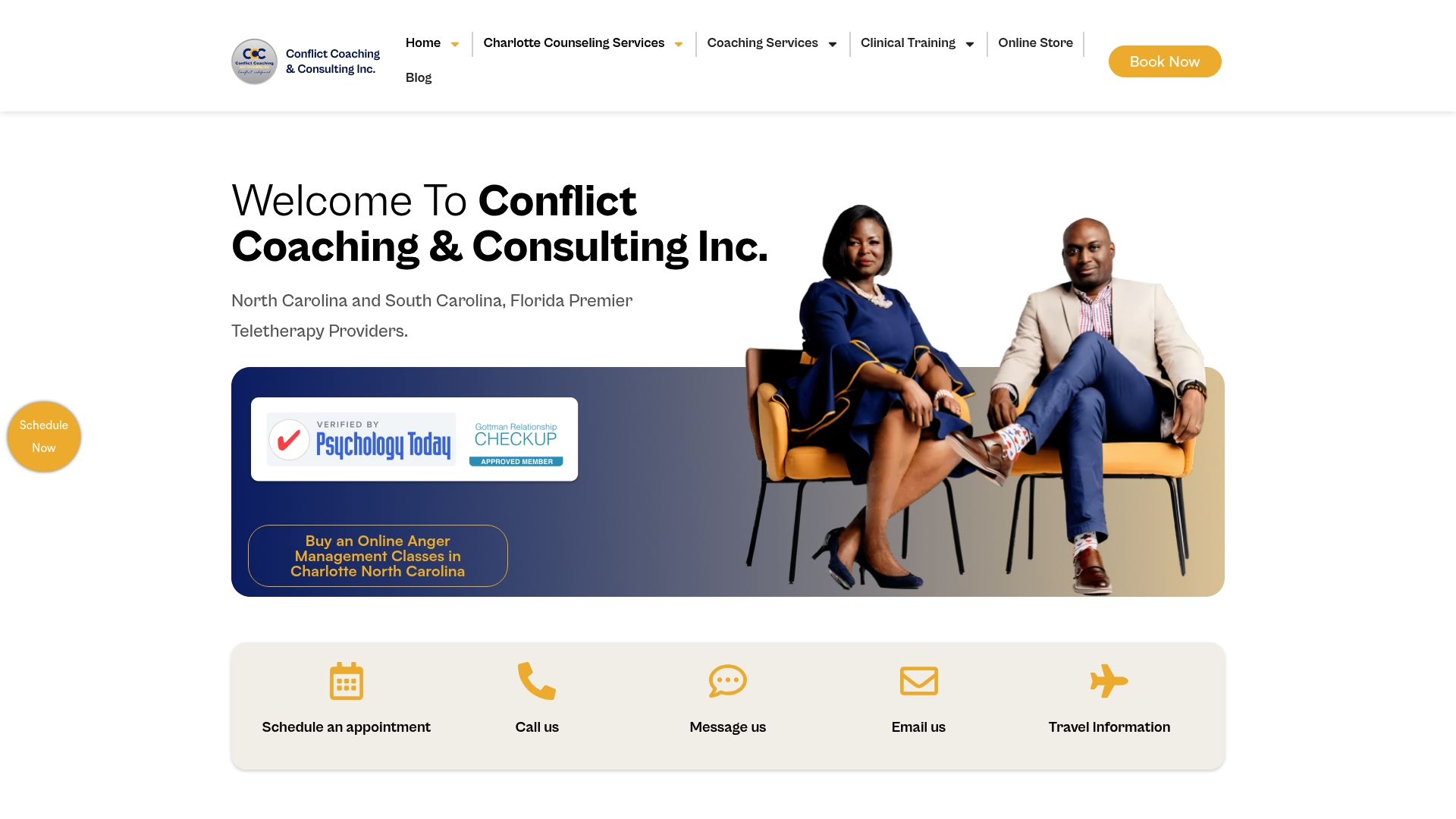
The difference from self-guided resources is accountability and personalization. Dr. Todd’s clinical services include one-on-one therapy, anger management assessments, and specialized programs for men, women, teens, and couples. For those deciding between coaching and formal therapy, the coaching vs. therapy comparison on the site clarifies which path fits your situation. Online options extend access beyond North and South Carolina and Florida to clients across the country.
If you’re ready to move from knowing to doing, browse the full catalog of anger management courses and workshops or book a clinical intake through Masteringconflict’s clinical services page to get matched with the right level of support.
Sources
- Control anger before it controls you
- Breathe, don’t vent: Turning down the heat is key to managing anger
- Anger Management Manual
- Anger management: 10 tips to tame your temper – Mayo Clinic
Recommended
- Evidence-Based Anger Management: Proven Strategies for Change – Mastering Conflict
- Anger Reduction Techniques: Building Healthier Relationships – Mastering Conflict
- Best Ways to Manage Anger: Proven Tips for 2025 – Mastering Conflict
- Mindfulness for Anger: 7 Evidence-Based Practices That Work – Mastering Conflict