
Simple Mindfulness Exercises: 8 Quick Practices for Everyday Stress

The simplest mindfulness exercises to start with are mindful breathing, a mini body scan, mindful walking, mindful eating, mindful listening, the 5-4-3-2-1 grounding technique, and a short three-minute breathing space. Each one takes less than five minutes, needs no equipment, and works by training your attention and calming your body’s stress response. Pick one and try it right now for sixty seconds before you read further.
TL;DR:
- When anxiety or anger spikes, use the five four three two one sensory sequence for immediate grounding; choose breathing or a body scan when you have more time.
- Box breathing uses four count intervals for inhaling, holding, exhaling, and pausing; keep the counts comfortable because overbreathing can cause lightheadedness.
- Start with one minute daily in week one, build to five minutes by weeks two or three, and increase further only if sustainable.
- A review of 44 meta analyses found small to moderate stress and anxiety benefits versus doing nothing, but results were more mixed against active interventions.
- If breath focused practices or body scans increase distress, especially with trauma or panic histories, pause and consult a licensed mental health professional.
Table of Contents
- A quick checklist of simple mindfulness exercises to try now
- Breathing exercises you can use the moment stress hits
- A short body scan to release tension in minutes
- Mindful movement: turning a short walk into a reset
- Mindful eating and listening: anchors you already have time for
- Grounding techniques for moments of acute stress
- How often to practice: building a habit that actually sticks
- What the evidence says about brief mindfulness practice
- Building a consistent practice with guided, clinician-led support
- FAQ
- Sources
A quick checklist of simple mindfulness exercises to try now
Mindfulness does not require a cushion, an app subscription, or thirty minutes of silence. Most of the exercises below take one to five minutes and can slot into a coffee break, a commute, or the five minutes before a hard conversation. Here is a practical rundown you can start using today.
- Raisin exercise (single-object awareness): Hold a small piece of food, a raisin, a berry, even a sip of coffee, and spend one full minute noticing its texture, smell, and taste before swallowing.
- Mindful breathing: Sit or stand comfortably, feel the breath move in and out of your body for one minute, and gently return attention whenever your mind drifts.
- Mini body scan: Starting at your head, spend ten seconds noticing each area of your body down to your feet, releasing tension as you go.
- Mindful walking: Walk at a slower pace than usual for two to five minutes, paying attention to each foot touching the ground.
- Mindful eating: Choose one bite of any meal and chew it slowly, noticing flavor and texture before taking the next bite.
- Mindful listening: For two minutes, listen to a sound, music, traffic, birds, without labeling or judging it, just tracking it as it changes.
- 5-4-3-2-1 grounding: Name five things you see, four you can touch, three you hear, two you smell, and one you taste.
- Three-minute breathing space: Spend one minute noticing your thoughts, one minute focused only on breath, and one minute expanding awareness back to your whole body.
None of these require special training, and that is the point. Short, repeatable practices build the same attention and self-regulation skills as longer sessions, just in smaller doses you are more likely to actually use and can complement with wellness supports from thecary. A systematic review of 44 meta-analyses found that mindfulness-based interventions produce small-to-moderate benefits for stress and anxiety, especially compared with doing nothing at all. The exercise matters less than the consistency, so start with whichever one feels easiest to repeat daily.
If your stress tends to show up as anger or conflict with people close to you, a few of these techniques pair naturally with other anger management exercises for adults built specifically for that purpose.
Breathing exercises you can use the moment stress hits
Breath work is the fastest entry point into mindfulness because you always have your breath with you. Three techniques cover most situations: basic breath awareness for everyday calm, box breathing for acute stress, and a gentle extended-exhale pattern for winding down before sleep.
- Basic breath awareness. Sit with your back straight but not stiff, let your hands rest in your lap, and soften your gaze or close your eyes. Notice the natural rhythm of your breath without changing it, and each time your attention wanders to a thought or sound, simply notice that and return to the breath. One minute is enough to start; extend to five as it becomes familiar.
- Box breathing. Inhale for a count of four, hold for four, exhale for four, and hold again for four before repeating the cycle. This pattern works well right before a stressful meeting, a difficult phone call, or any moment you need to reset quickly.
- Gentle extended-exhale breathing. Inhale through your nose for a count of four, hold briefly, then exhale slowly for a count of six to eight. A longer exhale than inhale tends to settle the body down, which makes this a useful option before bed or after a tense exchange.
Breath counts should stay comfortable rather than strained. Breathing guidance from Mindful notes that gentle breathing exercises are safe for most people, but overbreathing or holding too long can cause lightheadedness, so keep the counts conservative, especially when you are new to the practice.
A short script to follow in the moment: breathe in through your nose for four counts, hold for four, let the breath out slowly for four, and pause for four before the next inhale. Repeat that cycle four to six times. By the fourth round, most people notice their shoulders have dropped and their thoughts have slowed down.
Pro Tip: Keep one breathing technique attached to a specific trigger, like box breathing before you open a difficult email, so you do not have to decide which exercise to use in the moment.
A short body scan to release tension in minutes
A body scan brings attention to physical sensation instead of thought, which makes it useful when your mind feels busy but your body is holding tension you have not noticed yet. You can do this seated at a desk or lying down, whichever fits the moment.
- Settle into your position, close your eyes if that feels comfortable, and take one slow breath to arrive.
- Bring attention to your head and face, noticing any tightness in your jaw, forehead, or eyes without trying to change it.
- Move attention down through your neck, shoulders, and arms, pausing for a few seconds at each area.
- Continue through your chest, stomach, and back, noticing where your breath naturally expands and contracts.
- Finish at your hips, legs, and feet, then take one full breath and open your eyes.
That sequence takes about three minutes. For a five-minute version, slow down and add a second pass, this time intentionally softening any area that still feels tight, as if you were exhaling tension out through that part of your body.
The goal is simply to notice sensation, not to fix or judge it. If you catch yourself thinking “I shouldn’t feel this tense,” just return attention to the physical sensation itself. A body scan works well before bed to unwind from the day, after work to mark the transition out of job stress, or during a short break when you have been sitting too long in one position.
Mindful movement: turning a short walk into a reset
Movement-based mindfulness suits people who find sitting still frustrating, and it needs no more space than a hallway or a parking lot. The practice is simple: slow down, and pay attention to what is actually happening in your body as you move.
For mindful walking, slow your pace to roughly half your normal speed and bring attention to the sensation of each foot lifting, moving, and landing. Sync your breath loosely with your steps, for example inhaling for three steps and exhaling for three, without forcing a rigid count. A one-minute version works for a quick reset between tasks; a five-minute version, ideally outdoors, gives your attention more time to settle and lets you notice sounds, temperature, and light along the way.
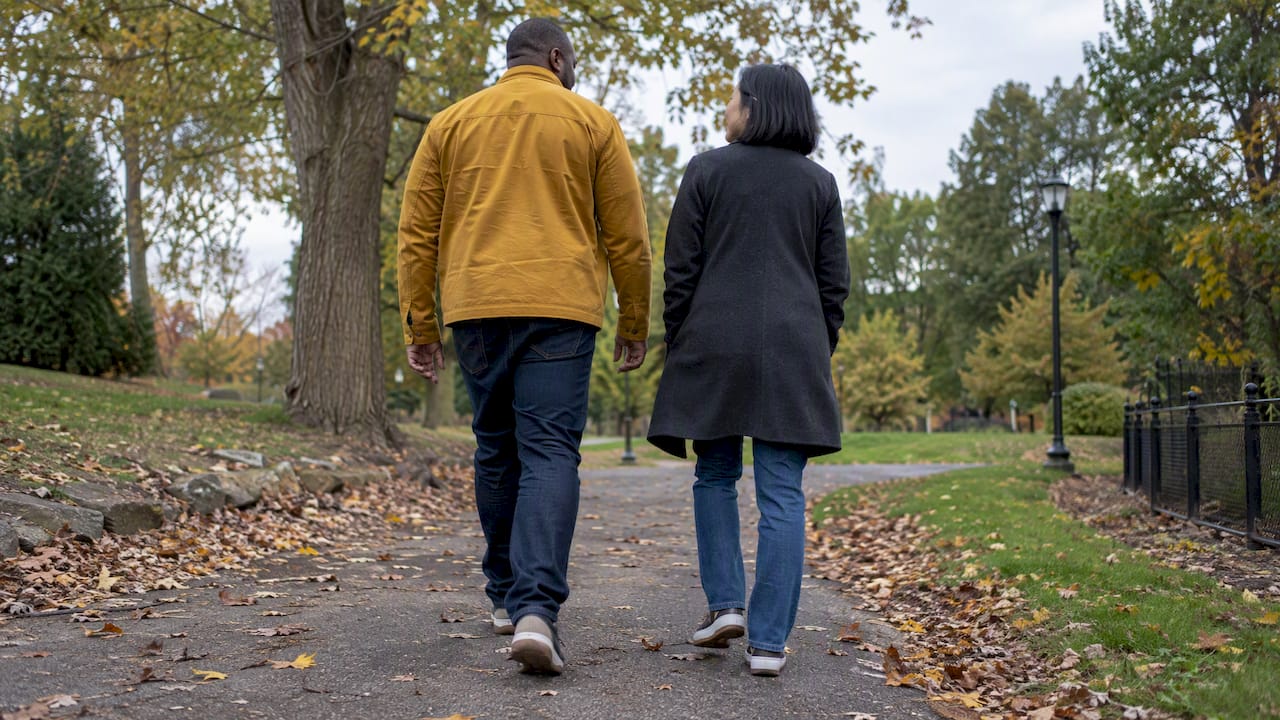
If walking is not practical, gentle stretches at a desk offer a similar anchor. Reach your arms overhead and notice the stretch through your sides, roll your shoulders slowly and notice where tension releases, or stretch your neck gently from side to side while tracking the sensation rather than rushing through the motion. The point of mindful movement is not exercise, it is using physical sensation to pull attention out of looping thoughts and back into the present moment.
Mindful eating and listening: anchors you already have time for
Informal mindfulness attaches awareness to things you already do every day, which makes it easier to sustain than a separate meditation session. Eating and listening are two of the most practical anchors because almost everyone does both daily, often on autopilot.
For mindful eating, pick one bite of any meal, even a bite of toast at breakfast, and slow down enough to notice its texture, temperature, and flavor before swallowing. You do not need to eat an entire meal this way. One intentional bite is enough to interrupt automatic, distracted eating and bring a moment of presence into a routine activity.
For mindful listening, choose two minutes during a conversation or while music or ambient sound plays, and give it full attention without planning what you will say next or judging whether you like the sound. Notice volume, tone, and how the sound shifts.
A few ways to build these into a day that is already full:
- Practice one mindful bite during your first meal after waking, before checking your phone.
- Spend the first two minutes of your commute listening to sounds around you instead of reaching for a podcast.
- Pause for one mindful breath right after your morning coffee, before opening your laptop.
- Use thirty seconds of mindful listening at the start of a phone call to arrive fully present before speaking.
Attaching a new practice to something you already do, sometimes called habit stacking, makes it far more likely to stick than trying to remember a standalone meditation session.
Grounding techniques for moments of acute stress
When anxiety or anger spikes quickly, longer breathing exercises can feel hard to access. Grounding techniques work faster because they redirect attention through the senses rather than asking you to sit still and focus inward.
The full 5-4-3-2-1 sequence, described by the Cleveland Clinic as a practical tool for interrupting overwhelming emotion, works like this:
- Name five things you can see around you, taking a few seconds on each one.
- Name four things you can physically feel, like your feet on the floor or fabric against your skin.
- Name three things you can hear, near or distant.
- Name two things you can smell, or recall two familiar smells if nothing is present.
- Name one thing you can taste, even if it is just the inside of your mouth.
For situations where speaking or counting aloud is not an option, like a meeting or a crowded room, try a private variation: sip a drink slowly and hold the taste in your attention for a few seconds, or press your thumb against an object in your pocket and focus entirely on its texture and shape.
Choose grounding when you need relief within seconds, like during an argument or before walking into a tense room. Choose a longer breathing exercise or body scan when you have a few extra minutes and want a deeper reset rather than just an interruption.
How often to practice: building a habit that actually sticks
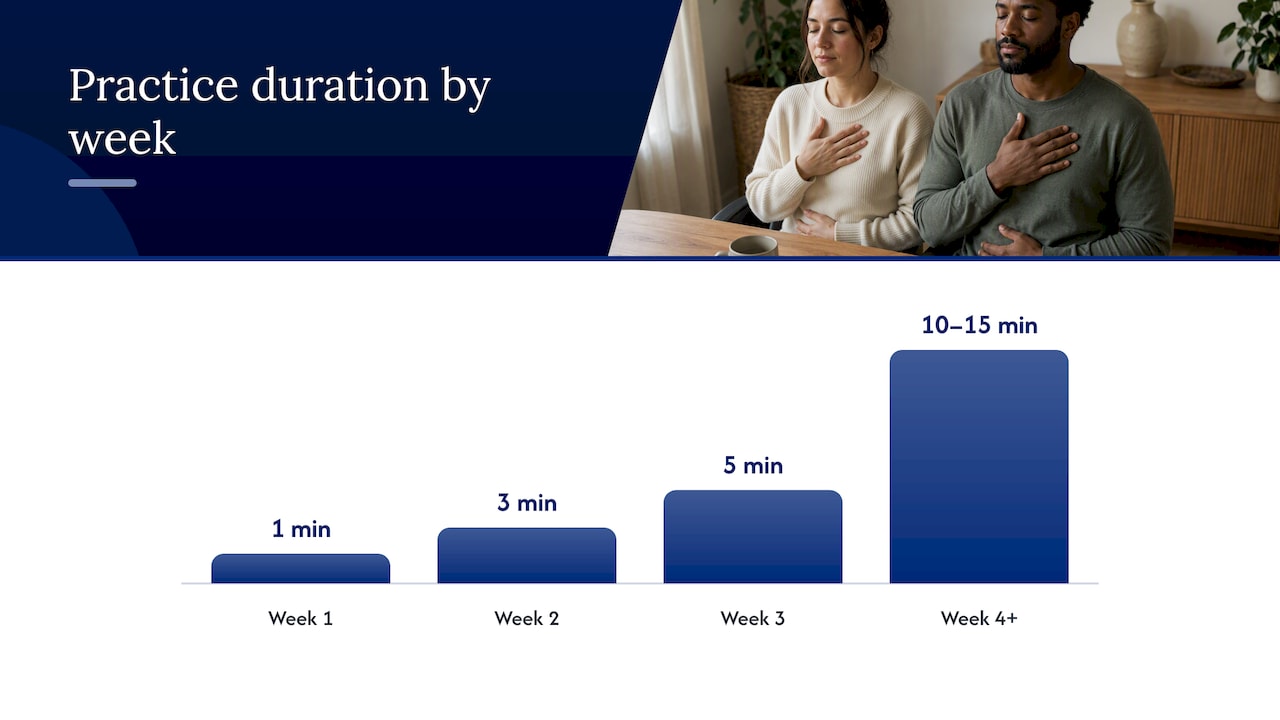
Consistency matters more than duration, especially at the start. A realistic beginner progression looks like this: one minute daily for the first week, building to five minutes by week two or three, and ten to twenty minutes by week four or beyond, only if that length still feels sustainable.
- Week 1: One minute of mindful breathing or grounding, once a day, attached to an existing habit like brushing your teeth.
- Week 2: Extend to three minutes, and add a second daily touchpoint, such as a one-minute body scan before bed.
- Week 3: Try a five-minute mindful walk or breathing space once a day, keeping the shorter practices from week one as backups on busy days.
- Week 4 and beyond: Combine a longer practice, ten to fifteen minutes, with two or three one-minute check-ins throughout the day.
Most beginners hit the same two obstacles: a wandering mind and impatience with slow progress. A wandering mind is not a sign of failure, it is the exercise itself; noticing the wandering and returning attention is the actual skill being built. Impatience usually eases once the practice is tied to a fixed daily cue rather than motivation, which fluctuates day to day.
If a practice consistently increases distress rather than easing it, particularly with body scans or breath-focused exercises for people with a history of trauma or panic, that is a signal to pause and talk with a licensed mental health professional rather than push through alone.
Pro Tip: Track practice with a simple checkmark on a calendar instead of a journal entry. The visual streak builds momentum faster than writing about how the session went.
What the evidence says about brief mindfulness practice
Brief mindfulness exercises are not just a convenient shortcut, they are supported by a meaningful body of clinical research. A review of 44 meta-analyses of randomized controlled trials found small-to-moderate benefits for stress and anxiety, with stronger effects compared to doing nothing and more mixed results compared to other active interventions. A separate systematic review of mindfulness-based stress reduction programs found that even brief, well-designed programs can reduce perceived stress and improve certain mental health outcomes, which supports starting small rather than waiting until you have thirty free minutes.
Short, repeatable mindfulness practices give people a way to build attention and emotional regulation skills in the moments they actually have, not the ideal moments they wish they had.
As a licensed clinical mental health counselor and psychologist, I see the same pattern in session after session: clients who practice briefly but daily make more progress than those who attempt long sessions sporadically. Brief mindfulness exercises are evidence-informed and safe for most people when practiced gently, which makes them a reasonable starting point whether your goal is general stress relief or steadier emotional footing during conflict.
— Carlos
Building a consistent practice with guided, clinician-led support
Self-guided exercises get you started, but many people find it easier to stay consistent with structure and feedback built in. Guided classes and teletherapy sessions add personalization, help troubleshoot practices that are not working, and provide accountability that a solo routine often lacks.
We offer several paths for readers who want that extra layer of support:
- Our online anger management classes incorporate mindfulness and breathing techniques alongside practical anger management tools, with options ranging from a 1-Hour Anger Management Class at $24.99 to a longer 8-Hour Anger Management Class at $85.
- Our in-person group programs include a 4-Hour Program and an 8-Hour Program that build mindfulness-based emotional regulation skills into a structured group setting.
- Our teletherapy sessions let you work one-on-one with a clinician on mindfulness, stress, and emotion regulation from anywhere.
- Our couples counseling services apply mindfulness-based communication tools when conflict between partners is part of what brought you here.
If you have been practicing on your own and want a clinician to help you apply these tools to a specific situation, whether that is anger, a relationship conflict, or ongoing stress, you can explore our available classes or book a teletherapy consultation to get started this week.
This article is general information, not a substitute for advice from a qualified doctor. Consult a qualified healthcare professional about your own circumstances before acting on anything here.
FAQ
What are the simplest mindfulness exercises for beginners?
The easiest starting points are mindful breathing, a short body scan, mindful walking, and the 5-4-3-2-1 grounding technique, all doable in under five minutes. Starting with one exercise and repeating it daily works better than trying several different techniques at once.
How long should a beginner practice mindfulness each day?
Most beginners do well starting with just one minute a day and gradually building toward five to ten minutes over several weeks. Research on brief mindfulness programs shows that even short, well-designed practices can meaningfully reduce perceived stress.
What is the 5-4-3-2-1 grounding technique used for?
The 5-4-3-2-1 technique uses your five senses, sight, touch, hearing, smell, and taste, to interrupt anxious or overwhelming thoughts and bring attention back to the present moment. The Cleveland Clinic describes it as a practical, low-effort tool that works well during acute stress or anxiety.
What is the difference between formal and informal mindfulness practice?
Formal practice means setting aside dedicated time for an exercise like a body scan or seated breathing session. Informal practice means bringing mindful attention to something you are already doing, like eating or walking, without adding extra time to your day.
Can mindfulness exercises help with anger management?
Mindfulness techniques like breath awareness and grounding can help you notice rising frustration earlier and create a pause before reacting, which supports better emotional regulation during conflict. For a deeper set of techniques built specifically for anger, see our guide on anger management exercises for adults.
Sources
- 5-4-3-2-1 grounding for anxiety: How to do it — Cleveland Clinic
- The empirical status of mindfulness-based interventions: A systematic review of 44 meta-analyses of randomized controlled trials