
Men’s Mental Health Issues: 4× Higher Suicide Risk in NC, SC & FL

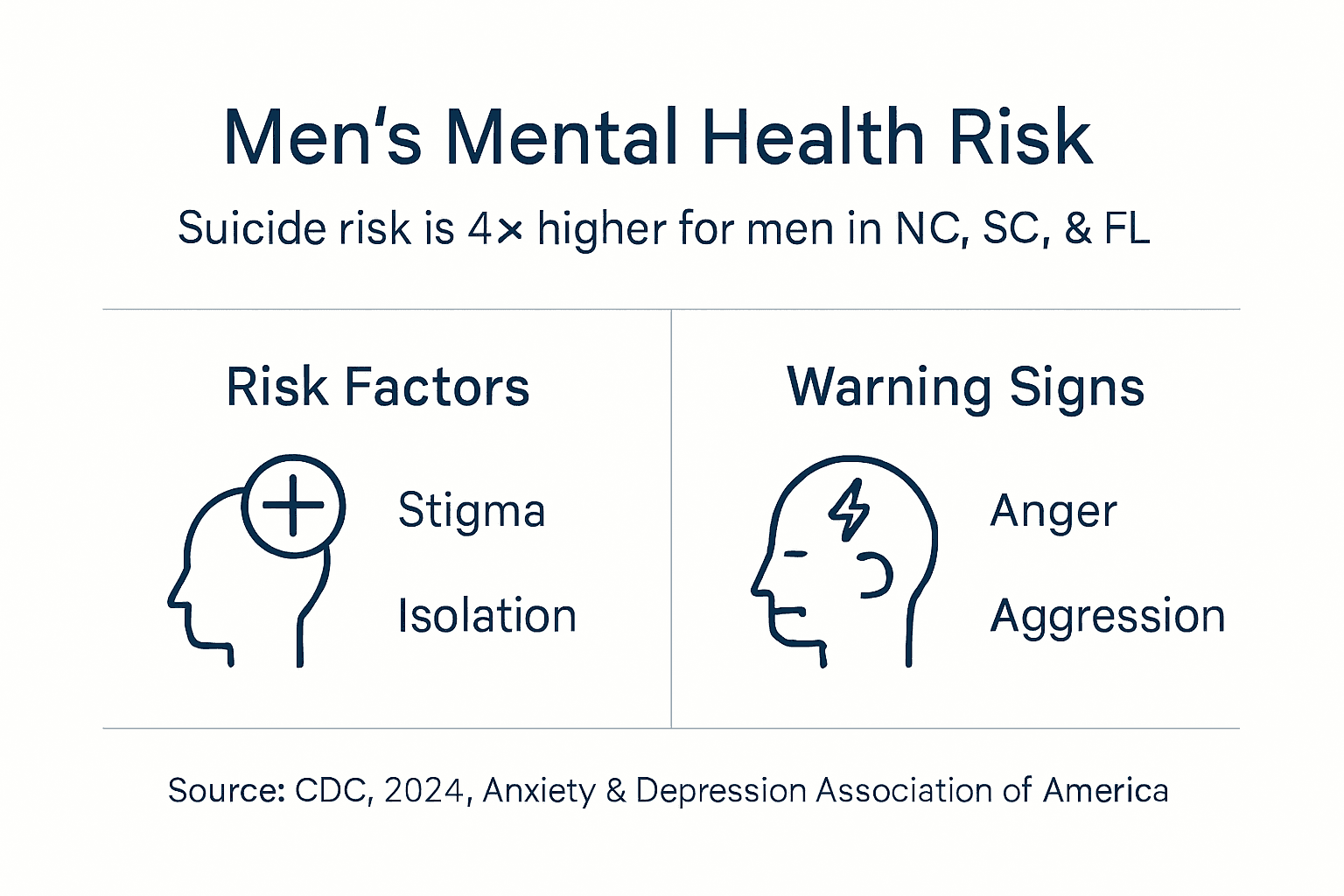
Men face a staggering reality: they are four times more likely to die by suicide than women, largely because mental distress emerges as anger and irritability instead of traditional sadness. This guide explores how men’s unique mental health symptoms manifest, the stigma preventing treatment in NC, SC, and FL, and the specialized therapies proven to reduce anger and improve conflict resolution skills for lasting change.
Table of Contents
- Defining Men’s Mental Health Issues
- Impact of Societal Norms and Stigma
- Effective Approaches to Anger Management
- Conflict Resolution Strategies for Men
- Overcoming Barriers: Stigma, Misconceptions, and Access
- Practical Steps to Engage in Men’s Mental Health Support
- Get Specialized Support for Men’s Mental Health in NC, SC & FL
- Frequently Asked Questions
Key Takeaways
| Point | Details |
|---|---|
| Unique Symptoms | Men express mental health struggles through anger, aggression, and withdrawal rather than typical depression signs. |
| Cultural Barriers | Traditional masculinity norms and stigma in Southern states prevent over half of struggling men from seeking therapy. |
| Proven Therapies | CBT-based anger management programs reduce episodes significantly within 12-16 weeks. |
| Access Solutions | Online therapy and regional NC, SC, and FL services overcome privacy concerns and accessibility barriers. |
| Actionable Steps | Recognizing non-traditional symptoms and choosing specialized programs leads to better emotional regulation and relationships. |
Defining Men’s Mental Health Issues
Men’s mental health challenges look different than what most people expect. Instead of showing sadness or tearfulness, men exhibit symptoms like irritability, aggression, and withdrawal that mask deeper struggles. This difference matters tremendously in NC, SC, and FL, where suicide rates among men remain alarmingly high due to these overlooked warning signs.
Biological and social factors drive these distinct expressions. Hormones and brain chemistry influence how men process emotions, while cultural conditioning teaches boys to suppress vulnerability from an early age. Understanding these signs of anger issues in men becomes critical for early intervention before crises develop.
Common symptoms that signal underlying mental health needs include:
- Frequent irritability or explosive outbursts over minor triggers
- Physical symptoms like headaches, digestive issues, or muscle tension
- Increased risk-taking behaviors including substance use
- Social withdrawal from friends, family, and previously enjoyed activities
- Work performance changes or unexplained absences
- Sleep disturbances and chronic fatigue
Recognizing these patterns early allows men to access appropriate help before symptoms escalate. The Anxiety and Depression Association of America provides additional resources for understanding how mental health manifests differently across genders. Stigma compounds the problem by making men feel weak for acknowledging struggles, delaying treatment when early intervention would be most effective.
Impact of Societal Norms and Stigma
Traditional masculinity norms create powerful barriers that keep men from seeking help. Society teaches men to be self-reliant, strong, and emotionally controlled, framing vulnerability as weakness. In NC, SC, and FL, these Southern cultural values often intensify pressure to “tough it out” rather than acknowledge emotional struggles.

The numbers tell a stark story: over 50% of men avoid therapy due to stigma even when experiencing severe depression or anxiety. This avoidance leads to worsening symptoms, relationship breakdowns, and tragic outcomes. Men hide their feelings to maintain masculine identity, increasing isolation that compounds men’s mental health issues significantly.
Stigma manifests in multiple ways that directly impact help-seeking:
- Fear of judgment from peers, family, or coworkers
- Belief that real men solve problems independently
- Concern about career or social consequences if struggles become known
- Misunderstanding therapy as only for severe mental illness
- Shame around experiencing emotions beyond anger
Pro Tip: Viewing therapy as an intelligent investment in your effectiveness rather than a sign of weakness reframes the decision. Athletes, executives, and military personnel use mental performance coaching routinely because emotional regulation directly impacts results.
Men’s counseling in Charlotte and throughout the region addresses these cultural barriers by creating male-friendly spaces where vulnerability becomes acceptable. Breaking through stigma requires both individual courage and broader cultural shifts recognizing emotional health as essential to overall wellbeing.
Effective Approaches to Anger Management
Evidence-based therapies specifically designed for men produce measurable results. Cognitive Behavioral Therapy (CBT) significantly reduces anger episodes and improves coping skills within 12-16 weeks when delivered consistently. This structured approach helps men identify triggers, challenge distorted thinking, and develop healthier responses.
Group programs offer unique advantages for men. Peer support normalizes struggles and breaks isolation, allowing participants to learn from others facing similar challenges. Men often respond better to group settings where shared experiences build accountability and connection without feeling singled out.
Online programs increasingly address accessibility and privacy concerns. Men who hesitate to walk into a therapist’s office find digital platforms reduce barriers while maintaining effectiveness. This flexibility particularly benefits those in rural areas of NC, SC, and FL where specialized services may be limited geographically.
Evidence-based anger management strategies teach practical skills men can apply immediately:
- Recognizing physical warning signs before anger escalates
- Using timeout strategies to prevent explosive reactions
- Challenging automatic negative thoughts driving anger
- Practicing assertive communication instead of aggressive responses
- Developing stress management techniques for daily pressures
| Therapy Component | Focus Area | Typical Duration |
|---|---|---|
| Trigger Identification | Recognizing anger patterns | 2-4 weeks |
| Cognitive Restructuring | Challenging distorted thoughts | 4-6 weeks |
| Skills Practice | Applying new responses | 6-8 weeks |
| Maintenance | Preventing relapse | Ongoing |
Pro Tip: Practicing learned skills during calm moments builds muscle memory for stressful situations. Most men see breakthrough results when they apply techniques daily rather than waiting for crisis moments.
Effective anger management tips combined with professional guidance create sustainable change. The key lies in consistent engagement rather than expecting instant transformation. Men who commit to the process report significant improvements in anger management in relationships and overall life satisfaction.
Conflict Resolution Strategies for Men
Conflict resolution therapy addresses interpersonal challenges that anger management alone may not fully solve. These approaches recognize men’s communication styles and emotional processing differences, tailoring techniques for maximum effectiveness. When integrated with anger management, conflict resolution skills produce better relationship outcomes and higher satisfaction.
Therapies focus on enhancing emotional regulation specific to male patterns. Men learn to identify emotions beyond anger, express needs assertively rather than aggressively, and listen actively without defensiveness. These skills transform how men navigate disagreements at home, work, and in social settings.
Key conflict resolution competencies include:
- Active listening that validates others’ perspectives before responding
- Using “I” statements to express feelings without blame
- Recognizing and interrupting escalation cycles early
- Finding collaborative solutions rather than winning arguments
- Repairing relationships after conflicts through genuine accountability
Men report measurable improvements after targeted training. Relationship satisfaction increases as partners feel heard and respected. Workplace conflicts decrease when men apply de-escalation techniques consistently. Conflict management in therapy provides structured frameworks men can practice systematically.
The stepwise approach makes complex skills manageable. Start by observing your typical conflict patterns without judgment. Next, identify one technique to practice in low-stakes situations. Gradually apply skills to more challenging interactions as confidence builds. Master conflict resolution skills through repetition and reflection on what works in your unique circumstances.
Integrating these strategies with anger management creates comprehensive emotional competence. Men gain tools not just to control anger but to engage constructively in difficult conversations. This combination addresses root causes rather than just managing symptoms, leading to lasting transformation in how men relate to others and themselves.
Overcoming Barriers: Stigma, Misconceptions, and Access
Three common misconceptions keep men from getting help they need. First, many view therapy as weakness when it actually demonstrates strength and self-awareness. Taking action to improve emotional regulation requires courage, not cowardice. Second, men often dismiss anger as merely a behavior problem rather than recognizing it may signal underlying mental health conditions requiring professional treatment.
Third, the “tough it out” mentality causes harm rather than building resilience. Emotional expression and seeking support actually improve mental health outcomes significantly. Research consistently shows men who engage with therapy experience better physical health, stronger relationships, and greater life satisfaction.
Online therapy directly addresses practical barriers:
- Privacy concerns dissolve when sessions occur from home
- Scheduling flexibility accommodates work demands
- Geographic limitations vanish with teletherapy access
- Stigma reduces without visiting physical offices
- Cost often decreases compared to traditional in-person care
Teletherapy options in Charlotte and throughout NC, SC, and FL make specialized care accessible regardless of location. Providers offering culturally sensitive approaches understand regional values while challenging harmful aspects of traditional masculinity.
Practical steps to overcome barriers include:
- Educate yourself about how mental health manifests in men specifically
- Connect with peers who have benefited from therapy to normalize the experience
- Research providers specializing in men’s counseling services familiar with your concerns
- Start with a single consultation to test the process without long-term commitment
- Frame therapy as performance enhancement rather than illness treatment
Understanding psychological impacts of emotional suppression motivates change. Men who address mental health early avoid escalation into crisis situations requiring more intensive intervention. The investment pays dividends across every life domain from relationships to career success.
Practical Steps to Engage in Men’s Mental Health Support
Taking action starts with honest self-assessment. Recognize when anger, irritability, or withdrawal patterns indicate something deeper requiring professional attention. Signs to identify anger issues include frequency of outbursts, impact on relationships, physical symptoms, and failed attempts to change patterns independently.
Choose therapeutic options aligned with your specific needs:
- Research providers specializing in anger management and conflict resolution for men
- Evaluate format preferences including individual therapy, group programs, or online options
- Verify credentials and experience with male-specific mental health challenges
- Consider regional providers in NC, SC, or FL who understand local cultural contexts
- Schedule initial consultations with 2-3 providers to find the right fit
Leveraging available resources maximizes success. Clinical anger management services offer structured programs with proven outcomes. Online platforms increase accessibility while maintaining evidence-based approaches. Many men benefit from combining individual therapy with group participation for comprehensive support.
Commitment to continued engagement separates temporary relief from lasting change. Attend sessions consistently, complete assigned practices between appointments, and communicate openly with your provider about progress and challenges. Most men see significant improvements within three months of dedicated effort.
Seeking supportive communities accelerates progress. Connect with other men working on similar goals through therapy groups, men’s circles, or online forums. Shared experiences normalize struggles and provide accountability. Building confidence through support systems creates momentum that individual efforts alone may struggle to generate.
The journey toward better mental health requires patience and persistence. Small consistent actions compound into major transformations over time. Start where you are, use available resources in NC, SC, and FL, and trust the process of gradual improvement through professional guidance and personal commitment.
Get Specialized Support for Men’s Mental Health in NC, SC & FL
You’ve learned how men’s mental health challenges manifest uniquely and why specialized approaches work. Now it’s time to take that crucial next step toward healthier emotional regulation and stronger relationships. Mastering Conflict offers clinical services specializing in men’s mental health throughout NC, SC, and FL, combining proven anger management techniques with conflict resolution skills tailored specifically for men.
Flexible teletherapy counseling options overcome stigma and accessibility barriers that keep men from getting help. Our clinician-supported programs incorporate evidence-based anger management strategies proven to reduce episodes and improve coping skills. Whether you’re dealing with explosive anger, relationship conflicts, or simply want better emotional control, specialized support makes the difference between struggling alone and achieving lasting change. Connect today to start your journey toward the emotional strength and relational success you deserve.
Frequently Asked Questions
What are the unique signs of mental health issues in men related to anger?
Men typically show irritability, aggression, and physical symptoms like headaches or muscle tension rather than sadness. Risk-taking behaviors, social withdrawal, and work performance changes also signal underlying struggles. These signs of anger issues often get dismissed as personality traits instead of recognized as mental health symptoms requiring attention.
How does stigma specifically affect men’s willingness to seek therapy?
Over half of men avoid therapy despite struggling because traditional masculinity norms frame emotional vulnerability as weakness. Fear of judgment, belief in self-reliance, and concern about social consequences create powerful barriers. Men in Southern states often face additional cultural pressure to handle problems independently, delaying treatment until symptoms become severe.
What should I expect from specialized anger management therapy?
CBT-based programs typically run 12-16 weeks and teach trigger identification, cognitive restructuring, and practical coping skills. You’ll learn to recognize physical warning signs, challenge distorted thoughts, and practice assertive communication. Clinical anger management combines individual and group formats for comprehensive support tailored to men’s needs.
Can online therapy be as effective for men’s anger and conflict issues?
Research shows online therapy produces comparable outcomes to in-person treatment for anger management and conflict resolution. Digital platforms actually reduce barriers by increasing privacy, eliminating travel, and accommodating busy schedules. Many men engage more openly from home environments where they feel comfortable and less exposed to stigma.
Where can men in NC, SC, and FL find tailored mental health services?
Specialized providers throughout these states offer men-focused counseling both in-person and online. Look for clinicians experienced in anger management, conflict resolution, and male-specific mental health challenges. Regional teletherapy expands access to culturally sensitive care regardless of location, making it easier to find providers who understand Southern cultural contexts while challenging harmful masculine norms.