
Men’s Mental Health Issues – Key Risks and Solutions

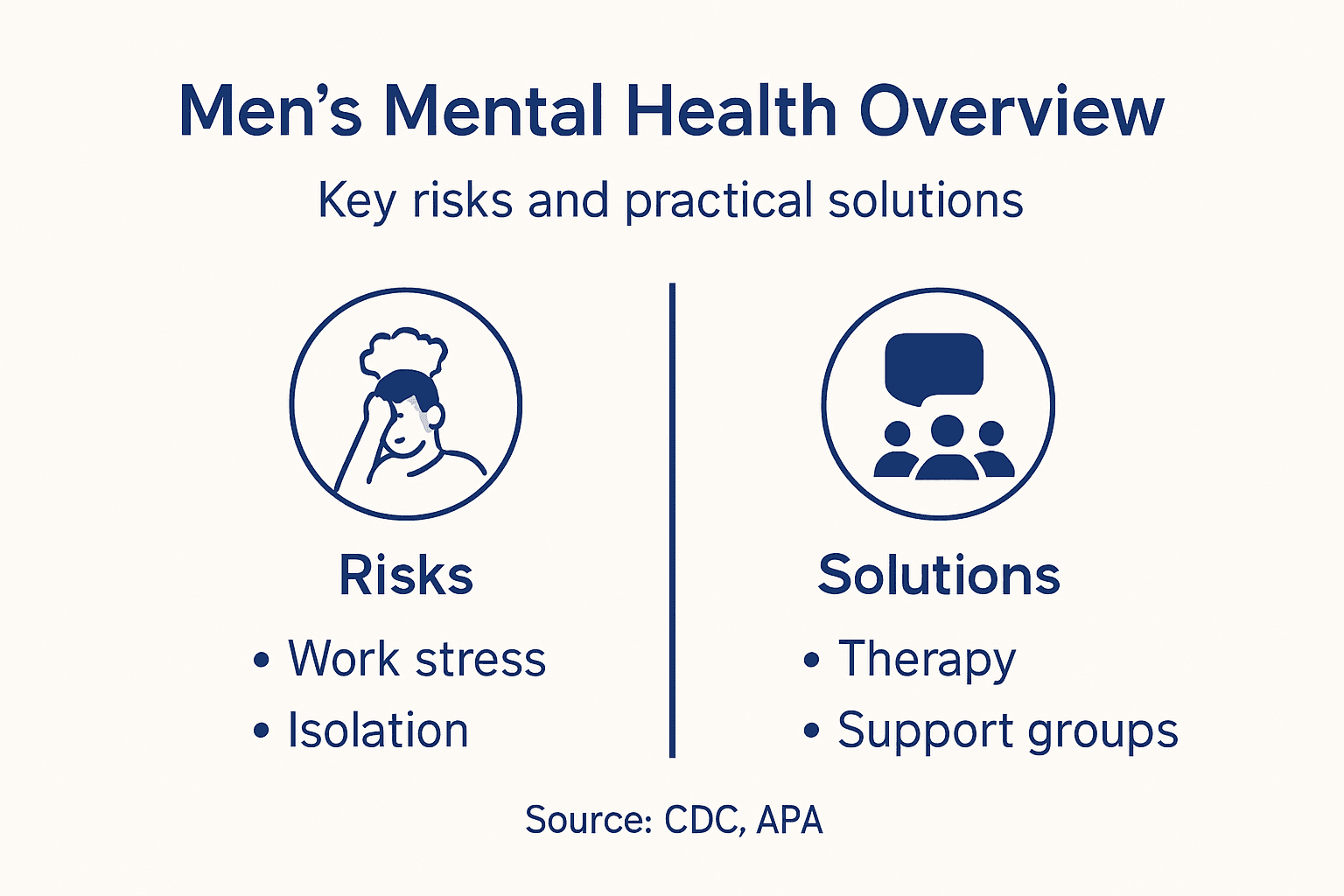
Feeling overwhelmed by anger or anxiety is more common for men than most people think. The weight of work stress, family expectations, and the pressure to always stay strong can build up fast—especially in North Carolina or South Carolina where access to the right mental health support may feel limited. Men tend to express mental health struggles through irritability, aggression, or withdrawal, which are often misunderstood. Understanding these unique signs can make all the difference in finding the specialized online therapy that gives real relief.
Table of Contents
- Defining Men’s Mental Health Issues
- Types and Symptoms Unique to Men
- Major Risk Factors and Societal Pressures
- Effective Approaches to Diagnosis and Treatment
- Stigma, Barriers, and Online Therapy Solutions
Key Takeaways
| Point | Details |
|---|---|
| Understanding Men’s Mental Health | Men’s mental health encompasses a range of issues; differing from women, men often express symptoms like irritability and anger rather than sadness. Recognizing these distinct expressions is crucial for effective support. |
| Impact of Societal Norms | Societal pressures regarding masculinity create barriers for men to seek help, often leading to isolation and untreated mental health issues. Changing these narratives is essential for improving men’s mental health outcomes. |
| Need for Tailored Approaches | Effective treatment for men requires tailored methods that acknowledge how they experience and express mental health issues. Approaches like cognitive-behavioral therapy and anger management can lead to significant improvements. |
| Online Therapy as a Solution | Online therapy offers greater accessibility and privacy, enabling men to seek help without the stigma associated with traditional therapy settings. This flexible option is particularly beneficial for those hesitant to seek in-person support. |
Defining Men’s Mental Health Issues
Men’s mental health is more complex than most people realize. It’s not just about depression or anxiety, though those certainly matter. Men face a distinct set of mental health challenges shaped by biological factors, social pressures, work stress, and family dynamics. The traditional image of a stoic man who “toughs it out” has left many men struggling in silence, avoiding treatment that could transform their lives. Understanding what men’s mental health actually encompasses is the first step toward getting real help.
Men experience mental health conditions differently than women do. Research shows that men display higher rates of conditions like ADHD, substance misuse, and suicide completion. The symptoms often look different too. Instead of expressing sadness or crying, men might become irritable, aggressive, or reckless. They might throw themselves into work obsessively or turn to alcohol to numb emotional pain. You might notice a man withdrawing from friends, engaging in dangerous behaviors, or showing sudden anger outbursts. These aren’t character flaws or weakness, they’re signals that something’s wrong and professional support could help.
Men’s mental health challenges extend beyond individual symptoms and into systemic territory. Employment stress, financial pressure, legal problems, and relationship conflict all contribute significantly to mental health struggles in men. A man facing job loss doesn’t just worry about money, he often questions his identity and worth. The pressure to be the provider, the strong one, the problem solver creates a psychological burden that many men carry silently. Understanding depression and anger interconnections is particularly important because anger often masks underlying sadness or hopelessness in men. When you recognize that these issues are socially determined, not personal failures, you start viewing men’s mental health differently. It becomes clear that solutions require more than individual willpower, they need clinical intervention, lifestyle changes, and support systems.
The good news is that early intervention works. Men who recognize their symptoms and seek treatment see significant improvements in their emotional well-being, relationships, and work performance. The challenge isn’t that treatment doesn’t work, it’s that many men don’t recognize they need it or feel too embarrassed to ask. Therapy, anger management classes, and counseling provide concrete tools that help men process emotions, build healthier relationships, and manage stress effectively. If you’re experiencing irritability, substance use, reckless behavior, or persistent anger, these are indicators that professional support could help you regain control and improve your quality of life.
Pro tip: Start by tracking when your anger or anxiety peaks, what triggers it, and how you respond, then bring this pattern to a therapist who can help you develop personalized strategies instead of relying on avoidance or harmful coping methods.
Types and Symptoms Unique to Men
When a man is struggling, he rarely shows it the way you might expect. Depression in men doesn’t always look like sadness. Anxiety doesn’t always manifest as worry. Instead, men tend to display anger, irritability, and aggressive behavior as their primary emotional signals. They might snap at their kids over nothing, get furious at minor inconveniences, or seem perpetually on edge. What looks like a bad attitude is often a man’s way of expressing emotional pain. Risk-taking behavior is another red flag. A man might suddenly start driving recklessly, spending money he doesn’t have, or engaging in dangerous hobbies. These aren’t character flaws or poor choices, they’re symptoms of an underlying mental health condition screaming for attention.
Physical complaints are another signature of men’s mental health struggles that often go unrecognized. While women might report feeling sad or hopeless, men frequently describe headaches, chest pain, digestive problems, or chronic fatigue. A man visits his doctor complaining about constant back pain, but no physical cause is found. The real issue is anxiety or depression manifesting in his body. Men’s mental health conditions often present differently, making diagnosis tricky if clinicians aren’t trained to recognize these patterns. Substance misuse is also a distinctly male presentation. Instead of seeking therapy, a man might turn to alcohol or drugs to numb his emotions. What starts as occasional drinking to decompress can quickly become a dependency that masks the underlying depression or anxiety. Escapist behavior is equally common. A man withdraws socially, loses interest in hobbies he once loved, spends excessive hours at work or gaming, or simply shuts down emotionally. He becomes unreachable, making excuses to avoid social situations or family gatherings.

Understanding specific anger patterns in men is crucial because anger serves as both a symptom and a shield. Men are socialized to believe that anger is acceptable while sadness, fear, or vulnerability are not. So depression transforms into rage. Anxiety becomes combativeness. Hurt feelings become argumentative confrontation. A man dealing with anxiety about finances might explode at his partner over a small household expense. Someone grieving a job loss might become explosively angry with his family. The anger itself feels real and powerful, but it’s usually masking deeper emotional distress underneath. These symptoms vary based on the specific condition. Depression in men involves withdrawal and irritability more than sadness. Anxiety shows up as restlessness and aggression rather than obvious worry. Bipolar disorder might present as extreme risk-taking during manic phases or complete shutdown during depressive ones. Substance abuse disorders often emerge as men’s primary coping mechanism for untreated mental health conditions.
What makes this particularly challenging is that men are less likely to recognize these patterns as mental health issues. Society teaches men that tough times require toughing it out, not talking it out. A man experiencing anxiety might interpret it as weakness or failure. He might blame external circumstances instead of acknowledging his emotional state. Workplace stress, relationship conflict, or financial pressure get the blame, but the real issue is how he’s processing and managing these stressors. The socioeconomic context matters too. A man facing job loss in a struggling economy carries different pressures than one with financial security. Race and cultural background influence how symptoms manifest and whether men feel safe seeking help. Getting accurate diagnosis requires clinicians who understand that a man’s irritability might indicate depression, or that his substance use might be self-medication for anxiety. Early recognition of these gender-specific symptoms dramatically improves treatment outcomes.
Here’s how men’s mental health symptoms often differ by condition:
| Condition | Common Symptoms in Men | Expression Style |
|---|---|---|
| Depression | Irritability, withdrawal | Anger, silence, restlessness |
| Anxiety | Restlessness, aggression | Combativeness, physical pain |
| Bipolar Disorder | Risk-taking, shutdowns | Impulsivity, isolation |
| Substance Abuse | Dependency, escapism | Self-medication, avoidance |
Pro tip: If you notice yourself becoming uncharacteristically angry, withdrawing from people, using substances more frequently, or experiencing unexplained physical complaints, track these patterns for a week and bring them to a therapist who specializes in men’s mental health instead of assuming you’re just having a bad month.
Major Risk Factors and Societal Pressures
The pressure to succeed, provide, and remain emotionally composed creates a perfect storm for men’s mental health struggles. You’re expected to handle everything quietly. Bills pile up, work demands increase, relationships strain, but you’re supposed to just push through. This unspoken expectation that men should be self-reliant, strong, and emotionally controlled doesn’t leave room for vulnerability or asking for help. Occupational stress plays a massive role in men’s mental health. A man spends forty, fifty, or sixty hours a week at a job that demands constant productivity, competitive performance, and emotional regulation. Job insecurity, workplace conflict, lack of advancement, or sudden layoffs trigger cascading mental health crises. Unlike women who might be encouraged to talk about work stress, men internalize it. They bring that stress home, where it erupts as anger at their families, withdrawal from relationships, or substance use to decompress. The pressure to be the financial provider adds another layer. Economic instability creates deep psychological wounds for men whose identity is tied to their ability to earn and support their family.
Sociocultural constructions of masculinity create the most significant barrier to men getting help. The dominant expectation that men remain stoic and self-reliant means that vulnerability gets labeled as weakness. A man struggling with anxiety or depression often sees seeking help as admitting failure. His friends might mock him for going to therapy. His family might suggest he just needs to man up. Even healthcare providers sometimes miss men’s mental health issues because men present symptoms differently and are less likely to openly discuss emotional pain. Life transitions compound these pressures significantly. Becoming a father brings joy but also financial anxiety and identity shifts. Divorce represents personal failure in a society that values long-term commitment. Retirement removes the work identity that many men have built their entire lives around. Aging brings mortality awareness that men often face alone because they lack the social support networks that women typically cultivate. Adverse childhood experiences like trauma, neglect, or witnessing domestic violence create deep psychological wounds that men carry silently into adulthood.
Family dynamics significantly influence men’s mental health trajectories. A man who grew up in a household where emotions were never discussed learns to suppress his feelings. He watches his father handle stress through drinking or explosive anger and absorbs those coping mechanisms as normal. Relationship conflict, parenting challenges, and family responsibilities create ongoing stress that men rarely talk about openly. The paradox is striking. Men experience high rates of suicide and substance use disorders, yet report lower depression rates than women. Why? Underreporting and stigma. Men don’t recognize their symptoms as mental health issues. They attribute their problems to external circumstances rather than internal emotional struggles. They self-medicate with alcohol or drugs instead of seeking therapy. They isolate instead of reaching out. These barriers create a silent crisis where men suffer alone rather than ask for professional support.
What makes this particularly dangerous in North Carolina is the intersection of these pressures with economic reality. Economic insecurity and inequality disproportionately affect men without college degrees or specialized skills. A man losing manufacturing work in a rural community faces not just job loss but identity loss. The factory jobs that sustained families for generations are disappearing. These men lack the social safety nets or career pathways that other demographics might have. Marginalized groups face compounded pressures. Men of color, LGBTQ+ men, and men from lower socioeconomic backgrounds experience additional systemic barriers. They face discrimination in healthcare settings, which makes them even less likely to seek mental health services. The solution requires recognizing that men’s mental health isn’t just about individual psychology. Addressing it demands workplace policy changes, cultural shifts around masculinity, improved access to tailored mental health services, and community support systems that normalize men asking for help.
Pro tip: Identify one specific pressure in your life that’s consistently triggering stress or anger, then discuss it with a therapist or counselor who can help you develop coping strategies rather than trying to eliminate the pressure through willpower alone.
Effective Approaches to Diagnosis and Treatment
Diagnosis is the critical first step, but it’s often where things fall apart for men. Your primary care doctor might see you for a physical complaint like chest pain or headaches without recognizing these as symptoms of anxiety or depression. They might prescribe medication for the symptom without addressing the underlying mental health issue. This is why primary care providers need training to recognize gender-specific symptoms in men. When a man comes in complaining of constant fatigue, irritability, or unexplained physical pain, clinicians must ask the right questions about emotional well-being, work stress, relationship problems, and substance use. Getting an accurate diagnosis requires honesty about your struggles, but it also requires a healthcare provider who understands that men express mental health issues differently. You need someone who doesn’t expect you to cry or express sadness but recognizes that your anger, withdrawal, or reckless behavior might signal depression. Once diagnosed, effective treatment requires a tailored approach. Standard therapy protocols designed for women don’t always work for men. A man sitting in a traditional therapy office might feel uncomfortable or out of place. He might feel judged for his emotions or fear that admitting struggles undermines his masculinity.
Effective treatment for men includes psychotherapy, medication, and tailored support that acknowledges how men experience and express mental health issues. Cognitive-behavioral therapy works particularly well because it’s structured and solution-focused, appealing to men who want concrete tools rather than extended emotional processing. Medication might include antidepressants or anti-anxiety drugs that help rebalance brain chemistry, allowing therapy to work more effectively. The key is combining approaches. Therapy alone helps some men, but adding medication accelerates progress. Anger management classes work especially well because they address the symptom men are most aware of while teaching underlying emotional regulation. Group therapy with other men creates a safe space where participants realize they’re not alone in their struggles. Online therapy removes some barriers. A man can access therapy from home without the vulnerability of walking into a therapist’s office. Some men prefer this option because it feels less exposing. Support groups, whether in-person or online, connect men with others facing similar challenges. Hearing another man’s story of recovery makes change feel possible.
Interventions tailored to masculine norms have proven remarkably effective at engaging men in treatment. Physical activity programs work because they’re not framed as therapy but as fitness or sport. A man joining a running group or rock climbing club might not realize he’s building social connections and processing stress through physical exertion. These activities provide what men often need most: meaningful connection without forced emotional vulnerability. Male-friendly therapeutic environments matter tremendously. An office decorated to feel welcoming, a therapist who understands male socialization, and a treatment plan that respects a man’s need for autonomy and action all increase engagement. Men respond well to therapists who are direct, solution-oriented, and don’t judge them for their masculinity. Expert network support gives men access to clinicians and coaches who specialize in men’s mental health and understand their unique challenges. These specialists know how to challenge harmful male stereotypes while respecting the parts of masculinity that are actually healthy.
The timeline for improvement matters too. Many men expect therapy to work like a medication. They want quick results and get discouraged if they don’t see change in two or three sessions. Realistic expectations help. Meaningful change in anxiety, depression, or anger management typically takes eight to twelve weeks with consistent treatment. Some men need longer. Early intervention produces better outcomes, which means getting help at the first sign of trouble instead of waiting years. If you’re noticing persistent anger, withdrawal, substance use, or physical complaints without clear causes, that’s your signal to reach out. Mastering Conflict offers specialized therapy and anger management classes designed specifically for men dealing with anxiety and anger issues. These services understand that men need practical tools, respect for their masculinity, and clinicians trained in recognizing how men’s mental health issues present differently. Whether through individual therapy, group programs, or online counseling, getting professional support transforms your ability to manage stress, control anger, and build healthier relationships.
Pro tip: Schedule an initial consultation with a therapist who specializes in men’s mental health and specifically ask about their experience with anger and anxiety issues, their approach to treatment, and whether they offer flexible scheduling or online options that fit your lifestyle.
Stigma, Barriers, and Online Therapy Solutions
The biggest obstacle standing between you and mental health support isn’t availability. It’s stigma. Public stigma tells men that admitting struggle equals weakness. Real men don’t need therapy. Real men handle their problems alone. Real men don’t cry or express vulnerability. These messages come from everywhere. Your father might have embodied them. Your friends might reinforce them. Movies and television perpetuate them. When a man finally admits he’s struggling with anxiety or depression, he risks being labeled weak, broken, or less masculine. This fear of judgment keeps millions of men suffering in silence rather than seeking help. The irony is brutal. Men who get help are actually demonstrating strength and self-awareness. It takes courage to admit you need support and take action to get it. Yet the cultural narrative remains so distorted that vulnerability still feels dangerous. Internalized stigma is equally destructive. A man might deeply believe that needing therapy reflects personal failure. He might view medication as a crutch rather than a tool. He blames himself for his struggles instead of recognizing that anxiety and depression are medical conditions, not character flaws. This internal shame creates a second layer of barrier. Even if a man overcomes public stigma and decides to seek help, his own beliefs about weakness might sabotage his treatment before it even begins.
Other practical barriers make getting help harder than it should be. Time constraints are real. A man working sixty hours a week with family responsibilities might struggle to fit therapy appointments into his schedule. Cost matters too. Mental health services aren’t always covered adequately by insurance, and many men can’t afford out-of-pocket therapy. Geographic limitations affect rural men in North Carolina especially. There might be no specialized therapists within an hour’s drive. Finding someone who understands men’s mental health specifically, rather than general therapy, requires extra effort. Public stigma and masculinity norms create profound obstacles to treatment seeking, making it critical to identify solutions that bypass these barriers entirely. This is where online therapy becomes a game changer. Online mental health support removes many traditional obstacles. You access therapy from home, eliminating the vulnerability of walking into a therapist’s office. Appointments fit into your schedule more flexibly. You can cancel and reschedule without traveling. You maintain anonymity if you want it, which reduces stigma. A man can start therapy without anyone knowing. He’s not sitting in a waiting room where neighbors might see him. His therapist doesn’t know where he lives or works unless he shares that information.
Online therapy also expands access to specialized providers. If your local area has no therapists trained in men’s mental health, online services connect you to experts nationwide. You can find someone who specializes in anxiety, anger management, or the specific intersection of issues you’re facing. The flexibility makes consistency easier. Many men struggle with therapy because they miss appointments or lose momentum between sessions. Online platforms allow evening and weekend appointments, making regular sessions more achievable. Some men prefer the distance that online therapy provides. The screen creates a psychological buffer that makes vulnerability feel safer. You’re not sitting across from someone in an intimate office setting. Some men open up more easily when they can maintain this distance. The research confirms what many men are discovering. Online mental health services enhance outreach and accessibility for men reluctant to disclose issues, especially those facing stigma barriers. Blended care models that combine online support with occasional in-person sessions work particularly well. A man might do most of his therapy online but meet his therapist in person for an intensive session every month or two.
Here’s a comparison of traditional in-person therapy and online therapy for men:
| Aspect | In-Person Therapy | Online Therapy |
|---|---|---|
| Accessibility | Local, often limited | Nationwide, flexible |
| Privacy | Lower, risk of exposure | Enhanced, anonymity options |
| Scheduling Flexibility | Fixed business hours | Evenings, weekends possible |
| Comfort Level | Can be intimidating | Home-based, less pressure |
Mastering Conflict offers teletherapy and online counseling specifically designed for men dealing with anxiety and anger. The online format removes the barriers that keep most men from getting help. You control your environment, your schedule, and your pace. Therapists trained in men’s mental health understand how to work effectively through this format. They recognize that a man sitting alone in his home office can be more authentic than sitting in a formal therapy room. The goal is getting you the support you need in a way that feels accessible and non-threatening. You might be uncertain whether you actually need therapy or if you’re overreacting to normal stress. That’s valid. Understanding when professional support makes sense helps you make informed decisions. Starting with online therapy lets you test the waters without the commitment that in-person treatment requires. You can try a few sessions, see if it helps, and continue or discontinue based on results. The fact that you’re reading this article suggests you’ve noticed something isn’t working in your mental health. Trust that instinct. Getting professional support now prevents problems from worsening and gives you skills and strategies that improve your entire life.
Pro tip: Start with a free consultation call with an online therapist to discuss your specific concerns, ask about their experience with men’s mental health and anger issues, and determine if their approach feels like a good fit before committing to ongoing treatment.
Take Control of Your Mental Health with Expert Support at Mastering Conflict
Men face unique mental health challenges including anger, irritability, withdrawal, and risky behaviors that too often go unrecognized or untreated. If you relate to feelings of stress from work pressures, difficulty managing anger, or the struggle to open up about emotional pain you are not alone. The stigma around men’s mental health creates barriers but taking the first step toward help can transform your life. Through practical, evidence-based approaches like anger management classes and tailored online therapy, Mastering Conflict provides a safe space to address anxiety, depression, and anger in ways that respect your experience and masculinity.
Do not wait until the pressure becomes overwhelming or harmful coping patterns take over. Visit Mastering Conflict now to book a confidential consultation and explore therapy options that fit your schedule and comfort level. Discover how professional guidance from experts with deep understanding of men’s mental health can empower you to manage stress, improve relationships, and regain control over your wellbeing.
Frequently Asked Questions
What are the common mental health issues faced by men?
Men commonly struggle with depression, anxiety, ADHD, anger issues, substance misuse, and suicidal thoughts. Symptoms can often manifest through irritability, aggression, and reckless behavior rather than traditional emotional expressions like sadness.
How do societal pressures contribute to men’s mental health issues?
Societal expectations often pressure men to remain stoic and self-reliant, discouraging them from seeking help or expressing vulnerability. This can lead to increased feelings of isolation, anger, and untreated mental health struggles.
What are effective treatment options for men experiencing mental health issues?
Effective treatments for men often include psychotherapy, medication, anger management classes, and support groups, all tailored to acknowledge how men experience and express mental health issues differently. Early intervention typically yields the best outcomes.
How can online therapy be beneficial for men?
Online therapy can provide greater flexibility, privacy, and accessibility, making it easier for men to engage in treatment. It reduces stigma and allows them to seek help from the comfort of their own homes, which can lead to higher rates of participation and recovery.
Recommended
- 24 Signs of Anger Issues in a Man
- Depression and Anger: Causes, Symptoms, and Management
- Signs of Anger Issues in a Man – Impact and Solutions – Mastering Conflict
- Anger Issues: Causes, Symptoms, Types and Coping Strategies
- Male Fertility | Aurea Fertility Center
- Male Pattern Baldness Treatment: Proven Solutions for 2025 | MyHair