
Couples Depression Therapy: Heal Together, Not Apart

TL;DR:
- Couples depression therapy addresses relationship patterns, cycles, and disconnection caused by depression, not just individual symptoms. It involves both partners working together through evidence-based approaches like EFT and the Gottman Method to improve communication, intimacy, and shared understanding. Early intervention and active participation between sessions significantly enhance recovery and relational resilience.
When depression enters a relationship, most couples assume the solution is individual therapy for the person struggling. That assumption misses half the problem. Couples depression therapy addresses what individual treatment cannot: the patterns, cycles, and disconnection that form between partners when depression takes hold. This article breaks down how depression reshapes relationships, which therapy approaches actually work, when to seek help, and what you can do right now to start supporting each other more effectively.
Table of Contents
- Key takeaways
- How couples depression therapy works differently
- Therapy approaches that address depression in relationships
- Signs it’s time to seek help together
- What couples can do between sessions
- My perspective on what therapy actually requires from you
- How Masteringconflict supports couples through depression
- FAQ
Key takeaways
| Point | Details |
|---|---|
| Depression affects both partners | The ripple effects of depression touch communication, intimacy, and shared roles for both people in the relationship. |
| Therapy changes patterns, not just moods | Effective couples depression therapy targets harmful interaction cycles, not just the depressed partner’s symptoms. |
| EFT and Gottman both work | Evidence-based approaches like EFT and the Gottman Method show 70-75% success rates in reducing relationship distress. |
| Early help prevents deeper damage | Seeking therapy before a crisis prevents resentment buildup and keeps depression from escalating into a relational breakdown. |
| Empathy is a renewable resource | Couples who treat emotional support as unlimited rather than scarce report fewer depressive moods and stronger connection. |
How couples depression therapy works differently
Most people picture therapy as one person on a couch working through their feelings. Couples depression therapy is something fundamentally different. The relationship itself becomes the patient. That shift in focus changes everything about how treatment unfolds and what healing looks like.
Depression in relationships does not stay contained to one partner. Depression symptoms are frequently misread by the other partner as disinterest, emotional withdrawal, or lack of investment in the relationship. That misreading breeds resentment. Resentment feeds more conflict. More conflict deepens the depression. The cycle is brutal and self-reinforcing.
What makes this especially hard is the empathy dynamic. Research tracking 198 heterosexual couples found that treating empathy as scarce correlates directly with more depressive moods and less compassion across both partners. When you start keeping score of who has given more emotional energy, both of you lose.
“Partners should not take withdrawal or irritability personally. Understanding depression as a medical condition reduces conflict and creates space for real support.”
The practical effects of depression on a couple include reduced sexual intimacy, disrupted daily routines, unequal distribution of household and caregiving responsibilities, and communication that shifts from connected to transactional. Negative cycles like blame-withdraw become the default, and without intervention, they calcify into relationship norms.
- Withdrawal: One partner pulls back emotionally, the other escalates to reconnect
- Blame: Frustration about unmet needs gets directed at the depressed partner personally
- Reduced empathy: Both partners feel unseen and unsupported
- Role imbalance: The non-depressed partner absorbs more responsibilities, building quiet resentment
Addressing these patterns requires both people in the room. That is the core premise of couples therapy for mental health.
Therapy approaches that address depression in relationships
Not all couples therapy is the same, and the method matters when depression is part of the picture. Three approaches stand out for their clinical evidence and specific applicability to depression in relationships.
| Therapy Method | Core Focus | Best For |
|---|---|---|
| Emotionally Focused Therapy (EFT) | Attachment patterns and emotional safety | Couples with emotional disconnection and withdrawal cycles |
| Gottman Method | Communication skills and friendship repair | Couples with frequent conflict and poor conflict resolution |
| Integrative Behavioral Couples Therapy | Acceptance and behavior change | Couples where one partner has significant individual depression |
Emotionally Focused Therapy (EFT) targets the attachment bond directly. It helps couples identify the unmet emotional needs driving their negative cycles and create new patterns of reaching toward each other instead of withdrawing or attacking. The EFT success rate in reducing relationship distress reaches 70-75%, with gains maintained long after therapy ends.
The Gottman Method builds what researchers call “the Sound Relationship House,” a framework of trust, commitment, and positive interactions that buffers against conflict escalation. It works especially well when depression has eroded the friendship and affection between partners. Studies show couples therapy participants achieve 70-80% better outcomes than those who try to manage relationship distress without professional support.
Integrative approaches blend individual depression treatment with couples work. A therapist might coordinate with the depressed partner’s psychiatrist or individual counselor while also working on the interaction patterns that keep both partners stuck.
Most couples see meaningful progress within 12 to 20 sessions, though this varies significantly based on the severity of depression and how entrenched the negative cycles have become. Couples therapy provides a structured, safe space to work through difficult topics like grief, health challenges, and caregiving stress that often underpin depressive episodes.
Pro Tip: When researching therapists, specifically ask whether they are trained in EFT or the Gottman Method. General couples counselors and depression-specialized couples therapists offer very different levels of clinical expertise.
Signs it’s time to seek help together
There is a persistent myth that therapy is only for couples in crisis. In reality, couples do not need a crisis to benefit from therapy. Waiting until a relationship is on the brink makes the work harder and longer. The earlier you start, the more you preserve.
Here are the clearest signs that couples depression therapy could help you right now:
- Communication has become mostly functional. You talk about logistics, not feelings. Conversations about work schedules replace conversations about connection.
- Physical and emotional intimacy has dropped significantly. This includes touch, sex, and simple affection like holding hands or sitting close.
- One or both partners feel more like roommates than romantic partners. Shared life without shared emotional experience is a warning sign, not a lifestyle choice.
- Arguments happen more frequently or feel unresolvable. The same fight keeps cycling back with no resolution.
- One partner has been diagnosed with or shows signs of depression. This is not the moment to wait and see. It is the moment to act together.
Managing a reluctant partner is one of the most common barriers to starting therapy. If your partner resists the idea, avoid framing therapy as something that fixes a broken person. Frame it as something you do together to protect what you have built. The language matters. “I want us to be stronger” lands very differently than “I think you need help.”
Finding the right therapist involves checking credentials, confirming they specialize in both depression and relationship work, and asking about their approach to the non-depressed partner’s role in sessions. Many therapists at practices like Masteringconflict offer initial consultations that let you gauge fit before committing.

Pro Tip: Before your first session, each partner should write down three things they want to feel differently about in the relationship. Bring those notes to the session. It focuses the therapist immediately and saves valuable time in early sessions.
What couples can do between sessions
Therapy is an hour a week. The other 167 hours belong to you. What you do between sessions determines how quickly the work takes hold.
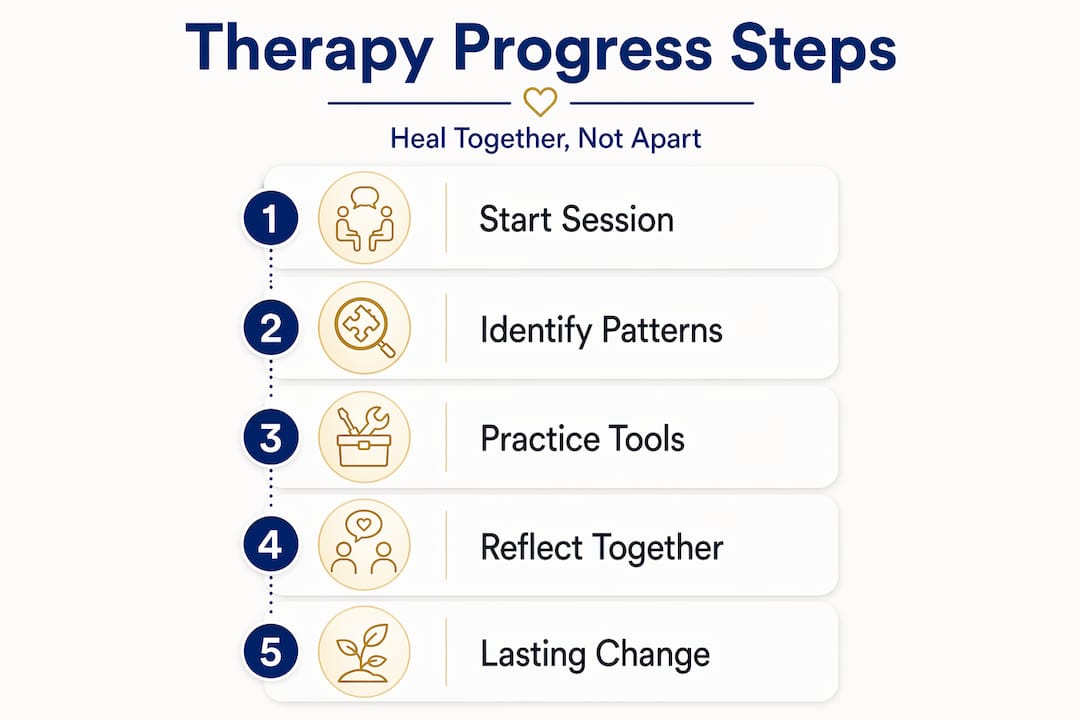
The research on empathy as a renewable resource has a direct practical implication. When you consciously decide that your capacity to support your partner is not a finite bank account being drained, your mental health improves alongside theirs. This is not a platitude. It is a documented shift in mindset with measurable effects on depressive symptoms for both partners.
Here are specific strategies that work:
- Listen to understand, not to fix. When your depressed partner shares how they feel, your job in that moment is to reflect it back, not solve it. “That sounds exhausting” is more healing than “Have you tried going to bed earlier?”
- Protect one shared activity each week. It does not need to be expensive or elaborate. A walk, a meal cooked together, a show you watch side by side. Consistency matters more than the activity itself.
- Name the depression separately from your partner. Saying “The depression is making mornings harder” rather than “You are impossible in the mornings” removes blame from the person and places it accurately on the condition.
- Monitor your own self-care. The partner who does not have depression is at significantly elevated risk of developing it. Partner support for depression requires that you stay emotionally and physically resourced yourself.
- Avoid scorekeeping. Tracking who has done more, sacrificed more, or suffered more is one of the fastest ways to destroy emotional intimacy. Conflict resolution strategies that focus on shared goals rather than tallying grievances produce far better outcomes.
These tools are most powerful when paired with active relationship counseling. They are not substitutes. They are amplifiers.
My perspective on what therapy actually requires from you
I have worked with hundreds of couples where one or both partners were managing depression, and there is a pattern I see repeatedly. Couples come in expecting therapy to fix the depressed person. They leave understanding that both partners needed to change.
The hardest truth I share with the couples I work with is this: being the non-depressed partner does not make you the healthy one in the relationship. Chronic stress, resentment, and caregiving without reciprocity create their own psychological damage. I have seen partners who were not clinically depressed when they walked in start showing clear symptoms within months of sustained, unsupported caregiving.
What I have also seen is the genuine transformation that happens when both partners commit to the process together. Not just attending sessions but doing the uncomfortable work of examining their own patterns, not just their partner’s. That willingness to be accountable on both sides is what separates couples who get better from couples who stay stuck.
My experience tells me that therapy is not a last resort. It is an investment. The couples who treat it like a financial investment in their shared future rather than an emergency medical procedure get far better returns. Show up consistently, do the homework, and trust the process even when it feels slow.
— Carlos
How Masteringconflict supports couples through depression
If what you have read here resonates, the next step is finding clinical support that understands both depression and relationship dynamics at a professional level.
Masteringconflict, founded by Dr. Carlos Todd, a licensed clinical mental health counselor and psychologist, offers evidence-based clinical services specifically designed for couples navigating depression, conflict, and emotional distress. Whether you are in North Carolina, South Carolina, Florida, or anywhere with an internet connection, teletherapy options make it possible to get consistent, professional support without rearranging your entire life around appointment logistics.
The practice also offers structured couples packages that provide ongoing, goal-oriented therapy rather than open-ended sessions. For partners dealing with depression-related irritability or anger, targeted assessments are available to complement the couples work. You do not have to figure out the right starting point alone. The team at Masteringconflict will help you identify what your relationship needs and build a plan around it.
FAQ
What is couples depression therapy?
Couples depression therapy is a clinical approach where both partners attend sessions to address how depression affects their relationship dynamic, communication, and emotional connection. It differs from individual therapy by treating the relationship itself as the focus of treatment.
Can couples therapy help even if only one partner has depression?
Yes. Research shows that negative communication cycles caused by depression affect both partners, and therapy helps the non-depressed partner understand and respond more effectively while reducing shared relational damage.
How do I know which therapy approach is right for us?
EFT works best for couples with emotional disconnection, while the Gottman Method suits couples with frequent conflict. A qualified therapist will assess your specific patterns and recommend the most appropriate method during an initial consultation.
When should we start couples therapy for depression?
Proactive therapy is always preferable to crisis-driven therapy. If depression is affecting intimacy, communication, or daily shared life, that is sufficient reason to start without waiting for the relationship to reach a breaking point.
How long does couples depression therapy take?
Most couples see meaningful progress within 12 to 20 sessions, though more entrenched patterns or severe depression may require longer-term work. Consistency and between-session practice significantly affect how quickly progress takes hold.