
Parent Coaching Benefits: 10 Proven Results for Families

TL;DR:
- Parent coaching improves parenting skills, reduces child behavioral issues, and enhances family relationships through evidence-based practices. It fosters better communication, emotional regulation, and confidence, leading to lasting positive effects across diverse family situations, including via telehealth options. Short, targeted programs deliver meaningful and enduring change, creating a positive cycle for the entire family.
Parent coaching benefits include measurable improvements in parenting skills, reduced child behavioral problems, and stronger family relationships, all backed by clinical research. Known formally as parent management training (PMT), this guided support model gives you concrete tools to handle tantrums, teen defiance, communication breakdowns, and daily stress. Programs like Net PAMA and Triple P have demonstrated these gains in randomized controlled trials, and telehealth formats now make access easier than ever. If you are weighing whether coaching is worth your time and investment, the evidence is clear.
1. Parent coaching benefits your communication skills first
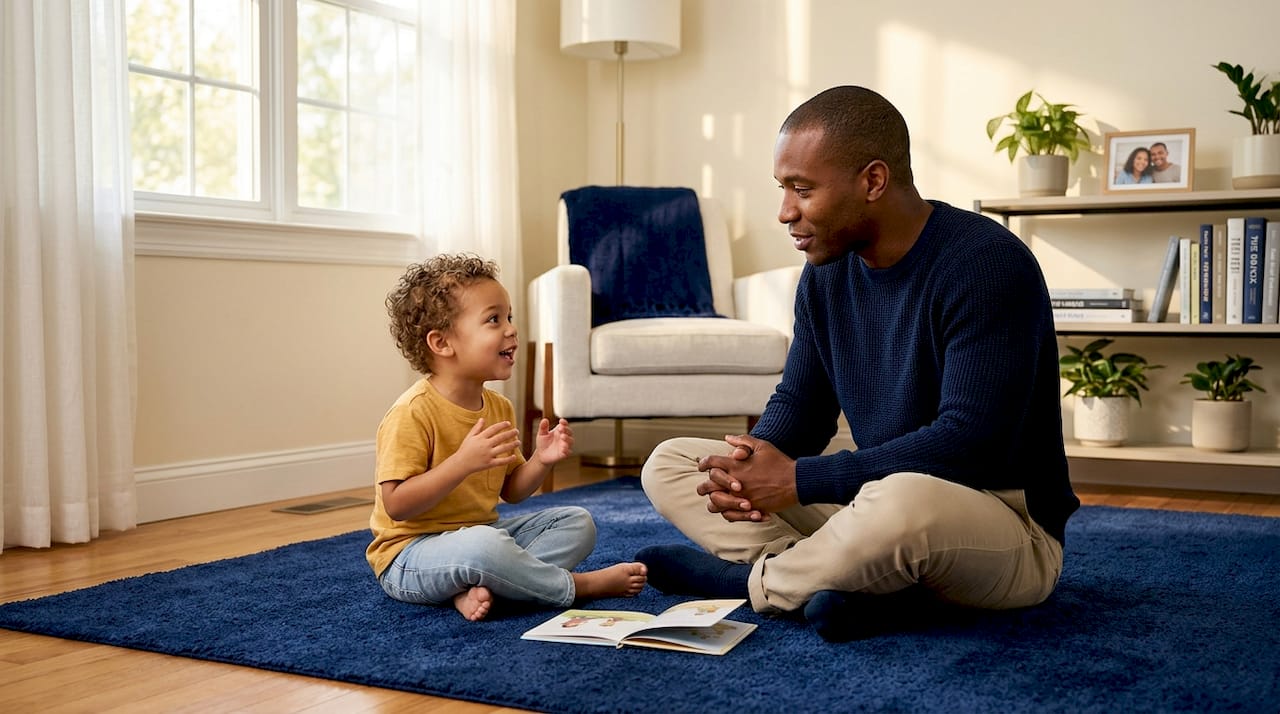
The most direct and measurable parent coaching benefit is a shift in how you communicate with your child. Coaching teaches positive reinforcement, clear limit-setting, and consistent follow-through. These are not abstract concepts. They are practiced behaviors that change how your household functions day to day.
Research on Net PAMA, an internet-based parent management training program, shows significant improvements in parenting skills versus a control group, with effects lasting at least two months. That durability matters. A skill you practice under coaching guidance does not disappear when the sessions end.
- Positive reinforcement: Catching your child doing something right and naming it specifically
- Effective limit-setting: Giving clear, calm instructions without repeating yourself five times
- Natural consequences: Letting outcomes teach rather than relying on punishment alone
- Reduced hostility: Replacing reactive responses with planned, calm reactions
Pro Tip: Practice your new communication skills specifically during the moments that stress you most, not just during calm times. The idea vs. doing gap in coaching is real. Real change happens when you apply skills under pressure, not just when things are easy.
2. Reduction in children’s disruptive and aggressive behavior
One of the most compelling advantages of parent coaching is what happens to your child’s behavior when your behavior changes. Coaching does not work directly on the child. It works on you, and the child responds.
A large-scale study of 2,900 households found that child externalizing scores improved from 21.7 to 14.4 on the Child Behavior Checklist over 24 months of digital parent training. That is a clinically meaningful drop in tantrums, aggression, and defiance. The same study found these gains held regardless of the parent’s own mental health status or education level, which means coaching works across a wide range of family situations.
| Child behavior area | Typical improvement after parent coaching |
|---|---|
| Externalizing behaviors (tantrums, aggression) | Significant reduction, sustained over 24 months |
| Internalizing behaviors (anxiety, withdrawal) | Moderate improvement in multiple meta-analyses |
| Emotional regulation | Improved through consistent parental modeling |
| School-related conduct | Positive spillover reported in several RCTs |
For parents managing a child’s anger and behavioral responses, this kind of structured coaching support produces results that therapy for the child alone often cannot match.
3. Improvements in children’s anxiety and emotional health
Parent coaching positive effects extend beyond visible behavior. Children also show improvements in internalizing problems, the quieter struggles like anxiety, low mood, and emotional withdrawal. These are harder to spot but just as damaging long-term.
A meta-analysis of 244 trials confirmed that parenting programs for disruptive behavior maintain stable effect sizes when implemented with fidelity. The research on programs like Triple P consistently shows that children whose parents receive coaching report fewer anxiety symptoms and better emotional regulation. The mechanism is straightforward. When parents become calmer and more predictable, children feel safer. Safety is the foundation of emotional health.
Understanding counseling interventions for children alongside parent coaching gives you a fuller picture of how to support your child’s mental health from multiple angles.
4. Stronger parental emotion regulation
Coaching does not just change what you do. It changes how you feel in the middle of a hard parenting moment. Programs that target parental emotion regulation give you strategies to pause, name what you are feeling, and choose your response rather than react automatically.
A randomized controlled trial of the Little All Children in Focus (Little ACF) program, conducted with 832 parents in Sweden, showed statistically significant gains in parental emotion regulation skills compared to an active control group. Even when other secondary outcomes did not shift, emotion regulation improved. That is a meaningful early win because it creates the conditions for every other skill to work. You cannot practice positive reinforcement when you are flooded with frustration.
Learning emotional regulation tools for parenting teens is one of the most practical skills you can develop, and coaching gives you a structured path to get there.
5. Increased parenting self-efficacy and confidence
Many parents enter coaching feeling like they are failing. One of the clearest parent support coaching benefits is the shift from self-doubt to confidence. Self-efficacy in parenting means you believe your actions can actually make a difference, and that belief changes everything about how you show up.
The Little ACF Swedish RCT also documented increases in parenting self-efficacy alongside emotion regulation gains, even in a brief universal program. Confidence is not a personality trait you either have or do not have. It is built through repeated successful practice, which is exactly what structured coaching provides.
Pro Tip: Track one specific parenting win each day during your coaching program. It sounds simple, but documenting small successes builds the evidence base your brain needs to shift its default story from “I am not good at this” to “I am getting better at this.”
6. Telehealth coaching delivers results without the commute
The advantages of family coaching have expanded significantly because of telehealth. You no longer need to find a babysitter, drive across town, and sit in a waiting room to access evidence-based parent coaching. A 2026 randomized controlled trial showed that a 90-minute telehealth parenting session produced significant improvements in positive reinforcement and reduced negative parenting behaviors compared to a waitlist control. Ninety minutes. That is shorter than most people’s commute.
Key advantages of telehealth parent coaching include:
- Accessibility for rural families who live far from specialized services
- Flexible scheduling that fits around work and school pickup
- Comparable outcomes to in-person coaching across multiple studies
- Lower dropout rates in some programs due to reduced logistical barriers
- Comfort of home which can actually reduce performance anxiety for parents
For a deeper look at whether virtual formats work as well as in-person options, the evidence on teletherapy effectiveness is worth reviewing before you choose a format.
7. Benefits reach families regardless of background or income
One of the most important parent coaching positive effects is its reach. Digital parent training does not reserve its benefits for highly educated or mentally healthy parents. The 2,900-household study found that benefits held across parental mental health status and education levels. That is a critical finding. It means coaching is not a tool only for parents who already have strong resources. It works for families under real stress.
This equity in outcomes matters for how you think about coaching. You do not need to be in a stable, low-conflict household to benefit. You need to show up and practice the skills.
8. Improved coparenting and family cohesion
Parent coaching for better communication does not stop at the parent-child relationship. It extends to how two parents or caregivers work together. Coparenting quality, meaning how consistently and cooperatively two adults parent the same child, has a direct effect on child outcomes. Coaching that addresses coparenting alignment reduces the mixed messages children receive and reduces household conflict overall.
The Little ACF program data supports this. Gains in emotion regulation and self-efficacy translate into less reactive, more cooperative interactions between caregiving adults. When you are less flooded and more confident, you fight less with your co-parent about discipline decisions. That shift creates a calmer household for everyone.
9. Short programs produce real and lasting change
You do not need a year-long commitment to see results. The role of parent coaching has evolved to include brief, targeted interventions that produce meaningful change quickly. The 90-minute telehealth trial cited earlier is one example. Net PAMA, which runs over several weeks online, showed effects lasting at least two months post-intervention.
A meta-analysis confirmed that program effects on disruptive behavior are stable across decades of research, meaning well-designed short programs are not a compromise. They are efficient. The key variable is not length. It is whether the program teaches the right skills and whether you practice them.
10. Coaching creates a positive cycle for the whole family
The cumulative effect of all these benefits is a self-reinforcing cycle. When you communicate better, your child behaves better. When your child behaves better, your stress drops. When your stress drops, your emotion regulation improves. When your emotion regulation improves, your confidence grows. That confidence makes you more consistent, which makes your child feel more secure, which reduces their anxiety and behavioral problems further.
This cycle is not theoretical. It is documented across programs like Net PAMA, Triple P, and Little ACF. Understanding conflict resolution tools for families can help you see where coaching fits within a broader strategy for family well-being.
Key takeaways
Parent coaching produces lasting improvements in parenting behavior, child mental health, and family relationships when parents actively practice skills during real high-stress moments.
| Point | Details |
|---|---|
| Skills over knowledge | Applying coaching skills during stressful moments drives real change, not just understanding concepts. |
| Child behavior improves | Externalizing scores dropped from 21.7 to 14.4 in a 2,900-household digital coaching study. |
| Telehealth works | A 90-minute telehealth session produced significant parenting improvements in a 2026 RCT. |
| Emotion regulation first | Gains in parental emotion regulation are an early, reliable benefit even in brief programs. |
| Works across all families | Benefits hold regardless of parental education level or mental health status. |
What I have learned from working with parents in coaching
After years of working with families at Masteringconflict, the pattern I see most often is this: parents come in knowing what they should do. They have read the books, watched the videos, and taken the quizzes. What they are missing is the ability to do it when their teenager slams a door or their eight-year-old melts down in a grocery store. That gap between knowing and doing is where coaching lives.
The parents who get the most out of coaching are not the ones who attend every session perfectly. They are the ones who try a skill, fail at it, come back and talk about why it did not work, and try again. That iteration is the process. I have seen parents who came in completely overwhelmed transform their households within weeks, not because they became different people, but because they started responding differently in the moments that count.
My honest observation is that most parents wait too long. They treat coaching as a last resort after everything else has failed. The research tells a different story. Brief interventions work. Telehealth works. You do not need a crisis to justify getting support. The earlier you build these skills, the less likely you are to need crisis-level intervention later.
If you are on the fence, the data is on your side. Start before things get worse, not after.
— Carlos
Start your family’s coaching journey with Masteringconflict
If the research in this article resonates with you, the next step is finding a program that fits your family’s specific situation.
Masteringconflict offers clinical coaching and family services designed for parents navigating real challenges with children and teens. Whether you are dealing with defiance, communication breakdowns, or co-parenting conflict, the team at Masteringconflict brings evidence-based approaches to every session. If you are unsure whether coaching or therapy is the right fit, reviewing the difference between coaching and therapy is a practical first step. Reach out today to book a consultation and get a plan built around your family’s needs.
FAQ
What are the main parent coaching benefits?
Parent coaching improves positive parenting skills, reduces child behavioral problems, and strengthens parental emotion regulation and confidence. Research across programs like Net PAMA and Triple P shows these benefits are measurable and last beyond the coaching period.
How does parent coaching help with child behavior?
Coaching changes parent behavior, which directly reduces children’s disruptive and internalizing behaviors. One large study found child externalizing scores dropped from 21.7 to 14.4 over 24 months of digital parent training.
Is telehealth parent coaching as effective as in-person sessions?
Yes. A 2026 randomized controlled trial found that a single 90-minute telehealth parenting session produced significant improvements in positive reinforcement and reduced negative parenting behaviors compared to a waitlist control group.
How long does it take to see results from parent coaching?
Results can appear quickly. Brief programs of 90 minutes to a few weeks show measurable improvements, and the Net PAMA trial documented gains lasting at least two months after the program ended.
Does parent coaching work for all types of families?
Research shows coaching benefits hold regardless of parental education level or mental health status. A study of 2,900 households confirmed that digital parent training produced consistent improvements across diverse family backgrounds.
Recommended
- Coparenting Communication Tips That Actually Work – Mastering Conflict
- Parenting Through Divorce: Practical Strategies for Success – Mastering Conflict
- Family counseling strategies: improve communication in 2026 – Mastering Conflict
- Family Counseling Benefits: Support, Healing, and Connection 2025 – Mastering Conflict