
Online Couples Therapy: Transforming Relationships

Struggling to communicate with your partner when everyday stresses keep building up? For couples across North Carolina and South Carolina, finding time and space for honest conversation feels nearly impossible with packed schedules and constant obligations. Digital interventions like online couples therapy now offer practical support without the barriers of travel, childcare, or conflicting work hours, making expert guidance more accessible. Discover how remote counseling can help you improve relationship satisfaction and rebuild trust while protecting your privacy and comfort at home.
Table of Contents
- Online Couples Therapy Defined And Debunked
- Common Approaches And Therapy Formats Explained
- Unique Features Of Virtual Relationship Counseling
- Effectiveness And Outcomes Versus In-Person Sessions
- Cost, Accessibility, And Privacy Considerations
- Choosing The Right Therapist And Avoiding Pitfalls
Key Takeaways
| Point | Details |
|---|---|
| Accessibility of Online Therapy | Online couples therapy provides geographical flexibility and convenient scheduling options, alleviating traditional barriers to accessing relationship counseling. |
| Effectiveness Comparable to In-Person Therapy | Research shows that online and in-person therapy produce similar improvements in relationship satisfaction and therapeutic alliance. |
| Choosing the Right Therapist | It is crucial to evaluate a therapist’s online competency, approach, and rapport-building skills to ensure effective digital counseling. |
| Privacy and Security | Couples should prioritize platforms with strong confidentiality measures and encryption to protect personal information during sessions. |
Online couples therapy defined and debunked
Online couples therapy represents a transformative digital approach to relationship counseling that breaks traditional therapeutic barriers. Digital interventions have revolutionized how partners address relational challenges, especially in regions like North and South Carolina where geographic or scheduling constraints might limit traditional therapy access.
At its core, online couples therapy involves digital relationship counseling techniques that mirror traditional in-person sessions through secure video platforms. These interventions focus on:
- Improving communication patterns
- Resolving interpersonal conflicts
- Rebuilding emotional connection
- Developing healthier relationship strategies
The technology enables couples to engage in therapeutic conversations from the comfort of their home, eliminating traditional obstacles like travel time, childcare arrangements, or conflicting work schedules. Telehealth therapy has proven particularly effective during challenging periods like the pandemic, demonstrating significant improvements in relationship satisfaction.
Online couples therapy transforms relationship dynamics by providing accessible, flexible mental health support directly to your digital doorstep.
Research substantiates the effectiveness of these digital interventions. Technology-based relationship interventions have shown remarkable outcomes across diverse populations, challenging initial skepticism about virtual counseling’s efficacy.
Key Misconceptions About Online Couples Therapy:
- It’s less personal than in-person therapy
- Video sessions cannot build genuine therapeutic rapport
- Online platforms compromise confidentiality
- Digital interactions reduce therapeutic effectiveness
Pro tip: Select an online therapy platform with robust security protocols and therapists specifically trained in digital counseling techniques.
Common approaches and therapy formats explained
Couples therapy offers diverse therapeutic approaches designed to address complex relationship dynamics. Couples therapy encompasses multiple intervention formats that provide flexible solutions for partners seeking relationship improvement, ranging from traditional in-person sessions to innovative digital platforms.
Primary Therapy Formats:
- Conjoint Therapy: Both partners participate simultaneously
- Concurrent Therapy: Individual sessions for each partner
- Online Video Therapy: Remote digital counseling sessions
- Hybrid Therapy: Combination of in-person and digital sessions
Established Therapeutic Approaches:
Here’s a summary of major therapy formats and their core benefits:
| Therapy Format | Participant Structure | Flexibility Level | Ideal For |
|---|---|---|---|
| Conjoint Therapy | Both partners together | Moderate | Joint conflict resolution |
| Concurrent Therapy | Partners see therapist separately | High | Individual growth focus |
| Online Video Therapy | Remote, digital sessions | Very High | Busy or distant couples |
| Hybrid Therapy | Mix of online and in-person | Highest | Need for varied modalities |
- Behavioral Couples Therapy
- Emotionally Focused Therapy
- Acceptance and Commitment Therapy
- Gottman Method Couples Therapy
Each approach targets specific relationship challenges by focusing on communication patterns, emotional connection, and conflict resolution strategies. Therapeutic techniques are carefully selected based on the couple’s unique relationship dynamics, personal backgrounds, and specific relationship goals.
Effective couples therapy transforms communication, helping partners understand and support each other more deeply.
The Gottman Method, in particular, stands out for its structured approach to assessing relationship health. This method provides couples with practical skills in emotional regulation and communication, making it particularly effective in both traditional and online therapy settings.
Key Considerations for Choosing a Therapy Approach:
- Individual relationship history
- Specific communication challenges
- Emotional connection levels
- Willingness to engage in therapeutic process
- Comfort with therapy format (online vs. in-person)
Pro tip: Discuss multiple therapy formats with your potential therapist to determine the most suitable approach for your relationship’s unique needs.

Unique features of virtual relationship counseling
Virtual relationship counseling has revolutionized therapeutic approaches, offering unprecedented flexibility and accessibility for couples seeking support. Videoconferencing therapy introduces innovative therapeutic dynamics that transcend traditional geographical and logistical constraints, enabling couples to engage in meaningful counseling from the comfort of their own environment.
Key Unique Features of Online Couples Therapy:
- Increased geographical accessibility
- Flexible scheduling options
- Privacy of home-based sessions
- Reduced travel time and expenses
- Continuous therapeutic support
The digital therapeutic landscape demands sophisticated navigation of professional boundaries. Online therapy transforms traditional therapeutic interactions by creating new frameworks for maintaining therapeutic alliance and managing interpersonal dynamics in virtual spaces.
Virtual counseling bridges emotional distances while respecting physical boundaries, offering a unique therapeutic experience.
Technical Considerations for Effective Virtual Counseling:
- Stable internet connection
- Private, quiet consultation space
- Compatible digital devices
- Secured video platforms
- Comfortable technology proficiency
Unlike traditional in-person sessions, virtual relationship counseling requires additional technological and emotional preparation. Couples must create intentional spaces that support open communication, minimize distractions, and foster a sense of emotional safety.
Potential Challenges in Virtual Therapy:
- Limited non-verbal communication cues
- Potential technical interruptions
- Managing home environment distractions
- Ensuring participant privacy
- Maintaining therapeutic focus
Pro tip: Test your technology and prepare a quiet, private space before your first virtual counseling session to maximize therapeutic effectiveness.
Effectiveness and outcomes versus in-person sessions
Couples therapy via videoconferencing demonstrates comparable therapeutic outcomes to traditional in-person counseling, challenging previous assumptions about digital mental health interventions. Research reveals that relationship satisfaction and therapeutic alliance remain consistently strong across both digital and face-to-face formats.
Key Comparative Outcomes:
- Equivalent relationship satisfaction improvements
- Similar mental health progression
- Consistent therapeutic alliance
- Reduced treatment access barriers
- Comparable long-term relationship health
Performance Metrics in Virtual vs. Traditional Therapy:
- Treatment engagement levels
- Emotional connection development
- Communication skill acquisition
- Conflict resolution effectiveness
- Relationship quality enhancement
Randomized controlled trials confirm online therapy’s effectiveness with moderate effect sizes matching traditional intervention models. The digital format offers unique advantages by eliminating geographical restrictions and providing more flexible therapeutic experiences.
Online couples therapy produces outcomes indistinguishable from in-person sessions, proving technology can meaningfully support relationship healing.
The evidence suggests that technological mediation does not compromise therapeutic quality. Couples can expect similar depth of emotional exploration, skill development, and relational transformation regardless of whether they choose virtual or traditional counseling formats.
Factors Influencing Therapeutic Effectiveness:
- Therapist’s professional expertise
- Couple’s engagement level
- Technology platform quality
- Individual comfort with digital interfaces
- Specific relationship dynamics
Pro tip: Select a therapist experienced in both digital and traditional formats to ensure the most adaptive and responsive therapeutic approach.
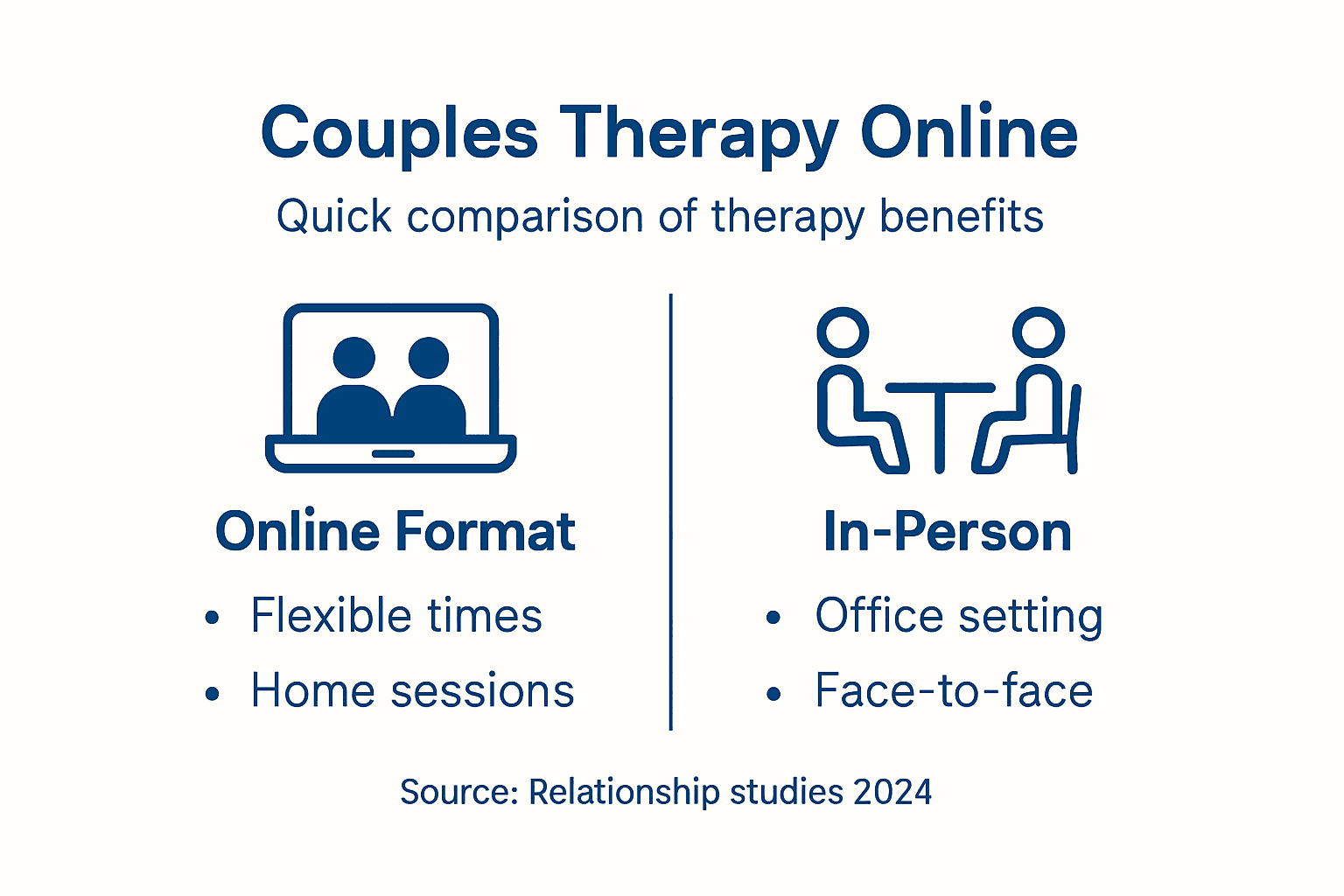
Cost, accessibility, and privacy considerations
Online couples therapy transforms traditional accessibility barriers by offering innovative solutions that address geographical, financial, and logistical challenges faced by couples seeking relationship support. The digital therapeutic landscape introduces unprecedented opportunities for flexible, cost-effective counseling experiences.
Cost Considerations:
- Reduced travel expenses
- Lower overhead costs
- Flexible pricing models
- Eliminated transportation fees
- Potential insurance coverage options
Accessibility Advantages:
- Geographic flexibility
- Multiple scheduling options
- No physical mobility constraints
- Technology-enabled global reach
- Convenient home-based sessions
Privacy protocols in digital therapy environments require sophisticated technological and ethical safeguards to maintain client confidentiality. Therapists must navigate complex digital privacy landscapes while ensuring secure, professional therapeutic interactions.
Digital therapy platforms balance accessibility with rigorous confidentiality standards, protecting client privacy in technological spaces.
Privacy Protection Strategies:
Compare key privacy safeguards of online therapy vs. traditional formats:
| Privacy Aspect | Online Therapy | In-Person Therapy |
|---|---|---|
| Data Encryption | Mandatory for sessions | Rarely applies |
| Storage of Records | Strict digital protocols | File cabinet storage |
| Location Privacy | Home-based, more control | Office, less control |
| Communication Platform | HIPAA-compliant video tools | Face-to-face only |
- HIPAA-compliant communication platforms
- Encrypted video session technologies
- Secure data storage protocols
- Professional confidentiality agreements
- Strict digital record management
Understanding these nuanced considerations helps couples make informed decisions about engaging in online relationship counseling, balancing technological convenience with professional therapeutic standards.
Key Decision Factors:
- Personal comfort with technology
- Budget constraints
- Privacy preferences
- Relationship dynamics
- Individual accessibility needs
Pro tip: Request detailed privacy policies and technology security protocols from your online therapy provider to ensure comprehensive confidentiality protection.
Choosing the right therapist and avoiding pitfalls
Selecting the right online couples therapist requires strategic evaluation of multiple professional and interpersonal factors. Couples must navigate a complex landscape of credentials, therapeutic approaches, and digital competency to find an ideal therapeutic match.
Critical Therapist Evaluation Criteria:
- Professional licensure and credentials
- Specialized online therapy training
- Experience with couples relationship dynamics
- Cultural competency
- Digital platform proficiency
- Specific therapeutic approach expertise
Red Flags to Avoid:
- Lack of clear online practice protocols
- Insufficient technology understanding
- Unclear confidentiality procedures
- Limited digital communication skills
- Inability to establish virtual rapport
Online therapy requires specialized ethical considerations that extend beyond traditional counseling boundaries. Therapists must demonstrate technological competence, cultural sensitivity, and robust crisis management skills in digital environments.
Effective online couples therapy hinges on a therapist’s ability to create meaningful connections through digital platforms.
Essential Screening Questions:
- What is your experience with online couples therapy?
- How do you manage confidentiality in digital sessions?
- What technological platforms do you use?
- How do you handle potential technical interruptions?
- What is your approach to crisis management?
Successful online therapy depends on finding a professional who can seamlessly blend technological skills with deep therapeutic expertise, creating a safe and transformative digital counseling experience.
Key Relationship Dynamics to Discuss:
- Communication patterns
- Conflict resolution styles
- Individual and shared goals
- Emotional connection barriers
- Personal and relational histories
Pro tip: Request a preliminary consultation to assess the therapist’s digital communication skills and personal compatibility before committing to full therapy.
Strengthen Your Relationship With Expert Online Couples Therapy
Online couples therapy offers a powerful solution for partners looking to improve communication, resolve conflicts, and rebuild emotional connection without the barriers of travel or scheduling conflicts. If you are seeking personalized support through secure, flexible digital sessions, Mastering Conflict provides trusted clinical interventions tailored to meet your unique relationship needs. Whether you are concerned about privacy, want to explore effective approaches like the Gottman Method, or prefer therapy from the comfort of your home, expert guidance is available to help transform your partnership.
Take the first step toward a healthier, more connected relationship today. Explore our comprehensive couples therapy services, learn how our online therapy options fit your lifestyle, and connect with licensed professionals led by Dr. Carlos Todd who specialize in evidence-based techniques designed to foster lasting change. Don’t wait to experience the benefits of virtual counseling tailored for you. Visit Mastering Conflict now and book your appointment to begin your journey toward renewed partnership.
Frequently Asked Questions
What is online couples therapy?
Online couples therapy is a digital approach to relationship counseling that uses secure video platforms to help partners address relational challenges, improve communication, and enhance emotional connections without the need for in-person meetings.
How does online couples therapy compare to in-person sessions?
Research shows that online couples therapy can produce outcomes comparable to in-person counseling, including improvements in relationship satisfaction and effective therapeutic alliances, making it a viable option for couples seeking support.
What unique features does virtual couples counseling provide?
Virtual couples counseling offers increased geographical accessibility, flexible scheduling, privacy of home-based sessions, and reduced travel expenses, making it easier for couples to engage in therapy when needed.
What are some key considerations when choosing an online couples therapist?
When selecting an online couples therapist, consider their professional licensure, experience in online therapy, cultural competency, and their ability to manage confidentiality and technology effectively.
Recommended
- Top Couples Therapy Benefits for Families in 2025 – Mastering Conflict
- Couples Therapy Basics: Strengthening Relationships Together – Mastering Conflict
- What Is Couples Therapy? Key Benefits and Options for 2025 – Mastering Conflict
- Couples Therapy Process Explained: Steps to Resolving Conflict – Mastering Conflict
- Psicología online precios: ¿qué esperar y cómo elegir?