
Individual vs Couples Counseling: Choosing What Heals You

Relationship tension can leave couples feeling stuck, especially when personal struggles overlap with shared conflicts. Many in North Carolina and South Carolina discover that true healing often requires more than one-size-fits-all solutions. By understanding the unique benefits of individual and couples counseling, you can choose a therapeutic path that addresses both personal growth and relationship connection, setting the stage for meaningful, lasting change.
Table of Contents
- Defining Individual and Couples Counseling Approaches
- Key Differences in Process and Goals
- When to Choose Individual or Couples Therapy
- Integrating Both Methods for Best Outcomes
- Common Pitfalls When Selecting Therapy Types
Key Takeaways
| Point | Details |
|---|---|
| Individual Counseling Focuses on Personal Growth | It centers on one person’s psychological experiences and personal development goals, addressing issues like trauma and anxiety. |
| Couples Counseling Enhances Relationship Dynamics | It focuses on communication, conflict resolution, and mutual understanding between partners for improved relational health. |
| Choosing the Right Approach is Crucial | Consider specific emotional and relational challenges when deciding between individual or couples therapy to maximize therapeutic effectiveness. |
| Integrated Therapy Can Offer Comprehensive Healing | A combined approach allows for addressing personal issues alongside relationship dynamics, facilitating holistic personal and relational growth. |
Defining Individual and Couples Counseling Approaches
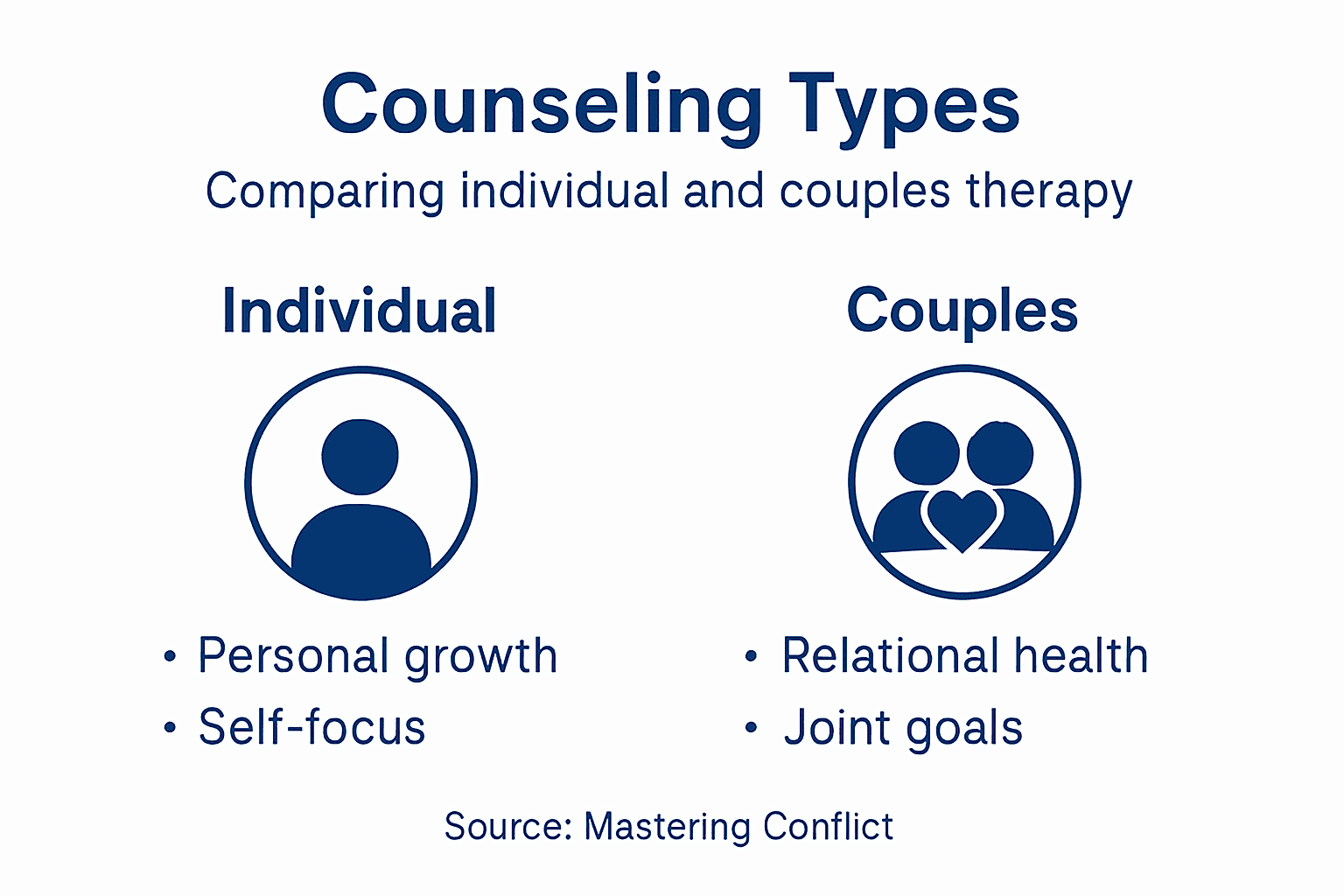
Counseling is a powerful tool for personal growth and relationship healing, with two primary therapeutic approaches: individual and couples counseling. While both aim to improve mental health and interpersonal dynamics, they differ significantly in focus, methodology, and desired outcomes.
In individual counseling, the therapeutic process centers exclusively on one person’s psychological experiences, internal challenges, and personal development goals. Collaborative therapeutic approaches emphasize understanding the client’s unique narrative, exploring personal history, emotional patterns, and fostering individual resourcefulness. Typical areas of focus include:
- Managing personal mental health challenges
- Processing past traumas
- Developing coping strategies
- Enhancing self-understanding
- Building emotional resilience
By contrast, couples counseling shifts the therapeutic lens from individual introspection to relational interaction. This approach examines the dynamic between partners, focusing on communication patterns, conflict resolution, and mutual understanding. Relationship-centered dialogue becomes the primary mechanism for identifying and addressing relationship challenges.
Key aspects of couples counseling include:
- Improving communication skills
- Resolving persistent relationship conflicts
- Rebuilding trust and emotional intimacy
- Understanding each partner’s perspective
- Developing shared relationship goals
Pro tip: Consider your primary therapeutic goal when choosing between individual and couples counseling – personal growth versus relationship healing.
Here’s a concise comparison of individual and couples counseling approaches:
| Aspect | Individual Counseling | Couples Counseling |
|---|---|---|
| Primary Focus | Personal growth and self-understanding | Relationship healing and connection |
| Session Format | One-on-one with therapist | Both partners with therapist |
| Goal Setting | Defined by individual | Negotiated by both partners |
| Methodology | Introspective and narrative-based | Relational and interaction-focused |
| Typical Use Cases | Personal trauma, anxiety, self-development | Communication issues, rebuilding trust |
Key Differences in Process and Goals
While individual and couples counseling share the overarching goal of improving mental health, their approaches and methodological frameworks differ substantially. Individual therapy processes are fundamentally introspective, focusing on the unique psychological landscape of a single client, whereas couples counseling operates through a more interactive and relational lens.
In individual counseling, the therapeutic journey is deeply personal. Key characteristics include:
- Exploring personal emotional patterns
- Addressing individual psychological challenges
- Developing personalized coping mechanisms
- Promoting self-awareness and personal growth
- Managing individual mental health symptoms
Couples counseling, by contrast, centers on the relational dynamic between partners. Integrative Behavioral Couples Therapy exemplifies this approach by targeting interaction patterns and relationship satisfaction. The primary objectives shift from individual healing to collaborative relationship improvement.

The core differences manifest in both process and outcomes. Individual therapy typically follows a linear progression of personal exploration and skill development, while couples counseling requires simultaneous engagement with both partners’ perspectives, communication styles, and emotional needs. This requires therapists to navigate complex interpersonal dynamics, balancing individual experiences within the context of their shared relationship.
Key process differences include:
- Individual therapy focuses on personal narrative
- Couples counseling emphasizes shared relationship narratives
- Single-client sessions allow deeper personal exploration
- Couples sessions require balanced participation from both partners
- Individual therapy goals are personally defined
- Couples therapy goals are mutually negotiated
Pro tip: Select the counseling approach that most directly addresses your current emotional and relational needs.
When to Choose Individual or Couples Therapy
Individual versus couples therapy selection requires careful consideration of your specific emotional and relational challenges. The decision depends on multiple factors, including the nature of your psychological needs, relationship dynamics, and personal goals for therapeutic intervention.
Individual therapy might be the most appropriate choice when:
- You are experiencing personal mental health challenges
- Dealing with individual trauma or past emotional wounds
- Struggling with anxiety, depression, or personal behavioral patterns
- Needing focused attention on your unique psychological landscape
- Wanting to develop personal coping mechanisms and self-understanding
Conversely, couples therapy becomes essential when relationship dynamics are causing significant emotional distress. Key indicators include:
- Persistent communication breakdowns
- Recurring conflicts that cannot be resolved independently
- Loss of emotional intimacy
- Trust issues or infidelity challenges
- Difficulty navigating major life transitions together
Some situations might actually benefit from a combined approach, where individual therapy runs concurrent with couples counseling. This strategy allows each partner to address personal issues while simultaneously working on relationship dynamics.
Critical considerations for choosing between individual and couples therapy include:
- Mutual partner willingness to engage in therapy
- Specific nature of emotional or relational challenges
- Individual mental health needs
- Relationship health and communication patterns
- Personal and shared therapeutic goals
Pro tip: Consult a professional therapist for a personalized assessment to determine the most effective therapeutic approach for your unique situation.
Integrating Both Methods for Best Outcomes
Integrative therapeutic approaches represent a sophisticated strategy for addressing complex emotional and relational challenges. By combining individual and couples therapy, clients can simultaneously explore personal psychological landscapes while improving relationship dynamics, creating a more comprehensive healing experience.
The integrated approach offers several critical advantages:
- Addresses individual psychological needs
- Improves relationship communication patterns
- Provides holistic emotional healing
- Creates synchronized personal and relational growth
- Allows targeted interventions for specific challenges
Concurrent therapy models enable partners to work on personal issues while also developing shared understanding. This might involve one partner addressing individual mental health concerns like anxiety or past trauma, while simultaneously engaging in couples sessions to enhance relationship communication and intimacy.
Contemporary therapy integration recognizes that personal and relational challenges are often interconnected. A therapist skilled in both individual and couples counseling can navigate these complex dynamics, helping clients understand how personal psychological patterns impact relationship interactions.
Key strategies for successful integration include:
- Maintaining clear therapeutic boundaries
- Coordinating treatment goals between individual and couples therapists
- Balancing individual autonomy with relationship needs
- Developing complementary therapeutic interventions
- Regularly reassessing and adjusting treatment approaches
Pro tip: Select therapists who demonstrate experience and flexibility in integrated therapeutic approaches to maximize your healing potential.
This table summarizes integrated therapy benefits compared to a single-method approach:
| Benefit | Integrated Approach | Single-Method Approach |
|---|---|---|
| Addresses personal and relational issues | Yes, concurrently | Usually only one area at a time |
| Coordination of therapeutic goals | Individual and shared goals | Primarily individual or relational goals |
| Potential for accelerated growth | Synchronizes healing in both partners | Growth often limited to one domain |
| Complexity handled | Navigates both personal and relationship dynamics | Focuses on fewer dynamics |
| Therapist expertise required | Broad, flexible skills needed | Deep expertise in one area sufficient |
Common Pitfalls When Selecting Therapy Types
Therapy selection challenges can significantly impact mental health outcomes, making it crucial to understand potential missteps in choosing the right therapeutic approach. Many individuals inadvertently compromise their healing potential by making uninformed decisions about counseling strategies.
Common pitfalls in therapy selection include:
- Choosing therapy based on convenience rather than therapeutic appropriateness
- Misunderstanding the specific scope of individual versus couples counseling
- Overlooking the severity and complexity of underlying psychological issues
- Failing to assess personal and relational readiness for therapy
- Ignoring potential safety concerns in high-conflict relationships
Stigma and misconceptions often prevent individuals from seeking the most effective therapeutic intervention. Therapy engagement barriers frequently stem from lack of awareness about different counseling modalities and unrealistic expectations about the therapeutic process.
Specific red flags that signal potential therapy selection errors include:
- Attempting couples therapy in situations involving domestic violence
- Assuming all therapists have identical treatment approaches
- Expecting immediate resolution of complex emotional challenges
- Selecting a therapist without verifying their specific expertise
- Neglecting to discuss treatment goals and expectations upfront
Mismatched therapy approaches can potentially worsen existing psychological or relational challenges, making careful selection critical.
Pro tip: Schedule initial consultations with multiple therapists to assess their approach and determine the most suitable therapeutic strategy for your specific needs.
Find the Healing Path That Fits You
Choosing between individual and couples counseling can feel overwhelming when emotions run high and relationship challenges seem complicated. This article highlights the real struggles you might face such as communication breakdown, personal trauma, or rebuilding trust. If you want to move past confusion and take control of your healing journey it is important to understand the unique benefits of each approach and how they serve your personal and relational goals.
At Mastering Conflict, we specialize in helping individuals like you and couples regain clarity and strength through tailored counseling solutions. Whether you seek personal growth with individual therapy or want to restore connection in your relationship through couples therapy our expert team led by Dr. Carlos Todd offers compassionate, evidence-based support. Do not wait until indirect pain turns into lasting damage. Visit our online therapy options today to schedule your personalized assessment and make the first confident step toward lasting emotional well-being and renewed relationships.
Frequently Asked Questions
What is the primary focus of individual counseling?
Individual counseling primarily focuses on personal growth, self-understanding, and addressing individual psychological challenges.
How does couples counseling differ from individual counseling?
Couples counseling differs as it emphasizes the relational dynamics between partners rather than individual introspection, focusing on communication patterns and conflict resolution.
When should I consider choosing individual therapy?
You should consider individual therapy when you are dealing with personal mental health issues, past trauma, or need focused attention on self-development and emotional resilience.
Can I participate in both individual and couples therapy simultaneously?
Yes, participating in both therapies can be beneficial, allowing you to address personal issues while also improving relationship dynamics.