Communication Skills in Marriage Counseling: A Couples Guide

TL;DR:
- Effective marriage communication involves structured techniques like active listening, “I” statements, and the Speaker-Listener method. Practicing these skills through exercises and emotional regulation builds trust and lasting connection, with most couples improving significantly within 15 to 20 sessions. Repairing communication rifts quickly and consistently keeps couples close, emphasizing the importance of ongoing counseling tailored to individual patterns.
Communication skills in marriage counseling are defined as the structured techniques couples learn to express feelings clearly, listen without judgment, and resolve conflict without damaging the relationship. These skills form the clinical backbone of evidence-based therapies like Emotionally Focused Therapy (EFT) and the Gottman Method. EFT shows a 70–75% recovery rate for distressed couples, with roughly 90% showing significant improvement within 15–20 sessions. That outcome is not accidental. It reflects what happens when couples replace reactive patterns with practiced, intentional communication.
What are the key communication skills used in marriage counseling?
Effective communication in marriage counseling is not about speaking more. It is about speaking and listening in ways that create safety rather than defensiveness. Counselors teach specific skills that interrupt destructive patterns and build genuine understanding between partners.
The core skills include:
- Active listening. You give your full attention, reflect back what you heard, and validate your partner’s experience before responding. This signals that their feelings matter, which lowers defensiveness immediately.
- “I” statements. Instead of “You never listen,” you say “I feel unheard when I’m interrupted.” This shift moves blame toward expressing vulnerable needs, which invites connection rather than counterattack.
- The Speaker-Listener technique. One partner speaks while the other listens without interrupting. This method works especially well for couples prone to escalation and talking over each other.
- Empathy expression. You name your partner’s emotion and acknowledge it as valid, even when you disagree with their interpretation. Empathy does not mean agreement. It means recognition.
- Tone and body language awareness. Research on nonverbal communication confirms that how you say something carries as much weight as what you say. Crossed arms, eye-rolling, and flat tone all communicate contempt, regardless of your words.
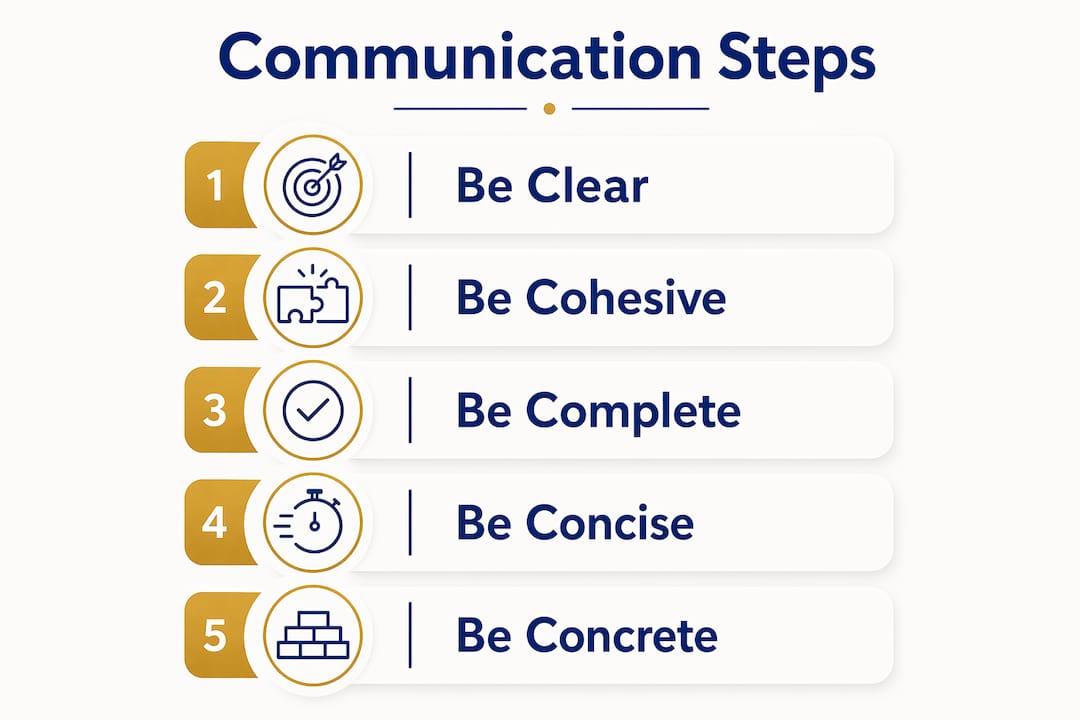
The 5 C’s of communication offer a practical checklist: be clear, cohesive, complete, concise, and concrete. Counselors use this framework to help couples audit their own communication habits and identify where breakdowns typically occur.
Pro Tip: Practice “I” statements during low-stakes conversations first. Trying a new skill mid-argument is like learning to drive on a highway. Build the habit when the stakes are low.

How do structured exercises improve couples’ connection?
Structured relationship exercises for couples do something that good intentions alone cannot. They slow the conversation down and create a repeatable structure that prevents escalation before it starts. Gottman research confirms that problem-solving should only begin once both partners feel fully understood. Exercises create the conditions for that understanding to happen.
Three exercises appear consistently in clinical practice:
| Exercise | Purpose | How it works |
|---|---|---|
| Stress-Reducing Conversation | Decompress daily tension without problem-solving | One partner talks about external stress; the other listens and validates only |
| Appreciation Exchange | Build positive interaction ratio | Each partner names one specific thing they appreciated about the other that day |
| Daily Check-In | Maintain emotional connection | A 10-minute structured check-in covering feelings, needs, and gratitude |
Stable marriages maintain a 5:1 ratio of positive to negative interactions. Dropping below that ratio significantly increases divorce risk. The Appreciation Exchange exercise directly targets this ratio by building a daily habit of positive acknowledgment.
Therapists are honest about one thing: these exercises can feel awkward at first. Structured techniques initially feel forced, but they function as temporary training wheels. The goal is to slow escalation long enough for new habits to form. Once the habits are internalized, the formal structure fades and the skills remain.
Pro Tip: Set a recurring 10-minute calendar reminder for your Daily Check-In. Consistency matters more than perfection. Missing one day is fine. Missing ten builds distance.
Why does emotional regulation matter in couples communication?
Emotional flooding is the single biggest barrier to effective communication in marriage. When your nervous system shifts into fight-or-flight, the prefrontal cortex, the part of the brain responsible for empathy and rational thought, goes offline. Trying to use “I” statements while flooded is largely ineffective. Emotional regulation must come first.
Clinical guidelines recommend a specific protocol for high-conflict moments:
- Recognize flooding early. Physical signs include a racing heart, shallow breathing, clenched jaw, and a rising urge to either attack or shut down.
- Call a timeout by agreement. Both partners must agree in advance on a signal, such as a raised hand or a specific word, that means “I need to pause, not avoid.”
- Take a 20–30 minute break. This is the clinical standard for nervous system calming. Shorter breaks often leave the body still activated.
- Use the break actively. Slow breathing, a short walk, or grounding exercises help the nervous system reset. Ruminating on the argument keeps you flooded.
- Return to the conversation. A timeout is a pause, not an exit. Couples agree on a time to resume, which prevents the break from becoming stonewalling.
Communication is fundamentally about connection and safety, not about winning the argument or solving the surface problem. When couples fight about the dishes, they are often fighting about feeling unseen or unvalued. Regulating emotion first makes it possible to address what is actually happening beneath the argument.
Somatic awareness, noticing physical sensations in your body during conflict, is a skill Masteringconflict integrates into its counseling approach. When you can name what your body is doing, you gain a moment of choice before reacting.
How can couples repair communication rifts quickly?
No couple communicates perfectly. The hallmark of healthy communication is not flawless exchanges. It is the ability to acknowledge and repair rifts quickly. Couples who repair well stay close. Couples who let ruptures fester build resentment that eventually becomes the relationship’s defining feature.
Repair attempts are any words, gestures, or actions that interrupt a negative cycle and signal a willingness to reconnect. They work even when they are imperfect. A clumsy “I’m sorry, I got defensive” lands better than silence.
Here are five practical repair steps couples can use immediately:
- Pause and name what happened. “I think we just got into a loop” is enough. Naming the pattern interrupts it.
- Take responsibility for your part. You do not need to concede the whole argument. Owning your tone or your timing is enough to shift the dynamic.
- Use a repair phrase. “I don’t want to fight with you” or “Can we start over?” signals that the relationship matters more than being right.
- Ask what your partner needs right now. Sometimes they need to be heard. Sometimes they need space. Asking prevents assumptions.
- Reconnect physically if appropriate. A hand on the shoulder or a brief hug can reset the emotional tone faster than words alone.
Counseling builds these repair skills through conflict resolution practice and role-play scenarios. Couples learn to recognize their own escalation patterns and practice interrupting them before the conversation becomes irreparable.
What role does ongoing counseling play in personalizing communication?
A skilled counselor does more than teach techniques. They observe how a specific couple communicates and match the intervention to the pattern. The Speaker-Listener technique works best for couples who escalate quickly. “I” statements work best for couples who shut down or withdraw. A counselor identifies which pattern dominates and selects accordingly.
Ongoing marriage counseling techniques also address the deeper issues that surface conflicts often conceal. Couples frequently argue about money, parenting, or chores when the real issue is emotional distance or unmet attachment needs. A counselor holds space for that deeper conversation to happen safely.
The evidence supports continued engagement. EFT’s 70–75% recovery rate reflects outcomes from structured, ongoing sessions, not one-time workshops. Couples who view counseling as a continuous support process, rather than a crisis intervention, build communication habits that last.
Key reasons to stay engaged with counseling beyond the crisis point:
- Counselors catch regression before it becomes entrenched.
- New life stressors (job loss, illness, children) require updated communication strategies.
- Periodic sessions reinforce skills and prevent the drift back into old patterns.
- Therapists provide accountability that self-directed practice often lacks.
Key Takeaways
The most effective approach to communication in marriage counseling combines emotional regulation, structured practice, and timely repair to build lasting connection.
| Point | Details |
|---|---|
| Regulation precedes skill | Calm your nervous system before attempting any communication technique during conflict. |
| Structured exercises build habits | Daily Check-Ins and Appreciation Exchanges build the 5:1 positive interaction ratio that protects relationships. |
| Repair matters more than perfection | Acknowledging a rift quickly and reconnecting is the defining trait of healthy couples communication. |
| Counseling personalizes the approach | A counselor matches techniques to your specific conflict pattern, which maximizes effectiveness. |
| EFT delivers measurable results | 90% of couples show significant improvement within 15–20 EFT sessions when they stay engaged. |
What I’ve learned after years of working with couples on communication
Couples come into counseling expecting to learn how to talk better. What they discover is that the real work is learning how to feel safer with each other. The words are almost secondary.
The pattern I see most often is this: one partner shuts down, the other pursues harder, and both feel completely alone in the same room. Neither is wrong. Both are scared. The communication breakdown is a symptom of disconnection, not the cause of it.
What actually moves couples forward is not mastering the perfect “I” statement. It is the moment one partner risks vulnerability and the other chooses to lean in rather than defend. That moment does not happen because of a technique. It happens because both people have practiced enough to stay regulated long enough for it to occur.
I tell every couple I work with: commit to the practice outside the therapy room. The session is the training ground. Your daily life is where the skill either takes root or fades. Couples who do the work between sessions consistently outperform those who rely on the hour in the office alone.
Counseling is not just for crisis. The couples who come in before things break down, who treat communication as a skill to maintain rather than a problem to fix, those are the couples who build something genuinely durable. That is not idealism. That is what the evidence shows, and what I have watched happen over and over again.
— Carlos
Masteringconflict’s approach to couples communication
Improving how you and your partner communicate is one of the most direct investments you can make in your relationship. Masteringconflict offers evidence-based couples therapy services through teletherapy, making professional support accessible regardless of where you live. Whether you are navigating recurring conflict, emotional distance, or simply want to strengthen what you already have, the clinical team at Masteringconflict matches proven techniques to your specific dynamic.
For men who want dedicated support, Masteringconflict’s men’s counseling program addresses communication, emotional regulation, and relationship skills in a focused, judgment-free setting. Booking an appointment takes minutes, and the first session can shift the entire direction of your relationship.
FAQ
What are communication skills in marriage counseling?
Communication skills in marriage counseling are structured techniques, including active listening, “I” statements, and the Speaker-Listener method, that help couples express feelings clearly and resolve conflict without escalation.
How long does it take to see results from couples communication counseling?
EFT research shows that roughly 90% of couples experience significant improvement within 15–20 sessions. Results depend on consistency, practice between sessions, and the severity of existing patterns.
What is the Speaker-Listener technique?
The Speaker-Listener technique assigns one partner to speak while the other listens without interrupting. It is most effective for couples who escalate quickly or talk over each other during conflict.
Why do communication exercises feel awkward at first?
Structured exercises slow conversation down in ways that feel unnatural initially. Therapists describe them as temporary training wheels that build habits before spontaneous, skilled communication becomes possible.
How do couples repair communication after a fight?
Healthy repair involves naming the pattern, taking responsibility for your part, using a reconnecting phrase, and asking what your partner needs. Quick repair after conflict is the defining trait of couples with strong long-term communication.
Recommended
- Master Couple Communication Techniques for Conflict Resolution – Mastering Conflict
- Communication Skills for Couples: Guide to Connection and Conflict Resolution – Mastering Conflict
- Marriage Counseling: Transforming Couples’ Communication – Mastering Conflict
- Common Marriage Counseling Questions That Transform Relationships – Mastering Conflict