
Black male mental health: addressing barriers and support

Black men are 20% more likely to report serious psychological distress than white men, yet mental health conversations in Black communities remain rare and often stigmatized. The pressure to appear strong, self-sufficient, and unbothered is real, and it costs lives. This guide is written specifically for you: a Black man who wants to understand what’s happening, why getting help feels so hard, and what actually works. We’ll walk through the data, break down the barriers, and give you practical steps to build the support system you deserve.
Table of Contents
- Why Black male mental health matters
- Key barriers to help-seeking for Black men
- Mental health support options that work
- How to find and use mental health resources
- Building your personal support system
- Next steps: Professional support and ongoing care
- Frequently asked questions
Key Takeaways
| Point | Details |
|---|---|
| Barriers persist | Cultural stigma, mistrust, and access issues make it difficult for Black men to seek mental health help. |
| Support works | Culturally tailored therapy, peer groups, and community engagement improve outcomes. |
| Resources exist | National directories and community programs specifically serve Black men’s mental health needs. |
| Networks matter | Building a strong, supportive environment makes it easier to maintain mental well-being. |
| Professional help is vital | Ongoing care and access to clinicians can lead to lasting mental wellness for Black men. |
Why Black male mental health matters
The numbers are hard to ignore. Suicide rates increased 25.2% among Black persons between 2018 and 2023, and suicide is now the third leading cause of death for Black males aged 15 to 24. That’s not a distant statistic. That’s brothers, sons, and friends.
| Mental health indicator | Black men | General population |
|---|---|---|
| Serious psychological distress | 20% higher likelihood | Baseline |
| Suicide rate increase (2018-2023) | 25.2% rise | Varies |
| Share of Black community suicide deaths | 80% are men | N/A |
| Suicide ranking for Black males 15-24 | 3rd leading cause | Varies |
These numbers reflect a community under pressure. Economic stress, racial trauma, and systemic inequality all pile onto daily life. And when mental health struggles go unaddressed, they often show up as signs of anger issues in relationships, at work, and at home.
“The silence around Black male mental health isn’t strength. It’s a wound that keeps reopening.”
Understanding suicide risk among men is the first step toward changing the outcome. When we name the problem clearly, we can start solving it.
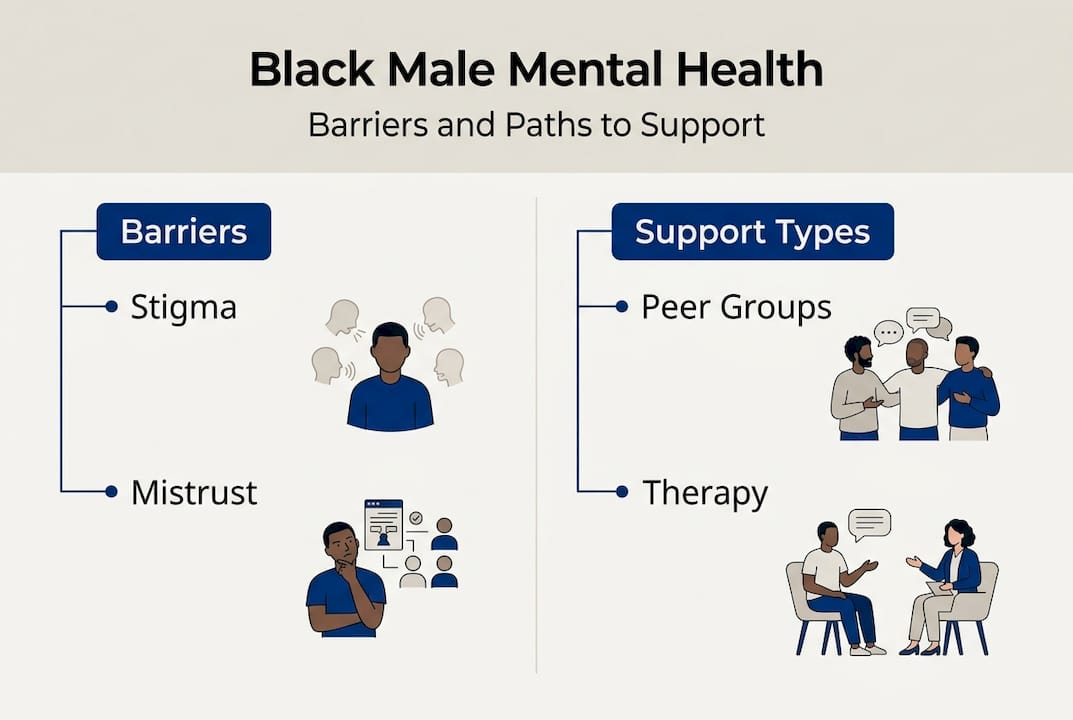
Key barriers to help-seeking for Black men
Knowing the urgency is one thing. Understanding why so many Black men still don’t seek help is another. The barriers are real, layered, and deeply rooted.
Cultural stigma, mistrust of healthcare, and lack of culturally competent providers are the three biggest obstacles Black men face when considering therapy. Each one deserves attention.
The main barriers Black men face:
- Cultural stigma: Seeking help is often framed as weakness or as “not being a real man.” This message gets passed down through generations.
- Generational mistrust: Historical abuses in healthcare, from the Tuskegee experiments to ongoing racial bias in diagnosis, make many Black men skeptical of the system.
- Lack of representation: Only 4% of the US psychology workforce is Black, and just 2% of American Psychological Association members are Black men. Finding someone who looks like you and understands your experience is genuinely difficult.
- Cost and access: Mental health providers are underrepresented in Black communities, and insurance gaps make care unaffordable for many.
- Systemic bias: Black men are more likely to be misdiagnosed or undertreated when they do seek care.
Pro Tip: If you’re unsure whether what you’re experiencing qualifies as a mental health concern, review the key risks for men’s mental health to get a clearer picture before your first appointment.
These barriers don’t mean help is impossible. They mean you need to know where to look and what to expect. Finding Black therapists in your area can make a significant difference in how comfortable and understood you feel from day one.
Mental health support options that work
Not every form of support looks like lying on a couch talking to a stranger. For Black men, the most effective approaches often meet you where you already are.
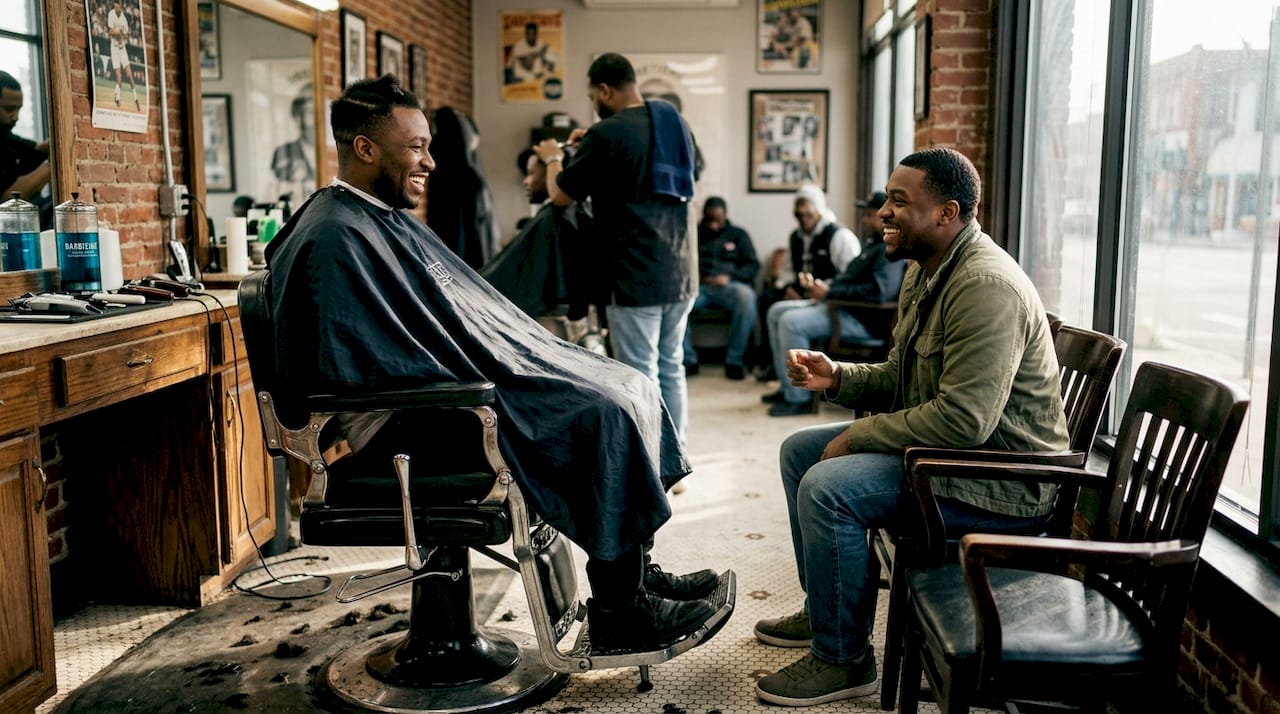
Culturally responsive therapy, barbershop conversations, peer support groups, and community workshops are all proven methods that resonate with Black men’s lived experiences. Here’s how they compare:
| Support type | Best for | Accessibility |
|---|---|---|
| Culturally responsive therapy | Deep personal work, trauma | Online or in-person |
| Barbershop or church programs | Low-barrier entry, community trust | Local, often free |
| Peer support groups | Shared experience, reducing isolation | Community centers, online |
| Workshops on masculinity | Identity, emotional expression | Events, nonprofits |
| Individual counseling | Personalized, confidential care | Clinics, telehealth |
Steps to start exploring support options:
- Identify what feels most comfortable: one-on-one therapy, a group setting, or a community space.
- Search directories like TherapyforBlackMen.org for culturally matched providers.
- Ask your church, barbershop, or community center if they host mental health programming.
- Look into culturally centered counseling that specifically addresses the Black family experience.
- Explore healing and therapy resources designed for African American growth and recovery.
Pro Tip: Don’t wait until you’re in crisis to explore male counseling options. Starting early, even when things feel manageable, builds resilience before the hard moments hit.
The right support doesn’t have to feel foreign or clinical. It just has to feel safe enough to start.
How to find and use mental health resources
Knowing support exists is different from actually using it. Here’s a practical roadmap to get from awareness to action.
TherapyforBlackMen.org, BlackMenHeal free sessions, and GRO Community Chicago are three of the most trusted resources specifically built for Black men. Each offers something different, from free therapy sessions to community-based healing circles.
Step-by-step guide to connecting with resources:
- Search a directory: Go to TherapyforBlackMen.org and filter by location, specialty, or insurance. You can find a Black male therapist in minutes.
- Make the call or send the email: The first contact is the hardest. Keep it simple. Say you’re looking for support and ask about availability.
- Ask the right questions: Inquire about their experience with Black male clients, their approach to cultural identity, and whether they offer sliding-scale fees.
- Use online sessions: Teletherapy removes the barrier of travel and increases privacy. Many men find it easier to open up from home.
- Stay consistent: One session won’t fix everything. Commit to at least four to six sessions before evaluating whether the fit is right.
- Attend free workshops: Organizations like BlackMenHeal offer no-cost group sessions that can supplement individual therapy.
If past trauma is part of your story, look specifically for trauma-informed counseling that recognizes how racial and personal trauma shape mental health. And if family dynamics are part of the picture, resources on finding a family counselor can help you navigate that process with confidence.
Consistency is what turns a first appointment into lasting change. Show up, even when it feels uncomfortable.
Building your personal support system
Professional help works best when it’s backed by a strong personal network. You don’t have to do this alone, and you shouldn’t have to.
Normalizing mental health conversations in safe spaces, involving faith leaders, and using peer role models are three of the most effective ways to reduce stigma and build lasting support. These aren’t soft suggestions. They’re evidence-backed strategies.
Ways to build your support network:
- Talk openly with one trusted friend or family member about how you’re really doing.
- Engage your barber or pastor. These are often the most trusted figures in Black men’s lives.
- Join a men’s group at your church, community center, or online.
- Identify a peer role model, someone who has sought help and speaks openly about it.
- Schedule regular check-ins with your support circle, not just when things go wrong.
“Community isn’t just where you live. It’s who shows up when you’re struggling.”
Research consistently shows that community engagement correlates with better mental health outcomes, particularly for men who face social isolation. Faith communities, in particular, can serve as a bridge between cultural comfort and clinical care.
If you’re in a relationship or have a family, exploring cultural considerations for therapy can help you bring your whole self into the healing process, not just the parts that feel acceptable to share.
Building a support system takes time. Start with one conversation. Then another. That’s how change actually happens.
Next steps: Professional support and ongoing care
You’ve read the data, understood the barriers, and explored what works. Now the question is: what’s your next move?

Seeking professional help isn’t a last resort. It’s a decision that says you value your life and your future. At Mastering Conflict, Dr. Carlos Todd and his team offer clinical services for Black men that are grounded in cultural competence and evidence-based practice. Whether you’re dealing with anger, relationship stress, trauma, or just the weight of carrying too much for too long, there’s a path forward. For those who prefer flexibility and privacy, teletherapy options make it possible to get quality care from wherever you are. Ongoing care isn’t a sign of weakness. It’s how you stay well.
Frequently asked questions
Why don’t more Black men seek help for mental health?
Many Black men face cultural stigma and mistrust toward healthcare rooted in historical racism, making it difficult to take that first step toward support.
What are signs that I might need mental health support?
Prolonged sadness, intense anger, withdrawal from people you care about, or thoughts of self-harm are all signs worth taking seriously. Black men are 20% more likely to experience serious psychological distress, so don’t dismiss what you’re feeling.
Are there free mental health resources for Black men?
Yes. TherapyforBlackMen.org and BlackMenHeal both offer free or low-cost services specifically designed for Black men, including individual sessions and group support.
Can churches or faith leaders help with mental health?
Absolutely. Faith leaders trained in mental health can create safe, trusted environments for conversations that might feel too vulnerable elsewhere.
Is seeking professional help confidential?
Yes. Licensed counselors and therapists are legally bound by confidentiality laws to protect your personal information, so what you share stays between you and your provider.
Recommended
- Men’s Mental Health Issues: 4× Higher Suicide Risk in NC, SC & FL – Mastering Conflict
- Counseling for Black Families: Culturally Centered Healing – Mastering Conflict
- African American therapy resources for healing and growth – Mastering Conflict
- Men’s Mental Health Issues – Key Risks and Solutions – Mastering Conflict
- Community Engagement Benefits: 30% Better Mental Health