
Cultural considerations couples therapy: 2026 guide

Many couples enter therapy expecting universal solutions, only to discover that cultural identity, values, and experiences profoundly shape how they communicate, resolve conflict, and connect emotionally. Generic approaches often miss these crucial dynamics. Understanding how cultural differences can create conflicts transforms therapy from a one-size-fits-all model into a personalized journey toward stronger relationships. This guide explores the cultural factors that determine therapy success, evidence-based approaches tailored to diverse backgrounds, and practical steps you can take to maximize your therapeutic outcomes in 2026.
Table of Contents
- How Culture Impacts Couples Therapy Dynamics
- Therapeutic Approaches That Respect And Integrate Cultural Differences
- Addressing Racial Stress And Building Trust In Culturally Sensitive Therapy
- Explore Personalized Culturally Sensitive Therapy Options
- Frequently Asked Questions About Cultural Considerations In Couples Therapy
Key takeaways
| Point | Details |
|---|---|
| Cultural context shapes therapy | Your cultural identities, values, and experiences directly influence how therapy works for your relationship. |
| IBCT balances differences | Integrative Behavioral Couple Therapy combines acceptance of cultural differences with practical behavior changes. |
| Racial stress needs attention | Chronic racial stress uniquely impacts couples and requires explicit therapeutic intervention for healing. |
| Sensitivity builds trust | Culturally centered approaches create safety for emotional vulnerability and authentic connection in therapy. |
| Gender roles matter | Understanding diverse cultural expectations around gender and emotion improves therapeutic outcomes significantly. |
How culture impacts couples therapy dynamics
Your cultural background isn’t just context. It actively shapes every interaction in the therapy room. Counselors and clients bring varied cultural identities, values, and biases that affect therapy effectiveness. When therapists fail to recognize these influences, couples often feel misunderstood or dismissed, leading to early dropout or minimal progress.
Cultural factors influence communication patterns, conflict triggers, and acceptable emotional expression. A couple from a collectivist culture may prioritize family harmony over individual needs, while partners from individualistic backgrounds might emphasize personal autonomy. These differences create friction that generic therapy approaches struggle to address.
Consider how culture shapes your relationship dynamics:
- Communication norms vary dramatically, from direct confrontation to indirect suggestion, affecting how you express needs and frustrations
- Gender role expectations influence who initiates difficult conversations, manages household decisions, or seeks outside help
- Emotional vulnerability carries different cultural weight, with some traditions encouraging open expression and others valuing restraint
- Trust in mental health professionals depends partly on historical experiences with medical and therapeutic systems
Unconscious biases operate on both sides of the therapeutic relationship. You might unconsciously resist advice that conflicts with deeply held cultural values. Your therapist might unknowingly apply frameworks developed primarily for Western, middle-class populations. These invisible barriers prevent the deep work necessary for relationship transformation.
“Cultural humility requires therapists to continuously examine their own cultural assumptions while remaining open to learning from each couple’s unique background and experiences.”
Recognizing these dynamics early allows you to advocate for culturally responsive care. Ask potential therapists about their training in multicultural competencies. Discuss your cultural background openly during intake. When therapy feels misaligned with your values, speak up rather than silently disengaging.
Therapeutic approaches that respect and integrate cultural differences
Evidence-based therapies increasingly incorporate cultural sensitivity as a core component rather than an afterthought. Two approaches stand out for their adaptability to diverse cultural contexts: Integrative Behavioral Couple Therapy and Emotionally Focused Therapy.
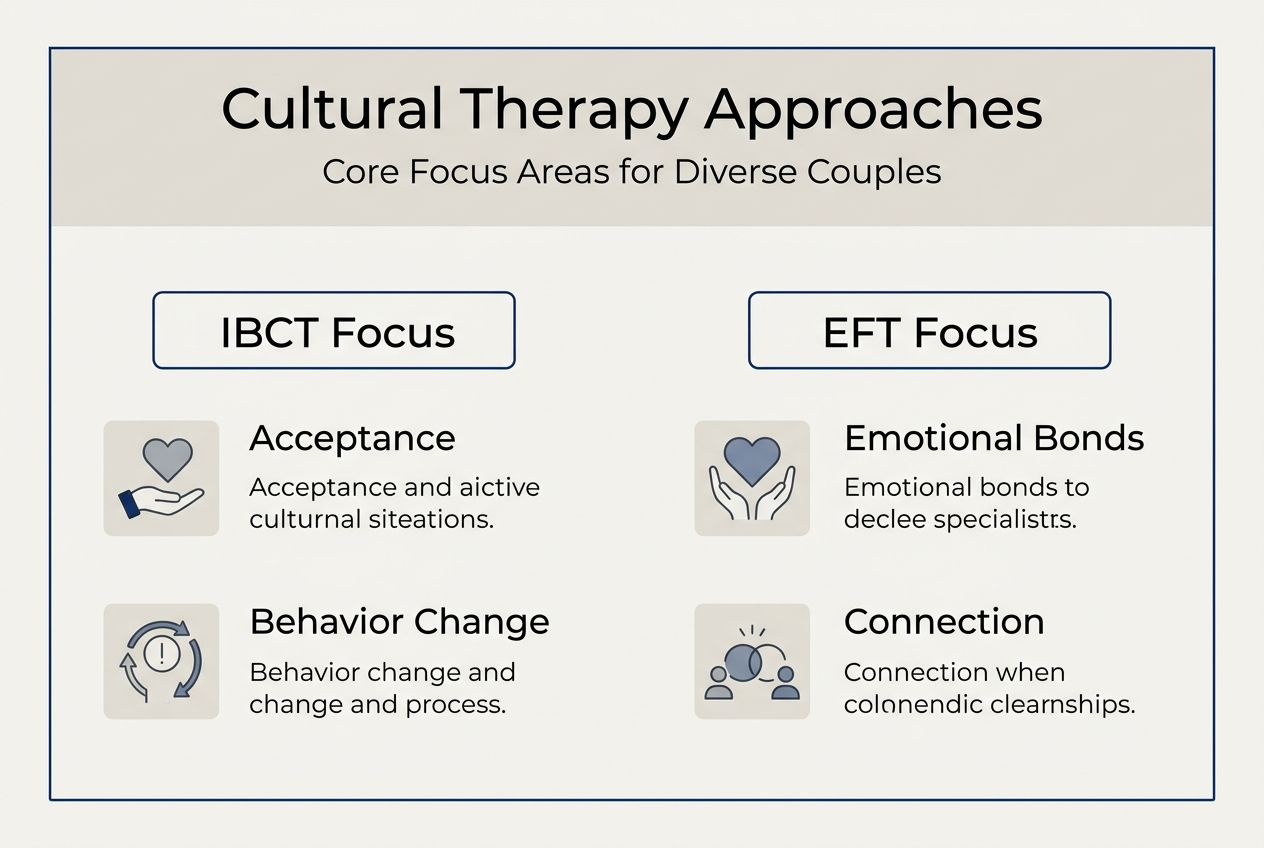
Integrative Behavioral Couple Therapy balances acceptance with change, making it particularly effective for culturally diverse couples. IBCT recognizes that some differences stem from core cultural values that shouldn’t be “fixed.” Instead, therapists help you build acceptance around these differences while identifying specific behaviors both partners can modify. This dual focus respects cultural identity while promoting practical relationship improvements.
The acceptance component of IBCT proves especially valuable when cultural backgrounds clash. Rather than forcing compromise on fundamental values, you learn to understand your partner’s cultural perspective and find meaning in your differences. The change component then targets specific behaviors causing distress, like communication patterns or conflict avoidance, without requiring you to abandon your cultural identity.
Emotionally Focused Therapy significantly reduces relationship distress when adapted for cultural contexts. EFT focuses on emotional bonds and attachment security, recognizing that different cultures express and experience these bonds uniquely. Therapists trained in culturally sensitive EFT adjust their approach based on your comfort with emotional vulnerability, your cultural norms around expressing needs, and your attachment patterns shaped by cultural upbringing.
Comparing these approaches helps you choose the right fit:
| Approach | Primary Focus | Cultural Strength | Best For |
|---|---|---|---|
| IBCT | Acceptance and behavior change | Honors cultural values while addressing specific conflicts | Couples with significant cultural differences needing practical solutions |
| EFT | Emotional bonds and attachment | Adapts to cultural norms around vulnerability and emotional expression | Couples seeking deeper emotional connection within cultural frameworks |
Both approaches require therapists with specific cultural competency training. During your search, ask about their experience with couples from your cultural background. Inquire how they adapt standard protocols to honor diverse values and communication styles.
Pro Tip: Request a consultation call before committing to therapy. Use this conversation to assess whether the therapist demonstrates genuine cultural curiosity and humility rather than claiming expertise they may lack.
The most effective couples therapy basics always include explicit discussion of cultural factors. Therapists should invite you to share how your background influences your relationship expectations, conflict patterns, and therapeutic goals. This ongoing dialogue ensures therapy remains relevant and respectful throughout your journey.
When exploring cultural differences and therapy, remember that cultural sensitivity isn’t about stereotyping or making assumptions. It’s about creating space for your unique cultural experience to inform and enrich the therapeutic process.
Addressing racial stress and building trust in culturally sensitive therapy
Racial stress creates unique challenges that standard couples therapy often overlooks. African Americans’ chronic exposure to racism causes cumulative stress that harms relationships through heightened vigilance, emotional exhaustion, and trauma responses. These effects ripple through couple dynamics, creating conflicts that have little to do with the relationship itself and everything to do with navigating a racially hostile environment.

You might experience racial stress manifesting as irritability after microaggressions at work, withdrawal following discriminatory encounters, or hypervigilance that makes relaxation at home nearly impossible. Your partner may struggle to understand these reactions without cultural context. Generic therapy approaches that ignore this reality miss the core issue driving relationship distress.
Racially sensitive interventions should address racial stress, client trust, gender role expectations, and views of emotionality. Effective therapists explicitly name racism’s impact on your relationship rather than treating it as background noise. They help you develop coping strategies for racial trauma while strengthening your connection as a buffer against external stress.
Building trust with a therapist requires more than clinical competence. For couples from marginalized communities, trust depends on the therapist’s willingness to acknowledge power dynamics, historical harm from mental health systems, and ongoing discrimination. Ways to build client trust include transparent communication about treatment approaches, cultural humility about knowledge gaps, and consistent validation of your lived experiences.
Cultural expectations around gender and emotion add another layer of complexity:
- Traditional gender roles may discourage men from expressing vulnerability or seeking help, creating barriers to therapeutic engagement
- Cultural norms about emotional restraint can conflict with therapy’s emphasis on open expression, requiring adapted approaches
- Intersecting identities around race and gender create unique pressures that generic frameworks fail to address
- Historical stereotypes about emotionality in different racial groups may unconsciously influence therapist perceptions and interventions
Pro Tip: If you’re seeking therapy as a Black couple, consider working with African American and Black Therapists who bring lived experience and cultural understanding to the therapeutic relationship, though cultural competency matters more than racial matching alone.
Culturally centered therapy acknowledges that healing happens within community and cultural context, not in isolation. Therapists should help you leverage cultural strengths like extended family support, spiritual practices, or community connections rather than viewing these as obstacles to individual-focused treatment.
For families navigating these dynamics together, counseling for black families provides specialized approaches that honor collective cultural values while addressing individual relationship needs. This systemic perspective recognizes that couple relationships exist within broader family and community networks that shape expectations and provide crucial support.
Addressing racial stress directly in therapy transforms it from another burden you carry alone into a shared challenge you face together. Your therapist should help you externalize racism as the problem rather than internalizing its effects as personal failings or relationship deficits.
Explore personalized culturally sensitive therapy options
Finding the right therapeutic support requires understanding your options and choosing services aligned with your cultural needs. Mastering Conflict offers teletherapy counseling therapists trained in culturally responsive approaches, providing accessible care regardless of your location. Teletherapy removes geographic barriers while maintaining the personalized attention necessary for effective couples work.
Before beginning therapy, consider completing an anger management assessment to identify specific patterns affecting your relationship. These assessments provide valuable insights into how stress, cultural factors, and individual histories contribute to conflict dynamics. Understanding these patterns early helps you and your therapist develop targeted interventions.
Many couples wonder about coaching vs therapy when seeking relationship support. Therapy addresses deeper emotional wounds, trauma, and mental health concerns, while coaching focuses on skill-building and goal achievement. For culturally complex relationship challenges, therapy typically provides the depth and clinical expertise necessary for lasting change.
Frequently asked questions about cultural considerations in couples therapy
How does addressing culture improve therapy effectiveness?
Cultural awareness allows therapists to tailor interventions to your specific values, communication patterns, and relationship expectations rather than applying generic protocols. This personalization increases engagement, reduces dropout, and produces outcomes that feel authentic to your cultural identity. When you feel understood culturally, you’re more likely to trust the process and implement suggested changes.
What should I look for in a culturally sensitive couples therapist?
Seek therapists with specific training in multicultural competencies, not just general clinical credentials. Ask about their experience with couples from your background and how they adapt standard approaches for cultural diversity. Look for demonstrated cultural humility, willingness to acknowledge knowledge gaps, and commitment to ongoing learning about diverse communities. Review common marriage counseling questions to prepare for initial consultations.
How can we prepare for culturally focused therapy sessions?
Discuss your cultural backgrounds openly with each other before therapy begins, identifying areas of alignment and difference. Prepare to share how your upbringing shapes your relationship expectations, conflict styles, and emotional expression. Write down specific cultural values or practices important to you that should inform treatment. Be ready to educate your therapist about your culture while also remaining open to examining how cultural patterns may contribute to relationship challenges.
Does cultural matching between therapist and clients matter?
Shared cultural background can facilitate understanding and trust, but cultural competency matters more than matching. Therapists from different backgrounds who demonstrate genuine curiosity, humility, and specialized training often provide excellent care. The key is finding someone willing to learn about your specific cultural context rather than making assumptions based on broad categories. Focus on the therapist’s skills and approach rather than demographics alone.
Can therapy work if partners come from very different cultural backgrounds?
Absolutely. Intercultural couples often benefit tremendously from therapy that explicitly addresses cultural differences as a source of both strength and challenge. Effective therapists help you navigate these differences by building mutual understanding, developing shared relationship values, and honoring each partner’s cultural identity. The goal isn’t cultural assimilation but rather creating a unique relationship culture that respects both backgrounds while meeting both partners’ needs.
Recommended
- Top Couples Therapy Benefits for Families in 2025 – Mastering Conflict
- Conflict Resolution for Couples: Practical Strategies for 2025 – Mastering Conflict
- How cultural differences can create conflicts in your relationship and what to do about it – Mastering Conflict
- When to Seek Couples Counseling: Signs, Solutions, and Options – Mastering Conflict
- Step-by-Step Guide to Cultural Exchange Travel Success | SwappaHome Blog
- Prenups and Estate Plans: Why Couples Should Consider Both Before Marriage – Hickory Attorneys for Family Law, Criminal Defense, & Estate Planning | King & Rowe