
5 real benefits of online therapy for couples in 2026

TL;DR:
- Online therapy is as effective as in-person treatment for anxiety, depression, and relationship issues.
- It offers practical benefits like convenience, privacy, and access to specialized providers.
- Not suitable for severe psychiatric crises or complex conditions requiring in-person care.
Most people assume that sitting across from a therapist in a physical office is the gold standard of mental health care. That assumption is understandable, but the research tells a more nuanced story. For individuals and couples in North Carolina, South Carolina, and Florida, online therapy has become a genuinely effective and often more practical path to healing. Whether you’re managing anxiety, navigating relationship conflict, or working through anger, this guide breaks down the evidence-based benefits of virtual care and helps you figure out whether it’s the right fit for your life.
Table of Contents
- How effective is online therapy compared to in-person sessions?
- What conditions and concerns respond best to online therapy?
- Unique advantages of online therapy: Convenience, privacy, and flexibility
- Limitations and important cautions for online therapy
- The truth most people miss about online therapy
- Ready to experience the benefits of online therapy?
- Frequently asked questions
Key Takeaways
| Point | Details |
|---|---|
| Proven effectiveness | Online therapy is as effective as in-person care for most common mental health and relationship issues. |
| Great for accessibility | You can get expert help wherever you live in the Carolinas or Florida, with flexible scheduling. |
| Informed decisions needed | Some conditions or crises may still require in-person care, so it’s important to know when digital therapy is right for you. |
| Privacy and convenience | Online therapy offers comfort and anonymity, but secure platforms and private spaces are crucial. |
How effective is online therapy compared to in-person sessions?
The biggest concern most people raise about online therapy is simple: does it actually work? The short answer is yes, and the research backs that up clearly. A meta-analysis of 112 trials found that online therapy produces results comparable to in-person counseling for depression, anxiety, and general mental health symptoms, with effect sizes of g=0.40 for anxiety and g=0.30 for global symptoms. Those are meaningful improvements, not marginal ones.
For couples specifically, the evidence is equally encouraging. A meta-analysis of 6 studies found that digital interventions improve relationship satisfaction with a moderate effect size of Hedges’ g=0.42. That’s a statistically significant result that mirrors what couples experience in traditional counseling settings. You can explore more about online couples therapy benefits and what the research says about teletherapy effectiveness to get a fuller picture.
| Condition | In-person effect size | Online effect size |
|---|---|---|
| Anxiety | g=0.45 | g=0.40 |
| Depression | g=0.35 | g=0.30 |
| Relationship satisfaction | g=0.44 | g=0.42 |
The numbers are close. Remarkably close. This matters because it means you don’t have to sacrifice quality of care just because you’re logging in from your living room in Charlotte or Tampa.
“The evidence consistently shows that online therapy is not a second-tier option. For most common mental health challenges, it delivers real, lasting results.”
Key takeaways from the research:
- Online therapy matches in-person outcomes for anxiety and depression
- Couples show improved conflict resolution and relationship satisfaction
- Effect sizes are comparable across multiple large-scale studies
- Teens and adults both benefit, as shown in research on online therapy for teens
What conditions and concerns respond best to online therapy?
Understanding how well online therapy works raises the next question: which issues or conditions does it address best? Not every mental health concern responds equally well to virtual care, so it’s worth knowing where the evidence is strongest.
Three digital therapy methodologies have the most clinical support. Internet-based cognitive behavioral therapy (iCBT), internet-based acceptance and commitment therapy (iACT), and internet-based dialectical behavior therapy (iDBT) all show significant reductions in depression and are considered comparable to face-to-face systemic therapy for couples. These aren’t experimental approaches. They are well-tested frameworks adapted for digital delivery.
| Concern | Best-fit online approach | Evidence level |
|---|---|---|
| Depression | iCBT, iACT | Strong |
| Anxiety | iCBT | Strong |
| Relationship conflict | iCBT, systemic therapy | Moderate to strong |
| Anger management | iCBT, iDBT | Moderate |
| Family stress | Systemic online therapy | Moderate |
Conditions and concerns that respond especially well to online therapy include:
- Mild to moderate depression and anxiety
- Relationship distress and communication breakdowns
- Anger issues and emotional regulation challenges, as detailed in this guide on online therapy for anger
- Family conflict and parenting stress, which is explored further in couples therapy for families
- Stress related to work, burnout, and daily life pressures
Building healthy daily routines for couples alongside therapy also strengthens outcomes. The same principle applies to individual clients. Learning to set healthy boundaries between sessions reinforces the skills you practice in therapy.
Pro Tip: Consistency matters more than you might think. Clients who attend sessions regularly and practice skills between appointments see significantly better results than those who treat therapy as a drop-in resource.
Unique advantages of online therapy: Convenience, privacy, and flexibility
Once you know online therapy works and suits your concerns, you’ll want to consider why so many choose it for their unique circumstances. The practical benefits are real and worth naming directly.
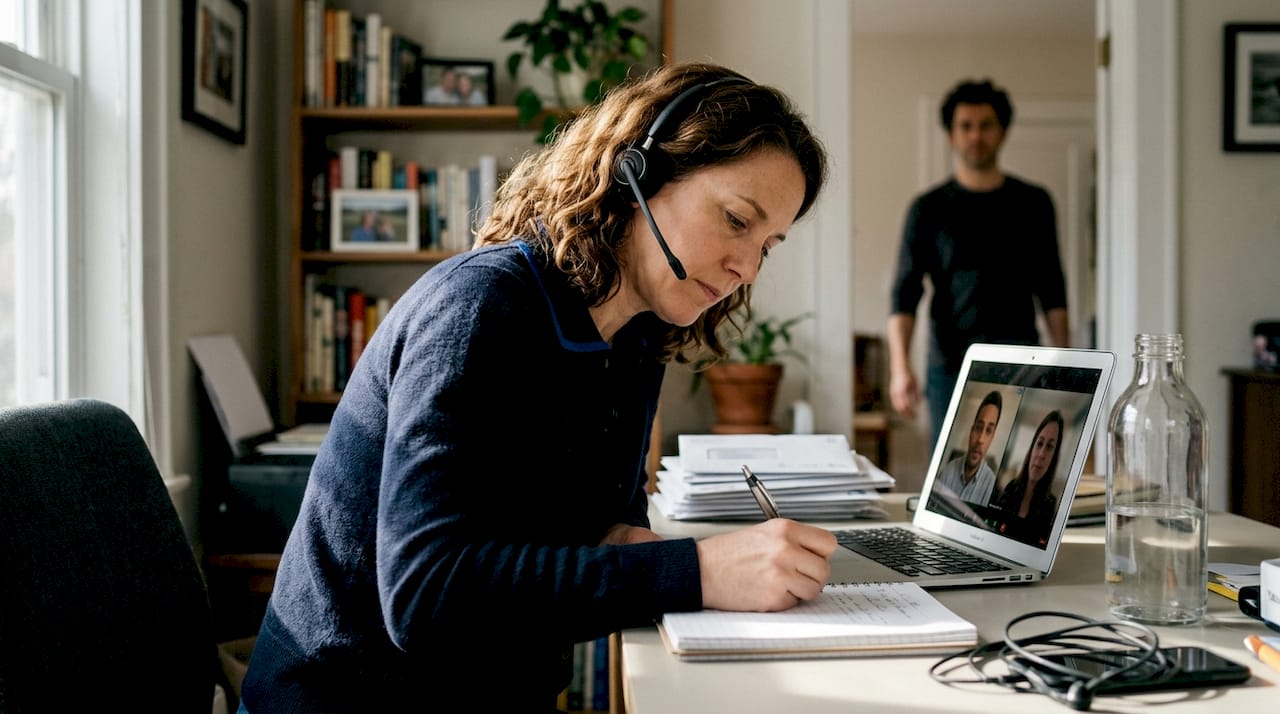
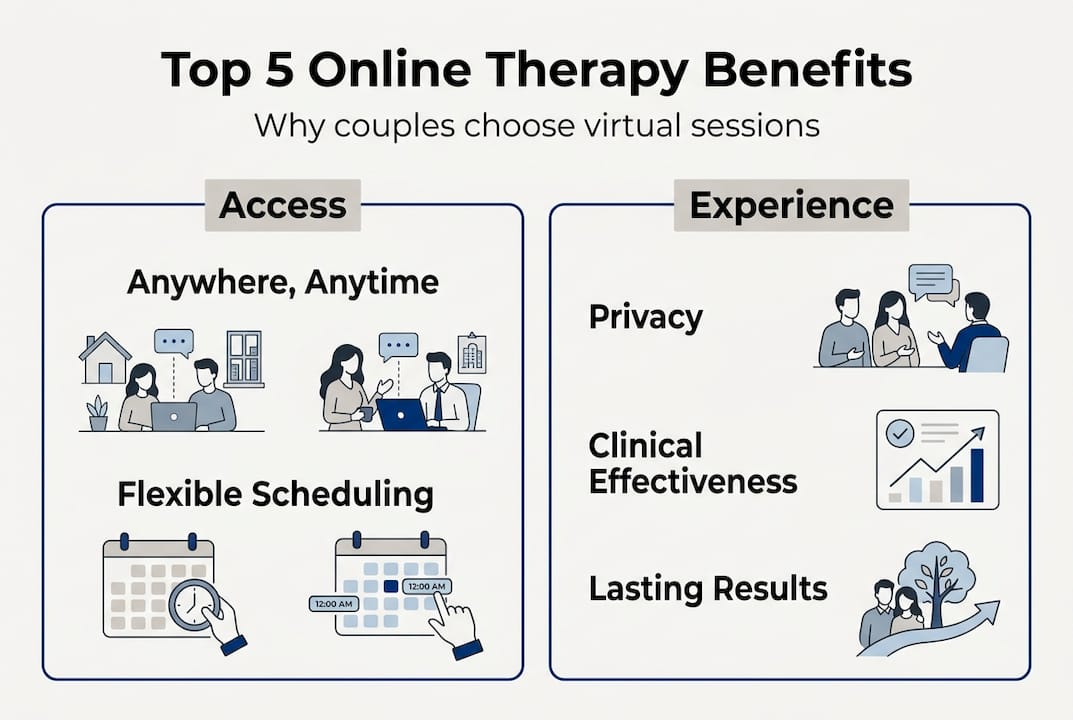
For busy professionals, parents, and couples managing packed schedules across North Carolina, South Carolina, and Florida, the biggest advantage is simply access. No commute. No waiting room. No need to take half a day off work. You log in from wherever you are, and the session begins. This kind of flexible mental health support removes barriers that cause people to delay or abandon care altogether.
Privacy is another underrated benefit. Some people feel more comfortable opening up about sensitive topics like anger, infidelity, or shame from their own home rather than in a clinical setting. Research does note that online therapy benefits privacy and anonymity, though it also carries risks like weaker therapeutic alliance and technical disruptions. Understanding confidentiality in online sessions helps you protect your information and set realistic expectations.
Advantages that make online therapy stand out:
- No travel time or transportation costs
- Access to specialized providers regardless of your city or zip code
- Easier scheduling for couples with different work hours
- Reduced stigma for those hesitant to visit a physical office
- Continuity of care during travel, illness, or relocation
- Ability to connect with teletherapy services in Charlotte and across the region
Managing your screen-life balance around your therapy schedule also supports your overall mental health between sessions.
Pro Tip: To protect your privacy during online sessions, use a HIPAA-compliant platform, wear headphones, and choose a room where you won’t be overheard. A small investment in your setup pays off in session quality.
Limitations and important cautions for online therapy
Despite its many strengths, online therapy is not suitable for all circumstances. Here’s what to watch for and when to consider alternatives.
Honesty matters here. Online therapy has real limitations, and ignoring them doesn’t serve you. Certain conditions require the kind of nuanced, in-person assessment that virtual platforms simply can’t replicate. According to Psychiatric Times, online therapy is less suitable for complex conditions like eating disorders, substance use disorders, PTSD, and borderline personality disorder due to diagnostic subtlety, limited non-verbal cue detection, and challenges with crisis intervention.
“Virtual care is a powerful tool, but it is not a universal solution. Clinical judgment about fit and safety must always come first.”
Red flags that suggest in-person care may be more appropriate:
- Active suicidal ideation or self-harm behaviors
- Severe psychiatric conditions requiring close monitoring
- Substance use disorders needing structured treatment programs
- Eating disorders with medical complications
- PTSD with frequent dissociation or severe flashbacks
- Domestic violence situations where privacy cannot be guaranteed
- Borderline personality disorder requiring intensive, multi-modal care
Technical issues also deserve honest acknowledgment. Dropped connections, poor audio, and platform glitches can disrupt the flow of a session at critical moments. These aren’t just inconveniences. They can affect the therapeutic relationship and session continuity. Reviewing online counseling best practices before starting helps you prepare. If you’re unsure whether virtual care is right for your situation, reading about how online therapy works can help you make a more informed choice.
The truth most people miss about online therapy
Having reviewed both the strengths and limitations of online therapy, let’s consider what truly matters when making your choice.
After working with clients across the Carolinas and Florida, the pattern is clear: the platform matters far less than the relationship. Clients who show up consistently, engage honestly, and practice what they learn between sessions make progress whether they’re sitting in an office or logging in from their kitchen table. The therapeutic relationship, the fit between client and counselor, and the client’s own readiness to change are the real drivers of outcomes.
What we’ve seen is that many people in our region actually follow through better with online therapy. The reduced friction of not having to drive, park, and wait means they keep appointments they might otherwise cancel. Comfort in a familiar environment often leads to more honest conversations. The evidence for teletherapy supports this observation. Delivery method is a logistics question. Commitment to change is the real question worth asking yourself.
Ready to experience the benefits of online therapy?
If the research and real-world experience described here resonate with you, the next step is straightforward. At Mastering Conflict, we provide safe, flexible, and clinically grounded support for individuals and couples throughout North Carolina, South Carolina, and Florida.
Whether you’re ready to book a session, complete an anger management assessment, or explore options through our clinical therapy services, we make it easy to get started. Mental health professionals seeking growth can also access clinical supervision through our platform. Reach out today and connect with a provider who understands your needs, your region, and your goals.
Frequently asked questions
Is online therapy as effective as in-person counseling for anxiety and depression?
Yes. Meta-analyses confirm that online therapy achieves results comparable to face-to-face counseling for anxiety and depression, with similar improvement rates across large-scale studies.
Are there mental health or relationship issues that online therapy can’t help with?
Online therapy is generally not recommended for acute crises, high-risk suicidal concerns, or complex conditions like eating disorders, PTSD, or borderline personality disorder, where in-person assessment is safer.
How do I keep my online therapy sessions private and secure?
Choose a therapist using a HIPAA-compliant platform and attend from a private, quiet space. These two steps protect your confidentiality and improve session quality.
Are couples therapy programs online as good as in-person?
Digital couples therapy shows moderate lasting improvements in relationship satisfaction, with effect sizes closely matching those seen in traditional in-person couples counseling.
What if my internet connection isn’t stable during a session?
Plan sessions from a location with reliable internet and discuss backup options with your therapist in advance, such as switching to a phone call if the video connection drops.