
Online therapy for teens: parent’s guide to support 2026

Supporting a teen through emotional challenges feels overwhelming, especially when traditional therapy options seem out of reach. Online therapy has emerged as a practical solution, offering licensed professionals who specialize in adolescent mental health through secure digital platforms. This guide walks you through evidence-based therapy methods, platform selection criteria, and strategies to support your teen effectively. You’ll discover how digital interventions compare to in-person treatment, what to look for in a therapy provider, and how to balance involvement with your teen’s need for privacy. Whether your teen struggles with anxiety, depression, or relationship conflicts, understanding online therapy options empowers you to make informed decisions that support their well-being.
Table of Contents
- Understanding Therapy Options For Teens Online
- Effectiveness And Benefits Of Online Therapy For Teens
- Choosing The Right Online Therapy Platform
- Supporting Your Teen Through Online Therapy
- Discover Expert Teletherapy And Family Counseling Services
- Frequently Asked Questions
Key takeaways
| Point | Details |
|---|---|
| Evidence-based methods work online | CBT and IPT-A deliver effective results through digital platforms with 12-16 session protocols |
| Comparable effectiveness | Online therapy shows similar outcomes to in-person treatment for teen anxiety and depression |
| Specialized platforms matter | Licensed therapists with teen expertise and parent portals provide optimal support |
| Technical limitations exist | Connection issues and higher dropout rates require monitoring and backup plans |
| Family involvement helps | Parent psychoeducation and conflict resolution skills enhance therapy outcomes |
Understanding therapy options for teens online
Cognitive Behavioral Therapy stands as the most widely researched approach for teen mental health challenges delivered through online platforms. This method helps teens identify negative thought patterns that fuel anxiety, depression, and behavioral issues. During sessions, therapists guide teens through mood monitoring exercises, journaling activities, and relaxation techniques designed to interrupt destructive thinking cycles. The structured approach typically unfolds over 12-16 sessions for anxiety and depression, with homework assignments between meetings to reinforce new skills.
Interpersonal Therapy for Adolescents takes a different angle by focusing on relationship dynamics that contribute to emotional distress. Teens explore how communication patterns with parents, peers, and romantic partners affect their mental state. Therapists use role-playing exercises to practice healthier interaction styles and help teens recognize emotional triggers tied to specific relationships. This approach proves especially valuable when depression stems from relational conflicts, offering teens practical tools to navigate social challenges while building emotional resilience.
Both methods adapt well to video sessions, with therapists sharing screens to demonstrate techniques or review homework digitally. The typical treatment timeline mirrors in-person therapy, though some teens progress faster with the convenience of scheduling sessions around school and activities. Online delivery removes transportation barriers and reduces the stigma some teens feel about visiting a therapist’s office.
Pro Tip: Ask potential therapists about their specific training in adolescent development, not just general counseling credentials, since teen brain development requires specialized knowledge.
Here’s how these approaches differ in focus and application:
| Therapy Type | Primary Focus | Best For | Session Activities |
| — | — |
| CBT | Thought patterns and behaviors | Anxiety, depression, PTSD, eating disorders | Mood tracking, cognitive restructuring, exposure exercises |
| IPT-A | Relationship dynamics | Depression linked to social conflicts | Communication analysis, role-playing, grief processing |
The choice between these methods depends on your teen’s specific challenges. Teens struggling with racing thoughts, panic attacks, or compulsive behaviors often respond well to CBT’s structured approach. Those dealing with friendship drama, family tension, or romantic relationship stress may benefit more from IPT-A’s interpersonal focus. Many therapists blend elements from both approaches based on individual needs. Understanding therapy for teens explained helps you recognize which method aligns with your teen’s situation.
Effectiveness and benefits of online therapy for teens
Research demonstrates that digital interventions reduce anxiety and depression with medium to large effect sizes in youth populations. A 2025 meta-analysis examining multiple studies found online CBT and related therapies produce meaningful symptom reduction comparable to traditional face-to-face treatment. These findings matter because they confirm parents aren’t sacrificing quality when choosing virtual sessions over office visits.

The therapeutic relationship, often called the alliance between teen and therapist, shows some variability in online settings. Studies indicate online therapy performs equivalently to in-person across most outcome measures, though individual preferences play a role. Some teens feel more comfortable opening up from their bedroom than sitting in an unfamiliar office. Others miss the physical presence of a therapist and struggle with screen-based connection.
Digital delivery offers distinct advantages for today’s teens who grew up with technology:
- Greater scheduling flexibility around school, sports, and part-time jobs
- Reduced travel time and associated stress for families
- Access to specialists regardless of geographic location
- Enhanced privacy since teens don’t risk running into classmates in a waiting room
- Immediate crisis support through messaging features on many platforms
The convenience factor cannot be overstated. Teens can attend sessions during lunch breaks or after evening activities without parents taking time off work for transportation. This accessibility increases the likelihood that teens will maintain consistent attendance, which directly impacts treatment success. Platforms often include interactive tools like mood trackers and journaling apps that engage tech-savvy adolescents more effectively than paper worksheets.
“The digital format allows therapists to meet teens in their natural environment, which can accelerate trust-building and reduce the power imbalance some adolescents feel in traditional clinical settings.”
Yet online therapy isn’t universally superior. Connection quality varies with internet reliability, and technical glitches can disrupt emotional moments. Some teens find video sessions draining or struggle to focus without the structure of a physical appointment. The benefits of online couples therapy benefits extend to family-based interventions as well, where multiple household members can join sessions from different locations when needed.
Therapist burnout rates appear lower in telehealth settings, potentially because providers avoid commute stress and can create more comfortable work environments. This professional well-being may translate to better care quality. However, therapists also report challenges reading body language through screens and managing technical troubleshooting during sessions.
Choosing the right online therapy platform
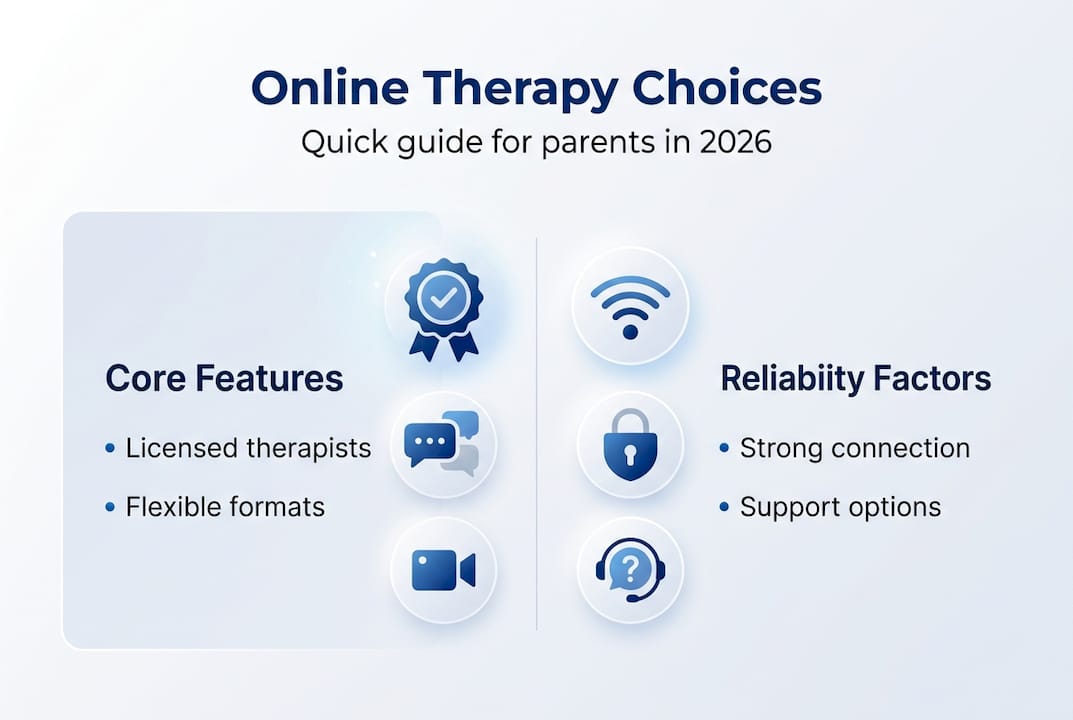
Selecting a platform requires evaluating several critical factors that directly impact your teen’s treatment experience. Licensed therapists with specialized training in adolescent mental health should be non-negotiable. Recommended platforms include Teen Counseling and Bend Health because they employ licensed professionals who focus specifically on teen issues rather than general adult therapy adapted for younger clients.
Parent portals represent another essential feature that balances your need for involvement with your teen’s privacy rights. Quality platforms provide secure access where you can view progress summaries, appointment schedules, and general treatment goals without reading session transcripts. This transparency helps you support your teen’s journey while respecting the confidential space they need to discuss sensitive topics freely.
Cost structures vary significantly across platforms, with monthly subscriptions typically ranging from $280 to $400. Some services accept insurance, while others operate on a cash-pay model. Before committing, verify:
- Whether your insurance plan covers telehealth mental health services
- If the platform is in-network with your provider
- What out-of-pocket costs you’ll face for each session
- Whether financial assistance programs exist for families with limited resources
Communication options matter because teens have different comfort levels with various formats. Most platforms offer video sessions as the primary mode, but supplementary messaging, phone calls, or chat features provide flexibility. Video remains the gold standard for building therapeutic relationships, but between-session messaging can help teens process urgent feelings or ask quick questions.
Pro Tip: Schedule a consultation call with potential therapists before committing to ensure your teen feels comfortable with their communication style and approach.
Avoid platforms that rely primarily on AI chatbots or unlicensed coaches marketing themselves as therapy alternatives. While these tools may offer support, they cannot provide clinical treatment for mental health conditions. Legitimate platforms clearly display therapist credentials, license numbers, and specializations. Privacy policies should explicitly address HIPAA compliance and data security measures.
Here’s a comparison of key platform features:
| Feature | What to Look For | Why It Matters |
| — | — |
| Therapist Licensing | State-licensed clinical professionals | Ensures qualified treatment and legal protections |
| Teen Specialization | Experience with adolescent development | Addresses age-specific challenges effectively |
| Parent Portal | Secure access to progress updates | Balances involvement with teen privacy |
| Communication Modes | Video, messaging, phone options | Accommodates different teen preferences |
| Crisis Support | 24/7 access or clear escalation protocols | Provides safety net for urgent situations |
Technical reliability deserves attention since platform outages or poor video quality can derail sessions at critical moments. Read recent user reviews focusing on connection stability and customer support responsiveness. Platforms should offer backup communication methods when technical issues arise. Understanding conflict resolution for adolescents helps you recognize whether a platform’s approach aligns with evidence-based practices.
Supporting your teen through online therapy
Your involvement plays a crucial role in therapy success, but finding the right balance challenges many parents. Open communication about therapy goals and progress helps teens feel supported without feeling monitored. Ask general questions about how sessions are going rather than demanding detailed accounts of what they discussed. This approach shows interest while respecting the confidential space they need to explore difficult emotions.
Encouraging consistent attendance matters more than most parents realize. Online therapy faces higher dropout rates than in-person, partly because the lower barrier to entry also makes it easier to skip sessions. Help your teen protect their therapy time by:
- Blocking the appointment time on family calendars to prevent scheduling conflicts
- Creating a quiet, private space in your home where they can attend sessions undisturbed
- Checking in before sessions to ensure they have working technology and a stable internet connection
- Following up afterward with supportive comments that don’t pressure them to share details
Family conflict resolution strategies complement individual therapy by creating a healthier home environment. When you learn communication techniques alongside your teen’s therapeutic work, you reinforce the skills they’re developing. Parental involvement through psychoeducation and skills coaching improves outcomes without breaching confidentiality. Many therapists offer occasional parent sessions to teach you specific approaches that support your teen’s progress.
Monitoring engagement without hovering requires attention to subtle signs. Notice whether your teen seems more withdrawn after sessions or shows increased resistance to attending. These patterns might indicate a poor therapist fit rather than therapy resistance. Conversely, teens who voluntarily mention insights from therapy or apply new coping strategies demonstrate healthy engagement.
Pro Tip: Create a simple check-in ritual after therapy sessions, like offering their favorite snack or suggesting a brief walk together, that provides connection without interrogation.
Balancing support with autonomy becomes especially important during adolescence when teens are developing independence. Resist the urge to solve problems they’re working through in therapy. Instead, acknowledge their efforts and express confidence in their ability to develop solutions with professional guidance. This approach reinforces the therapeutic process while building their self-efficacy.
Practical strategies from conflict resolution strategies teens can be implemented at home to reduce tension. When conflicts arise, use the communication techniques you’ve learned to model healthy problem-solving. Your teen will notice the consistency between therapy lessons and home practice, strengthening their commitment to applying new skills.
Watch for warning signs that might require additional support beyond online therapy. Sudden behavioral changes, mentions of self-harm, substance use, or academic decline warrant immediate attention. Online platforms should have clear crisis protocols, but you may need to pursue emergency services or intensive outpatient programs for severe situations. Resources on conflict resolution for teens provide additional frameworks for navigating challenging moments.
Discover expert teletherapy and family counseling services
Navigating your teen’s mental health journey becomes easier with professional support designed specifically for families facing these challenges. Mastering Conflict offers comprehensive clinical services that address adolescent emotional struggles through evidence-based approaches. Licensed therapists with specialized training in teen development provide teletherapy counseling therapists that makes accessing quality care convenient for busy families. The platform emphasizes family-focused interventions that recognize how household dynamics impact teen well-being.
When individual therapy needs support from broader family work, family counseling therapist services help improve communication patterns and resolve ongoing conflicts. This integrated approach ensures your teen receives consistent support across all aspects of their life. Professional guidance tailored to your family’s unique situation provides the foundation for lasting positive change.
Frequently asked questions
What age is appropriate for online therapy for teens?
Online therapy typically suits teens age 13 and older, though some platforms serve younger adolescents with increased parental involvement. State laws vary regarding consent requirements, with most requiring parental permission for minors under 18. Younger teens may need more parent participation during initial sessions to establish comfort with the format. Therapists assess developmental readiness during intake to ensure the teen can engage meaningfully with virtual treatment.
How can parents support teens while respecting their privacy in online therapy?
Engage with general progress updates through parent portals rather than requesting session details. Focus conversations on observable changes in mood or behavior instead of asking what they discussed with their therapist. Participate in psychoeducation opportunities when therapists offer parent sessions to learn supporting skills. This approach demonstrates investment in their well-being while honoring the confidential space they need for honest therapeutic work.
Is online therapy as effective as in-person therapy for teens?
Research indicates online therapy produces comparable outcomes to in-person treatment for teen anxiety and depression in most cases. Effectiveness depends partly on individual preferences, with some teens thriving in virtual settings while others prefer face-to-face interaction. The therapeutic relationship quality matters more than delivery format for most adolescents. Severe or complex cases may require hybrid approaches combining online and in-person sessions.
What are common challenges or limitations of online therapy for teens?
Technical difficulties like poor internet connections or platform glitches can disrupt therapeutic moments and frustrate both teens and therapists. Privacy concerns arise when teens lack private space at home for confidential conversations. Higher dropout rates compared to in-person therapy require active engagement monitoring. Severe mental health crises, active self-harm, or situations requiring immediate intervention may exceed online therapy’s scope and need emergency or intensive in-person care.
How do I choose the best online therapy platform for my teen?
Prioritize platforms with state-licensed therapists who specialize in adolescent mental health rather than general practitioners. Verify HIPAA compliance and robust privacy protections for sensitive health information. Look for parent support features that provide progress visibility without compromising teen confidentiality. Consider communication format options, cost structure, insurance acceptance, and platform reputation through recent user reviews. Schedule consultation calls to assess whether specific therapists match your teen’s personality and needs.
Recommended
- Therapy for Teens Explained: Supporting Behavioral Change – Mastering Conflict
- How online therapy works: a guide for anger support – Mastering Conflict
- Therapy Versus Coaching: Choose the Right Support for 2025 – Mastering Conflict
- Teen Anger Management: 35% Better Outcomes With Parent Support – Mastering Conflict