
Conflict Resolution Strategies for Teens: Building Stronger Family Bonds

Every american family with teens in North Carolina or South Carolina faces the challenge of turning tense moments into opportunities for connection. Over half of teenagers report that conflict at home feels overwhelming at least once a month, making it crucial for parents to understand effective strategies. This article explores practical approaches to teen conflict resolution, revealing clear ways to strengthen communication and prevent small disagreements from spiraling into lasting problems.
Table of Contents
- Defining Teen Conflict Resolution Strategies
- Common Types of Teen Conflicts at Home
- Essential Communication and Listening Skills
- Step-by-Step Approaches to Resolving Conflict
- Key Mistakes Parents and Teens Should Avoid
- When to Seek Professional Help With Conflicts
Key Takeaways
| Point | Details |
|---|---|
| Effective Communication is Key | Teens should utilize communication techniques such as ‘I’ statements and active listening to foster understanding in conflicts. |
| Conflict Types Vary by Context | Teen conflicts can stem from differing views on independence, technology use, and academic pressure. |
| Collaboration Over Confrontation | Approaches that encourage mutual agreement and emotional regulation yield better conflict resolution outcomes. |
| Seek Professional Help When Needed | Warning signs such as persistent conflicts or emotional distress may indicate the need for professional intervention. |
Defining Teen Conflict Resolution Strategies
Teens experience complex interpersonal dynamics that require sophisticated conflict resolution skills. Research examining adolescent conflict strategies reveals that effective communication techniques are crucial for navigating relationships with family, friends, and romantic partners. Understanding these strategies involves recognizing both constructive and potentially harmful approaches teens might utilize during disagreements.
Conflict resolution for teenagers involves multiple dimensions beyond simple problem solving. It requires emotional intelligence, active listening, empathy, and the ability to communicate needs without escalating tensions. Constructive strategies typically include techniques like expressing feelings using “I” statements, actively seeking to understand the other person’s perspective, managing emotional responses, and working collaboratively toward mutually acceptable solutions.
Successful conflict resolution strategies for teens often focus on developing communication skills that promote understanding rather than defensiveness. These skills include practicing emotional regulation, learning to articulate feelings clearly, recognizing personal triggers, and developing negotiation techniques that respect both parties’ perspectives. Conflict Resolution Skills for Teens: Building Healthy Relationships provides additional insights into developing these critical interpersonal abilities.
Pro tip: Practice reflective listening by repeating back what you hear the other person saying to confirm understanding and demonstrate genuine engagement.
Common Types of Teen Conflicts at Home
Family conflict dynamics during adolescence reveal multiple complex interaction patterns that challenge both parents and teenagers. Typical conflicts emerge from shifting boundaries, independence struggles, and communication breakdowns. These conflicts often revolve around core issues like personal autonomy, household responsibilities, technology use, academic expectations, and social activities.
Adolescents frequently experience tensions related to personal boundaries and perceived parental control. Common conflict scenarios include disagreements about screen time, social media usage, curfews, dating, academic performance, and personal privacy. How to Deal With Parenting Conflicts highlights that these conflicts are normal developmental challenges that reflect teenagers’ growing need for independence and self-determination.
Research indicates that conflict types vary depending on family dynamics, cultural background, and individual personality traits. Some teens might experience more intense conflicts around academic pressures, while others struggle more with social expectations or personal identity exploration. Understanding these nuanced conflict patterns helps parents develop more empathetic and effective communication strategies that support their teenager’s emotional growth and maintain healthy family relationships.
Here’s a summary of common sources of teen-family conflict and their underlying causes:
| Conflict Type | Typical Cause | Impact on Relationship |
|---|---|---|
| Screen time limits | Differing views on technology use | Can trigger arguments, resentment |
| Curfew enforcement | Desire for independence | Can erode trust if not addressed |
| Academic expectations | Pressure to perform | May lead to anxiety, disengagement |
| Privacy boundaries | Need for personal space | Reduces openness and communication |
| Social activities | Balancing freedom and safety | May provoke negotiation or defiance |
Pro tip: Create a weekly family meeting where each member can openly discuss concerns and feelings without judgment, establishing a safe space for communication.
Essential Communication and Listening Skills
Effective communication strategies encompass more than just verbal exchanges. Teens need to develop a nuanced approach that includes understanding verbal, nonverbal, and paraverbal communication elements. These skills are critical for navigating complex social interactions, managing conflicts, and expressing personal needs and boundaries with clarity and respect.
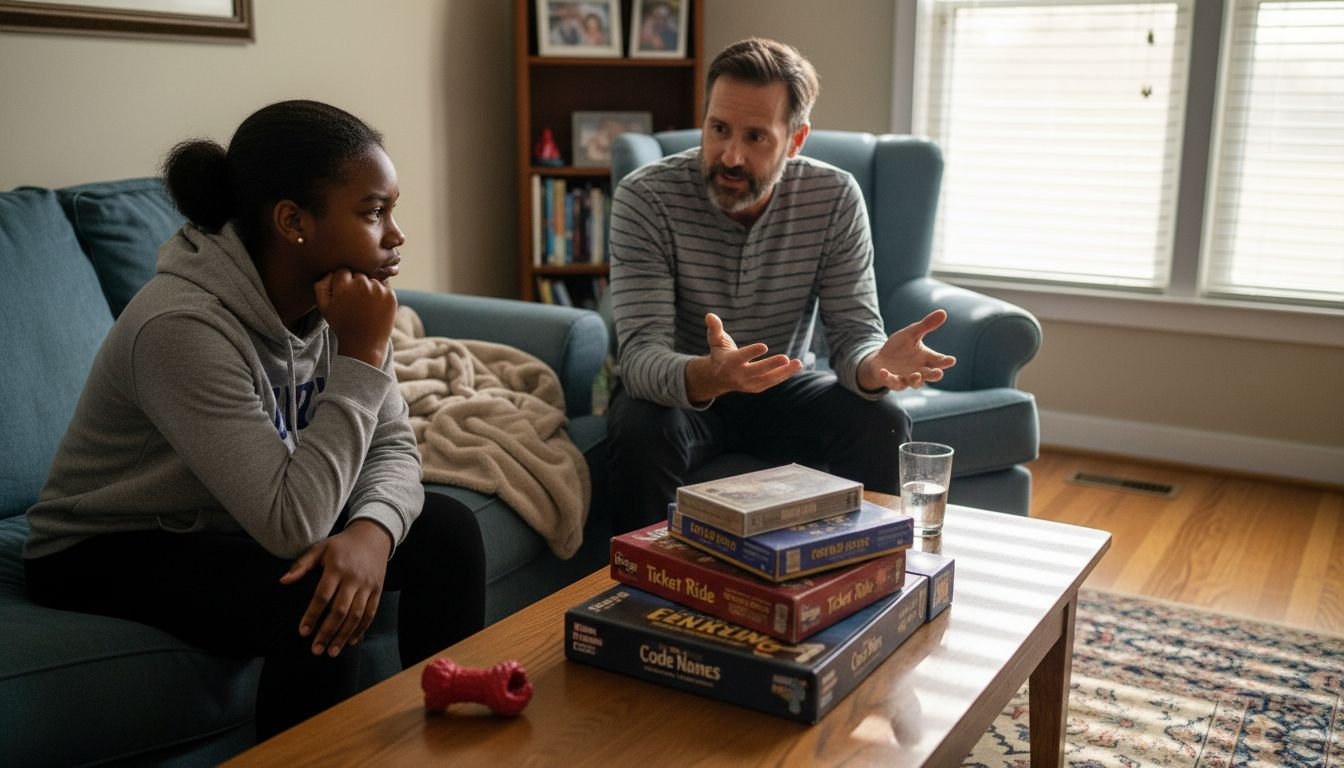
Active listening forms the cornerstone of powerful communication skills. This involves fully concentrating on what is being said, understanding the underlying emotions, and responding thoughtfully rather than reactively. Nonverbal communication plays a crucial role, including maintaining appropriate eye contact, using open body language, and demonstrating genuine engagement through facial expressions and posture. Conflict resolution skills for students emphasize the importance of developing empathy and understanding different communication styles to effectively manage interpersonal challenges.
Teens must learn to distinguish between different communication styles – assertive, passive, and aggressive – and recognize their own default patterns. Assertive communication involves expressing needs and feelings directly and respectfully, without undermining others or becoming defensive. This approach requires self-awareness, emotional intelligence, and the ability to articulate thoughts and feelings clearly while remaining receptive to alternative perspectives.
Pro tip: Practice the “reflection technique” by paraphrasing what you hear others say to confirm understanding and demonstrate that you are genuinely listening.
Compare ways teens and parents can improve communication during conflict:
| Strategy for Teens | Strategy for Parents | Likely Outcome |
|---|---|---|
| Use “I” statements | Validate emotions | Reduces defensiveness |
| Practice emotional regulation | Avoid generalizations | Builds mutual respect |
| Listen without interruption | Ask open-ended questions | Improves understanding |
| State needs clearly | Set clear, consistent boundaries | Strengthens trust |
Step-by-Step Approaches to Resolving Conflict
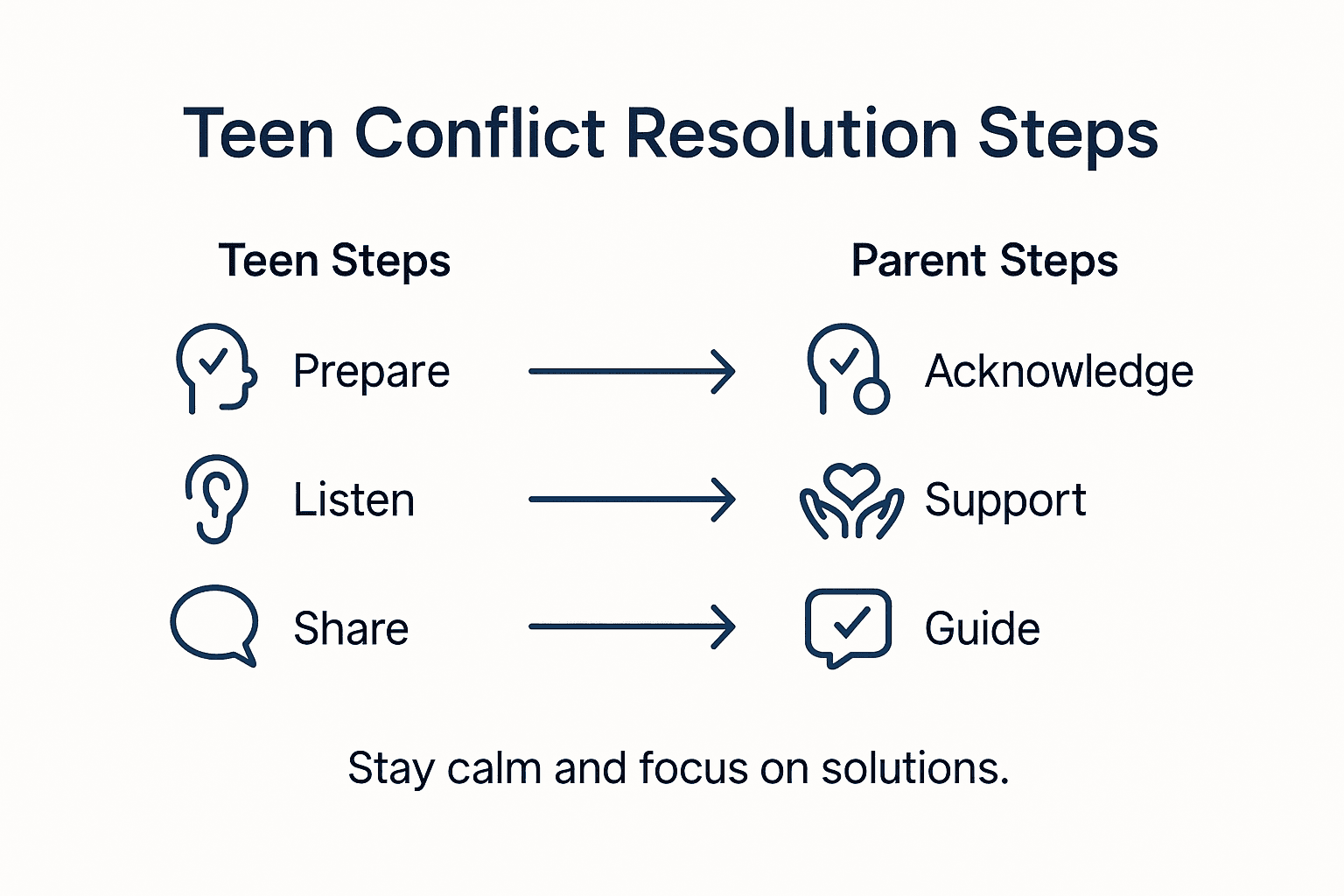
Structured conflict resolution processes provide teenagers with a systematic approach to addressing interpersonal challenges. The most effective strategies involve a deliberate, thoughtful method that transforms potential confrontations into opportunities for understanding and growth. These approaches emphasize emotional intelligence, clear communication, and collaborative problem-solving.
A comprehensive conflict resolution framework typically involves several key stages. Preparation is crucial, requiring individuals to regulate emotions, reflect on the core issue, and approach the conversation with a genuine desire to understand. Master Conflict Resolution Skills for Real-Life Success highlights the importance of creating a calm, neutral environment where both parties feel safe expressing their perspectives without fear of judgment or retaliation.
The most effective resolution approaches often follow a sequential model that includes identifying the root problem, actively listening to each perspective, exploring potential solutions collaboratively, and developing a mutually acceptable agreement. Teens must learn to distinguish between positions (what someone wants) and interests (why they want it), which allows for more creative and flexible problem-solving. This approach transforms conflicts from win-lose scenarios into opportunities for mutual understanding and relationship strengthening.
Pro tip: Before initiating a difficult conversation, take three deep breaths and remind yourself that the goal is understanding, not winning.
Key Mistakes Parents and Teens Should Avoid
Parent-teen conflict patterns reveal critical mistakes that can significantly damage family relationships. These destructive communication patterns often emerge from misunderstandings, emotional reactivity, and ineffective approaches to resolving disagreements. Recognizing and avoiding these common pitfalls is essential for maintaining healthy, supportive family dynamics.
One of the most significant mistakes involves engaging in power struggles and emotional escalation. Parents frequently make the error of tightening control when teens seek independence, while teenagers often respond with defiance or withdrawal. Adolescent-parent interaction research demonstrates that extreme approaches like authoritarianism or complete permissiveness can severely undermine relationship trust and communication. Critical errors include invalidating emotions, using blame language, making sweeping generalizations, and refusing to listen actively.
Both parents and teens commonly fall into destructive communication traps that prevent genuine understanding. These include interrupting each other, making assumptions, bringing up past conflicts, using sarcasm or dismissive language, and becoming defensive instead of seeking collaborative solutions. The most damaging mistakes involve shutting down communication, refusing to acknowledge the other person’s perspective, and viewing conflicts as win-lose scenarios rather than opportunities for mutual growth and understanding.
Pro tip: Create a “communication reset” signal that either person can use to pause a heated conversation and return to a calmer, more productive dialogue.
When to Seek Professional Help With Conflicts
Recognizing when professional intervention is necessary requires understanding the complex dynamics of family relationships and teen emotional health. Not all conflicts can be resolved through family discussions, and some situations demand specialized support to prevent long-term emotional damage or relationship breakdown. Identifying the right moment to seek external assistance is crucial for maintaining family harmony and supporting adolescent mental well-being.
Critical warning signs that indicate the need for professional help include persistent communication breakdowns, recurring intense conflicts, signs of depression or anxiety, substance abuse, significant behavioral changes, or situations involving emotional, verbal, or physical abuse. Family Conflict Resolution Services: Transforming Relationships emphasizes that professional counseling can provide neutral ground, teach communication skills, and help families develop strategies for understanding and supporting each other through challenging developmental stages.
Professional interventions offer multiple approaches tailored to specific family dynamics. These might include individual teen counseling, family therapy, cognitive behavioral techniques, mediation services, and specialized conflict resolution strategies. The goal is not to assign blame but to create a supportive environment where all family members can express themselves, understand each other’s perspectives, and develop healthier communication and emotional regulation skills.
Pro tip: Schedule an initial consultation with a family therapist if conflicts persist for more than a month, become increasingly intense, or start affecting academic or social functioning.
Strengthen Family Bonds with Expert Teen Conflict Resolution Support
Navigating conflicts with teenagers can feel overwhelming as emotions run high and communication breaks down. This article highlights common challenges like emotional escalation, power struggles, and the need for clear communication techniques such as “I” statements and active listening. If you are seeking effective ways to help your family overcome these hurdles and foster deeper understanding, professional guidance can make all the difference.
Mastering Conflict offers specialized family counseling and teen conflict resolution services designed to build healthier communication and emotional regulation skills. Backed by evidence-based approaches and led by Dr. Carlos Todd, our programs empower families to move beyond blame and frustration toward lasting connection and respect. Discover how you can start transforming tensions into trust today by visiting our main website and exploring tailored support options for teens and parents. Take the first step now through Master Conflict Resolution Skills for Real-Life Success and learn practical strategies that bring real change.
Frequently Asked Questions
What are some effective conflict resolution strategies for teens?
Effective conflict resolution strategies for teens include using ‘I’ statements, practicing active listening, expressing emotions clearly, and collaborating to find mutually acceptable solutions. These techniques promote understanding and reduce defensiveness during conflicts.
How can parents encourage better communication during conflicts with their teens?
Parents can encourage better communication by validating their teen’s emotions, avoiding generalizations, asking open-ended questions, and setting clear boundaries. Creating a safe space for dialogue fosters understanding and a supportive environment.
When should families consider seeking professional help for conflict resolution?
Families should consider seeking professional help when conflicts become persistent, intense, and disruptive, exhibiting signs of depression, anxiety, or behavioral changes in teens. Professional counseling can teach valuable communication skills and support healthy family dynamics.
What are common sources of conflict between teens and their parents?
Common sources of conflict between teens and parents include disagreements over screen time, curfews, privacy, academic expectations, and social activities. Understanding these issues helps parents approach conflicts with empathy and effective communication.
Recommended
- How to Deal With Parenting Conflicts
- How to Deal With Parenting Conflicts
- Conflict Resolution Skills for Teens: Building Healthy Relationships – Mastering Conflict
- 21 Ways to Control Anger in a Relationship
- 7 Ways to Handle What to Do if Your Teen Refuses to Take Responsibility – It’s a Southern Life Ya’ll