
How online therapy works: a guide for anger support

Many people assume online therapy can’t match the effectiveness of traditional face-to-face sessions, especially for intense issues like anger management and relationship conflicts. Yet research shows no significant difference in treatment outcomes between online and in-person therapy. This guide explains how online therapy operates, what techniques therapists use remotely, and how you can access quality mental health support from anywhere.
Table of Contents
- Introduction To Online Therapy
- How Online Therapy Sessions Are Conducted
- Therapeutic Techniques Adapted For Online Delivery
- Confidentiality And Privacy In Online Therapy
- Cultural Competence And Inclusivity In Online Therapy
- Comparison Between Online And Traditional Therapy
- Steps To Start And What To Expect In Online Therapy
- Common Misconceptions About Online Therapy
- Explore Expert Online Therapy Services For Anger And Relationship Support
Key takeaways
| Point | Details |
|---|---|
| Secure platforms protect privacy | Online therapy uses encrypted, HIPAA-compliant systems to keep your sessions confidential. |
| Evidence-based techniques adapt online | CBT for anger and EFT for couples work effectively through digital delivery. |
| Cultural tailoring improves outcomes | Therapy adapted to minority populations increases engagement by 30%. |
| Effectiveness matches in-person care | No significant outcome difference exists between online and traditional therapy for anger and relationships. |
| Simple start process | Begin with an online intake, schedule sessions via video or chat, and engage in structured treatment. |
Introduction to online therapy
Online therapy delivers mental health treatment through secure digital platforms, allowing clients to connect with licensed therapists via video, phone, or messaging. Online therapy has expanded rapidly and addresses a broad range of conditions including depression, anxiety, anger management, and relationship conflicts. The convenience factor drives much of its growth, as you can access care from home without travel time or waiting room anxiety.
Common issues treated online include:
- Anger management and emotional regulation challenges
- Relationship conflicts between partners or family members
- Anxiety disorders and stress management
- Depression and mood disorders
- Trauma processing and PTSD symptoms
The flexibility of teletherapy counseling services means you can schedule appointments around work, childcare, or other commitments. This accessibility particularly benefits people in rural areas, those with mobility challenges, or anyone who finds traditional therapy scheduling difficult. The pandemic accelerated acceptance of online therapy, but its effectiveness was proven long before 2020.
Online therapy removes barriers that prevent many people from seeking help. You don’t need to take time off work, arrange transportation, or sit in a waiting room. For parents managing children’s schedules or professionals with demanding jobs, this format makes consistent mental health care actually achievable.
How online therapy sessions are conducted
Therapy sessions use secure, HIPAA-compliant video platforms with options for live or asynchronous communication. Most therapists offer multiple communication methods to fit different comfort levels and needs. Video sessions most closely replicate traditional therapy, allowing therapists to observe facial expressions and body language. Phone sessions work well if you prefer voice-only interaction or have limited internet bandwidth.
Session format options include:
- Live video calls through encrypted platforms
- Phone sessions for voice-only therapy
- Real-time text chat for those who prefer writing
- Asynchronous messaging where you send messages and receive responses within set timeframes
Scheduling flexibility stands out as a major advantage. Many online therapy platforms offer evening and weekend appointments that traditional practices struggle to provide. You book sessions through a portal, receive calendar reminders, and join with a single click at appointment time. Technical issues are rare, but therapists typically provide backup contact methods.
Typical online sessions last 45 to 60 minutes, matching in-person appointment lengths. Your therapist creates a structured agenda, checks in on homework or progress since your last session, addresses current concerns, and assigns new exercises or skills to practice. The format mirrors traditional therapy’s rhythm and depth, just delivered through a screen instead of across a room.

Some therapists record sessions for your review later, though this requires explicit consent and adds security considerations. Most practitioners focus on real-time interaction without recordings to maintain privacy and spontaneity.
Therapeutic techniques adapted for online delivery
Adaptations of evidence-based practices such as CBT and EFT preserve treatment efficacy in online formats. Cognitive-behavioral therapy for anger management translates particularly well to digital delivery because it relies heavily on thought identification, behavioral tracking, and skill practice. Your therapist teaches you to recognize anger triggers, challenge distorted thinking, and implement coping strategies through video demonstrations and digital worksheets.
Key therapeutic approaches online:
- Cognitive-behavioral therapy uses digital mood tracking and thought records you complete between sessions
- Emotionally focused therapy for couples adapts attachment exercises to video format, maintaining emotional connection despite the screen
- Mindfulness and relaxation techniques guided through shared screens or audio
- Homework assignments delivered and reviewed through secure messaging
Digital tools enhance therapy in ways traditional formats can’t match. You might use mood tracking apps that sync with your therapist’s system, complete interactive worksheets on your device, or access video demonstrations of coping techniques. These resources provide support between sessions when you’re managing anger or relationship stress in real time.
The therapeutic alliance, that crucial bond between client and therapist, develops successfully online when both parties commit to the process. Therapists adapt their communication style, use verbal affirmations more frequently to compensate for reduced physical presence, and maintain consistent eye contact through the camera.
Pro Tip: Test your video and audio setup 10 minutes before your first session to avoid technical stress. Find a private, quiet space where you won’t be interrupted, and have a glass of water nearby.
Confidentiality and privacy in online therapy
Confidentiality is maintained using encryption, secure data storage, and compliance with privacy laws, reassuring most clients about online therapy security. Therapists use platforms specifically designed for healthcare, not consumer video apps like Zoom or Skype. These specialized systems encrypt both live sessions and stored data, meeting or exceeding security standards for medical information.
Privacy protection measures include:
- End-to-end encryption of video, audio, and text communications
- HIPAA compliance for US-based services, GDPR compliance for European clients
- Secure cloud storage with restricted access and automatic timeout features
- Two-factor authentication to prevent unauthorized account access
Many people worry that online sessions are less private than in-person therapy, but the opposite often proves true. You control your environment completely, choosing a location where you feel safe discussing sensitive issues. No one sees you entering a therapist’s office or sitting in a waiting room. Your session notes remain in encrypted databases rather than physical files that could be accessed.
“I was skeptical about privacy in online therapy, but after learning about the encryption and legal protections, I felt more secure than going to an office where anyone might see me in the parking lot.” — Survey respondent in privacy study
Common concerns about privacy usually stem from misunderstanding the technology involved. Therapists can’t access your device, see your browsing history, or retain recordings without explicit permission. Teletherapy best practices require informed consent about data handling, and you maintain the right to request deletion of your records according to applicable laws.
Your main privacy responsibility involves choosing a private location for sessions and using a secure internet connection. Avoid public Wi-Fi networks, and ensure family members or roommates won’t interrupt during your appointment time.
Cultural competence and inclusivity in online therapy
Culturally adapted online therapy tailored to specific minority populations improves engagement by 30% and enhances outcomes. Effective therapy requires therapists to understand how cultural background influences communication styles, family structures, and attitudes toward mental health. Online platforms expand access to culturally matched therapists who might not be available locally.
Cultural adaptations in practice:
- Language matching between client and therapist beyond just speaking the same tongue
- Recognition of cultural stigma around mental health and anger expression
- Integration of cultural values into treatment goals and methods
- Specialized approaches for Black/African American clients addressing unique stressors and historical trauma
For minority clients, finding a therapist who understands your cultural context makes an enormous difference in comfort and progress. Online therapy removes geographic limitations, connecting you with practitioners who share or deeply understand your background. A Black client in a rural area can access therapists experienced in addressing racism’s mental health impact, or a bilingual parent can work with someone fluent in their preferred language.
Communication style adjustments matter too. Some cultures value indirect communication and deference to authority figures, while others expect direct, egalitarian dialogue. Skilled online therapists adapt their approach, asking about preferences and observing what makes you comfortable. They also consider how cultural norms around anger expression might affect your treatment goals.
Therapeutic success improves dramatically when cultural factors inform treatment planning. A therapist working with an African American man on anger management considers how legitimate anger at systemic racism differs from maladaptive rage, helping him channel appropriate anger productively while managing destructive expressions.
Comparison between online and traditional therapy
Research shows no significant difference in efficacy between online and in-person therapy for anger management and relationship issues. Multiple studies comparing treatment outcomes find equivalent results across formats when therapists use evidence-based techniques and maintain strong therapeutic relationships. The effectiveness depends more on therapist skill and client engagement than delivery method.
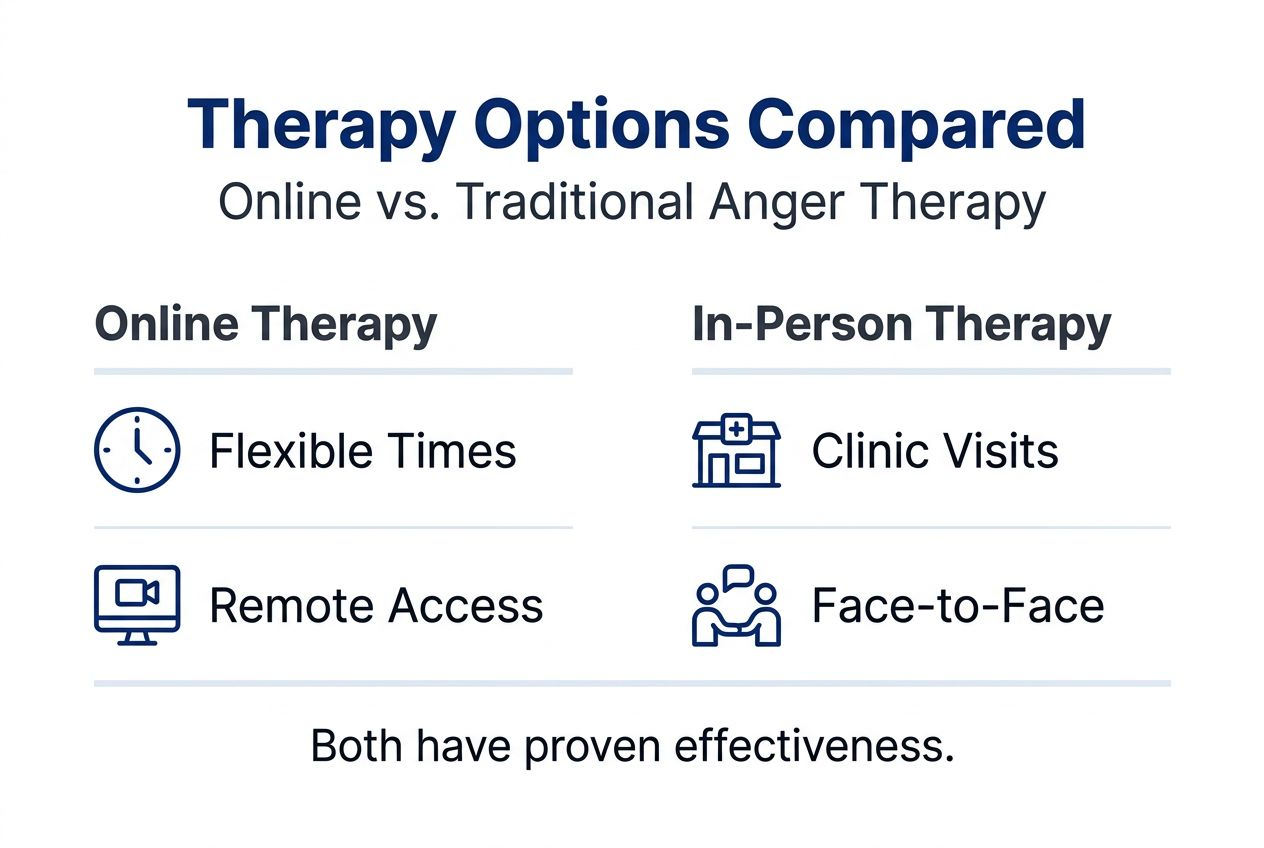
| Factor | Online Therapy | Traditional Therapy |
|---|---|---|
| Treatment efficacy | Equal outcomes for anger and relationship issues | Equal outcomes for anger and relationship issues |
| Accessibility | Available anywhere with internet, flexible scheduling | Limited by geography and office hours |
| Cost | Often 20-30% less expensive | Higher due to overhead costs |
| Non-verbal cues | Reduced but sufficient for most therapy types | Full access to body language and presence |
| Technical requirements | Stable internet and device needed | None beyond transportation |
| Privacy control | Complete control over environment | Limited to therapist’s office setting |
Accessibility advantages make online therapy particularly valuable for people with demanding schedules, transportation challenges, or social anxiety about visiting offices. You save commute time, can schedule sessions during lunch breaks, and access specialized therapists regardless of location. Online couples therapy benefits include convenience for busy partners to attend together from home.
Some situations still favor in-person therapy. Severe mental health crises, active suicidal ideation, or conditions requiring physical observation benefit from traditional settings with immediate intervention capability. Complex trauma work sometimes proceeds better with full in-person presence, though many trauma specialists work effectively online.
The therapist interaction quality remains high online when both parties commit to the process. Video allows sufficient connection for most therapeutic work, and many clients report feeling more comfortable opening up from their own space than in an unfamiliar office.
Steps to start and what to expect in online therapy
Beginning online therapy involves straightforward steps that get you connected with professional support quickly:
- Complete an online intake assessment identifying your concerns, history, and goals
- Schedule your first session choosing video, phone, or chat format based on preference
- Attend your initial appointment where your therapist explains the process and confidentiality
- Engage in regular sessions following a treatment plan tailored to your needs
- Complete homework assignments and practice skills between appointments
- Review progress periodically and adjust treatment approaches as needed
Your first session typically covers intake information, establishes rapport, and sets preliminary goals. Expect your therapist to ask about what brought you to therapy, your symptoms’ severity and frequency, previous treatment experiences, and what you hope to achieve. For anger management, you’ll discuss specific triggers, consequences of anger, and patterns you want to change.
Ongoing sessions follow a structure: check-in on your week, review homework or skills practice, address current concerns or incidents, learn new techniques, and assign practice for the coming week. This rhythm creates consistency and momentum in your treatment. Your therapist tracks progress using standardized measures and your self-reported improvements.
Realistic timelines matter for maintaining motivation. Anger management typically shows noticeable improvement within 8 to 12 weeks, while relationship therapy often requires 12 to 20 sessions for substantial change. Your therapist helps set achievable milestones and celebrates progress along the way.
Pro Tip: Keep a brief journal between sessions noting anger triggers, relationship conflicts, or situations where you applied coping skills. This concrete data helps your therapist refine your treatment and shows you tangible progress.
Communication between sessions varies by therapist and platform. Some offer messaging for urgent concerns, while others maintain strict session boundaries. Clarify these expectations during your first appointment. Many teletherapy counseling services provide resources like worksheets and videos you can access anytime. An anger management assessment helps establish your baseline and track improvement objectively.
Prepare for sessions by reviewing notes from previous appointments, completing assigned homework, and thinking about topics you want to address. This preparation maximizes your session time.
Common misconceptions about online therapy
Myth: Online therapy is less effective than face-to-face treatment.
Research shows no significant difference in treatment outcomes between online and in-person therapy, dispelling doubts about effectiveness. Multiple randomized controlled trials comparing the two formats find equivalent symptom reduction, client satisfaction, and therapeutic alliance development. The delivery method matters far less than the therapist’s skill and the client’s engagement.
Myth: Online therapy can’t protect my confidentiality.
Encrypted platforms, HIPAA compliance, and secure data storage provide privacy protection equal to traditional therapy. In some ways, online therapy offers greater privacy since you control your environment completely and avoid being seen entering a mental health facility. Therapists follow the same ethical and legal confidentiality requirements regardless of format.
Myth: Cultural needs can’t be addressed effectively online.
Online therapy actually expands access to culturally matched therapists and allows for better cultural tailoring than many local options provide. Clients can connect with practitioners who share their background or have specialized training in cultural competence, removing geographic barriers that limit in-person choices.
These misconceptions persist partly because online therapy is relatively new in public awareness, despite decades of research supporting its effectiveness. People also tend to overestimate the importance of physical presence in therapy while underestimating how well therapeutic techniques translate to digital formats.
“After my first online session, I realized all my concerns about it not being ‘real therapy’ were unfounded. The connection felt genuine, the techniques worked, and the convenience meant I actually stuck with treatment instead of making excuses to skip appointments.” — Client testimonial from effectiveness study
Understanding these facts helps you make informed decisions about mental health care. Online therapy isn’t a lesser alternative to traditional treatment but rather an equally effective option that offers unique advantages in accessibility and flexibility.
Explore expert online therapy services for anger and relationship support
If you’re ready to address anger management or relationship conflicts through professional online therapy, clinical services provide specialized support tailored to your needs. Qualified therapists offer evidence-based treatment through flexible, confidential sessions designed around your schedule.
Whether you need individual anger management, couples therapy for relationship conflicts, or family counseling, teletherapy counseling services connect you with experienced practitioners who understand the unique challenges you face. Begin with an anger management assessment to identify your specific needs and create a personalized treatment plan. Taking this first step opens the door to meaningful change in how you manage emotions and navigate relationships.
FAQ
Is online therapy as effective as in-person therapy for anger management?
Research demonstrates no significant difference in treatment outcomes between online and face-to-face therapy for anger management. Multiple studies confirm that evidence-based techniques like CBT work equally well through digital delivery when therapists maintain strong therapeutic relationships and clients engage actively in treatment.
How is my privacy protected during online therapy sessions?
Sessions use encrypted platforms compliant with HIPAA and GDPR standards, ensuring your confidential information remains secure. Data protection protocols, two-factor authentication, and secure cloud storage provide privacy equal to or exceeding traditional therapy settings. Therapists follow the same ethical confidentiality requirements regardless of format.
Can online therapy be tailored to cultural needs?
Many platforms offer therapy designed for diverse cultural backgrounds, with therapists who share or deeply understand your cultural context. Cultural adaptations increase engagement by 30% and improve therapeutic success in minority populations by addressing unique stressors, communication styles, and values that influence mental health.
What should I expect during my first online therapy session?
Your initial session involves an intake assessment to identify your needs, symptoms, history, and treatment goals. Sessions typically last 45 to 60 minutes via video, phone, or chat. Your therapist explains confidentiality, discusses the therapy process, and begins building rapport while establishing preliminary treatment objectives.
How long does online therapy take to show results for anger issues?
Most people notice improvement in anger management within 8 to 12 weeks of consistent online therapy using evidence-based techniques. Progress depends on your engagement with homework, skill practice between sessions, and the severity of your symptoms. Your therapist tracks changes using standardized measures and adjusts treatment as needed.
Recommended
- Best Ways to Manage Anger: Proven Tips for 2025 – Mastering Conflict
- Teen Anger Management: 35% Better Outcomes With Parent Support – Mastering Conflict
- Anger Management Classes Near Me: Find Local & Online Options 2025 – Mastering Conflict
- Individual Therapy: 70% See Anger Reduction in 12 Sessions – Mastering Conflict
- Strategie Calmanti ADHD: Gestire Impulsività a Casa – Sara Conti