
Teletherapy Best Practices: Effective Online Counseling

Every therapist knows that connecting with clients takes on new meaning when the session moves online. With the rise of digital care, delivering effective teletherapy now means blending clinical expertise with technical skill. For American professionals working with couples and families, especially in moments of conflict, mastering therapeutic presence in digital spaces unlocks new ways to reach and support diverse clients. This guide offers the practical insights clinicians need to build strong therapeutic alliances through teletherapy.
Table of Contents
- Teletherapy Defined And Core Concepts
- Types Of Teletherapy Services Offered
- Ensuring Client Engagement And Connection
- Legal And Ethical Issues In Teletherapy
- Technology Requirements And Security Standards
- Common Challenges And Solutions
Key Takeaways
| Point | Details |
|---|---|
| Teletherapy Expands Access | Teletherapy increases accessibility for clients facing mobility or geographic limitations, utilizing multiple communication modalities for flexibility. |
| Client Engagement is Crucial | Establishing a strong therapeutic presence, through effective verbal communication and visual engagement strategies, enhances client connection in digital settings. |
| Legal and Ethical Considerations | Mental health professionals must prioritize client confidentiality and adhere to informed consent protocols in teletherapy to maintain ethical standards. |
| Overcoming Challenges with Proactive Solutions | Address common teletherapy challenges, like technological disruptions and limited non-verbal cues, by implementing structured protocols and ongoing professional training. |
Teletherapy Defined and Core Concepts
Teletherapy represents a transformative approach to mental health services, delivering therapeutic interventions through digital communication platforms. Emerging research from clinical psychology studies demonstrates that this mode of treatment offers unique advantages and challenges for both mental health professionals and clients.
At its core, teletherapy encompasses several key communication modalities:
- Video conferencing sessions
- Phone counseling
- Text-based messaging therapy
- Email correspondence
- Secure online platforms for therapeutic interactions
Unlike traditional in-person therapy, teletherapy requires mental health professionals to adapt their clinical skills to digital environments. Online therapy platforms have expanded access to mental health resources, particularly for individuals with mobility challenges, geographic limitations, or scheduling constraints.
The digital therapeutic landscape demands specialized competencies from clinicians. Therapists must develop technical proficiency, maintain professional boundaries, and create meaningful therapeutic connections through screen-based interactions. This involves understanding digital communication nuances, managing potential technological interruptions, and ensuring client privacy and confidentiality.
Pro tip: Invest in secure, HIPAA-compliant communication platforms and continuously update your digital communication skills to provide high-quality teletherapy services.
Types of Teletherapy Services Offered
Teletherapy services have dramatically expanded the accessibility and flexibility of mental health care, offering multiple communication channels to meet diverse client needs. Large-scale mental health facility studies reveal that approximately 80% of facilities now provide comprehensive telehealth interventions across various therapeutic domains.
Mental health professionals can now deliver specialized services through multiple digital modalities:
- Video Counseling Sessions
- One-on-one individual therapy
- Couples and family counseling
- Group therapy interactions
- Phone-Based Counseling
- Convenient for clients with limited internet access
- Ideal for quick check-ins and support
- Text-Based Therapy
- Asynchronous messaging platforms
- Flexible communication for clients
- Email Correspondence Therapy
- Structured written communication
- Detailed therapeutic exchanges
Telemental health implementation integrates these modalities strategically, replacing or supplementing traditional face-to-face care. This approach allows mental health professionals to customize therapeutic experiences based on individual client preferences, technological comfort, and specific therapeutic goals.
Each teletherapy service requires specialized training and technological competence. Clinicians must understand digital communication nuances, maintain professional boundaries, and ensure client confidentiality across different platforms. Technical proficiency, active listening skills, and adaptability become crucial in creating meaningful therapeutic connections through digital interfaces.
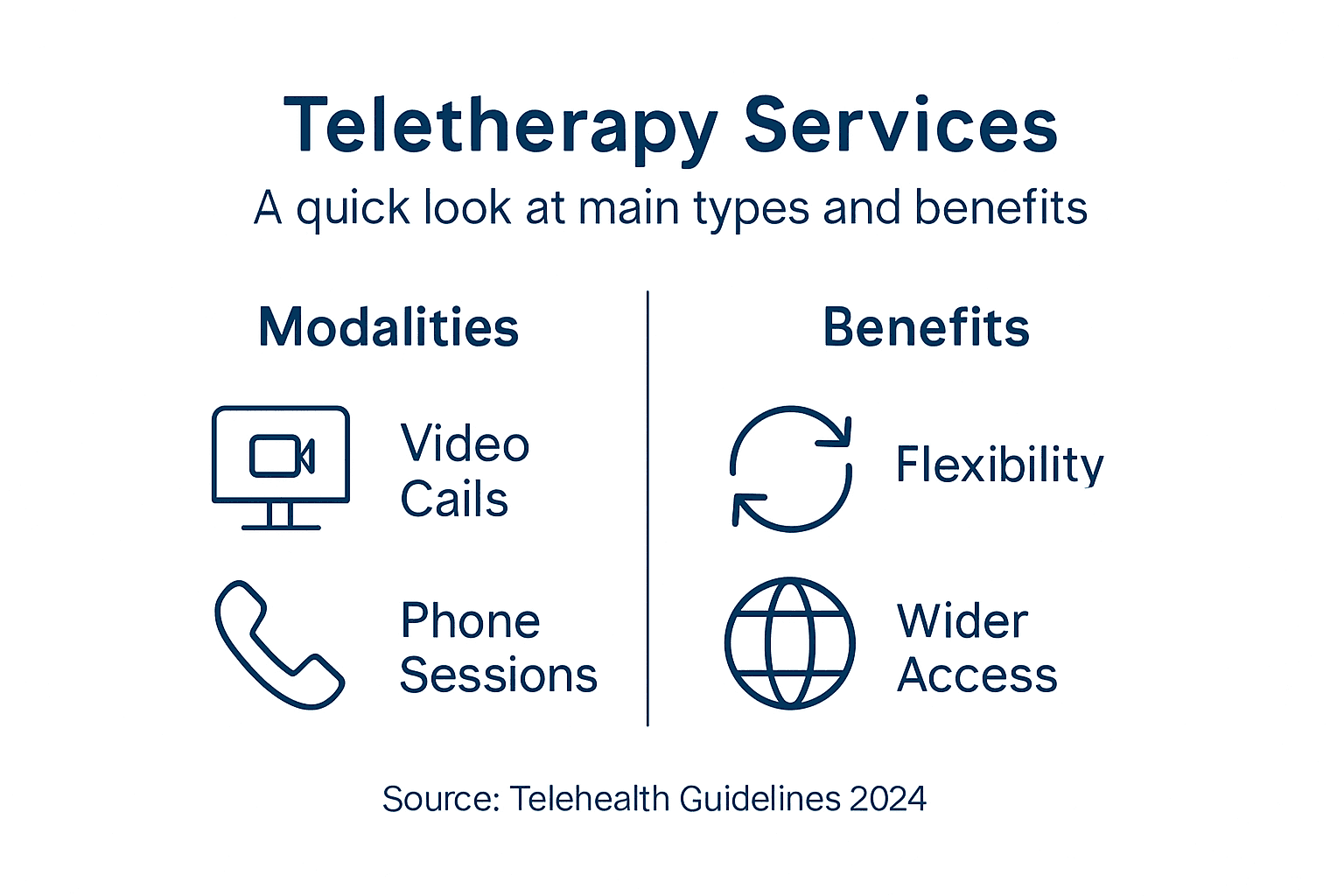
Here’s a comparison of teletherapy service modalities and their ideal uses:
| Modality | Best For | Typical Advantages | Possible Limitations |
|---|---|---|---|
| Video Sessions | Complex or visual interventions | Mimics face-to-face therapy | Requires stable connection |
| Phone Counseling | Quick support, no internet | Flexible, voice focus | Limits visual cues |
| Text-Based Messaging | Ongoing, flexible communication | Written reflection, privacy | Lacks real-time response |
| Email Correspondence | Detailed guidance | Structured, documented record | Slow feedback cycles |
Pro tip: Develop a comprehensive digital communication strategy that includes multiple service modalities and invest in ongoing technological training to enhance your teletherapy effectiveness.
Ensuring Client Engagement and Connection
Therapeutic presence represents the cornerstone of effective teletherapy, demanding intentional strategies to bridge the digital divide and create meaningful connections. Specific therapeutic interventions adapted to online formats demonstrate significant potential for maintaining strong client-therapist relationships despite physical distance.
Key strategies for enhancing client engagement include:
- Verbal Communication Techniques
- Use clear, empathetic language
- Practice active listening
- Provide verbal affirmations
- Visual Engagement Strategies
- Maintain consistent eye contact with camera
- Use expressive facial gestures
- Create a professional, welcoming background
- Technical Connection Methods
- Ensure stable internet connection
- Test audio and video quality before sessions
- Provide multiple communication backup options
- Emotional Attunement
- Validate client experiences
- Demonstrate genuine interest
- Acknowledge technological challenges
Counseling approaches during digital interactions reveal that therapists must compensate for reduced non-verbal cues by intensifying verbal communication and demonstrating exceptional technological facilitation. This requires developing new skills that transcend traditional in-person therapeutic approaches.

Successful teletherapy hinges on the therapist’s ability to create a sense of safety, trust, and connection through digital platforms. Clinicians must become adept at reading subtle verbal and visual cues, managing potential technological interruptions, and maintaining a consistent, supportive therapeutic presence that feels authentic and responsive.
Pro tip: Practice recording and reviewing your teletherapy sessions to critically assess your non-verbal communication, technological engagement, and overall therapeutic presence.
Legal and Ethical Issues in Teletherapy
Teletherapy introduces complex legal and ethical challenges that demand rigorous professional standards and careful navigation. Commercial teletherapy platform reviews reveal significant concerns about maintaining professional integrity and client protection in digital therapeutic environments.
Critical ethical considerations for mental health professionals include:
- Confidentiality Protection
- Secure digital communication platforms
- Encrypted client data storage
- Protected video conferencing systems
- Informed Consent Requirements
- Clear digital consent documentation
- Transparent service limitations
- Detailed technological risk disclosures
- Professional Boundary Maintenance
- Establishing digital interaction protocols
- Managing online communication boundaries
- Preventing inappropriate virtual interactions
- Technological Competence
- Understanding digital platform security
- Maintaining professional communication standards
- Adapting to evolving digital communication technologies
Global telepsychiatry guidelines emphasize the importance of developing comprehensive international frameworks that address cultural nuances, data security, and regulatory compliance. These guidelines recognize the unique challenges presented by digital therapeutic platforms and advocate for standardized professional practices.
Mental health professionals must continuously evolve their understanding of digital ethics, staying informed about changing technological landscapes, legal requirements, and professional standards. This ongoing commitment ensures client safety, maintains therapeutic integrity, and supports effective digital mental health interventions.
Pro tip: Develop a comprehensive digital ethics checklist that addresses confidentiality, consent, and technological safety for every teletherapy interaction.
Technology Requirements and Security Standards
Effective teletherapy platforms require sophisticated technological infrastructure that ensures client safety, privacy, and therapeutic effectiveness. Teletherapy clinical and technical standards mandate comprehensive security protocols that protect sensitive client information and maintain professional service delivery.
Critical technology requirements for mental health professionals include:
- Platform Security Features
- End-to-end encryption
- Multi-factor authentication
- Secure data transmission protocols
- Technical Infrastructure
- High-speed, reliable internet connections
- Professional-grade video conferencing software
- Backup communication channels
- Privacy Protection Mechanisms
- HIPAA-compliant communication tools
- Secure client data storage systems
- Regular security software updates
- Technical Competence Standards
- Professional technology training
- Continuous platform evaluation
- Adaptability to emerging technologies
APA Guidelines for Telepsychology emphasize the importance of ongoing technological assessment and clinician training. Mental health professionals must develop robust digital literacy skills that enable them to navigate complex technological landscapes while maintaining client confidentiality and therapeutic integrity.
Successful implementation of teletherapy technology requires a holistic approach that balances technical sophistication with clinical expertise. Clinicians must remain vigilant about potential security vulnerabilities, continuously update their technological knowledge, and prioritize client privacy in all digital interactions.
Pro tip: Conduct monthly technology audits of your teletherapy platforms to ensure maximum security and compliance with current professional standards.
Common Challenges and Solutions
Teletherapy presents unique professional challenges that require strategic interventions and adaptive techniques. Common teletherapy challenges and resolution strategies highlight the complex landscape mental health professionals navigate in digital therapeutic environments.
Key challenges and targeted solutions include:
- Technological Disruptions
- Create comprehensive backup communication plans
- Develop alternative communication channels
- Test technology before client sessions
- Limited Non-Verbal Communication
- Enhance verbal communication skills
- Use explicit emotional checking techniques
- Encourage client video participation
- Client Engagement Barriers
- Develop structured online interaction protocols
- Use interactive digital assessment tools
- Provide clear technological guidance
- Therapist Adaptation Challenges
- Participate in specialized digital therapy training
- Practice virtual communication techniques
- Regularly review and adjust digital interaction strategies
Pandemic-driven telehealth research demonstrates that proactive approaches and continuous professional development significantly improve teletherapy effectiveness. Mental health professionals must remain flexible, technologically competent, and committed to maintaining therapeutic integrity in digital spaces.
Successful teletherapy requires a holistic approach that balances technological proficiency with deep clinical understanding. Clinicians must continuously refine their skills, stay updated on emerging digital communication strategies, and prioritize client connection despite physical distance.
The table below summarizes common teletherapy challenges and proactive solutions:
| Challenge | Impact on Practice | Effective Strategy |
|---|---|---|
| Technology Disruptions | Interrupts sessions | Maintain backup tools and protocols |
| Limited Non-Verbal Cues | Hinders emotional assessment | Train in advanced verbal techniques |
| Client Engagement Barriers | Reduces session effectiveness | Use interactive tech and clear guides |
| Therapist Adaptation Needs | Delays skill development | Participate in ongoing digital training |
Pro tip: Develop a personalized digital therapy adaptation plan that includes monthly skills assessment and continuous technological learning.
Elevate Your Teletherapy Skills with Proven Conflict Resolution and Mental Health Strategies
Navigating the complexities of teletherapy requires more than just technology. The article highlights critical challenges such as maintaining therapeutic presence, overcoming limited non-verbal communication, and ensuring client engagement across digital platforms. These pain points impact how therapists deliver empathetic, effective online counseling that truly connects with clients.
Mastering Conflict offers tailored solutions that integrate clinical expertise with advanced online therapy methods. Whether you are addressing anger management, couples therapy, or individual counseling, our services equip you to enhance client trust and connection through digital mediums. With specialized coaching programs, clinical supervision, and resources designed to support both clients and practitioners, you can confidently overcome common teletherapy obstacles.
Ready to strengthen your teletherapy practice and deliver meaningful outcomes amid today’s evolving digital landscape? Visit Mastering Conflict to explore our comprehensive mental health and conflict resolution services, schedule a consultation, or access professional training. Experience how expert guidance helps you provide secure, engaging, and effective online counseling starting now.
Frequently Asked Questions
What is teletherapy?
Teletherapy refers to mental health services delivered through digital communication platforms, including video conferencing, phone counseling, text messaging, and email correspondence. This approach provides flexibility and access to therapy for individuals who may face barriers to in-person sessions.
How can I ensure client engagement during teletherapy sessions?
To enhance client engagement, therapists should utilize clear and empathetic verbal communication, maintain visual engagement through eye contact, and demonstrate emotional attunement. Implementing backup communication methods can also help manage any technical disruptions during sessions.
What are the key technology requirements for effective teletherapy?
Effective teletherapy requires secure communication platforms with features like end-to-end encryption, reliable internet connections, and HIPAA-compliant tools. Clinicians should also be technically competent and adapt to emerging technologies to ensure safety and privacy for their clients.
What are some common challenges faced in teletherapy and how can they be addressed?
Common challenges include technological disruptions and limited non-verbal cues. Solutions involve developing backup communication plans, enhancing verbal communication skills, and using interactive digital assessment tools to improve client engagement and session effectiveness.
Recommended
- Online Couples Therapy: Transforming Relationships – Mastering Conflict
- Teletherapy Counseling Therapists in Charlotte, NC 28262
- Top Couples Therapy Benefits for Families in 2025 – Mastering Conflict
- What Is Couples Therapy? Key Benefits and Options for 2025 – Mastering Conflict
- How Stigma Impacts Substance Abuse Recovery – 12PanelNow | 12 Panel Drug Test | Free Shipping
- 16 Science-Backed Stress Management Techniques for 2025 – Float Therapy Wilmslow