
Managing teen anger: A parent’s step-by-step guide

TL;DR:
- Teen anger often stems from stressors like academic pressure, social conflicts, and biological changes, linked to an immature emotional regulation system.
- Parents can manage outbursts effectively by staying calm, creating supportive environments, and following a structured response plan that includes validation and debriefing.
Your teenager slams their bedroom door so hard the pictures shake. Dinner is ruined, your heart is pounding, and you’re standing in the hallway wondering where things went so wrong. If that moment feels familiar, you’re not alone. Angry outbursts are one of the most common challenges parents of teens face, and the frustration of not knowing what actually works can make the cycle feel impossible to break. This guide gives you a practical, evidence-based roadmap to understand what’s fueling your teen’s anger, how to respond in the moment, and how to build lasting change in your household.
Table of Contents
- Understanding teenage anger: Causes and warning signs
- What you need to manage teen anger: Preparation and tools
- Step-by-step: Action plan for managing anger episodes
- Verifying progress: How to know what’s working
- Why real-world flexibility matters more than rigid plans
- Support for parents and teens: Next steps
- Frequently asked questions
Key Takeaways
| Point | Details |
|---|---|
| Spot early signs | Recognizing warning signs helps prevent anger outbursts escalating in teens. |
| Prepare and model skills | Parents who emotionally prepare and model regulation get better results. |
| Follow clear action steps | A structured plan during flare-ups leads to more effective conflict resolution. |
| Monitor and adjust | Regular feedback and adaptation ensure ongoing progress managing anger. |
| Use help when needed | Seeking outside resources is important if home strategies aren’t enough. |
Understanding teenage anger: Causes and warning signs
Before you can manage something, you have to understand it. Teenage anger rarely comes out of nowhere, even when it looks that way. Most of the time, there’s a web of stressors building beneath the surface, and what you see in the hallway or at the dinner table is just the overflow.
Common causes of teen anger include:
- Academic pressure and fear of failure
- Social conflicts, peer rejection, or bullying
- Hormonal and neurological changes that affect impulse control
- Family tension, divorce, or changes in household dynamics
- A sense of powerlessness or feeling unheard
The adolescent brain is still developing, particularly the prefrontal cortex, which handles decision-making and emotional regulation. This means your teen literally doesn’t have the same capacity to pause before reacting that adults do. That’s not an excuse, but it is important context. Understanding the underlying emotional triggers leads to more effective anger management strategies, rather than just focusing on controlling the behavior itself.
Warning signs to watch for:
- Frequent irritability that seems disproportionate to the situation
- Aggressive outbursts directed at people or objects
- Sudden withdrawal or emotional “shutting down”
- Difficulty recovering after conflict, staying upset for hours or days
- Increasing avoidance of family interactions
There’s an important distinction between typical teenage pushback and problematic anger. Complaining about chores or rolling their eyes is frustrating but developmentally normal. What crosses the line is physical aggression, sustained verbal attacks, or anger that interferes with school, friendships, or safety.
When you notice warning signs, avoid matching their energy. Raising your voice or issuing ultimatums in that moment adds fuel. Instead, use a calm, neutral tone and create space. Consider exploring conflict resolution for adolescents as a framework for those critical early responses.
“You can’t pour from an empty cup. Understanding your teen’s emotional world is the first step toward changing the patterns that keep you both stuck.”
What you need to manage teen anger: Preparation and tools
Identifying warning signs is only half the battle. Next, it’s key to gather the right resources and mindset so you can lead by example and react constructively when the pressure is on.
Preparation is not just about having a plan written on paper. It’s about getting yourself emotionally ready. Parental involvement and preparation significantly increases the likelihood of successful anger management outcomes for teens. Your teen looks to you whether they admit it or not. If you escalate, they escalate. If you stay grounded, you give them something stable to push against instead of fall off a cliff with.
Core tools every parent should have ready:
- An anger journal for your teen to track triggers and feelings between episodes
- A family communication plan that outlines how conflict will be handled at home
- A calm-down kit that might include breathing exercises, fidget tools, or a designated cool-down space
- Agreed-upon household boundaries around language, tone, and personal space
- A short list of trusted resources for anger management techniques for parents so you’re learning alongside your teen
| Preparation area | Why it matters | Example action |
|---|---|---|
| Emotional readiness | Sets the tone during conflict | Practice deep breathing before difficult conversations |
| Physical environment | Reduces triggers at home | Designate a “calm space” your teen can use freely |
| Communication plan | Prevents escalation | Agree on a family “pause word” to de-escalate |
| Outside support | Ensures help is available | Research local counseling options in advance |
| Modeling behavior | Demonstrates emotional control | Narrate your own regulation (“I’m going to take a breath”) |
Setting clear, consistent expectations is not the same as being rigid. You want your teen to know what the rules are, but also that you’re on their side. Boundaries feel safer when they’re explained with warmth rather than enforced with threats.
For hands-on activities that reinforce these skills at home, check out structured anger management activities for teens that can be woven into everyday routines rather than saved for crisis moments.
Pro Tip: Start modeling emotional regulation in low-stakes moments, not just during arguments. When you’re stuck in traffic or frustrated with technology, narrate what you’re doing. “This is annoying me, so I’m going to take a second.” Your teen is watching, and those small moments add up.
Step-by-step: Action plan for managing anger episodes
With the groundwork set, now it’s time to put a clear plan into action when your teen’s anger flares up.
Having a reliable sequence takes the guesswork out of a high-pressure moment. Research consistently shows that integrating parent support leads to improved teen anger management outcomes, particularly when parents follow a structured approach rather than reacting instinctively.
6-step action plan for anger episodes:
- Identify escalation early. Look for physical cues like clenched fists, a rising voice, or pacing. Catching this early gives you more options.
- Maintain your own composure. Slow your breathing consciously. If you feel your own anger rising, acknowledge it internally and choose your next move deliberately.
- Remove the audience. If siblings or others are present, calmly redirect them. Public showdowns amplify everyone’s emotions and add shame to the mix.
- Offer a calming tool. Suggest a short break, a walk, or access to their calm-down space. Frame it as a resource, not a punishment. “Let’s both take five minutes” works better than “go to your room.”
- Validate their feelings. Once the intensity drops even slightly, name what you’re observing without judgment. “It sounds like you’re really frustrated right now.” This doesn’t mean agreeing with their behavior; it means acknowledging their experience.
- Debrief after calm returns. This is where the real work happens. Once everyone is regulated, revisit the issue with curiosity. Ask open-ended questions. This is the teachable moment.
| Typical parent response | Recommended action | Why it works |
|---|---|---|
| “Stop yelling right now!” | “I can see you’re upset. Let’s take a break.” | Lowers temperature instead of raising stakes |
| Arguing back in the moment | Defer the conversation until calm | Prevents power struggles that lead nowhere |
| Threatening consequences mid-outburst | State expectations after calm returns | Consequences land better without emotional noise |
| Walking away without follow-up | Always debrief after the episode | Builds trust and reinforces learning |
Parents who use a stepwise approach consistently report more predictable emotional regulation from their teens over time. It’s not instant, but the consistency itself sends a powerful message: “This family handles things differently now.”
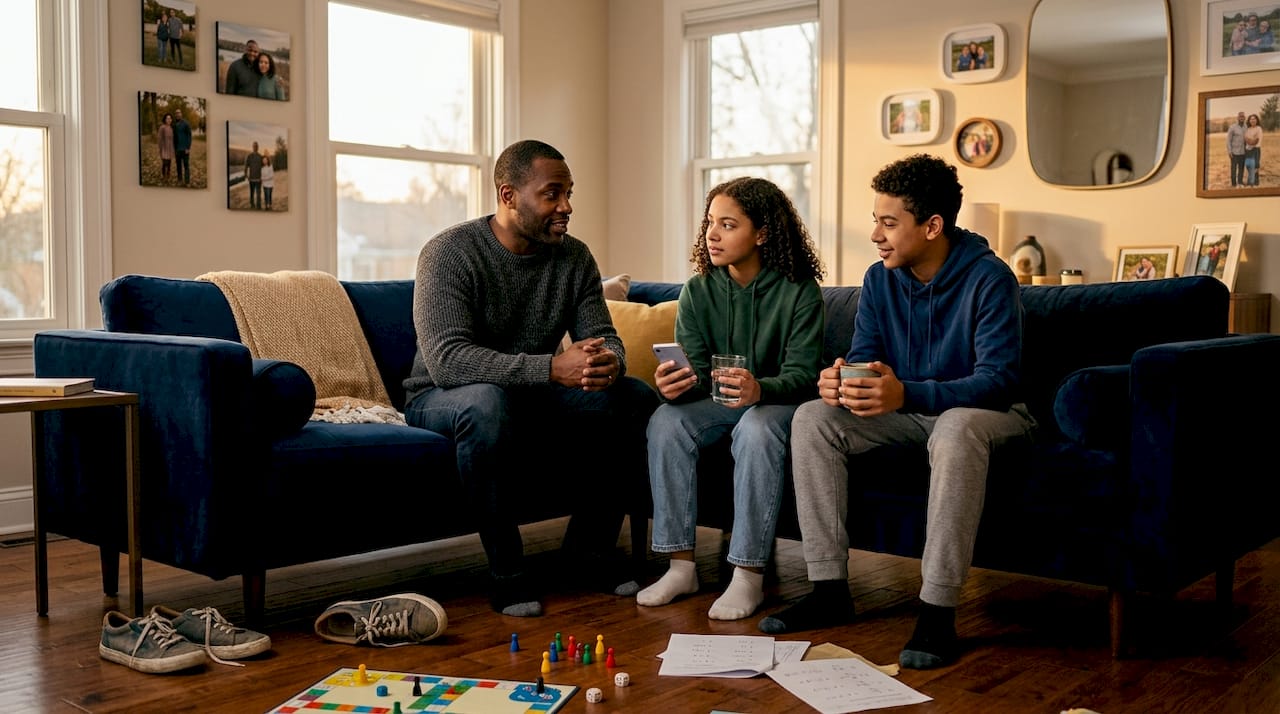
Using structured anger management activities during calm periods reinforces the skills your teen needs when anger hits. Similarly, teen emotional regulation tools like breathwork, grounding exercises, and journaling can become go-to resources when practiced regularly.
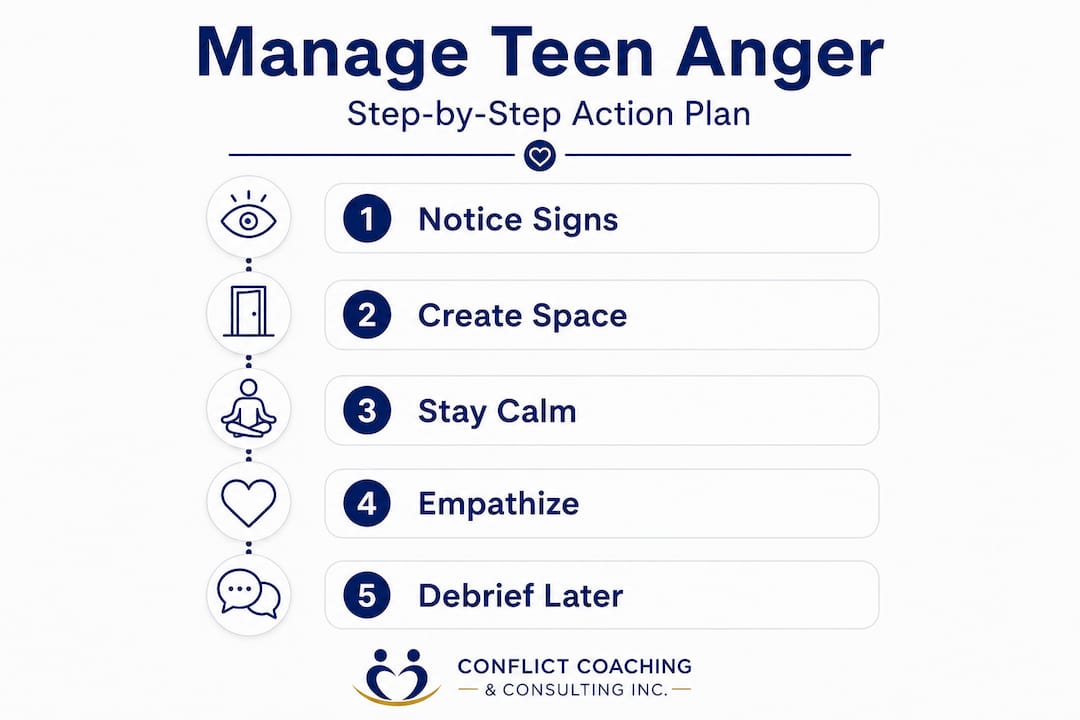
For a broader family context, parenting strategies for anger can help you align these steps with your overall parenting approach.
Pro Tip: Never try to resolve the underlying issue in the heat of the moment. The angry brain cannot absorb reasoning or consequences meaningfully. Wait until everyone is calm, then revisit with empathy. That conversation will be ten times more productive.
Verifying progress: How to know what’s working
Following effective steps is only part of the journey. Now, ensure you’re making real progress and not missing signs that deeper help may be needed.
Progress with teen anger doesn’t always look like perfection. It often looks like shorter outbursts, quicker recovery times, or a single conversation where your teen expresses frustration with words instead of walls. Celebrate those. They are real signs of growth.
Signs your strategies are working:
- Outbursts are becoming less frequent or less intense
- Your teen recovers faster after getting upset
- They’re starting to use calming tools on their own without prompting
- Communication is more open, even slightly
- Family conflict feels less like a war and more like a negotiation
Signs you may need to adjust:
- Strategies that worked last month suddenly stop working
- Your teen becomes completely withdrawn rather than engaged
- Anger is escalating despite consistent effort
- You’re noticing physical symptoms of stress in yourself or your teen
Ongoing family communication supports sustainable anger management in teens over the long term. Regular family check-ins, even brief ones, create a structure for addressing issues before they boil over. Weekly or bi-weekly conversations don’t need to be formal. A ten-minute check-in over a meal can cover a lot of ground.
“Setbacks are not failures. They are information. Every relapse is a chance to understand the trigger you missed the first time.”
When home strategies aren’t enough, that’s not a sign you’ve failed. It’s a sign the problem is larger than any one household can handle alone. Adolescent counseling provides a structured, professional environment where teens can work through underlying issues with a trained therapist. If you’re seeing unsafe behavior, persistent school problems, or a complete breakdown in family relationships, please don’t wait.
It also helps to revisit your own toolkit. Strengthening your own parent anger management techniques keeps you sharp and prevents caregiver burnout, which is real and often overlooked in these situations.
Why real-world flexibility matters more than rigid plans
Having seen how to verify your progress, let’s consider what really makes these techniques work in everyday life.
Here’s something that clinical training and parenting books don’t always say out loud: the families who make the most progress are not the ones who follow the plan perfectly. They’re the ones who stay curious when the plan stops working.
Every teen is different. What calms one teenager might feel condescending to another. A cool-down space that works brilliantly in January might become a place your teen resents by March. The strategies in this guide are not scripts. They’re frameworks. Your job is to learn the principles deeply enough to adapt them.
Some of the most meaningful breakthroughs we hear about come after a parent made what felt like a mistake, reflected on it honestly, and changed their approach. One parent who tried everything in the “correct” order still found that what finally worked was simply sitting in the car with their teen after school and saying nothing for five minutes. That silence became a ritual. That ritual became safety. That safety made everything else possible.
Adapting emotional regulation tools to fit your specific family dynamic is not cutting corners. It’s actually the most sophisticated thing you can do. Trust your instincts when they’re informed by evidence-based principles. That combination is where real, lasting change happens.
One last thing worth saying plainly: you are doing something courageous by seeking better strategies. Many parents default to the patterns they grew up with. Choosing something different, especially when you’re exhausted and your teen is furious, takes real commitment. That effort matters.
Support for parents and teens: Next steps
As you explore these strategies at home, consider reaching out for extra guidance to help your family thrive long-term.
Reading about these strategies is a strong start. But applying them under pressure is a skill that often benefits from professional guidance, accountability, and a supportive community. At Mastering Conflict, we offer tools and support designed specifically for families navigating teen anger.

Whether you’re looking for structured local anger management classes in North or South Carolina, a full library of anger management courses you can access at your own pace, or flexible teletherapy options that bring professional support directly to your home, we have options that fit where your family is right now. Dr. Carlos Todd and the Mastering Conflict team bring clinical expertise and a genuine understanding of what families go through. You don’t have to figure this out alone.
Frequently asked questions
How can I tell if my teen’s anger is a normal phase or a sign of a deeper issue?
If your teen’s anger is extreme in intensity, lasts for prolonged periods, disrupts school or friendships, or includes any unsafe behavior, those are clear signals to consult a mental health professional rather than wait it out.
What techniques work best for calming an angry teenager in the moment?
The most effective approach is to stay calm yourself, give your teen physical space, use non-confrontational language, and offer a short break. Space and de-escalation tools are consistently recommended for managing acute anger episodes.
How often should we check in as a family about anger and emotional health?
Weekly or bi-weekly check-ins tend to work well because they create consistent structure for open conversation without overwhelming your teen with too much focus on the issue. Ongoing family communication is one of the strongest predictors of lasting change.
When should I consider professional help for my teen’s anger issues?
Seek professional support if home strategies consistently fail, if anger is escalating rather than improving, or if serious problems develop at school or within the family. Counseling is valuable whenever anger becomes chronic, severe, or starts impairing your teen’s daily functioning.
Recommended
- Effective Anger Management Activities for Teens: A Guide – Mastering Conflict
- Managing anger in parenting: 5 strategies that work – Mastering Conflict
- Managing anger in parenting: 5 strategies that work – Mastering Conflict
- Teen Anger Management: 35% Better Outcomes With Parent Support – Mastering Conflict