
Anger Management Father: Transform Rage Into Connection

TL;DR:
- Fatherhood often triggers suppressed fears and exhaustion, resulting in anger that affects both fathers and children.
- Using self-awareness, the Name, Frame, Aim framework, and healthy habits can transform reactive anger into purposeful connection.
You probably didn’t expect fatherhood to bring out a side of yourself that scares you. Yet anger management for fathers is one of the most searched and least talked-about topics in parenting. The frustration that builds after a long day, the explosive reaction to spilled juice or a slammed door, the guilt that follows. That cycle is more common than you think, and the fact that you’re reading this means you’re already doing something about it. This guide gives you real tools, not platitudes.
Table of Contents
- Key Takeaways
- Anger management for fathers: the emotional roots
- Recognizing your triggers and early warning signs
- Strategies for managing anger: the Name, Frame, Aim framework
- Building habits that lower your anger baseline
- Common pitfalls to watch for
- My perspective on anger and fatherhood
- Take the next step with professional support
- FAQ
Key Takeaways
| Point | Details |
|---|---|
| Anger often masks fear | Fathers frequently express fear, exhaustion, or shame as anger because it’s the only emotional outlet they learned. |
| Early warning signs matter | Catching physical cues like jaw tension or rapid breathing gives you a chance to pause before reacting. |
| Use Name, Frame, Aim | This three-step framework helps you transform reactive anger into a purposeful, connecting response. |
| Habits reduce baseline anger | Exercise, journaling, and support networks lower the emotional temperature before conflict even starts. |
| Professional help is valid | When self-help stalls, clinical assessment and therapy provide structured, lasting change. |
Anger management for fathers: the emotional roots
Most men grew up in households where strong feelings had one acceptable exit: anger. Sadness wasn’t safe. Fear was weakness. Confusion got brushed off. So when stress piles up in fatherhood, anger is the familiar door. What looks like rage at a child who won’t listen is often something much more vulnerable underneath.
Research confirms that fathers mask deeper emotions like fear, stress, and exhaustion as anger, and children frequently interpret that anger as personal rejection. That’s the real cost. Not just the raised voice in the moment, but the story your child builds about themselves from it.
Traditional masculinity is a significant factor here. Boys are taught to solve problems, not feel them. That conditioning doesn’t disappear when you become a dad. It resurfaces every time you can’t fix something fast enough, every time your child’s behavior reflects your own unresolved patterns, or every time the financial pressure of providing feels crushing.
There’s also something called emotional inheritance. The way your father handled frustration became a blueprint in your nervous system before you could evaluate it. You absorbed his methods long before you had the words to describe what was happening. This is not an excuse. It is a starting point.
“I finally understand that my father wasn’t angry. He was terrified every single day that he couldn’t provide enough, and the only language he had for fear was volume.”
Clear misconceptions fathers carry about their own anger:
- Anger means I’m a bad father. False. It means you are a stressed human being with an outdated emotional toolkit.
- My kids will be fine as long as I don’t hit them. Emotional safety matters just as much as physical safety. Children with emotionally available parents fare better than those with absent but non-violent ones.
- I just have a short fuse. That’s my personality. Anger patterns are learned behaviors, not fixed traits. They can be changed.
- Acknowledging anger makes it worse. Suppressing or denying anger correlates with increased depression, anxiety, and shame. Acknowledgment is the first move toward control.
Understanding where father anger issues come from doesn’t fix them. But it removes the shame spiral that keeps most men from ever starting.
Recognizing your triggers and early warning signs
Self-awareness is not a therapy buzzword. For managing anger as a dad, it’s a practical skill with a specific function: catching the warning before the explosion.
Your body always signals anger before your mouth does. The problem is that most men were never taught to read those signals. Here’s how to start:
- Notice jaw tension or clenching. This often happens well before you raise your voice. Pay attention to it in the middle of a frustrating conversation with your child.
- Watch for quickened breathing. Short, shallow breaths are your nervous system preparing for conflict. That’s biology, and you can interrupt it.
- Track voice changes. When your tone shifts from calm to clipped, that’s a live signal. Catch it before the volume goes up.
- Feel for heat in the chest or face. Physical warmth is a reliable cue that your emotional threshold is close.
- Notice the urge to walk away or shut down. Withdrawal and explosion are two sides of the same overwhelmed state.
Bodily signals of anger allow for an intentional pause when recognized early. That pause is everything. A two-second gap between stimulus and response is enough to choose a different path.
Common parenting triggers worth knowing:
- Repeated behavior after correction, especially when you’re already drained
- Feeling disrespected or ignored by a child, which can echo old wounds
- Work or financial stress bleeding into home interactions
- Physical exhaustion from poor sleep or overcommitment
- Your own unmet needs, including solitude, affirmation, or rest
Pro Tip: Set a private one-word signal with yourself, something like “signal,” to use mentally when you notice a physical warning sign. That single word creates the pause your nervous system needs to downshift before reacting.
Strategies for managing anger: the Name, Frame, Aim framework
This is where anger management tips for fathers move from theory into practice. The Name, Frame, Aim framework was built specifically to help fathers convert reactive moments into parenting they can be proud of.
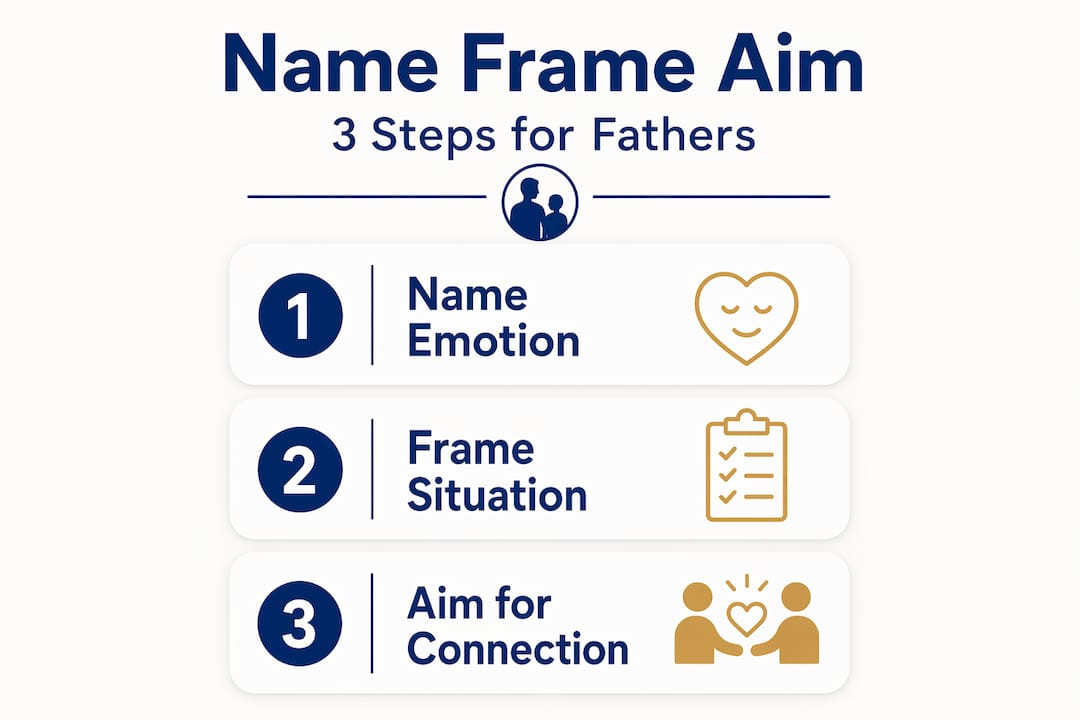
Step 1: Name the real emotion
Ask yourself: what am I actually feeling right now? Anger is rarely the only emotion. Behind it is usually fear, disappointment, loneliness, or exhaustion. Naming it out loud, even just internally, begins to defuse its intensity. “I’m not just angry. I’m scared my kid doesn’t respect me” is a more honest and more workable starting point.
Step 2: Frame the situation accurately
Reactive anger distorts reality. Your eight-year-old forgetting his homework is not disrespect. It’s developmental. Framing asks: is my interpretation of this situation accurate? Is this a threat or an inconvenience? Am I reacting to my child’s behavior or to what it triggers in me? Reframing inaccurate interpretations gives you the mental space to respond rather than react.
Step 3: Aim for connection
What outcome do you actually want from this interaction? Most fathers, when they slow down enough to ask, want their child to feel guided and loved, not terrorized. Aiming means directing your response toward that goal. It might sound like “I’m frustrated right now and I need a minute before we talk about this.” That one sentence models emotional maturity for your child while protecting the relationship.
Here’s how reactive versus intentional responses compare:
| Situation | Reactive response | Intentional response |
|---|---|---|
| Child talks back | Yelling or threatening consequences | Pausing, naming frustration, setting a clear boundary calmly |
| Homework forgotten again | Escalating lecture | Short consequence, brief conversation, reconnect later |
| Sibling fight erupts | Taking sides in frustration | Separating first, asking each child what happened |
| Child ignores a direct request | Sarcasm or ridicule | Kneeling to eye level, firm and direct re-request |
Pro Tip: Write down the last time you lost your temper with your child and walk it backward through Name, Frame, Aim. What were you really feeling? Was your interpretation accurate? What did you actually want? This exercise builds the mental habit faster than reading about it.
The Name, Frame, Aim method works across different anger styles, whether you tend to explode outward or simmer and withdraw. The framework adapts because it starts with your internal state, not the external situation.
Building habits that lower your anger baseline
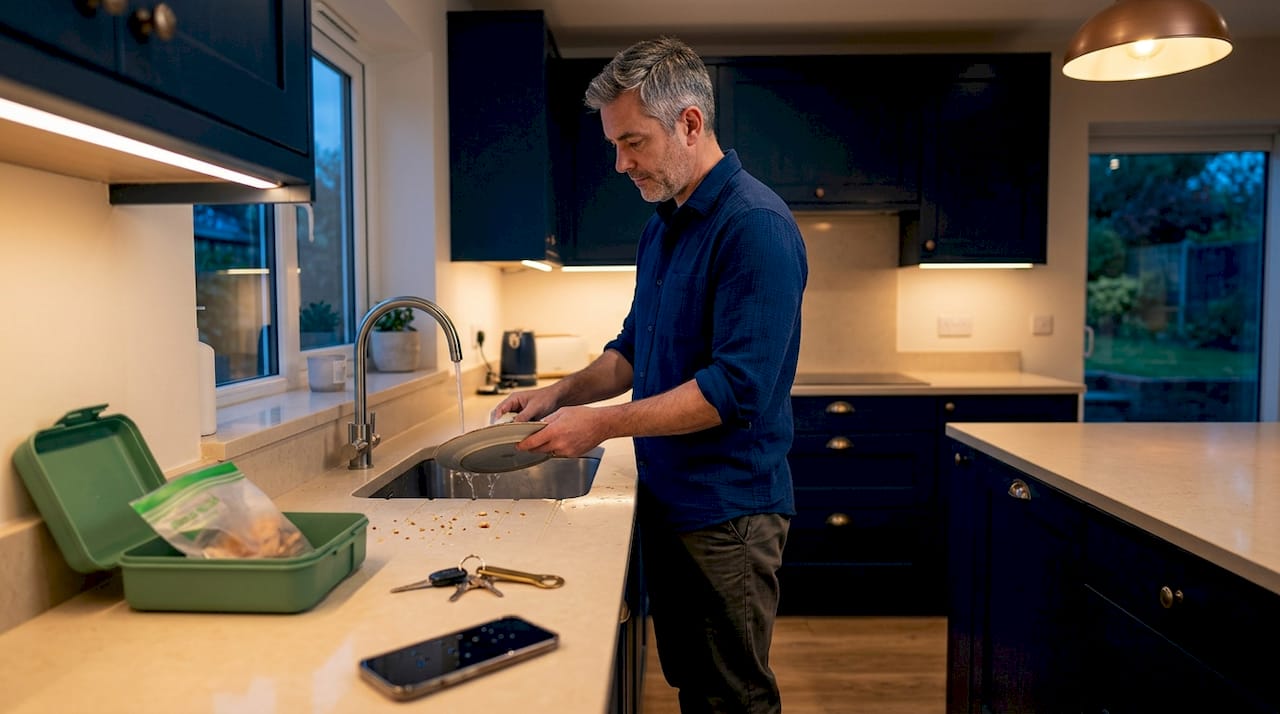
Managing anger as a dad is not just about what you do in a heated moment. It’s about what you do the other 23 hours. Fathers who incorporate outlets like exercise and journaling report fewer anger incidents and improved connection with their children.
Habits that genuinely move the needle:
- Physical movement most days. A 30-minute run or weight session doesn’t just improve fitness. It metabolizes stress hormones that would otherwise prime you for anger later.
- Journaling anger patterns. You don’t need a diary. You need three sentences: what happened, what I felt underneath it, and what I’d do differently. Do it twice a week.
- Expanding your emotional vocabulary. Most men can name four or five emotions. Work to name twenty. The more precise your emotional language, the less likely you are to collapse everything into anger.
- Building a support circle. Find one other father you can be honest with. Not to vent endlessly, but to normalize the struggle and share what’s working. Isolation amplifies anger.
- Implementing pause techniques. Say “I need a minute” out loud before you respond when things get heated. Pausing before responding regulates your nervous system and prevents words you’ll spend days undoing.
Pro Tip: Put your phone in another room for the first 15 minutes after you walk through the door at the end of the day. That buffer zone between work-stress and home-life is one of the highest-leverage parental anger control habits a father can build.
Common pitfalls to watch for
The path toward better emotional regulation is not straight. Knowing where fathers typically derail helps you stay on track.
- Blame shifting. “I only got angry because you pushed me.” The moment you make your anger someone else’s responsibility, growth stops. Statements like “I handled that badly” are signs of real emotional maturity, not weakness. Taking ownership of anger is the non-negotiable foundation of change.
- Bottling until it blows. Suppression feels like control. It isn’t. Pressure builds, and the eventual explosion is always worse than the managed releases would have been.
- Mistaking reduction for resolution. Getting less angry is progress, but it’s not the same as understanding why you got angry in the first place. Sustainable change requires both.
- Avoiding professional help too long. If anger is affecting your relationship with your children or your partner, and self-help strategies aren’t producing real change after a few months, that’s a clear signal to seek structured clinical support.
Self-compassion is not indulgence. You can acknowledge that you fell short without treating it as evidence that you’re beyond help. Both things are true: you made a mistake, and you are capable of doing better.
My perspective on anger and fatherhood
I’ve worked with hundreds of fathers over the years, and the ones who come in believing they are simply “hot-headed” almost always leave understanding something different. Anger is a signal, not a character flaw.
What shifted things for many of them, and honestly for my own thinking too, was this: once you stop asking “why do I get so angry?” and start asking “what am I actually afraid of in this moment?”, everything changes. The father who explodes when his son fails a test is often terrified that he’s failing as a provider of opportunity. The guilt many fathers feel about their anger makes sense once you understand it as a signal of how much they actually care.
I’ve also seen the myth that vulnerability weakens a father’s authority do serious damage. Fathers who model emotional honesty, who say “I got that wrong, here’s what I was feeling,” raise children who trust them more, not less. That trust is the foundation of everything else.
The fathers who improve the fastest are not the ones who read the most or know the most frameworks. They are the ones who stay curious about themselves and stay committed to the relationship even when it’s uncomfortable. That combination is what transforms anger from a wall into a window.
— Carlos
Take the next step with professional support
Reading about parental anger control is a powerful start, but some patterns are too deeply rooted to shift through articles alone.

At Masteringconflict, we work specifically with fathers dealing with father anger issues, offering clinical services that go beyond surface-level coping tips. Whether you want to start with a formal anger assessment to understand your specific patterns, or you’re ready to engage in one-on-one therapy through our clinical services, there’s a structured path here designed for you. Dr. Carlos Todd and the Masteringconflict team bring evidence-based, compassionate support to fathers who are serious about lasting change. Online options mean location is never a barrier. Book a session and start building the relationship with your children that you both deserve.
FAQ
What is anger management for fathers?
Anger management for fathers refers to structured strategies and practices that help dads understand, regulate, and constructively express anger in parenting contexts. It involves both self-awareness techniques and, when needed, professional clinical support.
Why do fathers struggle with anger more than they expect?
Many fathers lack emotional language for feelings like fear, exhaustion, or disappointment, so anger becomes the default outlet. Traditional ideas about masculinity reinforce this pattern by discouraging vulnerability and emotional expression.
How can I tell if I need professional help for father anger issues?
If your anger is regularly affecting your relationship with your children or partner, and self-directed strategies have not produced meaningful change after a few consistent months, clinical assessment and therapy are the appropriate next step.
What is the Name, Frame, Aim method?
Name, Frame, Aim is a three-step framework where you name the real emotion beneath anger, reframe your interpretation of the situation, and aim your response toward connection rather than control. It converts reactive moments into intentional parenting.
Can fathers really change long-standing anger patterns?
Yes. Anger patterns are learned behaviors, not fixed personality traits. With consistent practice of emotional awareness techniques and, when needed, professional guidance, how to help angry fathers is a question with a clear, evidence-based answer: structured support and sustained effort produce real change.
Recommended
- How to Control Anger Issues in a Relationship Easily – Mastering Conflict
- Anger Management Techniques for Parents: Building Family Resilience – Mastering Conflict
- Managing anger in parenting: 5 strategies that work – Mastering Conflict
- Managing anger in parenting: 5 strategies that work – Mastering Conflict