
ABC Emotional Regulation: Build Resilience That Lasts

TL;DR:
- ABC emotional regulation is a structured skill set from Dialectical Behavior Therapy that reduces emotional vulnerability by addressing physical health and cognitive responses before intense emotions take hold. The framework emphasizes proactive habits and physical self-care, combined with evidence-based techniques, to build emotional resilience over time. Regular daily practice over 8 to 12 weeks enhances emotional stability and improves conflict management skills.
ABC emotional regulation is a structured skill set from Dialectical Behavior Therapy (DBT) that reduces emotional vulnerability by addressing physical health and cognitive responses before intense emotions take hold. Known formally as ABC PLEASE, this framework gives you concrete tools to lower your baseline emotional reactivity, so daily stressors and conflicts stop feeling unmanageable. Emotional resilience is not a fixed trait you either have or lack. It is a dynamic skill shaped by neuroplasticity, and the ABC model of emotions gives you a repeatable system to build it deliberately.
What does ABC PLEASE stand for in emotional regulation?
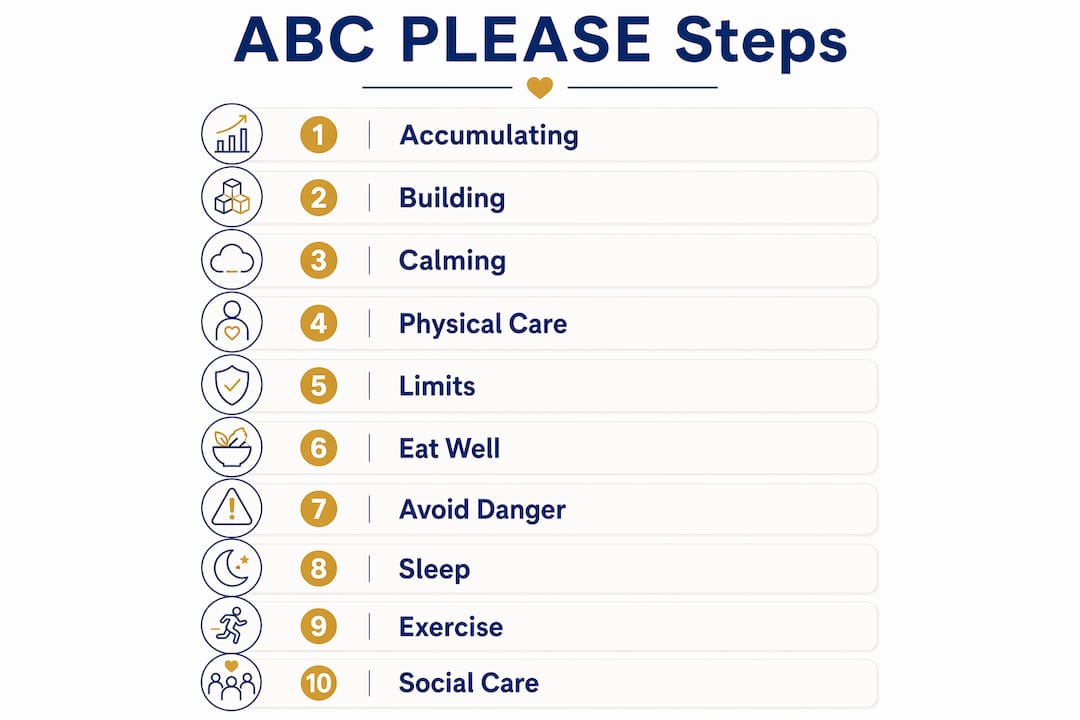
ABC PLEASE is the full name of the abc emotional regulation skill set developed within DBT. Each letter targets a specific factor that raises or lowers your emotional vulnerability on any given day. DBT skills like ABC PLEASE prevent emotional chaos by reducing vulnerability and strengthening baseline emotional stability.
The framework breaks into two layers. The first three letters address proactive emotional habits. The PLEASE section addresses the physical conditions that silently drive mood.
The ABC layer
- Accumulate Positive Emotions. Schedule activities that create pleasant experiences regularly, not just when you feel good. Small wins compound over time and raise your emotional baseline.
- Build Mastery. Practice a skill or hobby that creates a genuine sense of competence. Completing something challenging, even briefly, counters feelings of helplessness that fuel emotional dysregulation.
- Cope Ahead. Mentally rehearse how you will respond to a stressful situation before it happens. Pre-deciding your responses to anticipated emotional challenges increases self-regulation success when the moment arrives.
The PLEASE layer
- Physical Illness. Untreated pain or illness directly lowers your emotional tolerance. Addressing health issues is not optional self-care. It is a regulation strategy.
- Balance Eating. Skipping meals or eating erratically destabilizes blood sugar and mood. Consistent nutrition keeps your nervous system out of a stress state.
- Avoid Mood-Altering Substances. Alcohol and recreational drugs interfere with the brain’s natural regulation systems. Even moderate use can undo days of skill practice.
- Balance Sleep. Chronic sleep disruption is one of the fastest routes to emotional dysregulation. Consistent sleep and wake times protect your emotional floor.
- Exercise. Physical movement reduces cortisol and releases mood-stabilizing neurotransmitters. Neglecting sleep, nutrition, and exercise significantly increases vulnerability to emotional dysregulation.
Pro Tip: Track your PLEASE factors each morning with a simple 1-to-5 rating. On days when your scores are low, expect stronger emotional reactions and plan accordingly.
How do evidence-based techniques complement the ABC PLEASE framework?
ABC PLEASE builds your emotional foundation, but you also need tools for the moments when emotions spike despite good self-care. Evidence-based emotional regulation techniques fill that gap by targeting different points in the emotional process.
Intervening earlier in the emotional process is more effective and less metabolically costly than late-stage suppression. That principle organizes the techniques below from earliest to latest intervention.
- Situation Selection and Modification. Choose to avoid or alter situations likely to trigger disproportionate emotional responses. This is the earliest and least effortful intervention point.
- Mindfulness. Non-judgmental observation of your emotional state reduces reactivity by creating space between the trigger and your response. Mindfulness practice improves emotion differentiation, allowing you to recognize and name what you are feeling with greater accuracy.
- Cognitive Reappraisal. Reframe the meaning of a situation to change its emotional impact. Reappraisal works best at moderate emotional intensity, before the emotion fully peaks.
- TIPP Skills. Temperature, Intense exercise, Paced breathing, and Progressive relaxation are fast physiological interventions for high-intensity emotions. Physiological sighing and 4-7-8 breathing reduce immediate anxiety effectively when cognitive tools are no longer accessible.
Regulation and suppression are not the same thing. Suppressing emotions carries physiological costs like increased heart rate and elevated cortisol. True regulation modulates the emotion without those adverse effects.
The goal of all these techniques is not to eliminate feelings. The goal of emotional regulation is to increase your capacity to experience emotions without being overwhelmed by them. That distinction matters because people who try to stop feeling often make dysregulation worse.
What are practical steps to develop emotional resilience?
Building lasting emotional resilience requires consistent daily practice, not occasional effort. The brain changes through repetition. Emotional regulation abilities can be learned and strengthened across the lifespan because neuroplasticity supports habit formation at any age.

A realistic timeline matters here. Consistent practice of emotional regulation techniques typically requires 8–12 weeks of daily application to yield noticeable improvements. That is not a discouraging fact. It is a useful planning tool.
Follow these steps to build a sustainable practice:
- Start with 10 minutes of mindfulness daily. Formal mindfulness practice of 10–20 minutes per day builds the foundational capacity to observe emotions before reacting to them.
- Choose one mastery activity per week. Pick something slightly challenging, not overwhelming. Completing it builds the sense of competence that ABC PLEASE targets.
- Run a nightly PLEASE check. Review your sleep, nutrition, exercise, and substance use each evening. Identify which factors need attention the next day.
- Write a cope-ahead plan for known stressors. Before a difficult conversation or event, write out the emotions you expect and the specific responses you will use. Keep it brief and concrete.
- Layer techniques gradually. Start with PLEASE factors in weeks one through two. Add mindfulness in weeks three through four. Introduce cognitive reappraisal and TIPP skills after you have a stable foundation.
- Track without judging. Monitor your emotional intensity daily using a simple scale. The goal is awareness, not suppression.
Pro Tip: Pair your cope-ahead planning with a specific cue, like your morning coffee. Attaching the habit to an existing routine dramatically increases follow-through.
Combining multiple strategies gives you flexibility. On low-stress days, mindfulness and mastery activities are enough. On high-stress days, TIPP skills and cope-ahead plans carry the load. Rigid reliance on one technique leaves you exposed when that technique stops working.
How can ABC emotional regulation improve conflict management?
Conflict escalates fastest when both people are emotionally dysregulated. ABC emotional regulation skills reduce the baseline reactivity that turns disagreements into crises. Emotional regulation in relationships is one of the most direct paths to healthier communication and fewer destructive arguments.
The connection between self-care and conflict outcomes is direct. When your PLEASE factors are neglected, your emotional threshold drops. Small provocations feel like major threats. Your ability to listen, reframe, and respond thoughtfully collapses.
Applying these skills to conflict looks like this:
- Recognize your triggers before the conversation starts. Use your cope-ahead plan to identify what is likely to activate you and decide in advance how you will respond.
- Use cognitive reappraisal to shift perspective mid-conflict. Ask whether the other person’s behavior has an explanation that does not involve bad intent. That shift alone reduces emotional intensity.
- Apply TIPP skills if you hit a wall. When your heart rate spikes and rational thinking shuts down, paced breathing or a brief intense exercise break resets your physiology faster than any cognitive tool.
- Maintain your PLEASE baseline consistently. People who sleep well, eat regularly, and exercise are measurably more tolerant of interpersonal friction. Self-care is conflict prevention.
- Build emotional intelligence over time. Stronger emotional awareness strategies translate directly into better reading of social cues, more accurate empathy, and less reactive communication.
| Conflict situation | Recommended skill |
|---|---|
| Anticipating a difficult conversation | Cope Ahead planning |
| Mid-argument emotional spike | TIPP skills (paced breathing) |
| Misreading another person’s intent | Cognitive Reappraisal |
| Chronic low-level irritability | PLEASE self-care review |
| Post-conflict emotional hangover | Mindfulness and Accumulate Positive Emotions |
The research is clear on one point. Most people fail at emotional regulation because they rely on late-stage suppression rather than early interventions. In conflict, that means waiting until you are already flooded before trying to calm down. ABC PLEASE prevents that by keeping your emotional floor high enough that flooding is less likely in the first place.
Key takeaways
The most effective approach to emotional regulation combines proactive physical self-care through ABC PLEASE with evidence-based cognitive and physiological techniques, practiced consistently over 8–12 weeks.
| Point | Details |
|---|---|
| ABC PLEASE is foundational | Address sleep, nutrition, exercise, and mastery before emotional crises occur. |
| Early intervention beats suppression | Situation selection and reappraisal cost less effort and produce better outcomes than suppression. |
| Consistency drives results | Daily practice over 8–12 weeks produces measurable improvements in emotional resilience. |
| Conflict benefits directly | Maintaining your PLEASE baseline reduces the reactivity that escalates interpersonal conflict. |
| Regulation is not elimination | The goal is to experience emotions without being overwhelmed, not to stop feeling them. |
What I have learned from years of working with emotional regulation
People come to me expecting that emotional regulation means learning to feel less. That is the most common misconception I encounter in clinical practice. The real work is learning to feel more accurately and respond more deliberately.
The PLEASE layer of ABC PLEASE is where most people underinvest. They want the cognitive skills. They want reappraisal and mindfulness. But when someone is sleeping five hours a night and skipping meals, no cognitive technique holds up under pressure. Physical self-care is not a bonus. It is the floor everything else stands on.
I have also seen how much early intervention changes outcomes. Clients who learn to catch the first sign of emotional escalation, a tightening in the chest, a shift in their thinking, and apply a skill at that moment, make progress far faster than those who wait until they are fully reactive. The window for skillful response is wide at the start and nearly closed by the time emotions peak.
The hardest part is patience. Eight to twelve weeks feels long when you are struggling. But the brain genuinely changes with practice. I have watched people who described themselves as “just an angry person” develop real flexibility and calm through consistent skill use. That change is not magic. It is neuroplasticity doing exactly what it is designed to do.
— Carlos
Professional support for emotional regulation and conflict
Knowing the skills is one thing. Applying them under real pressure is another. Masteringconflict offers clinical services designed to help you move from understanding these concepts to using them when it counts.

If you are not sure where your emotional regulation challenges are rooted, an anger management assessment is a structured starting point. It identifies the specific patterns driving your reactivity and guides the clinical work that follows. For practitioners who support clients with these challenges, Masteringconflict also offers clinical supervision to deepen your skills in applying DBT-based approaches. Reach out through Masteringconflict’s clinical services to find the right level of support for your situation.
FAQ
What is the ABC PLEASE model in DBT?
ABC PLEASE is a Dialectical Behavior Therapy skill set that reduces emotional vulnerability by combining proactive habits (Accumulate positive emotions, Build mastery, Cope ahead) with physical self-care (managing illness, eating, substances, sleep, and exercise).
How long does it take to see results from emotional regulation practice?
Consistent daily practice of emotional regulation techniques typically produces noticeable improvements within 8–12 weeks. Ten to twenty minutes of daily mindfulness practice is the recommended starting point.
What is the difference between emotional regulation and suppression?
Emotional regulation modulates the intensity and expression of emotions without adverse physiological effects. Suppression forces emotions down, which raises heart rate and cortisol and tends to make emotional reactivity worse over time.
Can abc emotional regulation skills help with anger in relationships?
Yes. Maintaining the PLEASE self-care baseline keeps your emotional threshold higher, and cope-ahead planning prepares you for known conflict triggers before they escalate into full anger responses.
Is it possible to learn emotional regulation as an adult?
Emotional regulation abilities can be learned and strengthened at any age. Neuroplasticity supports the formation of new emotional habits throughout the lifespan, making adult skill development fully achievable with consistent practice.
Recommended
- 7 Personal Development Steps to Build Emotional Resilience – Mastering Conflict
- Emotional Regulation in the Classroom: 2026 Guide – Mastering Conflict
- 7 Practical Steps to Building Resilience in Everyday Life – Mastering Conflict
- Emotional Regulation: Building Resilience in Relationships – Mastering Conflict