
Conflict Management Techniques for Couples, Families & Clinicians

The most effective therapeutic conflict management techniques are Emotionally Focused Therapy (EFT), Integrative Behavioral Couple Therapy (IBCT), emotion-regulation and anger-management skills training, and family-systems approaches. Research consistently supports these as the core options for reducing interpersonal conflict in personal relationships. Your immediate next step depends on where you are: if you are a client, practice one micro-skill today (the timeout script in Section 6 is a good start); if you are a clinician, assess commitment and safety before choosing a modality.
- EFT targets attachment cycles and is best for couples with emotional disconnection or recurring pursue-withdraw patterns
- IBCT uses a DEEP formulation (Differences, Emotional vulnerabilities, External stressors, Pattern) and builds acceptance alongside behavior change; suited for couples with entrenched conflict
- Emotion regulation and anger management programs build skills for individuals whose reactivity drives conflict, regardless of relationship status
- Family-systems therapy reframes conflict as a relational pattern rather than one person’s problem; useful when children or extended family are involved
- Brief programs (OurRelationship, PREP, Hold Me Tight) work well for mild-to-moderate distress or as initial steps before deeper therapy
- Mastering Conflict (Dr. Carlos Todd) offers clinical services, couples packages, and teletherapy across these modalities
Therapist-client fit and early engagement quality are among the strongest predictors of outcome, according to the Bradbury and Bodenmann couples interventions review. Getting matched to the right approach matters as much as the approach itself.
Pro Tip: Before booking any service, write down one recurring conflict pattern you notice (e.g., “I pursue, my partner withdraws”). That single observation will help any clinician choose the right technique faster.
Table of Contents
- What conflict management techniques does the research actually support?
- How do you de-escalate a conflict before it causes real damage?
- How do you assess whether couple or family therapy is the right fit?
- What does progress look like, and what does it cost?
- Concrete skills and practice exercises you can use between sessions
- Therapy, coaching, or a structured program: which one fits your situation?
- How to start: the questions to ask before you book
- Key Takeaways
- What most people get wrong about conflict therapy
- Masteringconflict: clinical services built around these techniques
- Useful sources for further reading
What conflict management techniques does the research actually support?
EFT and IBCT are the two most studied couple therapy approaches, each targeting different mechanisms. EFT focuses on attachment dynamics, helping partners identify the emotional needs underneath reactive behavior. IBCT builds acceptance through a structured case formulation and uses techniques like empathic joining and unified detachment to shift how partners relate to their differences.

| Approach | Primary goal | Session focus | Who it helps | Evidence level | Typical timeframe | Delivery formats | Contraindications |
|---|---|---|---|---|---|---|---|
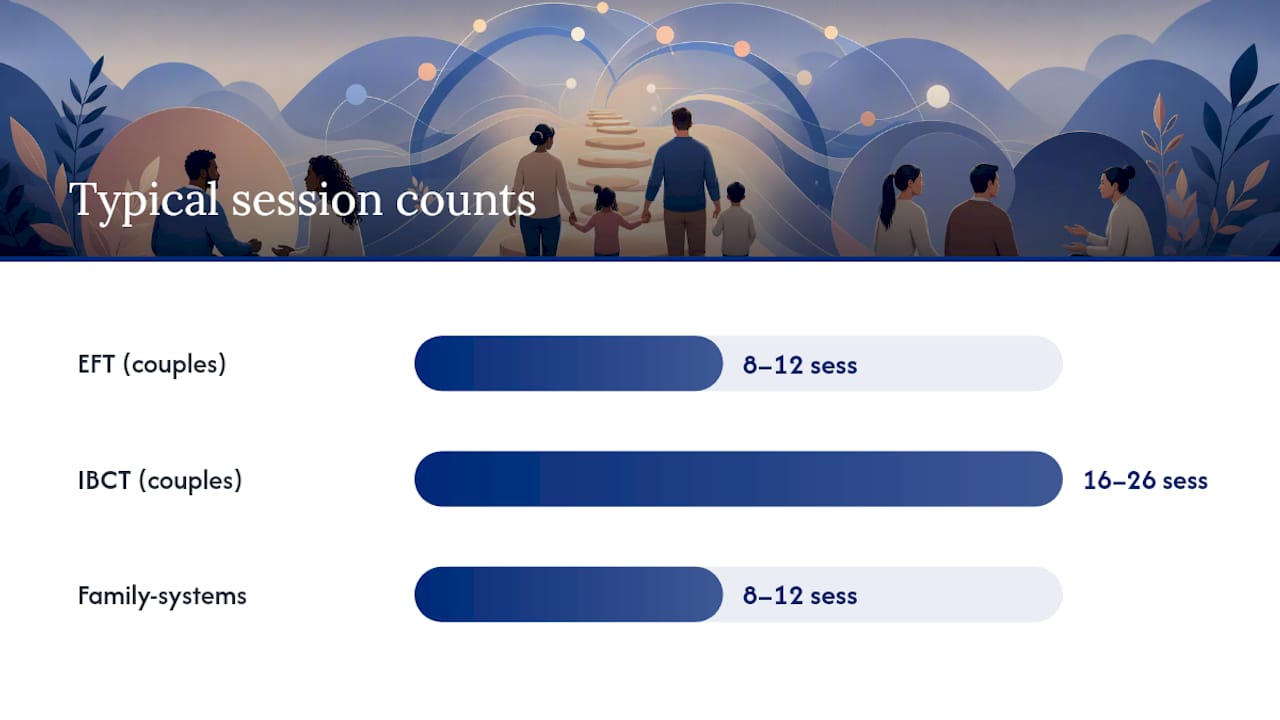
| EFT | Rebuild attachment security | Emotion processing, de-escalation of cycles | Couples; some individual and family adaptations | Strong (multiple RCTs) | 8–12 sessions | Couple, individual, group | Active domestic violence; one partner fully disengaged |
| IBCT | Acceptance + behavior change | DEEP formulation, empathic joining, unified detachment | Couples with chronic conflict | Strong (large RCTs) | 16–26 sessions | Couple, teletherapy | Severe individual psychopathology untreated |
| Emotion regulation / anger management | Reduce reactivity | Skills training: breathing, labeling, timeout | Individuals; group | Moderate-to-strong | 8–12 weeks | Individual, group, online | Requires motivation to change |
| Family-systems therapy | Reframe conflict as relational | Genograms, boundary work, communication patterns | Families, parents, adolescents | Moderate | 8–12 sessions | Family, couple | Crisis requiring immediate safety intervention |
| Brief programs (OurRelationship, PREP, Hold Me Tight) | Prevention and mild distress | Structured modules, coach calls | Couples, individuals | Moderate (growing evidence base) | 4–8 weeks | Online, group, self-directed | Moderate-to-severe distress; safety concerns |
A pre-pilot IBCT prevention study found that gains in empathic joining and relationship satisfaction persisted at three-year follow-up, which suggests these skills are durable when practiced consistently. Prevention programs also tend to produce larger effects for higher-risk couples than for low-risk ones, making early intervention especially worthwhile for couples who already notice recurring patterns.
How do you de-escalate a conflict before it causes real damage?
De-escalation is not about winning the argument later. It is about stopping the physiological spiral that makes productive conversation impossible. When heart rate climbs above roughly 100 beats per minute, the brain’s capacity for empathy and problem-solving drops sharply. The steps below work for both clients and clinicians coaching clients through high-conflict moments.
De-escalation checklist:
- Call a structured timeout: say “I need 30 minutes to calm down. I will come back to this.” Set a timer and keep the commitment to return.
- During the break, do something physically regulating: slow breathing (4 counts in, 6 counts out), a short walk, or cold water on the wrists.
- Avoid rehearsing your argument during the break. Replaying grievances keeps cortisol elevated.
- Return with a ground rule: one person speaks at a time, no name-calling, and either partner can call another timeout if needed.
Safety planning comes first. When conflict includes threats, coercion, or physical contact, couple or family therapy is not the appropriate first step. Individual therapy, safety planning with a trained clinician, and connection to resources like the National Domestic Violence Hotline take priority. Clinicians should screen for this in the first contact, not the third session.
When one partner is ambivalent about continuing the relationship, research supports pausing standard couple therapy and using a discernment counseling or last-chance approach instead. Pushing toward behavior change when commitment is unresolved tends to backfire.
Pro Tip: Give clients the timeout script in writing. Couples in crisis rarely remember verbal instructions. A card on the refrigerator works.
How do you assess whether couple or family therapy is the right fit?
The first session is an assessment, not a treatment. Clinicians who skip this step often find themselves three months in with a client who was never a good candidate for the modality chosen.
Intake checklist for clinicians (and clients reviewing their own readiness):
- Is the relationship safe? Screen for coercion, threats, and physical conflict before proceeding.
- Can both partners take a relational perspective? If one partner attributes all problems to the other, acceptance-based work will stall.
- What is the commitment level? Partners questioning whether to stay need discernment counseling, not standard IBCT or EFT.
- Are there untreated individual disorders or active substance use? These usually require parallel individual treatment.
- What is the pursue-withdraw pattern? Identifying it early shapes which techniques to prioritize.
Engagement steps (in order):
- Use a brief feedback model (similar to the Marriage Checkup) to share assessment findings with clients in session one; this increases buy-in.
- Ask about previous therapy: what helped, what felt off, and why it ended.
- Assess therapist-client fit explicitly. Ask the client: “Do you feel comfortable being honest with me?” If not, a referral may serve them better.
- Discuss realistic timelines and what early progress looks like (often more tension before less, not immediate relief).
For clinicians building treatment plans for conflict-focused cases, the assessment phase is where the entire trajectory gets set.
What does progress look like, and what does it cost?
Measurable change in couple therapy typically appears within 8–12 sessions for behavioral shifts (fewer escalations, better repair attempts) and within 16–26 sessions for deeper emotional shifts. Brief online programs like OurRelationship show comparable effects for some couples versus in-person work, with a three-phase format (Observe, Understand, Respond) and optional coach calls. PREP delivers communication and conflict-management skills in group or online formats, often in 8–12 hours total.
Delivery and cost overview:
- Couple therapy: — $130–$250 per session; insurance coverage is inconsistent and varies by diagnosis
What “progress” actually looks like early in therapy: clients often feel worse before they feel better. Suppressed emotions surface, and tension can temporarily increase. This is a documented pattern in couples work, not a sign the therapy is failing.
Sliding-scale fees are available through many community mental health centers and training clinics. Teletherapy through platforms like Masteringconflict extends access beyond the immediate geographic area.
Concrete skills and practice exercises you can use between sessions
The gap between sessions is where change either consolidates or evaporates. These exercises come directly from IBCT and emotion-regulation frameworks.
DEEP analysis prompts (do this in writing, not in your head):
- Differences: What core difference between us keeps showing up in this conflict?
- Emotional vulnerabilities: What does this conflict trigger in me emotionally, and why?
- External stressors: What outside pressures are making this worse right now?
- Pattern: What does our typical cycle look like? Who moves first, and how does the other respond?
Empathic joining starter phrases:
- “It makes sense you felt that way, given…”
- “I didn’t realize this was hitting you that hard.”
- “I can see why that felt like I wasn’t listening.”
Unified detachment exercise: describe the conflict as if you are both watching it happen to another couple. Use “the couple” instead of “you” and “I.” This creates enough distance to analyze the pattern without re-triggering it.
Emotion-regulation micro-skills:
- Box breathing: 4 counts in, 4 hold, 4 out, 4 hold. Repeat four times before re-engaging.
- Feeling labeling: name the emotion specifically (“I feel dismissed” rather than “I feel bad”). Specificity reduces amygdala activation.
- Behavioral activation: schedule one positive shared activity per week, regardless of current conflict level.
Pro Tip: Print the DEEP prompts and keep them somewhere accessible. Clients who do this in writing between sessions arrive at the next appointment with material the clinician can actually work with, rather than reconstructed memory.
For a printable version of these exercises, the conflict management techniques practice guide at Masteringconflict is a useful starting point.
Therapy, coaching, or a structured program: which one fits your situation?
The choice is not about preference. It is about clinical fit.
Choose therapy when: there is significant relationship distress, a history of trauma, untreated mental health conditions, safety concerns, or patterns that have persisted despite self-help attempts. EFT and IBCT both require a licensed clinician and a structured course of treatment. For approaches to conflict resolution in clinical settings, therapy is the appropriate container.
Choose coaching when: the relationship is fundamentally stable, the goal is skill-building rather than symptom treatment, and there are no active safety concerns or unmanaged psychiatric conditions. Coaching moves faster and costs less per session, but it cannot diagnose or treat.
Choose a structured program when: distress is mild to moderate, both partners are motivated, and the goal is prevention or early intervention. OurRelationship and PREP are well-suited here. A 2025 review in the Journal of Family Therapy confirmed that brief programs like OurRelationship and Hold Me Tight are effective low-intensity options for this population.
Step up to therapy when: a program or coaching engagement is not producing change after 6–8 weeks, conflict is escalating rather than stabilizing, or either partner discloses trauma, substance use, or safety concerns that were not apparent at the start.
How to start: the questions to ask before you book
Decision checklist:
- Is the situation safe for joint sessions?
- Are both people willing to participate?
- What is the primary goal: symptom relief, skill-building, or relationship decision?
- What format works logistically: in-person, teletherapy, group, or self-directed?
- What is the budget, and is insurance available?
Questions to ask a prospective clinician:
- What therapeutic approach do you use for couples or families in conflict?
- Are you trained in EFT, IBCT, or a specific evidence-based model?
- How do you handle safety concerns if they come up?
- What does a typical course of treatment look like, and how will we know it is working?
- Do you offer teletherapy, and do you accept my insurance?
Pro Tip: Bring a one-page summary of your conflict pattern to the first session: what triggers it, what each person typically does, and what you have already tried. Clinicians who get this upfront can skip weeks of exploratory work and get to the technique faster.
Key Takeaways
The most durable conflict resolution outcomes come from matching the right evidence-based technique to the right clinical presentation, assessed before treatment begins, not after it stalls.
| Point | Details |
|---|---|
| Match technique to presentation | EFT suits attachment-driven disconnection; IBCT suits chronic, entrenched conflict with acceptance deficits. |
| Assess safety and commitment first | Couple therapy is contraindicated when safety is unresolved or one partner is ambivalent about staying. |
| Expect early discomfort | Tension often increases before it decreases; this is a documented pattern in effective couples work, not a failure signal. |
| Brief programs are a legitimate first step | OurRelationship and PREP have evidence for mild-to-moderate distress and work well as entry points or prevention. |
| Masteringconflict offers clinical pathways | Clinical services, couples packages, and teletherapy are available for individuals, couples, and families ready to begin. |
What most people get wrong about conflict therapy
The conventional framing is that conflict is a communication problem. Fix the communication, fix the relationship. That is partially true, but it misses the deeper mechanism. Most entrenched relational conflict is an attachment problem wearing communication clothes. Partners are not fighting about dishes or money. They are fighting because one person feels unseen and the other feels criticized, and neither has language for that yet.
This is why purely skill-based approaches sometimes produce short-term improvement and then plateau. The skills are real and necessary. But without addressing the emotional vulnerability underneath the pattern, the same cycle reasserts itself under stress. IBCT’s DEEP formulation gets at this directly. EFT makes it the entire treatment target.
The other thing people underestimate: the first few weeks of good therapy often feel harder, not easier. When suppressed emotions finally have a safe container, they surface. Clients sometimes interpret this as the therapy making things worse. Clinicians who prepare clients for this pattern in session one retain them through it. Those who do not lose clients right when the work is getting productive.
Masteringconflict: clinical services built around these techniques
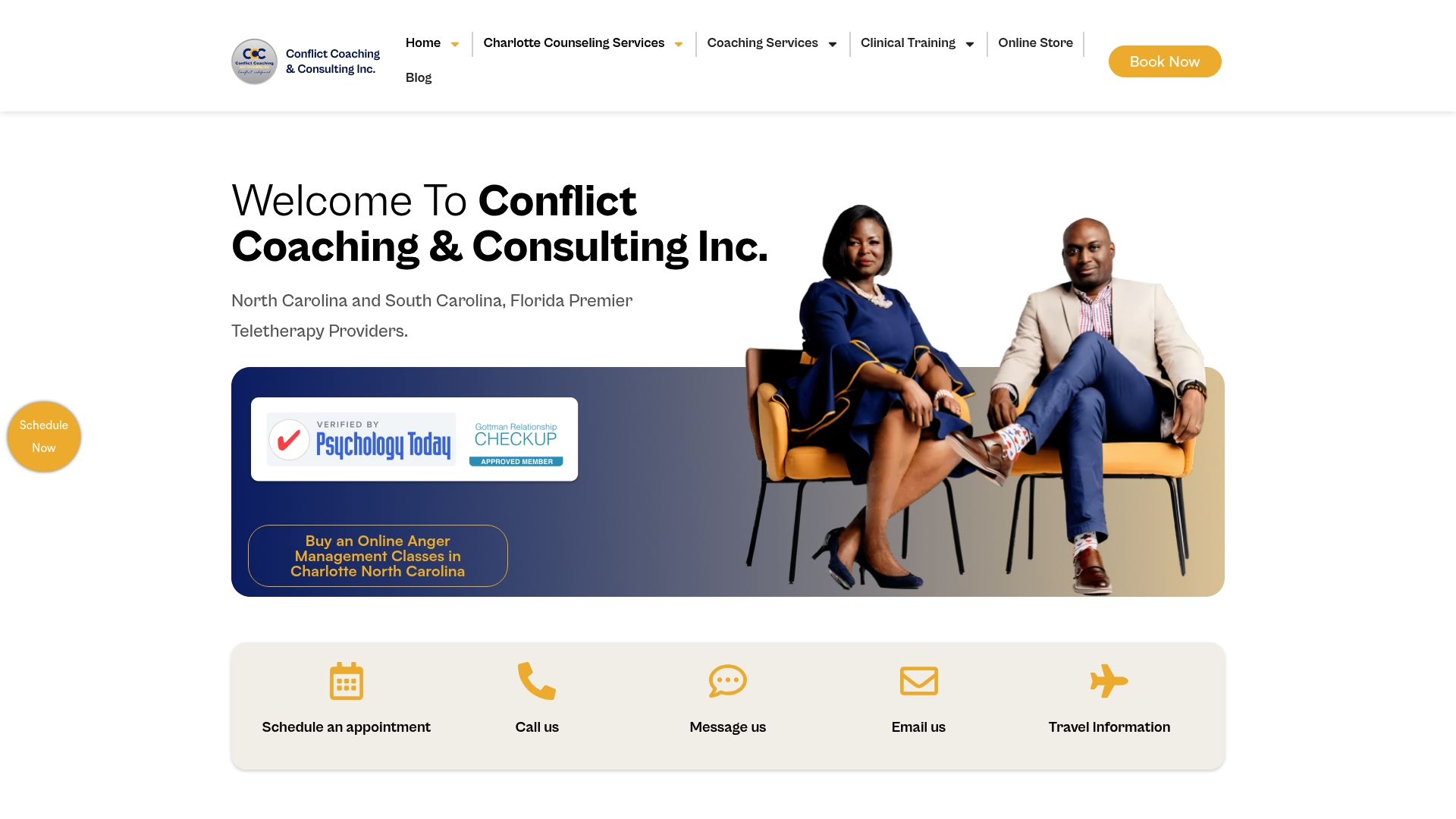
Masteringconflict, founded by Dr. Carlos Todd, a licensed clinical mental health counselor and psychologist, offers structured clinical pathways for individuals, couples, and families dealing with interpersonal conflict. The difference from a general therapy directory is specificity: services are organized around conflict as the presenting issue, not as a secondary concern.
Clinical services cover individual therapy, anger-management classes, and assessments. Couples packages provide structured session bundles for partners ready to commit to a course of treatment. Teletherapy extends access for clients outside North Carolina, South Carolina, and Florida. Clinicians seeking to develop conflict-focused skills can access clinical supervision with Dr. Todd directly.
To get started, book an intake session through the website. The intake process includes a commitment and safety screen, so you arrive at the first session already matched to the right approach.
Useful sources for further reading
- Integrative Behavioral Couple Therapy (IBCT) — PMC: detailed explanation of the DEEP formulation, acceptance techniques, and clinical application
- Research-driven flowchart for couples change — Frontiers in Psychology (2024): practical decision framework for clinicians on commitment assessment, discernment counseling, and treatment sequencing
- IBCT-based conflict prevention program: Pre-pilot study — MDPI: evidence for IBCT prevention programs and three-year follow-up data
- Couple therapy and systemic interventions — Journal of Family Therapy (2025): broad evidence review including OurRelationship, Hold Me Tight, and population-specific program effects
This article is general educational information, not professional mental health advice. Confirm current clinical guidelines and your specific situation with a licensed clinician.
Recommended
- Conflict Management Method: Enhancing Therapy Outcomes – Mastering Conflict
- Conflict Management Skills: Enhancing Therapy Outcomes – Mastering Conflict
- Conflict Resolution for Couples: Practical Strategies for 2025 – Mastering Conflict
- Conflict Resolution Strategies for Couples and Families – Mastering Conflict