
Emotional Regulation for Teens: A Complete 2026 Guide

TL;DR:
- Teenagers learn to manage their feelings through emotional regulation, which impacts their mental health and responses to stress. Biological development challenges and social pressures make emotional control difficult, but structured training like ERST, DBT, and emotion coaching can improve skills. Daily activities such as breathing exercises, grounding, journaling, and physical movement help teens develop self-regulation, while adult support through modeling, validation, and check-ins enhances progress.
Emotional regulation for teens is the process by which adolescents learn to manage and respond to their feelings in healthy, adaptive ways. This skill sits at the center of teen mental health, shaping how young people handle stress, conflict, and disappointment. The teenage brain is still developing the circuits needed for impulse control, which makes emotional outbursts normal rather than a sign of failure. Emotional regulation is a transdiagnostic skill that affects anxiety, depression, academic stress, and social conflict. The good news is that it can be strengthened at any age through consistent, intentional practice.
Why is emotional regulation challenging during adolescence?
The core reason teens struggle with emotional control is biology. The prefrontal cortex matures only by early adulthood, and this region governs impulse control, planning, and the ability to pause before reacting. During the teen years, the emotional centers of the brain fire intensely while the braking system is still under construction. That gap explains why a minor frustration can escalate into a full meltdown.
Adolescence also brings a surge of social pressure, identity questions, and hormonal shifts that amplify emotional intensity. A comment from a peer, a bad grade, or a conflict at home can feel catastrophic in a way that adults often underestimate. Teens are not being dramatic. Their nervous systems are genuinely registering these events as high-stakes threats.
Emotional meltdowns in teens are a normal developmental milestone, not character flaws. They reflect incomplete brain maturation, not a lack of effort or willpower.
Common signs of emotional dysregulation in teens include:
- Explosive anger or crying over seemingly small triggers
- Shutting down or withdrawing from family and friends
- Difficulty recovering after an upsetting event
- Impulsive decisions made in the heat of the moment
- Persistent anxiety or low mood that disrupts daily life
Recognizing these signs early matters. Dysregulation that goes unaddressed tends to compound, affecting grades, friendships, and family relationships over time.
What evidence-based methods improve emotional regulation skills in teens?
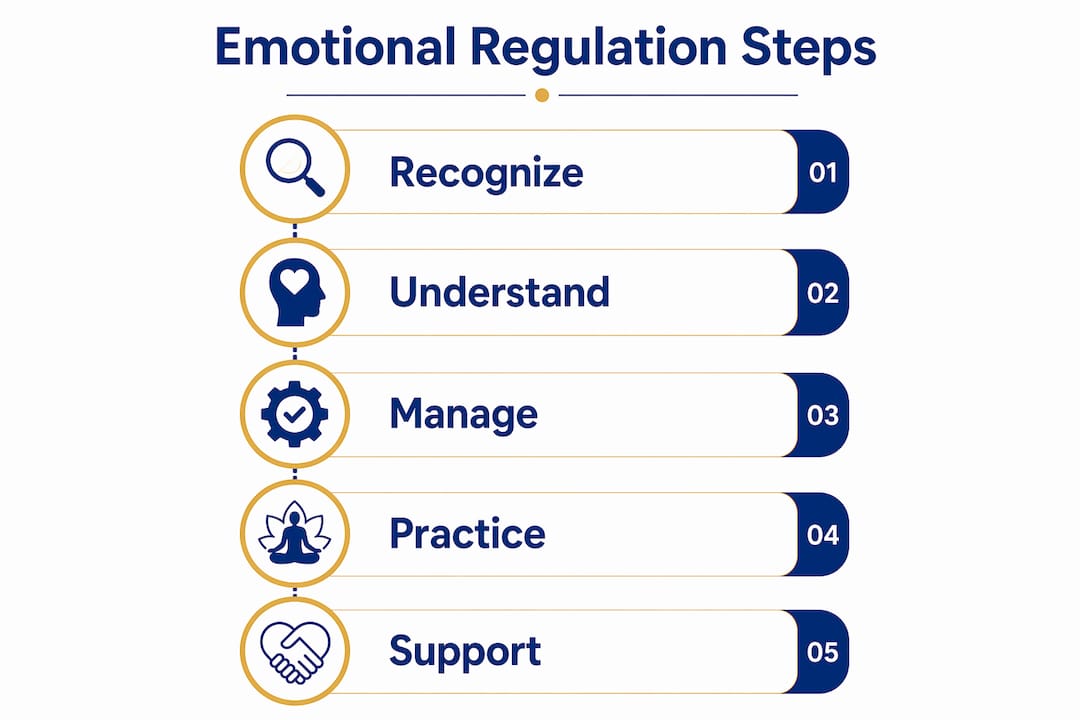
Clinical research points to structured skill training as the most reliable path to lasting improvement. The strongest evidence currently supports two main approaches.
Emotion regulation skills training (ERST)
Brief, group-based ERST consisting of around 7 sessions significantly improves emotional clarity and regulation in adolescents aged 14–20, with effects that hold after 3 months. That finding matters because it shows teens do not need years of intensive therapy to see real change. A focused, short-term program can shift how a teen identifies and responds to difficult emotions.
DBT-based interventions
Dialectical Behavior Therapy (DBT) was originally developed for adults with severe emotional dysregulation, but adapted versions now work well with teens. Therapy focusing on emotional awareness and coping skills reduces meltdowns and builds resilience over time. DBT teaches four core skill sets: mindfulness, distress tolerance, emotion regulation, and interpersonal effectiveness. Each one directly addresses a gap that dysregulated teens commonly show.
The role of emotion coaching
Emotion coaching is a structured approach where a trusted adult helps a teen name, understand, and work through their feelings rather than dismissing or punishing them. Research consistently shows that teens who receive emotion coaching develop stronger self-regulation skills than those who face emotional suppression or criticism. The adult does not solve the problem. They help the teen build the internal tools to solve it themselves.
| Method | Format | Evidence Strength | Best For |
|---|---|---|---|
| ERST | Group, 7 sessions | Strong, sustained at 3 months | Teens aged 14–20 |
| DBT-adapted | Individual or group therapy | Strong, multi-skill | Severe dysregulation |
| Emotion coaching | Parent or educator led | Moderate to strong | Daily home or school use |
| Mindfulness-based programs | School or clinic | Moderate | Anxiety and stress reduction |
Pro Tip: When choosing a therapy format for a teen, ask the provider whether the program includes parent involvement. Teens who practice regulation skills at home with a supportive adult show faster and more durable gains.
Skill practice is the engine behind all of these methods. Reading about emotion regulation does not change behavior. Repeating specific techniques in real situations does.
What practical emotional regulation activities can teens use daily?
Daily practice is where regulation skills actually take root. The following activities are backed by behavioral science and accessible without clinical support.
Breathing and grounding exercises
Breathing exercises and mindfulness improve emotional regulation by reducing stress and restoring nervous system balance. Box breathing is one of the most effective techniques: inhale for 4 counts, hold for 4, exhale for 4, hold for 4. Repeating this cycle for 2 minutes activates the parasympathetic nervous system and lowers the physical intensity of an emotional spike.
The 5-4-3-2-1 grounding technique is another proven tool. A teen names 5 things they can see, 4 they can touch, 3 they can hear, 2 they can smell, and 1 they can taste. This technique pulls attention away from a spiraling thought and anchors it in the present moment. It works especially well for anxiety and anger.
- Box breathing: Slows the heart rate and interrupts the stress response within minutes
- 5-4-3-2-1 grounding: Interrupts rumination and brings the teen back to the present
- Progressive muscle relaxation: Tensing and releasing muscle groups reduces physical tension linked to emotional distress
- Cold water on the face or wrists: Triggers the dive reflex, which rapidly lowers heart rate
Journaling and emotional awareness
Writing about emotions builds the kind of emotional awareness that makes regulation possible. A teen who can name what they feel, identify what triggered it, and trace how their body responded is already ahead of the curve. Structured prompts work better than open-ended journaling for most teens. Questions like “What set this off?” and “What did I need in that moment?” build self-knowledge over time.
Physical activity and movement
Exercise is one of the most underused regulation tools available to teens. A 20-minute walk, a run, or even a few minutes of jumping jacks burns off the cortisol and adrenaline that fuel emotional escalation. Physical movement gives the body a healthy outlet for the energy that strong emotions generate.

Pro Tip: Encourage teens to build a personal “regulation menu” of 3–5 activities that work for them. Having a pre-made list means they do not have to think clearly in the middle of an emotional spike.
How can parents and educators support teens in building emotional regulation?
Adults play a defining role in whether teens develop strong regulation skills or stay stuck in reactive patterns. The most effective support is not about fixing the teen. It is about creating the conditions where learning can happen.
Model calm behavior
Parents who model calm behavior and validate teen emotions significantly reduce emotional meltdowns and improve communication. Teens learn regulation by watching the adults around them. A parent who responds to conflict with a raised voice is teaching a lesson, even if unintentionally. Practicing your own regulation skills is not optional if you want to support a teen’s growth. The parenting guide at Masteringconflict offers clinical research and practical strategies for exactly this challenge.
Validate before problem-solving
The most common mistake adults make is jumping to solutions before a teen feels heard. Validation does not mean agreeing with the behavior. It means acknowledging the feeling underneath it. “That sounds really frustrating” lands differently than “You shouldn’t feel that way.” Validation lowers the emotional temperature and opens the door to learning.
Use regular check-ins
Routine emotional check-ins correlate with delayed or reduced emotional outbursts. A brief daily question, such as “How are you feeling on a scale of 1 to 10?” gives teens practice naming their emotional state before it escalates. It also signals that emotions are safe to discuss. Educators can build this into classroom routines without significant time investment. The classroom regulation guide from Masteringconflict provides validated methods for school settings.
Key strategies for parents and educators include:
- Stay calm during the teen’s emotional escalation, even when it is difficult
- Name the emotion you observe without judgment (“You seem really overwhelmed right now”)
- Avoid ultimatums or punishments during peak emotional moments
- Teach specific coping tools when the teen is calm, not mid-crisis
- Know when to refer to a therapist or counselor for additional support
Healthcare settings also benefit from these principles. Effective communication with anxious patients in clinical contexts follows the same validation-first approach that works with teens at home and school.
Key Takeaways
Emotional regulation in teens is a learnable skill rooted in brain development, and consistent practice combined with adult support produces the most durable results.
| Point | Details |
|---|---|
| Biology drives dysregulation | The prefrontal cortex is not fully mature until early adulthood, making emotional outbursts developmentally normal. |
| Short programs produce real gains | ERST in around 7 sessions improves emotional clarity in teens aged 14–20 with effects lasting at least 3 months. |
| Daily practice builds the skill | Breathing, grounding, journaling, and physical activity each strengthen regulation when practiced consistently. |
| Adults shape outcomes | Parents and educators who model calm behavior and validate emotions reduce meltdowns and improve teen communication. |
| Therapy accelerates progress | DBT-adapted approaches and emotion coaching build the skills teens need faster than unstructured support alone. |
What I’ve learned from working with teens on emotional regulation
After years of working with adolescents and their families, the pattern I see most often is not a lack of effort. It is a lack of the right framework. Teens are told to “calm down” or “think before you act” without ever being taught how. That is like telling someone to fix an engine without handing them any tools.
The second thing I have learned is that patience from adults is not passive. It is an active clinical strategy. When a parent stays regulated during their teen’s meltdown, they are doing something neurologically powerful. They are providing a co-regulation anchor, a calm nervous system that the teen’s dysregulated system can synchronize with over time.
The third insight is one that families often find surprising. Emotional regulation skills learned in adolescence do not just help teens get through high school. They shape how those young people handle conflict in relationships, manage stress at work, and parent their own children one day. The investment is generational. Starting early, even imperfectly, matters more than waiting for the “right” moment.
— Carlos
Clinical support for teen emotional regulation at Masteringconflict
Teens who need more than daily exercises and parental support often benefit from structured clinical care. Masteringconflict offers outpatient programs designed specifically for adolescents, addressing emotional regulation, anger management, and mental health challenges with evidence-based methods.

Dr. Carlos Todd and the Masteringconflict team provide individual and group therapy tailored to teen development, with options for in-person sessions in North and South Carolina as well as teletherapy for families across the country. Whether a teen is dealing with anxiety, explosive anger, or persistent low mood, the clinical team builds a plan grounded in the same research covered in this guide. Reach out to schedule an assessment and take the first concrete step toward lasting change.
FAQ
What is emotional regulation in teens?
Emotional regulation in teens is the ability to recognize, understand, and manage emotional responses in healthy ways. It is a skill that develops gradually as the brain matures and can be strengthened through practice and support.
At what age do teens develop emotional regulation?
The prefrontal cortex, which governs impulse control and emotional regulation, does not fully mature until early adulthood, typically the mid-20s. Teens can build strong regulation skills well before full maturity through targeted practice and coaching.
What are the best emotional regulation activities for teens?
Box breathing, the 5-4-3-2-1 grounding technique, journaling with structured prompts, and regular physical activity are among the most effective daily tools. Short-term programs like ERST also produce significant improvements in as few as 7 sessions.
How can parents help teens with emotional regulation?
Parents help most by modeling calm behavior, validating emotions before offering solutions, and using regular check-ins to build emotional awareness. Consistent, non-judgmental responses from parents reduce meltdowns and teach teens that emotions are manageable.
When should a teen see a therapist for emotional regulation?
A teen should see a therapist when dysregulation disrupts daily functioning, such as affecting school performance, friendships, or family relationships. DBT-adapted therapy and emotion-focused counseling are clinically validated options for adolescents who need structured support.