
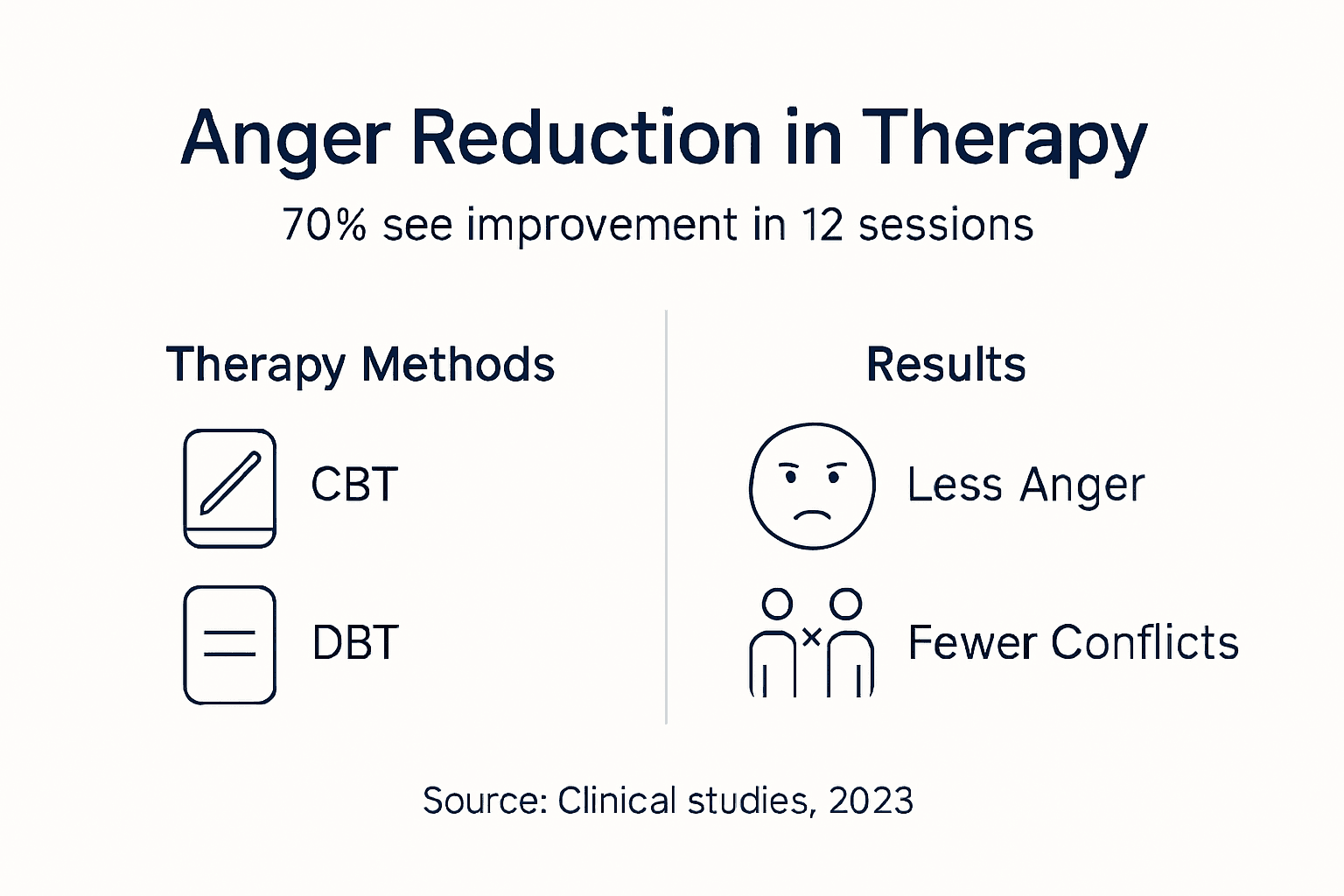
Individual Therapy: 70% See Anger Reduction in 12 Sessions

If you’re from a minority background in the Carolinas or Florida, you might think therapy isn’t for you. But clients receiving culturally tailored therapy show a 35% higher retention rate, proving that individual therapy adapted to your experiences can transform how you manage anger and conflict. This article walks you through how individual therapy works, why cultural competence matters, and practical steps to find a therapist who understands your background and helps you build lasting skills.
Table of Contents
Key Takeaways
| Point | Details |
|---|---|
| Evidence-Based Approach | Individual therapy uses CBT and DBT to reduce anger frequency by up to 40% through structured skill building. |
| Cultural Competency Matters | Culturally tailored therapy boosts engagement and retention significantly among minority clients in the Southeast. |
| Realistic Timeline | Most clients see measurable anger reduction after 8–12 sessions with continued practice of learned techniques. |
| Accessible Options | Therapists in NC, SC, and FL offer both in-person and teletherapy sessions to meet your schedule and preferences. |
| Proven Outcomes | 70% of therapy participants report reduced anger symptoms, improving personal and interpersonal relationships. |
What Is Individual Therapy?
Individual therapy is a personalized mental health process where you work one-on-one with a trained therapist to understand and manage your emotions, thoughts, and behaviors. For anger and conflict management, individual therapy is a personalized process helping clients understand and manage emotions by exploring what triggers your reactions and building strategies to respond differently.
Sessions typically last 50 to 60 minutes and occur weekly or biweekly. Your therapist acts as a guide and partner, creating a safe space to discuss challenges without judgment. The relationship you build with your therapist is crucial because trust enables you to open up about difficult experiences and practice new skills in real time.
Here’s what you can expect from the structure of individual therapy:
- Confidential environment where you control what you share
- Collaborative goal setting focused on your specific anger and conflict patterns
- Active practice of coping skills during and between sessions
- Regular progress reviews to adjust strategies as you improve
The goal isn’t to eliminate all anger but to help you recognize triggers, understand your emotional responses, and choose healthier ways to express yourself. Whether you’re dealing with workplace frustration, family tension, or historical trauma, individual therapy offers tools tailored to your life. Many clients also benefit from structured anger management classes alongside therapy for comprehensive support.
How Individual Therapy Addresses Anger and Conflict

Therapy relies on evidence-based psychological models proven to reduce anger symptoms. Cognitive Behavioral Therapy (CBT) helps you identify and change the thought patterns that trigger angry responses. When you catch yourself thinking
Recommended
- Anger Reduction Techniques: Building Healthier Relationships – Mastering Conflict
- Anger Management Tips That Actually Work (2025)
- Top 20 Benefits of Anger Management – Mastering Conflict
- Anger Management in Relationships – Lasting Change – Mastering Conflict
- Formation « Gérer son stress et ses émotions dans un contexte professionnel » | Proactive Academy
- 10 ChatGPT Prompts for Entrepreneurial Self-Discovery: Your 2025 Growth Guide | Kickass Online