
Get Written Court Approval for Mississippi Anger Management Classes

If a Mississippi court has ordered you into anger management, the fastest path to compliance is this: get written confirmation from the judge’s clerk or your probation officer before you enroll, then choose a clinician-led program that issues a signed certificate of completion. Courts often accept online or in-person programs, but acceptance can vary by county, so confirm first and enroll in a course built to satisfy that paperwork.
TL;DR:
- Confirm in writing with the court’s clerk or probation officer whether your case accepts online or in-person anger management classes before enrolling.
- Ensure the program provides a signed certificate with provider details, aligns with the court-ordered hours, and ties directly to your case and name.
- Enroll only in a program explicitly approved for your specific court order type, especially differentiating between anger management and batterer intervention.
- Gather all necessary documentation up front, including approval confirmation, attendance logs, and payment receipts, to avoid rejection on technical grounds.
- Program lengths vary from 4-hour refreshers to 16-hour multi-session courses, with costs ranging from free options to around $85 for standard sessions.
Table of Contents
- What Mississippi courts look for in an acceptable program
- Are online classes acceptable, and does that change by county?
- How to verify acceptance and the paperwork to collect
- What to expect: hours, curriculum, cost, and certificate timing
- A clinician’s view on what makes a course reliable for court purposes
- Steps to enroll, complete, and submit proof to the court
- A clinician’s note on court-ordered programs
- Mastering Conflict: clinician-led classes with documentation built in
- FAQ
- Sources
What Mississippi courts look for in an acceptable program
Courts are not grading your personal growth. They are checking paperwork against a set of specific markers, and a program that skips any of them creates a documentation gap that can delay your case or trigger a compliance hearing.
A program that satisfies most Mississippi courts typically includes:
- A certificate of completion with the provider’s name, license information, and direct contact details.
- Documented hours or credit that match what the court ordered, whether that is a single session or a multi-week course.
- A record tying the certificate to your name and case number, not a generic class roster.
- A facilitator with recognized clinical credentials, usually in counseling, social work, or psychology.
- Attendance logs or progress notes available on request from the court or probation officer.
Mississippi’s intervention court rules require program certification and participant handbooks that spell out program length, participant responsibilities, fees, and how completion affects a case, according to the Mississippi Administrative Office of Courts. That requirement signals how seriously county courts treat documentation: a program without a clear handbook or certification trail is a risk even if the content itself is solid.
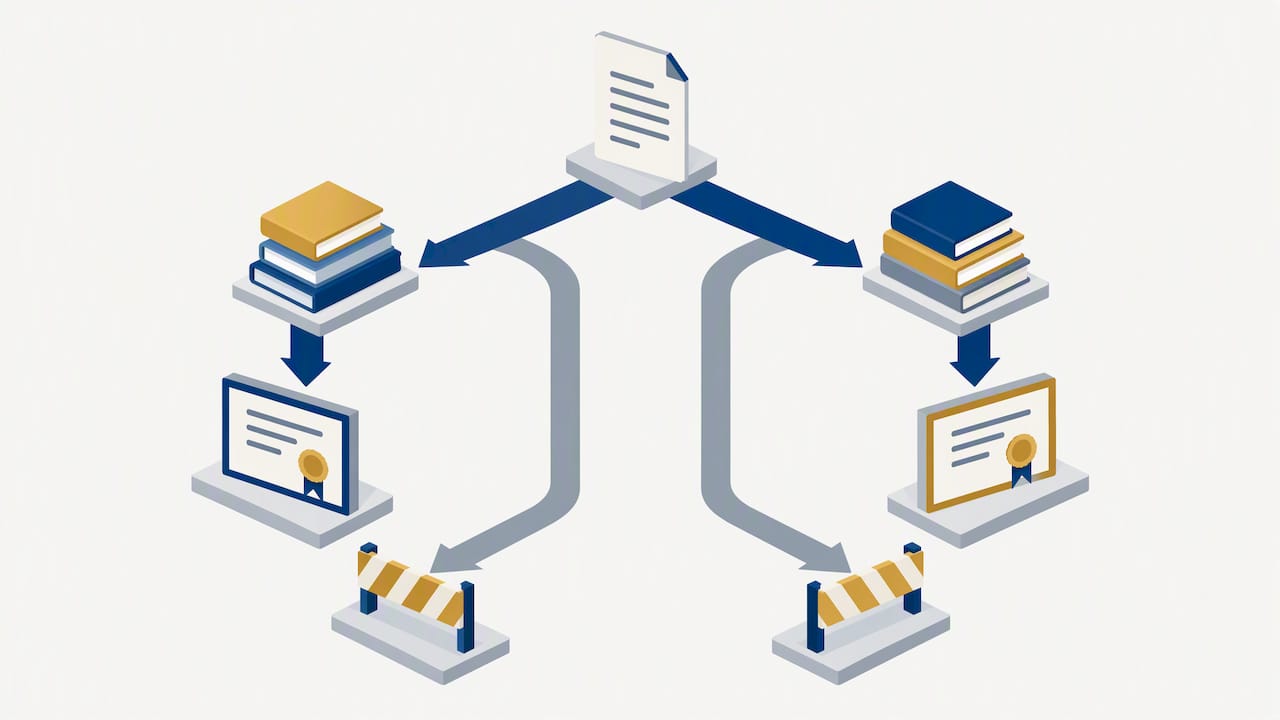
One distinction trips up more people than anything else: anger management and batterer intervention programs are not interchangeable. Batterer intervention programs are typically mandated in domestic violence cases and follow a different curriculum and certification path than general anger management. If your court order uses specific language, that language matters. Enrolling in the wrong program type, even one with excellent credentials, usually will not satisfy the order and often means starting over.
Are online classes acceptable, and does that change by county?
Online anger management classes are increasingly common, and many providers market themselves as nationally recognized or court approved. That marketing claim is not the same as a guarantee that your specific judge or probation officer will accept it, because acceptance in Mississippi is frequently a county-level and even a judge-level decision.
The safest approach is to treat written pre-approval as a mandatory step, not an optional courtesy. Here is how to get it:
- Call the clerk’s office for the court that issued your order and ask who confirms acceptable program types, usually the judge’s clerk or your assigned probation officer.
- Ask directly: does this court accept online anger management classes, or is in-person attendance required for my case type?
- Request written confirmation, not a verbal yes. A signed email, a docket entry, or a clerk’s note referencing your case number all work.
- Keep that document with your case file and bring a copy to your enrollment and your final court date.
Domestic violence cases, DUI-related orders, and other intervention court matters are the situations most likely to require in-person attendance or extra verification, partly because of the certification standards tied to intervention programs, as outlined in the Mississippi intervention court rules, if your order falls into one of these categories, assume you need written approval before you spend any money on a course.
Pro Tip: Ask the clerk for the exact wording the judge prefers on a completion letter. Matching that phrasing when you submit your certificate avoids a second round of back-and-forth.
How to verify acceptance and the paperwork to collect
Treat this like a checklist you complete once, rather than something you piece together after you’ve already finished a course. Gathering these documents up front prevents a completed class from being rejected on a technicality.
Collect the following before, during, and after your program:
- Written approval from the court or probation officer naming the program type and format (online or in-person).
- An enrollment confirmation showing the date you registered and the course length.
- Attendance proof, whether that is a sign-in sheet, a login log for online sessions, or session-by-session notes from the facilitator.
- A signed certificate of completion listing the provider’s name, license number, and contact information.
- A payment receipt, if your court requires proof that fees were paid in full.
When you first contact the court, a short written request works better than a phone call alone because it creates a paper trail. A simple version reads:
When you submit your finished certificate, a short cover letter referencing your case number and the court’s prior written approval closes the loop cleanly. Some counties add requirements beyond the basics, such as a signed participant handbook acknowledgment or periodic progress reports, so ask the clerk whether your county has any additional steps tied to its intervention court program.
What to expect: hours, curriculum, cost, and certificate timing
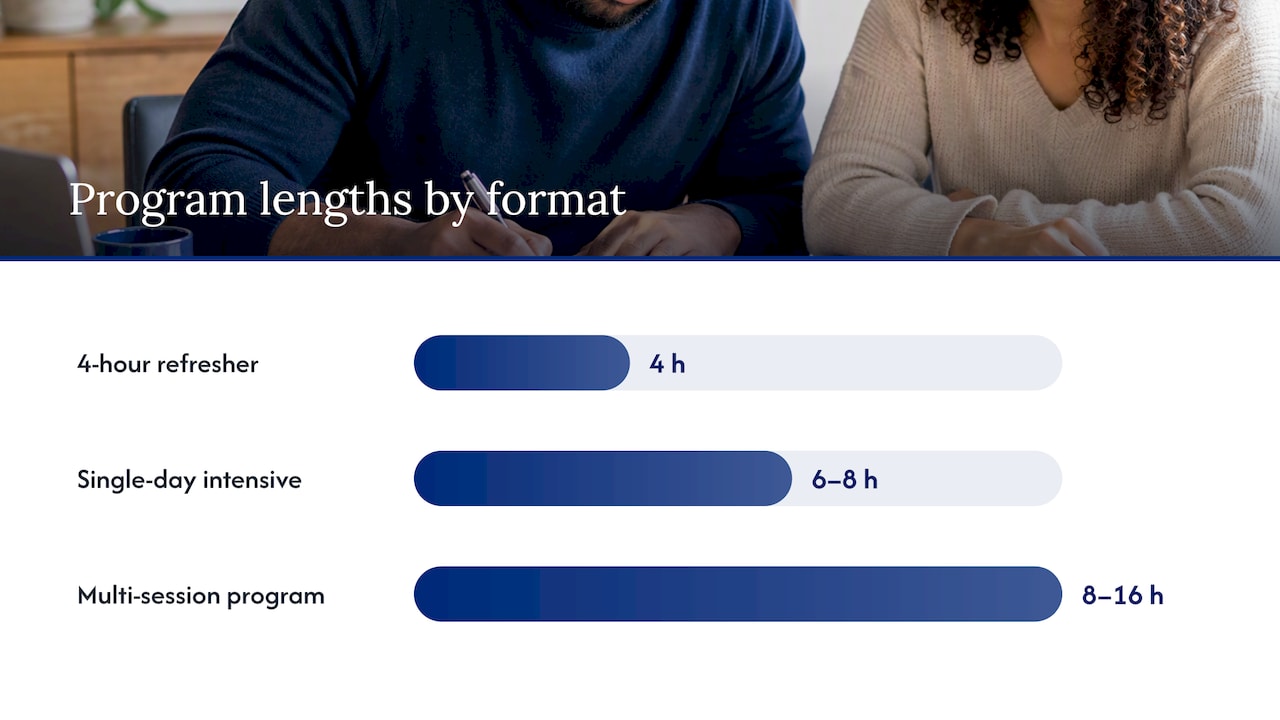
Program length varies more than most people expect walking in. Single-day intensives run 6 to 8 hours and are common for lower-level court orders. Some courts accept a 4-hour refresher format for less severe cases, while others, particularly repeat offenses or intervention court matters, require 8 to 16 hours spread across multiple sessions.
Most credible programs lean on cognitive behavioral therapy, often shortened to CBT, along with structured counseling techniques. Programs using CBT and similar structured approaches are considered standard practice by mental health resources like the NHS, which describes typical anger management courses as ranging from a single day to several months, delivered either one-to-one or in groups.
What affects your cost:
- Live, clinician-led sessions generally cost more than self-paced online modules.
- Group webinar formats tend to fall in the middle.
- Some public mental health providers and nonprofit organizations offer free or sliding-scale anger management services, which is worth checking if cost is a barrier, as the UK-based charity Mind notes about similar public-service pathways.
Certificates are typically issued one of three ways: instantly after a final online module, mailed within a week or two of an in-person class, or emailed with a digital signature. Courts usually want a certificate that lists total hours completed, the provider’s contact information, and a signature or license number, not just a printed “congratulations” page.
A clinician’s view on what makes a course reliable for court purposes
Working with clients who are navigating court orders, the pattern I see most often is a mismatch between what a program promises and what it can actually document. A reliable course has a licensed facilitator, a curriculum built around CBT or comparable structured methods, measurable session objectives, and attendance logs the provider can produce without a delay.
The biggest compliance risk is not a bad class. It is the wrong class, usually anger management chosen when the court actually ordered batterer intervention, or vice versa. Before you enroll anywhere, confirm the exact program type named in your order.
Our anger management classes include licensed clinical oversight, signed certificates, and documentation support built for exactly this kind of court follow-up.
Pro Tip: If your order doesn’t specify a program type by name, ask the clerk to clarify rather than assuming anger management is the default.
Steps to enroll, complete, and submit proof to the court
- Get written pre-approval from the judge’s clerk or probation officer naming the required format.
- Enroll in the approved program and save your enrollment confirmation.
- Attend every session and request attendance records or progress reports as you go.
- Submit your signed certificate with a cover letter referencing your case number, then confirm the court received it.
A clinician’s note on court-ordered programs
Clients arriving under a court order often expect judgment. What they usually need is a clear process: understanding what the court wants documented, and getting through the material without the paperwork becoming its own source of stress. Balancing a genuine therapeutic goal with a court’s administrative checklist takes some translation, but it is a normal part of this work.
Confidentiality still applies within legal limits, and most clients complete their requirement without drama once the documentation side is handled correctly.
— Carlos
Mastering Conflict: clinician-led classes with documentation built in
If you want one less thing to verify, anger management classes built around what courts actually ask for include licensed clinical facilitation, structured curriculum, and a signed certificate you can submit directly.
We offer several formats depending on what your order specifies:
- A 1 Hour Anger Management Class for lighter requirements, priced at $24.99.
- A 6 Hour Anger Management Class at $79, and an 8 Hour Anger Management Class at $85, both common lengths for standard court orders.
- Group formats through our 4-Hour Program at $149 and 8-Hour Program at $249.
- A one-day 6 to 8 hour intensive for readers who need a completed certificate quickly.
Every course includes a signed certificate listing hours completed and clinical contact information, so you have what your court or probation officer needs without chasing down extra paperwork. If your county requires a specific verification letter before you enroll, help is available to figure out what to request from the clerk first. Start with our course catalog to find the format that matches your order.
This article is general information, not a substitute for advice from a qualified doctor. Consult a qualified healthcare professional about your own circumstances before acting on anything here.
FAQ
Does Mississippi accept online anger management classes for court orders?
Many Mississippi courts accept online anger management classes, but acceptance can vary by county and by judge. Always get written confirmation from the clerk’s office or your probation officer before enrolling in an online format.
How many hours of anger management does a Mississippi court typically order?
Program lengths commonly range from a single 6 to 8 hour session to multi-week programs totaling 8 to 16 hours, depending on the severity of the case. Your specific court order will state the required hours, so confirm that number rather than assuming a standard length applies.
What’s the difference between anger management and batterer intervention programs?
Anger management programs focus on general emotional regulation skills, while batterer intervention programs are typically mandated in domestic violence cases and follow separate certification requirements. Enrolling in the wrong program type usually will not satisfy a court order even if the content overlaps.
What happens if I don’t complete court-ordered anger management classes?
Failing to complete a court-ordered program can lead to a compliance hearing, additional sanctions, or other consequences tied to your underlying case, since Mississippi intervention court rules tie program completion directly to case outcomes according to the Mississippi Administrative Office of Courts. Contact the court immediately if you anticipate missing a deadline rather than letting it pass silently.
How do I verify a provider’s license before enrolling?
Check the facilitator’s credentials directly with the provider, and for broader credential verification, resources like NAADAC list professional standards for addiction and related counseling certifications. You can also use licensing verification tools available through provider directories such as Clinicly’s counselling listings when researching a facilitator’s standing.
Sources
For readers or attorneys who want to verify these requirements directly, the following cover Mississippi’s official program rules and general clinical standards for anger management care.
- INTERVENTION AND TREATMENT COURT RULES (Mississippi AOC)
- Get help with anger – NHS
- Find support for anger problems | Mind