
Clinician-Led Stress Management Programs in the Workplace

If workplace stress or burnout is affecting your sleep, your relationships, or your ability to function at your job, the most direct path forward is booking an intake with a licensed clinician. Clinician-led stress management programs in the workplace come in three main forms: individual therapy for chronic or complex stress, small-group clinician-led anger-management classes for emotion regulation and conflict, and structured burnout recovery programs for cases that have gone on long enough to affect your health or job performance.
The right starting point depends on severity, not preference:
- Mild to moderate stress, occasional conflict: individual therapy or a short anger-management class
- Chronic irritability, workplace conflict patterns: clinician-led anger-management groups
- Long-term exhaustion, physical symptoms, or job impairment: a multimodal burnout recovery program
Providers like Mastering Conflict offer several of these formats directly, which means you can start with an assessment rather than guessing which track fits.
Key Takeaways
Clinician-led therapy reliably reduces emotional exhaustion and depersonalization, while lasting relief from severe burnout usually requires a structured multimodal plan over several months.
| Point | Details |
|---|---|
| Match format to severity | Use individual therapy for chronic stress, anger-management classes for conflict and reactivity, and multimodal programs for severe burnout. |
| Evidence favors third-wave CBT | Mindfulness-based CBT cuts emotional exhaustion and depersonalization by roughly half a standard deviation in meta-analytic data. |
| Fit beats method | Choosing a clinician you trust predicts outcomes more than which specific technique they use. |
| Timelines vary by severity | Expect early gains in 6 to 8 weeks for moderate stress, and 12 to 24 weeks or more for structured burnout recovery. |
| Start now with Mastering Conflict | Mastering Conflict offers individual therapy, anger-management assessments, and teletherapy for readers ready to book a clinician-led intake. |
This article is general information, not a substitute for advice from a qualified doctor. Consult a qualified healthcare professional about your own circumstances before acting on anything here.
Table of Contents
- What Clinician-Led Stress Management Programs Actually Look Like
- Does Therapy Actually Work for Workplace Burnout?
- How Do You Choose the Right Clinician or Program?
- What Happens in the First Few Sessions?
- Techniques You Can Start Using Today
- Where Organizational Policy Fits Into Your Recovery
- How Do You Know the Program Is Working?
- Fitting Clinical Care Into Your Broader Wellness Routine
- Can Your Manager Actually Help?
- Legal and Ethical Guardrails Worth Knowing
- What a Clinician Wants You to Know Before You Start
- Getting Started With Mastering Conflict
- Sources
What Clinician-Led Stress Management Programs Actually Look Like
Not every stress problem needs the same intervention, and matching the format to the severity of what you’re dealing with saves months of wasted effort. Three main clinical formats cover most workplace stress presentations.
- Individual therapy. Best for complex or chronic stress, especially when anxiety, depression, or a diagnosable condition is tangled up with the work stress. A licensed clinician can address the underlying pattern, not just the symptom that shows up at your desk.
- Anger-management classes or small clinical groups. Built for emotion regulation and workplace conflict, these run as structured, time-limited sessions where a clinician teaches specific skills, often alongside peers working through similar issues.
- Multimodal burnout recovery programs. Designed for stress-induced exhaustion disorder or severe, longstanding burnout, these combine therapy with coordinated medical input and sometimes a structured return-to-work plan.
Delivery format matters almost as much as content. In-person sessions offer more intensity and nonverbal read, teletherapy offers consistency when your schedule is unpredictable, and hybrid models split the difference. If you travel for work or manage shifting hours, teletherapy removes the single biggest reason people drop out of care: missed appointments.
Pro Tip: If you’re not sure which format fits, say so on your first call. A clinician who does intake assessments will steer you toward the right level of care instead of defaulting you into whatever slot is open.
Does Therapy Actually Work for Workplace Burnout?
Yes, and the effect sizes are large enough to matter, though not every dimension of burnout responds the same way. A 2025 meta-analysis of third-wave cognitive behavioral therapy, mostly mindfulness-based interventions, found a standardized mean difference of about −0.69 for emotional exhaustion and −0.53 for depersonalization across 11 studies. Those are meaningful reductions in the two symptoms that tend to make work feel unbearable: the drained feeling and the emotional numbness toward coworkers or clients.
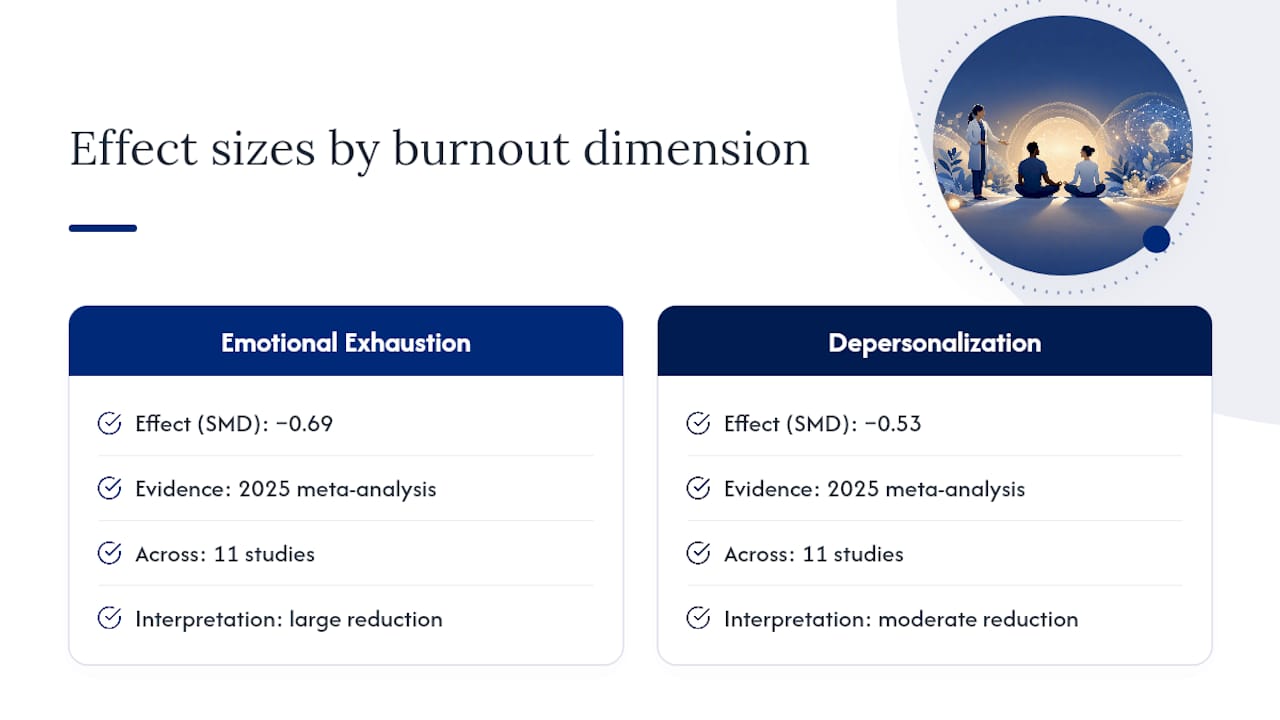
Personal accomplishment, the third burnout dimension, didn’t move significantly in that same analysis. That’s not a knock on therapy. It reflects that feeling capable and valued at work often depends on things a clinician can’t control alone, like workload or recognition, which is why the researchers note that individual treatment works best paired with changes to the actual job conditions.
Digital, self-guided CBT programs show smaller but still real effects. A pragmatic randomized controlled trial found a moderate effect on perceived stress at three months (d ≈ 0.36), growing larger by six months, with engagement predicting bigger gains.
The evidence in one line: Third-wave CBT cuts emotional exhaustion and depersonalization by roughly half a standard deviation or more, but rebuilding a sense of accomplishment usually takes more than therapy alone.
For severe, longstanding cases, a 24-week standardized multimodal program produced large within-group improvements and better return-to-work outcomes sustained a full year later, according to an open clinical trial. That’s the evidence base behind recommending multimodal care for anyone whose burnout has become a functional impairment rather than a bad stretch at work.
How Do You Choose the Right Clinician or Program?
Fit predicts outcomes more reliably than any single treatment method, according to guidance from Mental Health America. Use this sequence to vet a clinician before committing.
- Check licensing and specific experience. Ask directly whether they treat burnout or stress-induced exhaustion regularly, not just generalized anxiety.
- Ask what modalities they use and how they measure progress. A clinician who can name specific tools, like CBT, mindfulness-based approaches, or a validated burnout scale, is giving you something concrete to evaluate.
- Confirm delivery format and actual availability. A program that looks perfect on paper is useless if you can’t get a consistent weekly slot. Ask about sliding scale fees or insurance acceptance up front.
- Ask about assessment tools and expected timeline. Most structured programs run somewhere between 6 and 24 weeks depending on severity; anyone who can’t give you a rough range hasn’t thought through their own process.
Fifteen-minute introductory calls with two or three clinicians before committing to one cost you almost nothing and reveal more than any website bio.
Pro Tip: Treat vague promises as a red flag. If a program guarantees results without ever assessing you first, or pressures you into a long-term package before your first session, that’s a sales pitch wearing a clinical coat.
Watch for programs that skip the assessment step entirely. Legitimate clinician-led care starts with evaluation, not enrollment.
What Happens in the First Few Sessions?
Most clinician-led stress management programs run 50 to 60 minute sessions, weekly or biweekly, and the early goals are deliberately modest: better sleep, less reactivity, and a first attempt at setting a boundary that actually holds.
Sessions typically draw on a specific toolkit rather than open-ended talk. Expect some combination of:
- CBT exercises that target the thought patterns feeding your stress response
- Mindfulness practice aimed at breaking the cycle of rumination
- Behavioral activation, small assigned steps to rebuild energy and engagement outside work
Clinical guidance suggests many people notice early improvements within 6 to 8 weeks of focused work, usually showing up first as better sleep and shorter fuses evening out. Severe stress-induced exhaustion disorder is a different timeline entirely. Multimodal rehab for those cases commonly runs 12 to 24 weeks or longer, coordinated across a psychologist, a physician, and sometimes a rehabilitation coordinator.
The realistic marker: early gains in weeks, full recovery in months for anything beyond moderate burnout. Clinicians track this with self-report scales and, in structured programs, functional metrics like actual return-to-work status rather than just how you say you feel.
Techniques You Can Start Using Today
You don’t need to wait for your first appointment to start managing acute stress. These five techniques are drawn from what clinicians already teach in session, so they complement rather than substitute for professional care.
- Diaphragmatic breathing. Inhale for four counts through your nose, letting your belly expand rather than your chest, hold for two, exhale for six. Five minutes, twice a day, trains your nervous system to downshift faster.
- The minimum viable boundary. Pick one small, specific “no” per week, declining one extra meeting, one after-hours email reply, and test how it feels. Clinicians recommend this exact approach because it’s small enough to actually do and specific enough to measure.
- Two-minute mindfulness anchors. Name five things you can see, four you can hear, three you can touch. It interrupts reactivity faster than trying to “calm down” through willpower.
- Behavioral activation micro-steps. Schedule one enjoyable, low-effort activity daily, even ten minutes of something unrelated to work. Read more grounding techniques here.
Pro Tip: If breathing exercises and boundary-setting aren’t moving the needle after two or three weeks, or you notice panic, hopelessness, or an inability to function at work, that’s the signal to book a clinician now rather than keep experimenting alone.
Where Organizational Policy Fits Into Your Recovery
Individual therapy changes how you respond to stress; it rarely changes the workload, deadlines, or management culture creating it. That gap matters, because the same meta-analysis on third-wave CBT that found strong effects on exhaustion found none on personal accomplishment, the dimension most tied to structural job conditions.
If your employer offers flexible hours, workload adjustments, or a formal stress policy, use them alongside your clinical care rather than instead of it. Flexible scheduling in particular makes consistent therapy attendance realistic, and consistency is what drives the outcomes described in the research above. A therapist can help you request accommodations more effectively too, since clinicians often coach clients on how to frame a reasonable workload conversation without escalating conflict.
None of this means you should wait on organizational change before getting help. Policy shifts move slowly, sometimes over years, while your own nervous system needs relief now. Treat workplace-level changes as a supporting factor you advocate for once you’re stable enough to do so clearly, not a prerequisite for starting therapy.
How Do You Know the Program Is Working?
Progress tracking separates a real clinical program from a vague wellness gesture. Ask your clinician what they measure and how often.
Most legitimate programs use one or more of these markers:
- Standardized self-report scales for burnout, anxiety, or perceived stress, given at intake and re-administered periodically
- Functional outcomes, like whether you’ve returned to full working hours or reduced sick days
- Session-by-session check-ins on specific goals you set together, such as sleep quality or reactivity at work
If a program can’t tell you how it measures whether you’re improving, that’s worth questioning before you commit further sessions or money. The digital CBT trial mentioned earlier found that engagement level predicted outcome, meaning consistent participation and honest feedback to your clinician both shape how much you get out of treatment. Bring up what’s not working. A good clinician adjusts the approach rather than repeating a technique that isn’t landing.
Fitting Clinical Care Into Your Broader Wellness Routine
Therapy works better as one piece of a broader routine than as an isolated fix squeezed in during a lunch break. If your workplace already offers an employee assistance program, gym subsidy, or wellness stipend, treat those as scaffolding around your clinical care, not a replacement for it.
Sleep, movement, and nutrition all affect how much benefit you get from a given session, and clinicians will usually ask about all three during intake. Mindfulness practice taught in session, for instance, only sticks if you actually practice it between appointments, so pairing therapy with an existing habit, like a daily walk or a wellness app you already use, tends to outperform therapy alone.
The reverse is also true: a workplace wellness stipend spent on a gym membership won’t touch a stress-induced exhaustion disorder that needs coordinated clinical treatment. Match the tool to the severity of the problem.
Can Your Manager Actually Help?
A manager who notices withdrawal, irritability, or a drop in quality early can be the difference between a stress episode and a burnout diagnosis, but only if they know what to look for and what not to do. Untrained managers often either ignore the signs or respond in ways that add pressure, like scheduling a “check-in” that feels like a performance review.

Basic manager training on stress recognition typically covers three things: what early burnout signals look like, how to have a non-punitive conversation about workload, and when to point someone toward professional support rather than trying to counsel them personally. That last point matters most. A manager’s job is to notice and refer, not to diagnose or treat.
If your workplace hasn’t trained managers this way, you can still advocate for yourself directly. Naming what you need, whether that’s flexibility for appointments or a temporary workload adjustment, tends to go better when you frame it around a documented plan from a clinician rather than a vague request for “less stress.”
Legal and Ethical Guardrails Worth Knowing
Clinical care carries confidentiality protections that workplace wellness programs often don’t, and understanding the difference protects you. Sessions with a licensed clinician are covered by professional confidentiality standards and, depending on your jurisdiction, health privacy law. What you disclose in therapy generally cannot be shared with your employer without your written consent.
Employer-run wellness surveys, biometric screenings, or informal “stress check-ins” don’t carry the same protections unless a licensed clinician is directly involved and bound by those standards. If you’re deciding whether to disclose burnout symptoms to HR versus a private clinician, that distinction should factor into your choice.
Ethically, a legitimate clinician-led program will always start with informed consent, a clear explanation of confidentiality limits, and an actual assessment before recommending a treatment path. Any program that skips consent, pressures a long-term commitment before evaluating you, or claims outcomes with certainty is operating outside the norms licensed clinicians follow.
What a Clinician Wants You to Know Before You Start
Most people who start clinician-led treatment for workplace stress notice something small shift first, usually sleep or a slightly longer fuse before reacting, well before the bigger picture feels different. That order matters. Recovery from burnout or chronic anger isn’t a single insight; it’s a string of small, boring wins that compound.
The modality matters less than most people assume going in. What matters more is whether you trust the person across from you enough to be honest when a technique isn’t working. A skilled clinician will adjust the plan; a rigid one will keep prescribing the same worksheet regardless of your feedback.
If you’re weighing whether your situation is “bad enough” to warrant professional help, that hesitation itself is usually the signal. Waiting rarely makes workplace stress simpler to treat.
— Carlos
Getting Started With Mastering Conflict
Mastering Conflict offers the exact range of clinician-led options this guide has walked through: individual therapy for chronic stress, anger-management assessments and classes for reactivity and workplace conflict, family counseling when stress is spilling into home life, and teletherapy for anyone whose schedule makes in-person sessions impractical.
Booking starts with an intake, where a clinician asks about your history, current stressors, and what’s already been tried, so the plan matches your actual situation rather than a generic template. Bring a rough timeline of when the stress started and any patterns you’ve noticed, like specific triggers at work or changes in sleep. That fifteen minutes of prep saves a full session of backstory later.
If anger or reactivity at work is part of what brought you here, the anger management assessment is a direct way to get a clinical read before committing to a full class. For broader stress or burnout, the clinical services page outlines the full range of individual and group options, and you can book an intake appointment directly from there.
Sources
- LAVENDER pragmatic RCT of a self-guided digital CBT for work-related stress (Nature, 2025)
- Open clinical trial of multimodal intervention for stress-induced exhaustion disorder (2020)
Recommended
- Stress Management for Professionals: Achieve Calm and Focus – Mastering Conflict
- Master Stress Reduction Exercises for Instant Calm – Mastering Conflict
- Conflict Management Method: Enhancing Therapy Outcomes – Mastering Conflict
- Stress Management for Men: Master Your Emotions Today – Mastering Conflict