
Mom Therapist: Find the Right Support for Mothers

TL;DR:
- A mom therapist is a licensed mental health professional who specializes in maternal emotional, relational, and psychological challenges, especially during the perinatal period. They use evidence-based approaches like IPT and CBT, which have shown significant success in reducing postpartum depression and related conditions. Screening and clear referral pathways are essential for effective care, complemented by peer support and teletherapy options to improve access and outcomes for mothers.
A mom therapist is a licensed mental health professional who specializes in the emotional, relational, and psychological challenges unique to motherhood, from pregnancy through the postpartum period and beyond. The clinical term for this specialty is perinatal mental health, a field that covers pre-conception through the first year after birth. Organizations like Postpartum Support International and tools like PMH Connect have made it easier than ever for mothers to connect with trained specialists. Whether you are managing postpartum depression, parenting anxiety, or the identity shift that comes with becoming a mother, a therapist for moms offers targeted support that general counseling often misses.
What does a mom therapist actually do?
A mom therapist provides evidence-based mental health care tailored to the specific stressors mothers face, including perinatal depression, anxiety, birth trauma, and the relational strain that parenting places on couples and families. This is not general talk therapy with a parenting twist. It is a specialized practice that draws on clinical frameworks designed specifically for maternal mental health.

The most widely used approaches are interpersonal therapy (IPT) and cognitive behavioral therapy (CBT). IPT focuses on improving communication patterns and resolving role transitions, which makes it particularly effective for new mothers adjusting to the demands of parenthood. CBT targets the thought patterns that drive anxiety and depression, giving mothers practical tools they can use between sessions.
The evidence for IPT is striking. A randomized clinical trial with 234 pregnant individuals reduced major depressive disorder prevalence from 37% to just 6% after the intervention. That is not a modest improvement. It signals that brief, structured therapy can produce dramatic results when applied at the right time.
IPT’s benefits also extend well past delivery. The same research found that depression rates through the first year postpartum dropped from around 13% to 4.4% compared to usual care. For mothers, that sustained protection matters enormously for both their own well-being and their infant’s development.
| Therapy type | Primary focus | Typical session structure | Best suited for |
|---|---|---|---|
| Interpersonal therapy (IPT) | Role transitions, relationships, grief | 12 to 16 structured sessions | Perinatal depression, postpartum adjustment |
| Cognitive behavioral therapy (CBT) | Thought patterns, behavioral responses | 8 to 20 sessions, skill-based | Anxiety, depression, intrusive thoughts |
| Trauma-focused CBT | Birth trauma, past adverse experiences | 12 to 25 sessions | Birth trauma, PTSD symptoms |
| Group therapy | Peer connection, shared experience | Ongoing or time-limited groups | Isolation, identity shifts, new moms |
Pro Tip: Therapy for perinatal mental health does not have to be long-term. IPT and CBT protocols are often 12 to 16 sessions, which means you can see meaningful progress within a few months. Ask any prospective therapist about their typical treatment timeline before your first appointment.
How does perinatal mental health screening support therapy outcomes?
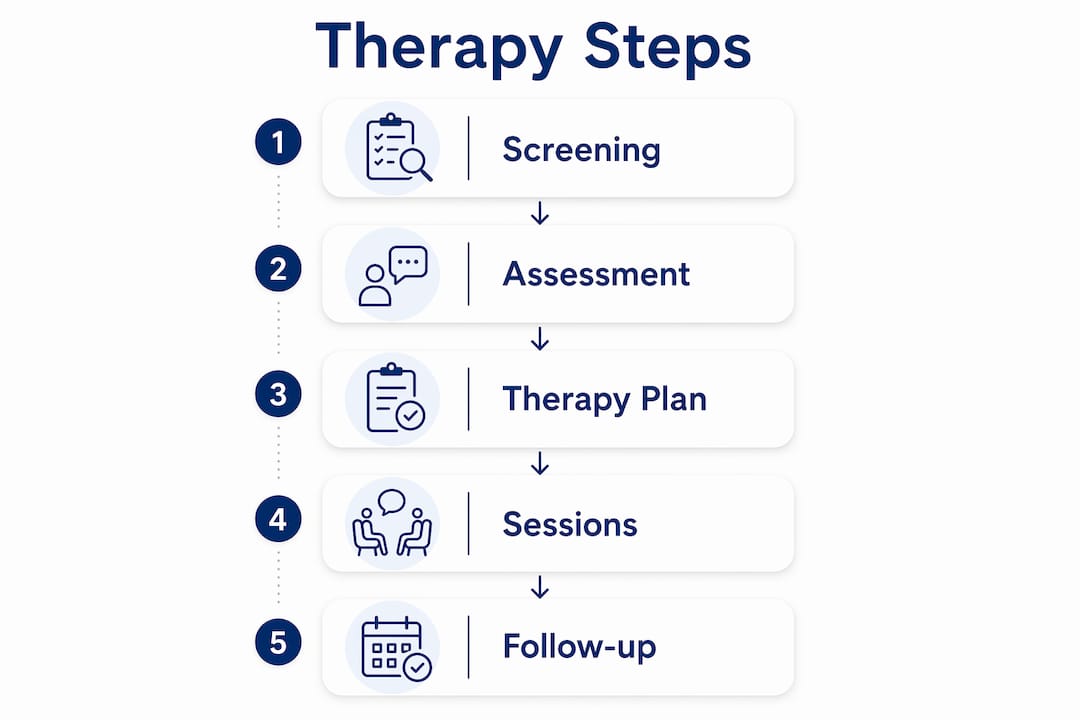
Screening is the gateway to care. Without it, many mothers never receive a diagnosis or referral, and symptoms that are treatable in weeks can escalate over months. 2026 ACOG guidance recommends validated perinatal mental health screening at least once during pregnancy and again postpartum, using tools designed to detect depression, anxiety, and related conditions early.
Screening alone is not enough, though. Effective screening requires clear referral pathways to trained professionals who can provide timely diagnosis and treatment. A positive screen that leads nowhere is a missed opportunity and, in serious cases, a safety risk.
The 2026 postpartum care guidelines go further. Follow-up contact within 3 weeks postpartum is now considered standard care, covering symptom assessment, counseling, screening for postpartum depression, and assessment for intimate partner violence. This standard reflects a growing clinical consensus that mental health is inseparable from physical postpartum recovery.
Tools like PMH Connect are changing how screening feels for mothers. PMH Connect uses trauma-informed, person-first language alongside QR code links to evidence-based information and provider directories. It reduces stigma and helps mothers understand their results in plain language rather than clinical shorthand.
Here is what to look for when evaluating a therapist’s approach to screening:
- Does the therapist use a validated tool like the Edinburgh Postnatal Depression Scale (EPDS) or the PHQ-9?
- Do they screen at multiple points, not just at intake?
- Is there a clear protocol for what happens if you screen positive?
- Do they offer warm handoffs to psychiatrists or higher levels of care when needed?
- Are they trained in trauma-informed communication when discussing results?
Pro Tip: Ask any prospective parenting counselor directly: “What do you do if my screening result is positive?” A therapist with a clear, rehearsed answer has a real clinical protocol. Vague answers suggest they are not equipped for serious perinatal mental health concerns.
What support options exist beyond one-on-one therapy?
Clinical therapy is the gold standard for treating perinatal mental health conditions, but it is not the only resource available to mothers. Peer support, community programs, and teletherapy each play a role in a well-rounded support system.
NurturePA is one of the most concrete examples of peer support done well. This Pennsylvania-based mom-to-mom texting program has served over 6,000 mothers since 2014, connecting them with trained mentors who offer anonymous, nonjudgmental support and screen for postpartum depression multiple times in the first year. The anonymity matters. Many mothers will text something they would not say out loud in a waiting room.
MOMS Club operates through local chapters across the country, offering in-person community for at-home mothers. It is not a clinical resource, but the social connection it provides directly counters the isolation that worsens postpartum depression. Peer support groups like MOMS Club work best as a complement to therapy, not a replacement for it.
Teletherapy has expanded access significantly for mothers who cannot leave the house, live in rural areas, or simply cannot find a local specialist. Research on teletherapy effectiveness shows outcomes comparable to in-person care for depression and anxiety, which makes it a clinically sound option for moms managing logistics alongside mental health.
Additional resources worth knowing:
- Postpartum Support International (PSI): Helpline, provider directory, and online support groups specifically for perinatal mental health.
- Crisis Text Line: Text HOME to 741741 for immediate support during a mental health crisis.
- The Monthlies: Parenting-focused resources including a parent’s guide to emotional responses that can help mothers support their children through developmental transitions while managing their own mental health.
- Local hospital-based perinatal programs: Many hospitals now offer dedicated perinatal psychiatry services or warm referral lines.
How to find and choose the right mom therapist
Choosing a therapist is not just about credentials. It is about finding someone whose clinical approach, communication style, and experience align with what you actually need.
Start with these concrete steps:
- Verify licensure and specialty training. Look for credentials like LCSW, LPC, LMFT, or PhD/PsyD combined with specific training in perinatal mental health. Postpartum Support International offers a provider directory of PSI-certified specialists.
- Ask about their screening protocol. A qualified perinatal mental health therapist screens at intake and reassesses over time. They do not wait for you to report symptoms. Early screening and reassessment across pregnancy and postpartum enables timely intervention before symptoms worsen.
- Clarify their crisis management policy. Ask what happens if you experience suicidal ideation or a psychiatric emergency. A therapist without a clear answer is not equipped for serious perinatal cases.
- Evaluate cultural competency. Maternal mental health experiences differ significantly across racial and cultural backgrounds. A therapist who understands your cultural context will be more effective. Masteringconflict, for example, offers specialized counseling for diverse populations including Black and African American women.
- Assess therapy format fit. Decide whether in-person or virtual sessions work better for your schedule. Consider whether individual therapy, group therapy, or couples counseling for new parents better addresses your situation. Parenting stress rarely affects only one person in a household.
- Trust your gut on rapport. Therapeutic alliance, meaning the quality of the relationship between you and your therapist, is one of the strongest predictors of treatment success. If you feel dismissed or unheard after two sessions, that is data.
Pro Tip: Most moms research therapist credentials but forget to ask about their approach to individual therapy techniques. Ask: “What does a typical session look like with you?” The answer tells you whether their style matches how you process and communicate.
Key takeaways
A mom therapist who specializes in perinatal mental health, uses validated screening tools, and maintains clear referral pathways delivers measurably better outcomes than general counseling for mothers.
| Point | Details |
|---|---|
| Specialized therapy works faster | IPT reduced perinatal depression from 37% to 6% in a clinical trial, with benefits lasting through the first postpartum year. |
| Screening requires referral pathways | A positive screen without a follow-up plan provides no clinical benefit and can leave mothers without care. |
| Peer support complements therapy | Programs like NurturePA and MOMS Club reduce isolation but are not substitutes for clinical treatment. |
| Teletherapy is clinically sound | Virtual counseling produces outcomes comparable to in-person therapy for depression and anxiety in mothers. |
| Therapist selection requires specificity | Ask about screening protocols, crisis policies, and cultural competency before committing to a therapist. |
What I’ve learned from working with mothers in therapy
After years of clinical work with individuals and families, one pattern stands out clearly: mothers wait too long. They minimize their symptoms, tell themselves they should be able to handle it, and seek help only after the situation has become a crisis. By that point, what could have been resolved in 12 sessions of IPT has become a more complex clinical picture.
The stigma around maternal mental health is real, but it is also changing. The 2026 postpartum care standards that now include mental health screening as routine care reflect a cultural shift in how we define recovery after birth. That shift matters, and mothers deserve to know about it.
What I find most powerful in this work is the moment a mother realizes her experience is valid. Not dramatic. Not a sign of weakness. Valid. That validation alone can shift the therapeutic relationship and accelerate progress in ways that no technique can replicate.
My practical advice: do not wait until you are certain something is wrong. Use the screening tools. Ask the questions. Reach out to a parenting counselor or perinatal specialist before symptoms become severe. The mothers who do consistently report better outcomes, faster recovery, and stronger relationships with their children and partners. Combined clinical and peer support is not a luxury. For many mothers, it is the difference between surviving motherhood and thriving in it.
— Carlos
How Masteringconflict supports mothers and families
Masteringconflict provides evidence-based clinical services designed for individuals, couples, and families navigating complex emotional challenges. For mothers managing parenting stress, postpartum adjustment, or relational conflict, the team offers individual and family therapy grounded in proven clinical frameworks.
Parenting rarely happens in isolation. When a mother’s mental health affects the relationship with her partner, couples counseling can address both the relational and individual dimensions of that stress. Masteringconflict serves clients in North Carolina, South Carolina, Florida, and online across the country. If you are ready to stop waiting and start getting real support, booking a session is the most direct next step you can take.
FAQ
What is a mom therapist?
A mom therapist is a licensed mental health professional who specializes in the psychological and emotional challenges of motherhood, including perinatal depression, parenting anxiety, and postpartum adjustment. The clinical specialty is called perinatal mental health.
How can a therapist help moms with postpartum depression?
Therapists use evidence-based approaches like interpersonal therapy (IPT) and cognitive behavioral therapy (CBT) to treat postpartum depression. A randomized clinical trial found IPT reduced perinatal depression rates from 37% to 6%, with benefits lasting through the first postpartum year.
When should a mom seek counseling?
Mothers should not wait until symptoms are severe. Current 2026 guidelines recommend mental health screening at least once during pregnancy and again within the first three weeks postpartum, making early engagement with a counselor the standard of care.
What is the difference between a parenting counselor and a perinatal therapist?
A parenting counselor typically focuses on child behavior, discipline strategies, and family dynamics. A perinatal therapist specializes in the mother’s own mental health during pregnancy and postpartum, using validated screening tools and clinical treatment protocols.
Is virtual therapy effective for moms?
Teletherapy produces outcomes comparable to in-person therapy for depression and anxiety, making it a clinically sound option for mothers managing childcare, scheduling, or geographic barriers to in-person care.