
Life Coach vs Therapist: Choosing the Right Support

More than 60 percent of American adults struggle to choose between a life coach and therapist for personal growth or resolving conflicts. In North Carolina and South Carolina, understanding the difference matters because your emotional health and future goals depend on picking the right support. This guide uncovers which approach fits your needs, highlights key differences in training, and explains how coaching and therapy work so you can make an informed choice with confidence.
Table of Contents
- Defining Life Coaching and Therapy Roles
- Professional Training and Legal Qualifications Compared
- Key Methods and Goals for Clients
- When to Choose a Coach or Therapist
- Legal, Ethical, and Safety Considerations
Key Takeaways
| Point | Details |
|---|---|
| Understanding Roles | Life coaching targets present and future goals, while therapy emphasizes emotional healing and mental health support. |
| Professional Training | Life coaching requires less formal training compared to therapy, which mandates advanced degrees and licensure. |
| Choosing Between Services | Select a coach for personal growth without mental health issues; choose a therapist for deeper emotional challenges. |
| Ethical Considerations | Both coaching and therapy require adherence to ethical guidelines, but therapy has stricter legal frameworks for client protection. |
Defining Life Coaching and Therapy Roles
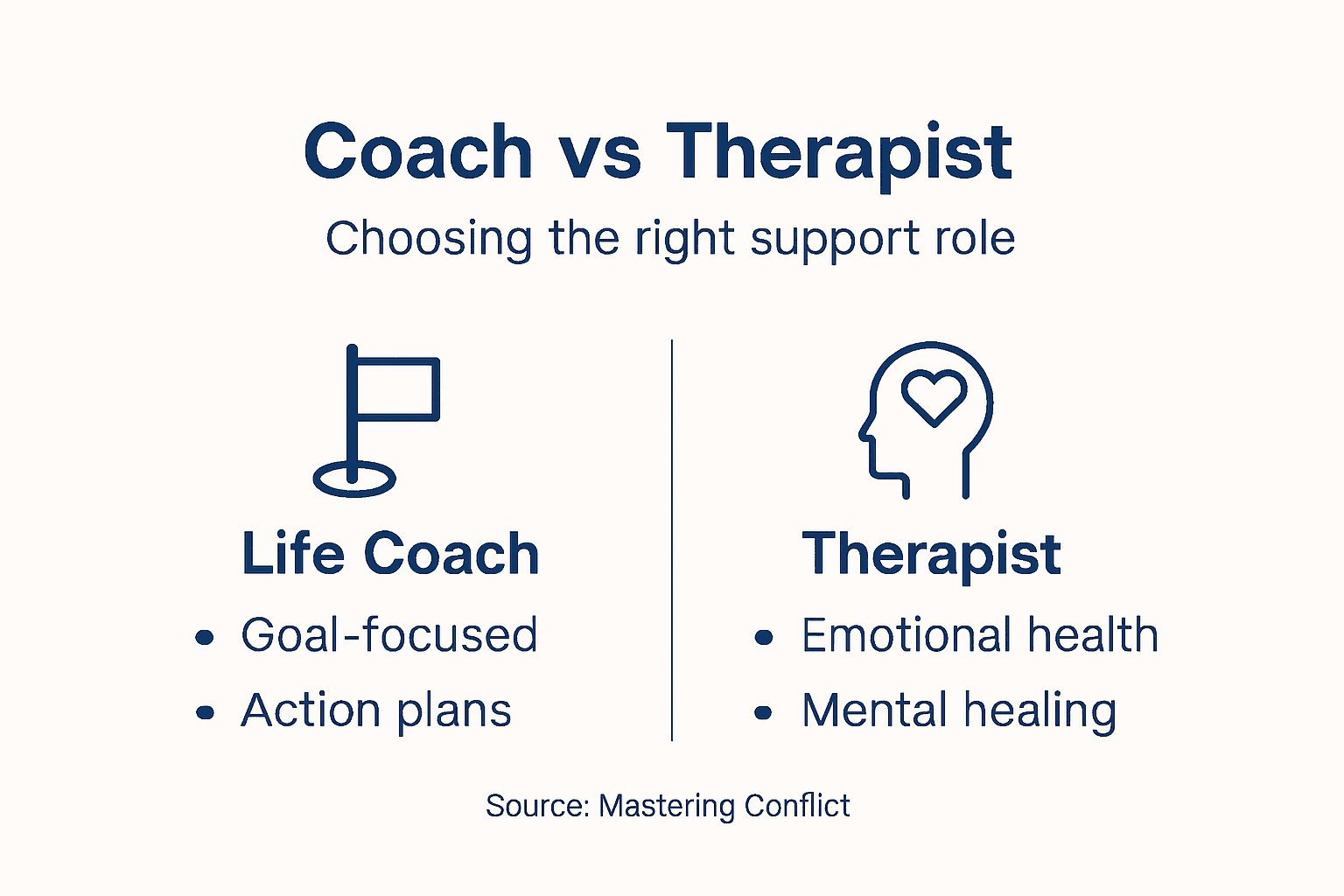
Understanding the nuanced differences between life coaching and therapy is crucial for selecting the most appropriate support for your personal development journey. While both professions aim to help individuals improve their lives, they operate through distinctly different approaches and methodologies. Life coaching focuses on supporting clients in achieving present and future goals through solution-focused and time-limited guidance.
Life coaches specialize in helping clients set and attain personal or professional objectives using proactive, goal-oriented strategies. Unlike therapists who often address deep-seated emotional challenges or past traumas, coaches concentrate on the present moment and future potential. These professionals work collaboratively with clients to identify strengths, optimize resources, and develop actionable plans for success. A key distinction is that life coaching remains an unregulated field with no standardized licensing requirements, whereas therapy demands extensive clinical training and professional certification.
Therapy, in contrast, provides a more comprehensive approach to mental health and emotional well-being. Therapists are trained to diagnose and treat psychological disorders, explore historical emotional patterns, and help clients heal from past experiences. Mental health professionals focus on treating trauma and emotional disorders through evidence-based clinical interventions, offering deeper psychological support compared to the forward-looking approach of life coaching.
Pro tip: Before choosing between a life coach and therapist, clearly define your primary objectives and assess whether you need goal-oriented guidance or in-depth emotional healing.
Here’s how life coaching and therapy roles compare across key dimensions:
| Aspect | Life Coaching | Therapy |
|---|---|---|
| Main Focus | Present and future goals | Emotional healing and mental health support |
| Regulation | Unregulated, no state licensing | Strict licensure and regulation required |
| Professional Training | 60-200 hours, voluntary certification | Master’s or doctorate, clinical internships |
| Primary Methods | Solution-focused, goal-setting strategies | Evidence-based clinical interventions |
| Typical Client Needs | Motivation, accountability, performance | Trauma, emotional distress, mental disorders |
Professional Training and Legal Qualifications Compared
The professional landscape for life coaches and therapists reveals stark differences in training, certification, and legal requirements. Life coaching training involves minimal regulatory oversight, with practitioners typically investing between 60 to 200 hours of program study and spending approximately $3,000 to $12,000 on certification. While many life coaches hold bachelor’s or master’s degrees in psychology or related fields, there are no mandatory state licensing requirements for practicing.
In contrast, therapy demands a significantly more rigorous and standardized professional pathway. Therapists must complete advanced academic training, typically earning master’s or doctoral degrees in counseling, psychology, social work, or related mental health disciplines. Therapists require comprehensive licensure processes that include completing supervised clinical hours and passing extensive professional examinations. These stringent requirements ensure that mental health professionals meet high standards of professional competence and ethical practice.
Voluntary certifications play a crucial role in the life coaching profession. Organizations like the International Coaching Federation (ICF) provide credentials that help establish professional credibility. Although these certifications are not legally mandated, they serve as important indicators of a coach’s training and commitment to professional development. Potential clients often view such voluntary certifications as valuable markers of a coach’s expertise and dedication to maintaining professional standards.
Pro tip: Verify a professional’s credentials by checking their certifications, educational background, and professional memberships before engaging their services.
Key Methods and Goals for Clients
Life coaching involves collaborative partnership designed to help clients identify personal objectives, recognize potential obstacles, and leverage individual strengths for sustainable growth. Unlike traditional therapeutic approaches, life coaching emphasizes forward momentum and proactive goal achievement. Coaches utilize evidence-based techniques such as mindfulness and positive psychology to empower clients in creating meaningful personal and professional transformations.

Therapeutic approaches, by contrast, focus more comprehensively on addressing underlying emotional and psychological challenges. Counseling and therapy explore deeper behavioral issues through structured interventions like cognitive-behavioral therapy. The primary goals include symptom relief, behavioral modification, and overall mental health improvement. While life coaching looks ahead and targets specific achievements, therapy delves into understanding and resolving complex emotional patterns that might be hindering personal progress.
Both methodologies share a fundamental commitment to client growth, albeit through different strategies. Life coaches typically employ solution-focused techniques that help clients develop actionable plans and overcome immediate barriers. Therapists, meanwhile, provide more in-depth emotional exploration, helping clients understand root causes of behavioral patterns and develop comprehensive coping mechanisms. The choice between these approaches depends entirely on an individual’s current needs, emotional landscape, and specific personal development objectives.
Pro tip: Schedule initial consultations with both a life coach and therapist to understand which approach best matches your current personal growth requirements and emotional needs.
When to Choose a Coach or Therapist
Mental health treatment requires specific professional support based on individual circumstances and personal challenges. Therapy becomes the recommended path when experiencing significant emotional difficulties, persistent mental health conditions, or profound psychological distress. Individuals struggling with depression, anxiety, trauma, or complex emotional disorders should prioritize seeking professional therapeutic intervention that offers comprehensive diagnostic and treatment capabilities.
Life coaching emerges as an ideal option for individuals seeking proactive personal development, career advancement, or strategic goal achievement without underlying clinical mental health concerns. When challenges are primarily related to motivation, professional transitions, or specific life objectives, a coach can provide targeted guidance and accountability. Therapeutic intervention is crucial for clinical conditions that impact daily functioning, whereas coaching focuses on forward momentum and potential optimization.
Distinguishing between coaching and therapy requires honest self-assessment. Key indicators suggesting therapy might be more appropriate include experiencing persistent emotional pain, struggling with behavioral patterns that significantly disrupt personal relationships, or feeling overwhelmed by internal psychological challenges. Conversely, life coaching suits individuals who are emotionally stable, seeking performance enhancement, and motivated to create strategic personal or professional transformations. Understanding these nuanced differences ensures selecting the most effective support mechanism for individual growth and healing.
Pro tip: Conduct an honest self-evaluation of your current emotional state and specific objectives before scheduling consultations to determine whether therapeutic intervention or coaching alignment better serves your needs.
This table highlights factors to help you decide which professional to choose:
| Situation | Life Coach is Ideal When | Therapist is Essential When |
|---|---|---|
| Emotional Stability | Feeling stable and motivated | Struggling with persistent distress |
| Nature of Goals | Focused on achievement or growth | Healing past trauma or mental conditions |
| Expected Outcome | Personal/professional milestones | Improved emotional and psychological health |
| Regulatory Safeguards | Relies on personal integrity | Protected by law and ethical standards |
Legal, Ethical, and Safety Considerations
Coaching and therapy professional standards are fundamentally grounded in ethical guidelines designed to protect client welfare and maintain professional integrity. While the regulatory frameworks differ between coaching and therapeutic disciplines, both professions share core principles of confidentiality, informed consent, and client safety. The International Coaching Federation provides a comprehensive Code of Ethics that guides coaches in maintaining professional boundaries, ensuring client privacy, and practicing reflective decision-making.
Therapeutic practices operate under more stringent legal and ethical requirements due to their clinical nature. Psychologists must adhere to comprehensive ethical standards that mandate professional competency, client protection, and rigorous informed consent protocols. These standards include detailed guidelines about maintaining client confidentiality, avoiding potential conflicts of interest, and ensuring that therapeutic interventions prioritize the client’s psychological well-being. Mental health professionals are legally obligated to report situations that might pose significant harm to the client or others.
Coaching, being a less regulated profession, relies more heavily on individual professional integrity and voluntary ethical commitments. Coaches are not typically required to hold medical licenses or undergo the same extensive clinical training as therapists. This difference underscores the importance of clients thoroughly vetting potential coaches by examining their credentials, professional affiliations, and demonstrated commitment to ethical practice. Potential clients should feel empowered to ask direct questions about a professional’s training, experience, and approach to maintaining client boundaries and confidentiality.
Pro tip: Request and verify professional credentials, ethical certifications, and ask specific questions about confidentiality practices before engaging with any coaching or therapeutic professional.
Find the Right Support for Your Mental Health and Personal Growth Journey
Choosing between life coaching and therapy is a crucial step that depends on your unique emotional needs and goals. This article highlights key differences such as the focus on goal-setting in life coaching versus deep emotional healing in therapy. If you find yourself needing guidance with managing emotional distress, improving relationships, or overcoming trauma, expert clinical support is essential. On the other hand, if your challenges revolve around motivation, personal development, or strategic growth, a coaching approach may fit best.
At Mastering Conflict, we understand these nuances and offer tailored services blending professional therapy and coaching to meet your specific requirements. Our licensed clinicians including Dr. Carlos Todd provide evidence-based individual therapy and coaching programs designed for sustainable change. Whether you seek anger management support, couples therapy, or burnout recovery coaching, our expert team is here to guide you safely and effectively.
Take charge of your well-being today by exploring personalized mental health and coaching solutions that align with your current emotional state and life goals. Visit Mastering Conflict now to book a consultation and discover the ideal path forward for your growth and healing.
Frequently Asked Questions
What is the main difference between a life coach and a therapist?
The main difference lies in their focus: life coaches concentrate on helping clients achieve future goals and personal development, while therapists address emotional healing and mental health issues, often related to past experiences.
Do life coaches require any formal education or certification?
Life coaches typically undergo 60 to 200 hours of training and can obtain voluntary certifications. However, there are no state licensing requirements, making the field less regulated than therapy.
When should I choose a therapist over a life coach?
A therapist should be chosen when experiencing significant emotional distress, mental health conditions, or trauma. Therapy provides diagnostic and treatment capabilities for such challenges.
How do I know if I need coaching or therapy?
Assess your emotional state and objectives; choose coaching for personal achievement and motivation if emotionally stable, while therapy is ideal for resolving deeper psychological issues.