
Coaching vs Psychotherapy: What’s Right for You?

Most American adults face uncertainty when deciding if coaching or psychotherapy is the best fit for mental health support. In North Carolina and South Carolina, knowing the difference matters because each approach meets distinct emotional and life challenges. By understanding their goals and methods, you will be better equipped to choose the support that matches your needs and enhances your conflict resolution skills. Over 50 percent of adults prioritize clarity and results when seeking mental health services.
Table of Contents
- Defining Coaching and Psychotherapy Approaches
- Key Differences in Practice and Scope
- Professional Training and Legal Standards
- When to Choose Coaching or Psychotherapy
- Risks, Misconceptions, and Ethical Boundaries
Key Takeaways
| Point | Details |
|---|---|
| Distinction in Focus | Coaching emphasizes personal growth and future goals, while psychotherapy addresses mental health and emotional healing. |
| Professional Credentialing | Psychotherapists require advanced degrees and licensure; coaches may have certifications, which are often unregulated. |
| Client Needs Assessment | Choose coaching for proactive development if psychologically stable; opt for psychotherapy for deeper emotional challenges. |
| Awareness of Ethical Boundaries | Both fields maintain ethical standards but differ in oversight; understand professionals’ limitations to ensure proper support. |
Defining Coaching and Psychotherapy Approaches
Coaching and psychotherapy represent distinct professional approaches designed to support personal growth and emotional wellbeing, each with unique methodologies and objectives. While both aim to help individuals navigate challenges and improve their lives, they differ significantly in their foundational principles, techniques, and expected outcomes.
Psychotherapy primarily focuses on addressing mental health concerns, exploring deep-seated emotional patterns, and healing psychological wounds from past experiences. Mental health professionals in this field are licensed clinicians trained to diagnose and treat complex psychological conditions such as depression, anxiety, trauma, and personality disorders. Their work involves in-depth analysis of an individual’s psychological history, utilizing evidence-based therapeutic modalities like cognitive behavioral therapy, psychodynamic approaches, and other clinical interventions.
Positive psychological coaching emerges as a collaborative professional relationship centered on personal development and future-oriented goals. Unlike traditional therapy, coaching emphasizes leveraging an individual’s existing strengths, potential, and resilience to create meaningful life changes. Coaches work with clients who are generally psychologically healthy, focusing on performance enhancement, skill development, and strategic life planning rather than treating underlying mental health conditions.
Key distinctions between these approaches include their professional training, session structure, and intended outcomes. Psychotherapists require advanced clinical degrees and state licensure, while coaches may have various certifications but are not necessarily regulated healthcare providers. Therapy sessions often explore past experiences and emotional healing, whereas coaching conversations concentrate on present circumstances and future aspirations.
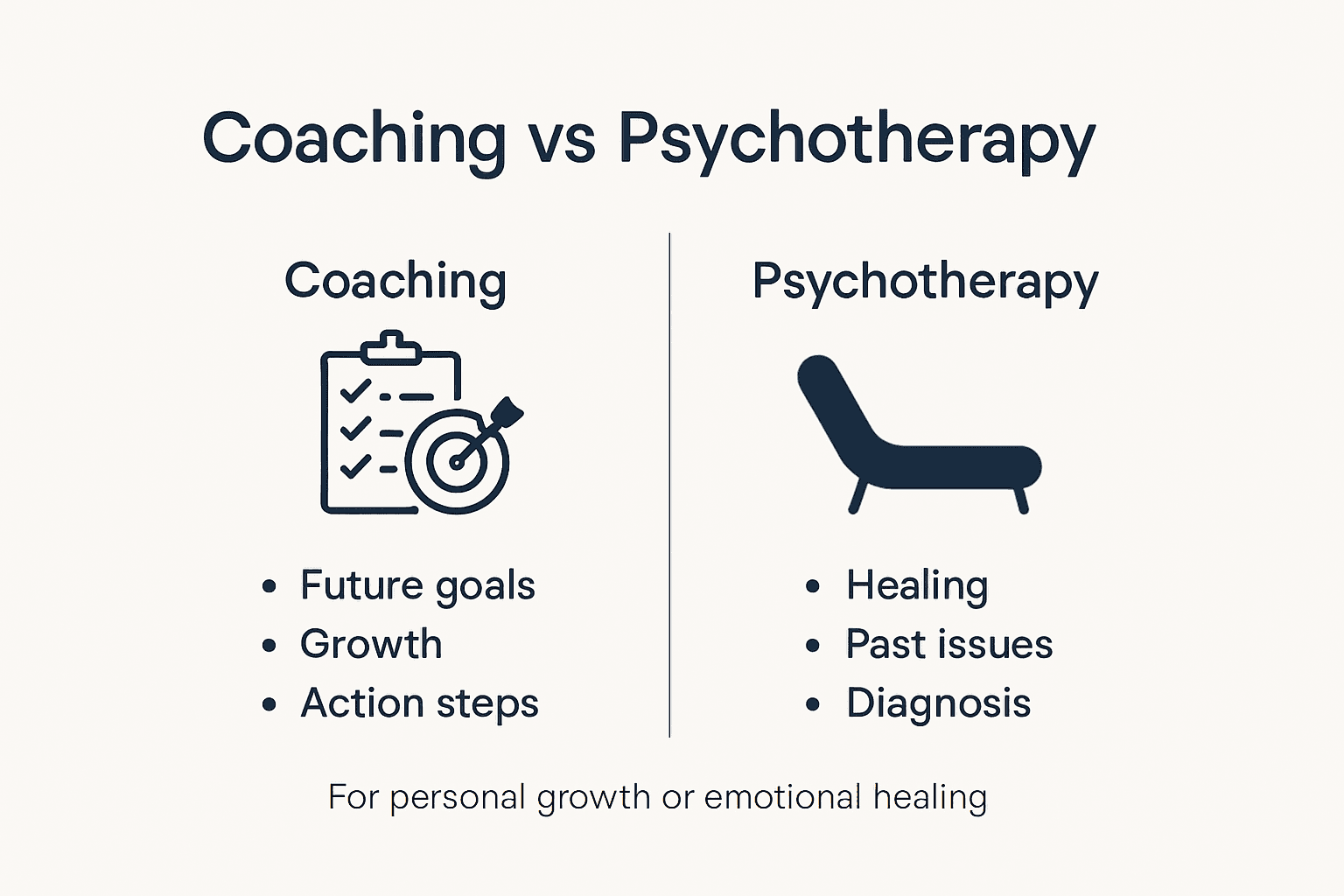
Here is a concise comparison of coaching and psychotherapy across key areas:
| Aspect | Coaching | Psychotherapy |
|---|---|---|
| Primary Focus | Personal/professional growth | Mental health and emotional healing |
| Client Needs | Future goals, skill development | Trauma, depression, anxiety, disorders |
| Typical Clients | Psychologically stable individuals | Individuals with emotional challenges |
| Credentialing | Certification (variable, unregulated) | Graduate degree, state licensure |
| Goal Orientation | Action plans and accountability | Insight, coping, and healing |
| Session Structure | Solution-focused, present/future goals | In-depth, past experiences explored |
Pro tip: Before selecting a coaching or therapy professional, verify their credentials, ask about their specific approach, and ensure their expertise aligns with your personal goals and current life challenges.
Key Differences in Practice and Scope
While coaching and psychotherapy both aim to support personal development, they operate through fundamentally different professional paradigms with distinct methodological approaches, goals, and regulatory frameworks. Understanding these nuanced differences is crucial for individuals seeking the most appropriate support for their specific needs and challenges.
Professional practice guidelines reveal critical distinctions in how mental health professionals and coaches approach client support. Psychotherapists engage in diagnostic assessment, treatment of psychological disorders, and deep emotional healing, requiring extensive clinical training and state licensure. Their work involves addressing complex mental health conditions through evidence-based therapeutic interventions such as cognitive behavioral therapy, psychodynamic approaches, and trauma-informed care.
Coaches, by contrast, focus on forward-looking personal and professional development strategies. They work with psychologically stable individuals seeking performance optimization, skill enhancement, and strategic life planning. Unlike therapists, coaches are not typically licensed healthcare providers and do not diagnose or treat mental health disorders. Their interventions center on identifying strengths, establishing actionable goals, and creating accountability mechanisms to support client progress.

The regulatory landscape further distinguishes these professions. Psychotherapists must complete advanced clinical degrees, pass rigorous licensing examinations, and maintain ongoing professional certification. Coaching certifications, while valuable, are less standardized and do not require the same level of clinical oversight. This difference means clients should carefully evaluate a professional’s credentials and understand the scope of services they can realistically provide.
Pro tip: Always clarify a professional’s specific qualifications, ask about their approach to handling potential mental health concerns, and be prepared to transition between coaching and therapy if your needs evolve.
Professional Training and Legal Standards
The professional landscapes of coaching and psychotherapy are characterized by significant differences in training requirements, legal frameworks, and regulatory oversight. These distinctions play a crucial role in determining the scope of practice, professional accountability, and the type of support clients can expect from each discipline.
International coach training standards demonstrate the evolving nature of professional credentialing in the coaching field. Unlike psychotherapy, which requires rigorous clinical licensure, coaching certification processes vary widely. Most coaching programs focus on developing skills in communication, goal setting, accountability, and personal development strategies. Coaches typically complete certification programs that range from brief training courses to more comprehensive multi-year educational pathways, but these do not involve the same depth of clinical psychological training required for therapists.
Psychotherapy training represents a significantly more structured and regulated professional pathway. Psychotherapists must complete advanced graduate degrees, typically a master’s or doctoral level program in clinical psychology, counseling, or social work. These programs involve extensive academic coursework, supervised clinical training, comprehensive examinations, and ongoing professional development requirements. State licensing boards enforce strict standards, requiring therapists to demonstrate extensive clinical knowledge, ethical practice, and continuous professional competence through regular recertification and continuing education.
The legal standards governing these professions reflect their distinct purposes. Psychotherapists operate under healthcare regulations, with clear legal responsibilities for client confidentiality, diagnosis, and treatment of mental health conditions. They are held to medical ethics standards and can be subject to professional disciplinary actions. Coaches, while expected to maintain ethical standards, do not have the same level of legal oversight. This difference means clients should carefully assess a professional’s qualifications, understanding that coaching certifications do not carry the same legal weight as clinical mental health credentials.
Pro tip: Always verify a professional’s credentials by requesting their specific qualifications, checking professional association memberships, and understanding the exact scope of services they are legally permitted to provide.
When to Choose Coaching or Psychotherapy
Deciding between coaching and psychotherapy requires careful self-assessment of your current psychological state, personal goals, and the specific challenges you are experiencing. Not every emotional struggle or personal development need is best addressed by the same type of professional support.
Comprehensive guidance for selecting the right intervention suggests several key considerations when determining whether coaching or psychotherapy is most appropriate. Coaching is typically ideal for individuals who are psychologically stable and seeking proactive personal or professional growth. If you are struggling with specific goals like career advancement, improving communication skills, developing leadership capabilities, or creating strategic life plans, a coach can provide targeted support and accountability.
Psychotherapy becomes the recommended approach when you are experiencing persistent emotional challenges, unresolved psychological trauma, clinical mental health conditions, or significant life disruptions. Symptoms such as chronic depression, anxiety, post-traumatic stress, relationship patterns that repeatedly undermine your happiness, or deep-seated emotional wounds require the specialized diagnostic and treatment capabilities of a licensed mental health professional. Therapists are trained to help you explore root causes, develop coping mechanisms, and facilitate fundamental emotional healing.
The decision between coaching and psychotherapy is not always straightforward and may evolve over time. Some individuals start with coaching and transition to therapy if deeper psychological work becomes necessary, while others might begin therapy and later engage a coach to support ongoing personal development. The key is to be honest about your current emotional state, be open to professional guidance, and remain flexible in your approach to personal growth.
Pro tip: Consider scheduling initial consultations with both a coach and a therapist to discuss your specific situation and get professional recommendations about the most appropriate support pathway.
Risks, Misconceptions, and Ethical Boundaries
Navigating the professional landscapes of coaching and psychotherapy requires a nuanced understanding of potential risks, ethical considerations, and common misconceptions that can compromise effective support and client well-being.
Boundary management and professional best practices reveal critical insights into the complex ethical terrain of professional helping relationships. One significant risk emerges from role confusion, where clients may mistakenly assume that coaches or therapists can seamlessly address all their personal and psychological needs. Coaches are not licensed to provide mental health treatment, while therapists are not career development specialists. Blurring these boundaries can lead to ineffective interventions, potential harm, and delayed access to appropriate professional support.
Common misconceptions often create additional challenges in seeking help. Many individuals believe that coaching is simply a form of casual advice-giving or that therapy is only for people with severe mental health disorders. In reality, both disciplines require specialized training, professional expertise, and a structured approach to supporting client growth. Coaches are not informal mentors, and therapists are not just sympathetic listeners. Each profession demands rigorous ethical standards, ongoing professional development, and a commitment to maintaining clear, professional boundaries that protect client welfare.
Ethical boundaries represent the cornerstone of responsible professional practice in both coaching and psychotherapy. These boundaries include maintaining client confidentiality, avoiding dual relationships, setting clear expectations about the scope of services, and recognizing when a client’s needs exceed a professional’s expertise. Coaches and therapists must be prepared to refer clients to other professionals when appropriate, prioritizing the client’s best interests over professional ego or financial considerations. Transparency about qualifications, limitations, and potential conflicts of interest is crucial for maintaining trust and ensuring client safety.
The following table highlights ethical boundaries and risk management in both fields:
| Consideration | Coaching | Psychotherapy |
|---|---|---|
| Ethical Oversight | Voluntary codes, association guidelines | Legally mandated, stricter enforcement |
| Role Limitations | Cannot diagnose/treat mental health issues | Does not address career/life planning |
| Referral Obligations | Refer to therapist when needed | Refer to coach for non-clinical goals |
| Common Misconceptions | Seen as informal advice or mentoring | Seen as only for serious disorders |
Pro tip: Always request clear documentation of a professional’s credentials, ask direct questions about their ethical guidelines, and trust your instincts if something feels professionally inappropriate or uncomfortable.
Find the Right Support for Your Personal Growth and Healing
Choosing between coaching and psychotherapy can feel overwhelming when you want to improve your life but are unsure which path suits your unique needs. This article highlights the importance of understanding whether you require future-focused action steps or deep emotional healing. If you are grappling with unresolved emotional challenges like anxiety or trauma, professional therapy guided by licensed experts is essential. On the other hand, if your goal is to enhance your skills, boost performance, or navigate life transitions with accountability, coaching can offer powerful support.
At Mastering Conflict, we specialize in both evidence-based mental health services and targeted coaching programs to meet you where you are. From individual therapy designed to address depression, trauma, and relationship concerns to coaching options that focus on conflict resolution and burnout recovery, our offerings are crafted with your wellbeing in mind. Led by Dr. Carlos Todd, a licensed clinical mental health counselor and psychologist, our team provides compassionate care rooted in proven clinical methods.
Take the next step toward clarity and growth today. Whether you need licensed therapy or professional coaching support, explore how Mastering Conflict can help you achieve your goals with trustworthy expertise. Contact us now to schedule a consultation and discover the best path for your journey.
Frequently Asked Questions
What are the main differences between coaching and psychotherapy?
Coaching focuses on personal and professional growth, working with psychologically stable individuals to achieve specific goals. Psychotherapy, on the other hand, addresses mental health issues, providing deeper emotional healing for those dealing with anxiety, depression, or trauma.
When should I choose coaching over psychotherapy?
Choose coaching if you are psychologically stable and want to enhance your skills, set strategic goals, or improve performance. It’s ideal for personal development and accountability in achieving future aspirations.
Can a coach help me with mental health issues?
No, coaches are not licensed to diagnose or treat mental health conditions. If you are experiencing emotional challenges or psychological issues, it’s essential to seek therapy from a licensed psychotherapist.
How do I find the right professional for my needs?
Evaluate your current emotional state and personal goals. Consider scheduling initial consultations with both a coach and a therapist to discuss your specific situation and get professional recommendations on the most appropriate support for you.