
Couples counseling for new parents in 2026: 70% less conflict

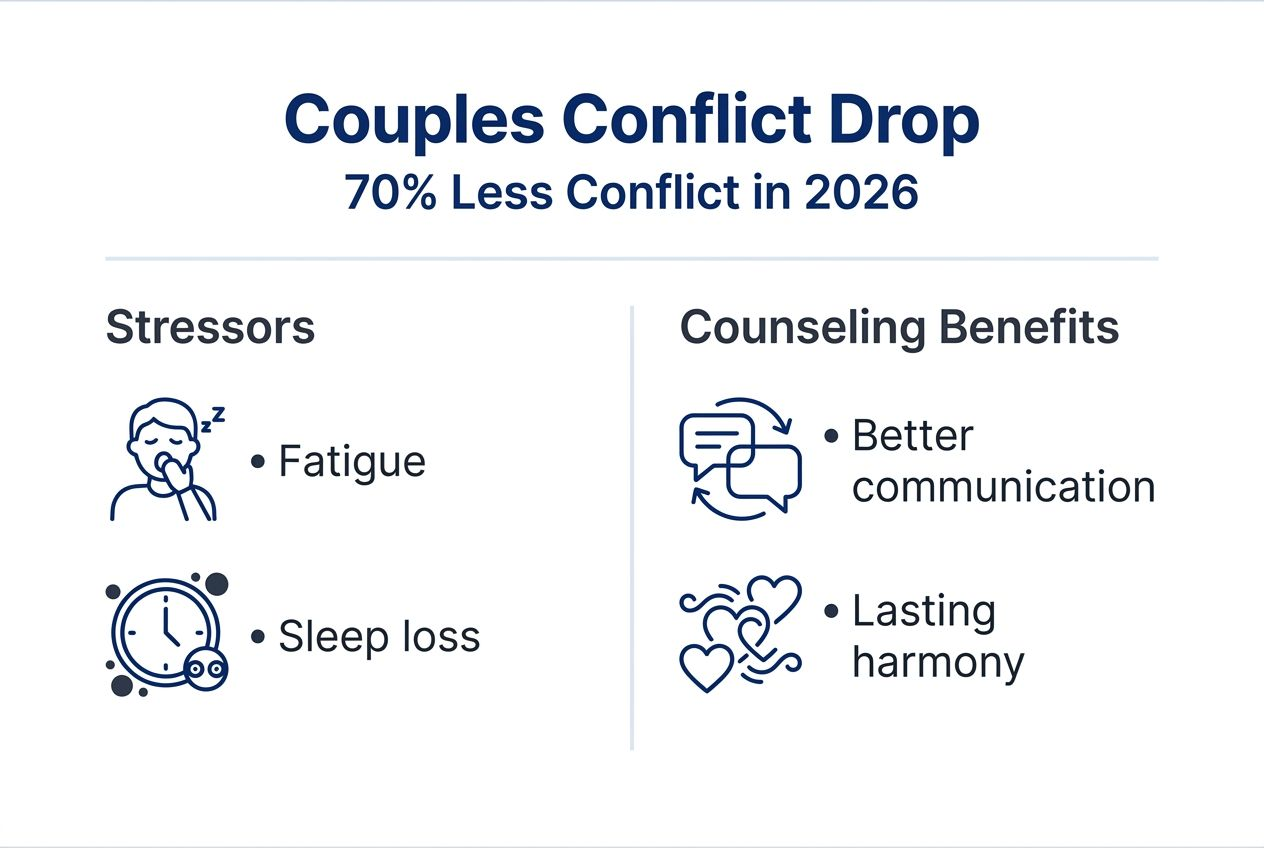
Relationship conflict jumps by 30 to 70% during the first year after your baby arrives. Sleep deprivation, shifting roles, and mounting stress transform the partnership you once knew. Couples counseling tailored for new parents addresses these unique challenges, helping you rebuild communication and strengthen your bond. This guide explores the stressors you face, how counseling restores connection, and practical steps to get started in North and South Carolina.
Table of Contents
- Understanding The Unique Relationship Stressors Of New Parents
- How New Parenthood Impacts Communication And Conflict Patterns
- Benefits Of Couples Counseling Tailored For New Parents
- Effective Counseling Techniques And Approaches For New Parents
- Common Misconceptions That Hinder New Parents From Seeking Counseling
- Accessing Couples Counseling Services In North And South Carolina
- Practical Steps For New Parents To Prepare For And Maximize Counseling Benefits
- Explore Couples Counseling Services Tailored For New Parents
- Frequently Asked Questions About Couples Counseling For New Parents
Key takeaways
| Point | Details |
|---|---|
| Conflict intensity rises sharply | New parents experience 30 to 70% more relationship conflict in the first postpartum year due to stress and role changes. |
| Communication breakdown drives dissatisfaction | Poor communication is the top cause of relationship dissatisfaction among new parents across the Southeast. |
| Tailored counseling delivers measurable results | Specialized therapy reduces stress and improves satisfaction for over a year with continued support. |
| Misconceptions delay effective intervention | 45% of new parents postpone counseling due to myths, missing early intervention benefits. |
| Multiple formats fit diverse schedules | In-person, online, and hybrid counseling options in NC and SC accommodate busy new parent routines. |
Understanding the unique relationship stressors of new parents
The transition to parenthood reshapes your emotional landscape in ways you never anticipated. Hormonal shifts, chronic fatigue, and constant caregiving demands create a perfect storm of psychological stress. You might feel overwhelmed, anxious, or emotionally drained as you adapt to your new identity.
Relational dynamics shift dramatically when a baby enters the picture. Intimacy often declines as physical exhaustion takes over. Role confusion surfaces when you and your partner struggle to divide caregiving responsibilities fairly. Financial pressures intensify as expenses climb and income may temporarily drop.
Sleep deprivation erodes your patience and ability to regulate emotions. When you’re operating on fragmented rest, even minor disagreements can escalate into heated arguments. Research confirms that new parents face a 30 to 70% increase in conflict intensity during the first postpartum year.
These stressors compound over time if left unaddressed. You may notice a growing emotional distance as resentment builds. Recognizing these patterns early allows you to seek targeted support before small fractures become deep divides.
Key stressors include:
- Hormonal fluctuations affecting mood and emotional stability
- Chronic sleep deprivation reducing cognitive function and patience
- Identity shifts as individuals become caregivers first, partners second
- Financial strain from increased expenses and potential income loss
- Loss of couple time and spontaneous intimacy
- Disagreements over parenting approaches and household responsibilities
Pro Tip: Track your conflict patterns for one week to identify triggers like hunger, fatigue, or specific times of day when tension peaks.
How new parenthood impacts communication and conflict patterns
Communication breakdown ranks as the primary driver of relationship dissatisfaction among new parents in the Southeast. When you’re exhausted and overwhelmed, constructive dialogue often gives way to criticism, defensiveness, or withdrawal. These negative patterns create a cycle that’s difficult to break without intervention.
Common triggers intensify conflict in predictable ways. Fatigue shortens your fuse, making you snap over trivial issues. Changing roles spark disagreements when expectations don’t align with reality. Unmet emotional needs fester when neither partner has energy left to offer support.
Emotional exhaustion depletes your capacity for empathy and problem solving. You might find yourself saying things you regret or shutting down completely during disagreements. Repair attempts that once worked now fall flat because neither of you has the emotional reserves to respond.
Recognizing these destructive patterns represents the crucial first step toward change. When you understand how fatigue and stress corrupt your communication, you can seek professional guidance to rebuild healthier interactions. Understanding when to seek couples counseling helps you intervene before patterns become entrenched.
Typical conflict patterns include:
- Demand-withdraw cycles where one partner pursues and the other retreats
- Criticism escalating into personal attacks rather than addressing specific behaviors
- Stonewalling or emotional shutdown during difficult conversations
- Scorekeeping that tallies contributions and perceived inequities
- Flooding with overwhelming emotions that prevent productive discussion
- Late night arguments fueled by exhaustion rather than genuine grievances
These patterns erode relationship satisfaction gradually. Each unresolved conflict adds another layer of distance between you and your partner.
Benefits of couples counseling tailored for new parents
Specialized counseling for new parents delivers measurable improvements in relationship quality and conflict resolution. Therapists trained in postpartum relationship dynamics understand the unique pressures you face and tailor interventions accordingly. Generic relationship advice rarely addresses the specific challenges of sleepless nights and shifting identities.
Tailored approaches reduce relationship stress while enhancing overall satisfaction. Studies show these improvements sustain for over a year when couples maintain the skills learned in therapy. You gain practical tools for managing conflict during high stress periods rather than abstract principles that don’t translate to your daily reality.
Counseling formats designed for new parent schedules increase engagement and completion rates. When therapy fits your life rather than adding another burden, you’re more likely to attend consistently and apply what you learn. Early intervention prevents minor issues from escalating into relationship threatening problems.
You can find counseling tailored for new parents that addresses your specific challenges rather than generic relationship issues. Specialized therapists help you:
- Rebuild emotional intimacy despite physical exhaustion
- Develop fair division of labor that both partners accept
- Practice effective communication during high stress moments
- Set realistic expectations for your relationship during this transition
- Strengthen your partnership as a foundation for effective co-parenting
- Process postpartum mental health challenges affecting relationship dynamics
Pro Tip: Begin counseling during pregnancy or within the first three months postpartum for maximum preventive benefit rather than waiting until problems feel unmanageable.
Effective counseling techniques and approaches for new parents
Evidence-based therapies like Cognitive Behavioral Therapy and Emotionally Focused Therapy prove particularly effective for new parent couples. CBT helps you identify and change negative thought patterns that fuel conflict. EFT focuses on strengthening emotional bonds and creating secure attachment between partners.
Communication exercises form the backbone of skill building in couples therapy. The Speaker-Listener Technique teaches structured turn taking that prevents interruptions and ensures both partners feel heard. You practice paraphrasing to verify understanding before responding, reducing misinterpretations that spark unnecessary conflict.
Therapists might assign homework between sessions to reinforce new skills. These exercises could include daily check-ins, gratitude sharing, or practicing conflict resolution frameworks during calm moments. Consistent application of techniques between sessions accelerates progress and builds lasting habits.

Teletherapy options for new parent couples eliminate commute time and childcare logistics that often prevent attendance. You can attend sessions from home during nap time or after your baby’s bedtime.
| Format | Pros | Cons |
|---|---|---|
| In-person | Stronger therapeutic alliance, privacy from home distractions | Requires childcare, commute time, scheduling rigidity |
| Online | Maximum flexibility, no travel, lower cost | Technology issues, potential home interruptions |
| Hybrid | Balances connection with convenience | Requires coordination between formats |
Skill building techniques include:
- Active listening exercises that teach reflective responses
- “I” statements replacing accusatory “you” language
- Time-out protocols for de-escalating heated arguments
- Fair fighting rules establishing boundaries during disagreements
- Appreciation rituals rebuilding positive sentiment
- Problem solving frameworks for addressing practical challenges
Pro Tip: Practice communication exercises for 10 minutes daily during low stress moments to build muscle memory before conflicts arise.
Common misconceptions that hinder new parents from seeking counseling
Myth number one assumes counseling only helps couples in crisis. This belief delays intervention until problems feel overwhelming and entrenched. In reality, therapy prevents relationship decline by strengthening communication before destructive patterns solidify. Proactive counseling builds resilience rather than simply repairing damage.
Another persistent myth claims therapy won’t fit busy new parent schedules. Modern counseling offers flexible formats including evening appointments, weekend sessions, and online options. Teletherapy eliminates travel time and allows you to attend from home, making therapy more accessible than ever before.
Some couples mistakenly view counseling as solely problem focused rather than relationship strengthening. Contemporary approaches emphasize building on existing strengths while addressing challenges. You learn skills that enhance your partnership long after formal therapy concludes.
Statistics reveal that 45% of new parents delay seeking help due to misconceptions about counseling necessity, accessibility, or effectiveness. This postponement allows minor issues to escalate unnecessarily. Early intervention requires less time and effort than repairing deeply damaged relationships.
Common misconceptions include:
- Believing only couples considering separation need therapy
- Assuming therapy requires months of weekly sessions
- Thinking counseling will blame one partner for relationship problems
- Fearing therapists will judge parenting choices or relationship dynamics
- Expecting immediate results without consistent effort
- Worrying about stigma from family or friends
These barriers prevent couples from accessing support that could transform their relationship trajectory. Challenging these myths opens pathways to earlier, more effective intervention.
Accessing couples counseling services in North and South Carolina
New parents in North and South Carolina enjoy multiple options for accessing quality couples counseling. In-person services offer face-to-face connection with therapists who specialize in postpartum relationship challenges. Major cities and many smaller communities throughout both states host qualified counselors with expertise in new parent dynamics.
Online counseling expands access for rural residents and couples with demanding schedules. Teletherapy options in NC and SC provide flexibility to attend sessions during nap time or after your baby sleeps. Virtual formats also reduce stigma concerns since you can participate privately from home.
Hybrid approaches combine periodic in-person sessions with online appointments between visits. This model balances the connection benefits of face-to-face meetings with the convenience of virtual therapy. You might meet your therapist initially in person, then maintain progress through video sessions.
Selecting a qualified counselor requires research into credentials and specializations. Look for licensed therapists with specific training in couples therapy and postpartum mental health. Many local counseling services in North and South Carolina list therapist qualifications and areas of expertise on their websites.
| Format | Key Benefits | Potential Drawbacks |
|---|---|---|
| In-person | Physical presence strengthens connection, easier to read body language | Childcare needs, travel logistics, limited scheduling |
| Teletherapy | Attend from home, flexible scheduling, reduced stigma | Requires reliable internet, home privacy challenges |
| Hybrid | Flexibility with occasional deeper in-person work | More complex scheduling coordination |
Tips for finding the right counselor:
- Verify licensure through state boards in North or South Carolina
- Ask about specific training in postpartum relationship therapy
- Inquire about experience with your particular challenges
- Request a brief phone consultation to assess compatibility
- Check insurance coverage or sliding scale fee options
- Read client testimonials focusing on new parent experiences
Most therapists offer initial consultations to determine fit before committing to ongoing sessions. Use this opportunity to ask questions and gauge comfort level.
Practical steps for new parents to prepare for and maximize counseling benefits
Step 1: Approach your first session with open communication and shared commitment. Discuss your decision to seek counseling together, framing it as an investment in your family’s future. Align on goals before meeting your therapist so you present a unified front.
Step 2: Set clear, specific goals with your therapist during initial sessions. Vague objectives like “improve our relationship” prove harder to measure than concrete targets such as “reduce criticism during disagreements” or “schedule weekly couple time.” Defined goals create accountability and track progress.
Step 3: Practice communication techniques between sessions consistently. Skills improve through repetition in real world situations, not just therapy office role plays. Apply active listening during everyday conversations, not only during conflicts.
Step 4: Maintain realistic expectations about therapy timelines and outcomes. Change happens gradually as you build new neural pathways and relationship patterns. Most couples notice improvements within 8 to 12 sessions, but deep transformation requires sustained effort.
Step 5: Apply counseling insights to daily parenting challenges. The communication tools you learn transfer beyond couple conflict to interactions with extended family, childcare providers, and eventually your growing child. This broader application reinforces skills while improving multiple relationships.
Understanding how to prepare for couples counseling sets realistic expectations and maximizes your investment. Following strategies for maximizing counseling outcomes ensures you translate therapy insights into lasting change.
Pro Tip: Schedule weekly couple check-ins separate from therapy sessions to discuss progress, celebrate improvements, and identify areas needing continued focus.
Consider these important preparation steps that help you approach counseling with the right mindset. Active participation accelerates progress and deepens the benefits you’ll experience.
Explore couples counseling services tailored for new parents
Navigating new parenthood challenges your relationship in unexpected ways. You don’t have to figure it out alone. Clinical counseling services for couples at Mastering Conflict provide specialized support designed specifically for the transition you’re experiencing right now.
Dr. Carlos Todd and the Mastering Conflict team understand the unique pressures new parents face in North and South Carolina. Whether you prefer in-person sessions or need the flexibility of teletherapy options for busy new parents, you’ll find approaches that fit your schedule and strengthen your partnership. Find local couples counseling that addresses your specific challenges and helps you build the resilient relationship your growing family deserves. Take the first step toward reconnecting with your partner today.
Frequently asked questions about couples counseling for new parents
What are signs that new parents should seek counseling?
Persistent conflict that doesn’t resolve, emotional distance growing between partners, and difficulty communicating without criticism or defensiveness signal it’s time for professional support. If either partner feels consistently unheard or resentful, counseling helps before patterns become entrenched.
How long does couples counseling for new parents typically last?
Most couples notice improvements within 8 to 12 weekly sessions, though duration varies based on specific challenges and goals. Some continue with monthly maintenance sessions after initial intensive work to sustain progress during the first year.
Can online counseling be as effective as in-person for new parents?
Research shows teletherapy delivers comparable outcomes to traditional in-person sessions when couples engage fully. Online formats actually increase accessibility for exhausted new parents who struggle with childcare logistics and travel demands.
Will counseling focus only on relationship problems or also positive growth?
Contemporary couples therapy balances addressing challenges with strengthening existing relationship positives. Therapists help you build on what’s working while developing skills to navigate difficulties, creating overall relationship enhancement beyond problem solving.
Is it normal to feel hesitant or embarrassed about starting counseling?
Absolutely normal, as cultural stigma around therapy persists despite growing acceptance. Most couples feel nervous initially but quickly appreciate having a safe space to work through challenges with professional guidance supporting their efforts.
Recommended
- Top Couples Therapy Benefits for Families in 2025 – Mastering Conflict
- Conflict Resolution for Couples: Practical Strategies for 2025 – Mastering Conflict
- Conflict Resolution for Families: Tools, Tips, and Teletherapy 2025 – Mastering Conflict
- Best Family Therapy Services for Couples – Expert Comparison 2025 – Mastering Conflict
- Libidoverlust Nach Der Geburt: Was Frauen Wissen Sollten – YourPowerFoods.com
- 1-to-1 Coaching – IN Social