Transform your relationships with conflict management education

TL;DR:
- Conflict is an inevitable part of close relationships, but learning effective management skills can build trust rather than harm it. Structured education, from graduate programs to workshops, enhances communication, emotional regulation, and conflict resolution, benefiting both personal and family dynamics. Such training not only changes how individuals handle disagreements but also fosters healthier, more resilient relational systems across diverse communities.
Conflict doesn’t mean your relationship is broken. It means you’re in one. Yet most people never learn a single proven skill for handling disagreement well, and they pay for that gap in damaged relationships, spiraling stress, and years of painful patterns that never change. Conflict management education is changing that, and for individuals and couples in North and South Carolina, clinically oriented pathways now make it possible to learn these skills in structured, supervised environments. This article walks you through why that education matters, what it looks like in practice, and how to start applying it in your life today.
Table of Contents
- Why conflict is normal—and why education matters
- The education pathway: Clinical training and community options
- Core conflict management skills you’ll learn
- Practical steps for applying conflict skills in daily life
- The deeper impact of conflict education: What most guides miss
- Next steps: Getting support for your conflict management journey
- Frequently asked questions
Key Takeaways
| Point | Details |
|---|---|
| Conflict is normal | Learning to manage conflict empowers healthier, more resilient relationships. |
| Clinical education pathways | Supervised hands-on programs provide rigorous skill-building opportunities in North and South Carolina. |
| Core skills are practical | Effective conflict management education focuses on communication, emotional regulation, and negotiation. |
| Apply skills daily | Practice techniques in real-life situations to see lasting changes in relationships. |
| Help is available | Local counseling and teletherapy services can guide you through learning and applying these skills. |
Why conflict is normal—and why education matters
Here’s the misconception that does the most damage: many people believe conflict signals failure. If a couple argues, something must be fundamentally wrong. If a family struggles to agree, the relationships must be weak. That belief drives people to suppress conflict rather than address it, and suppression is one of the strongest predictors of long-term relational breakdown.
Conflict is inevitable in any close relationship. Two people with different histories, needs, and perspectives will disagree. The question is never whether conflict will happen; it’s whether you have the tools to navigate it productively.
Common myths about conflict that hold people back:
- Conflict means you don’t love each other enough
- Healthy couples never fight
- Avoiding a disagreement keeps the peace
- Only people with serious problems need conflict education
- Conflict always escalates if you engage with it
All of these are false. Research consistently shows that couples who learn to engage conflict directly, with skill and respect, report higher relationship satisfaction than those who avoid it. The ability to repair after disagreement is a stronger predictor of a healthy relationship than the absence of disagreement.
“The goal is not to eliminate conflict from your life. It’s to develop the emotional and relational intelligence to handle it in ways that build trust rather than destroy it.”
Proactively learning conflict management skills has measurable benefits. Couples report better communication, greater emotional safety, and reduced anxiety within the relationship. Individuals who seek this education often describe a wider shift: they become better at managing stress at work, more patient as parents, and more confident in setting healthy boundaries. The education doesn’t just fix one relationship; it improves the quality of every connection in your life.
An accredited Marriage and Family Therapy graduate program in the Carolinas illustrates how seriously clinicians take this work. These programs train future therapists to work specifically with conflict in relational systems, not just individuals in isolation. That systems-based approach is exactly what makes conflict education so powerful for everyday people too.
The education pathway: Clinical training and community options
Understanding why you need conflict skills is step one. The next question is where and how you actually get them. In North and South Carolina, the options range from graduate-level clinical training to shorter community workshops and professional coaching programs. Each serves a different need, and knowing the difference helps you invest your time and money wisely.
Clinical and structured education pathways:
- Graduate programs: Programs like the Master of Marriage and Family Therapy (MMFT) at Converse University offer the deepest level of conflict management education. The MMFT program requires 500 hours of client contact over a 15-month practicum, with at least 250 of those hours being “relational hours,” meaning more than one member of a client system is present. Supervision requirements include 50 hours of group supervision and 50 hours of individual supervision. This is clinical-grade conflict education built on real practice with real families.
- Certificate programs: Shorter post-graduate certificates in conflict resolution or family mediation offer focused skills without a full degree commitment.
- Workshops and intensives: Community-based workshops, often offered through counseling centers or universities, cover specific topics like communication repair, anger management, or de-escalation over a weekend or series of evenings.
- Coaching programs: Structured conflict coaching through specialized practitioners focuses on goal-oriented skill building without the clinical therapy framework.
The following table compares these pathways across key factors:
| Pathway | Time commitment | Supervised practice | Best for |
|---|---|---|---|
| Graduate clinical program | 2 to 3 years | Yes, extensive | Future therapists, deep personal change |
| Certificate program | 3 to 6 months | Limited | Professionals seeking credentials |
| Community workshop | 1 to 3 days | Minimal | Couples or families wanting quick tools |
| Coaching program | Weeks to months | Structured but not clinical | Personal development, relationship goals |
| Individual or couples therapy | Ongoing | Therapist-guided | Healing deeper relational wounds |
If you want a practical comparison of structured options versus self-directed learning, the discussion of family therapy services comparison offers useful context for making that decision. For people who want to understand the full range of available conflict management training courses, it helps to look at what credentialed programs actually require.
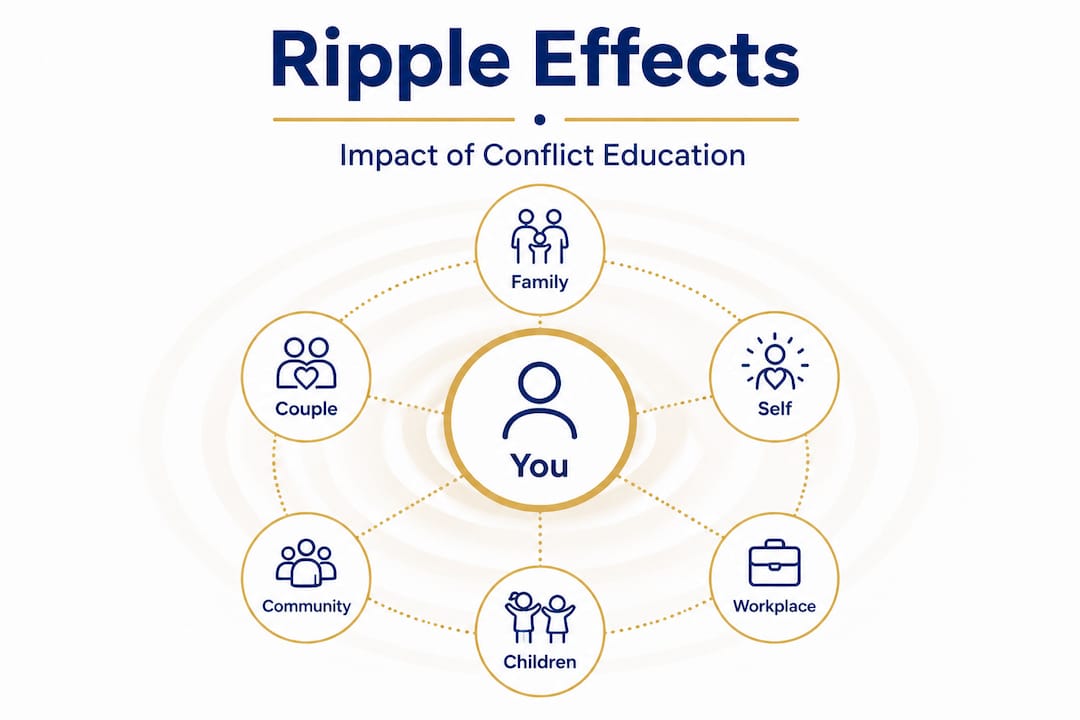
One often-overlooked benefit of structured education is the ripple effect on extended family systems. Research on improving family dynamics shows that even one person in a family system learning conflict skills can shift how the entire group communicates. You don’t need everyone in the room for change to happen.
Pro Tip: When evaluating any conflict management program, ask three questions. Does it include supervised or coached practice, not just theory? Does it address relational conflict specifically, not just individual anger management? And is the provider credentialed in a mental health or counseling field? Programs that say yes to all three are worth serious consideration.
Core conflict management skills you’ll learn
Choosing your education path is important. But knowing what skills you’re actually developing keeps the process grounded. Conflict management education is not vague self-improvement talk. It teaches specific, learnable competencies that you can practice and measure.
The core skills developed through conflict management education:
- Active listening: This goes far beyond being quiet while someone talks. Active listening means reflecting back what you heard, asking clarifying questions, and signaling through your body language that the other person has your full attention. Most people discover quickly that they spend conversations preparing their rebuttal, not actually listening. Learning to genuinely hear someone before responding changes conflict dynamics immediately.
- Emotional regulation: You can’t manage a conflict effectively if your nervous system is in overdrive. Emotional regulation techniques, such as paced breathing, cognitive reframing, and grounding exercises, help you stay engaged without being reactive. This skill is especially important for couples where one or both partners tend to escalate quickly.
- De-escalation strategies: When a conversation starts to heat up, knowing how to reduce tension without shutting down communication is a critical skill. De-escalation includes tools like taking structured breaks, lowering your voice, naming emotions without blame, and returning to the specific issue instead of the person.
- Assertive communication: Many people swing between passive silence and aggressive outbursts. Assertive communication teaches you to express your needs clearly and directly without attacking the other person. The classic framework is the “I statement,” for example: “I feel unheard when meetings run over time” instead of “You never respect anyone’s schedule.”
- Negotiation and compromise: Not every conflict has a perfect solution, and that’s okay. Effective negotiation means identifying what each person actually needs at the core, not just what they’re asking for on the surface. When you understand underlying needs, creative compromises become possible that neither person would have imagined at the start of the argument.
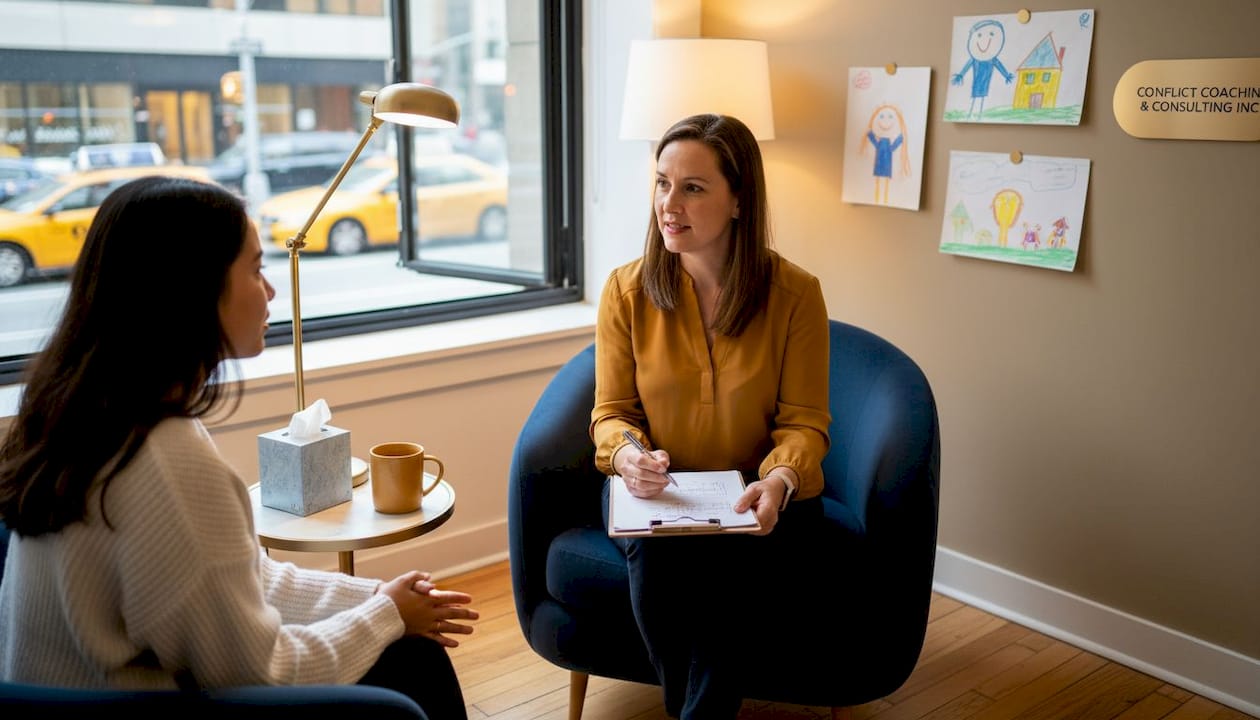
Supervised practicum hours in clinical programs ensure these skills are built through real experience, not just classroom discussion. Watching a therapist model active listening in a live session is a completely different experience from reading about it in a textbook.
Once you understand the conflict management method behind these tools, it becomes easier to apply them across different relationship types. The practical conflict resolution tools for families differ slightly from those used in couples work or professional settings, but the underlying principles remain consistent.
Pro Tip: Pick one skill each week and use it intentionally during one real interaction, whether that’s a tense conversation with a partner, a difficult call with a family member, or a challenging exchange at work. Focused practice in low-stakes moments builds the muscle memory you’ll rely on when things get harder.
Practical steps for applying conflict skills in daily life
Skills learned in education settings need to transfer to real life. That transfer doesn’t happen automatically. It requires a deliberate practice strategy.
A step-by-step approach for applying conflict skills in the moment:
- Pause before engaging: When you feel the tension rising, take a three-second pause before responding. That gap breaks the automatic reaction cycle.
- Name what’s happening: Saying “I notice this conversation is getting tense for me” creates a moment of shared awareness that often defuses escalation immediately.
- Return to the actual issue: Conflicts frequently drift from the original topic into larger character attacks. Redirect the conversation to the specific behavior or situation you’re discussing.
- Use the skill you’ve practiced: Whether it’s an “I statement,” a structured break, or a reflective listening response, draw on what you’ve learned intentionally.
- Repair after disagreement: What you do after a conflict matters as much as what you do during it. A simple acknowledgment of the other person’s experience, even if you disagree, rebuilds trust faster than pretending the argument didn’t happen.
| Practice level | Setting | Example action |
|---|---|---|
| Beginning | Low-stakes conversations | Practice reflective listening with a friend |
| Intermediate | Family or partner discussions | Use “I statements” during a mild disagreement |
| Advanced | High-conflict moments | Apply de-escalation during a real argument |
| Ongoing | Self-assessment | Journal your conflict patterns weekly |
The supervised client contact model used in clinical training is valuable precisely because it moves people through these levels with professional feedback. For everyday couples and individuals, a similar progression is possible through therapy, coaching, or structured group programs.
Resources for continuing your growth include navigating family conflict for families working through specific patterns and a detailed breakdown of conflict resolution steps for couples and professionals ready to build a repeatable process.
Teletherapy is also a strong support option, particularly for people in rural parts of North and South Carolina where in-person access may be limited. Online sessions maintain the accountability and professional guidance that make skill development stick.
The deeper impact of conflict education: What most guides miss
Most articles about conflict management stop at the practical level. Learn to listen better. Breathe before you respond. Use “I statements.” That advice is solid, but it misses something more important.
Conflict management education, done well, changes who you are in relationships, not just what you do during an argument. That distinction matters enormously.
When someone genuinely learns to regulate their emotions under pressure, they don’t just become a better communicator. They become a safer person for others to be honest with. They become a parent whose children come to them with real problems. They become a partner whose spouse stops hiding difficult truths. That transformation happens below the level of technique.
There’s also a community dimension that rarely gets discussed. In Black and African American communities, in immigrant families, in multigenerational households, conflict carries layers of historical experience, cultural expectation, and intergenerational pattern that generic conflict guides simply don’t acknowledge. Conflict management education that incorporates multicultural awareness, that asks whose communication norms are being treated as the default, is far more effective and far more respectful.
The ripple effects extend beyond the home. When families reduce chronic conflict, children perform better academically. Workplace relationships improve when people bring regulated emotional responses to their professional environment. Community trust grows when neighbors know how to disagree without fracturing relationships. This is why mastering conflict resolution skills isn’t simply personal development. It’s a contribution to the relational health of the people around you.
The uncomfortable truth is that most people want conflict to just stop. They want a technique that makes the other person easier to deal with. Real conflict education asks a harder question: what role are you playing in the patterns you keep experiencing? That question is difficult. It’s also the one that leads to lasting change.
Next steps: Getting support for your conflict management journey
If you’ve recognized yourself or your relationship in these pages, you don’t have to figure out the next step alone. At Mastering Conflict, Dr. Carlos Todd and his clinical team specialize in helping individuals and couples in North and South Carolina build exactly the skills this article describes, through evidence-based therapy, structured coaching, and accessible online sessions.
Whether you’re navigating a crisis or simply want to communicate better before small issues become big ones, support is available. You can access teletherapy counseling from anywhere in the Carolinas, connect with family counseling services designed for complex relational dynamics, or explore the difference between your options through a clear breakdown of coaching vs therapy to find what fits your situation best. Booking a consultation is straightforward, and taking that first step is often the most important one.
Frequently asked questions
How does conflict management education differ from therapy?
Conflict management education focuses primarily on skills-building and communication frameworks, while therapy addresses deeper emotional wounds, relational trauma, and underlying patterns that drive chronic conflict.
Are supervised clinical hours necessary for conflict management education?
In formal clinical programs, yes. Supervised client contact with at least 500 hours of hands-on practice is a defining feature of credible conflict management training because real-world application builds competence that classroom learning alone cannot.
Can conflict management skills help diverse families and couples?
Absolutely. These skills are adaptable to multicultural families, blended households, intergenerational systems, and LGBTQ+ couples, especially when working with a practitioner trained to honor cultural context.
Is online or teletherapy support as effective as in-person conflict management education?
Yes. Teletherapy is a proven, research-supported model that delivers meaningful results and is particularly valuable for people in areas of North and South Carolina where in-person options are limited.
Recommended
- Master Conflict Resolution Skills for Real-Life Success – Mastering Conflict
- Conflict Management Training Courses: Skills for Real Life – Mastering Conflict
- What Is Conflict Management? Tools for Better Relationships – Mastering Conflict
- Mastering Empathy in Conflict Resolution: A Step-by-Step Guide – Mastering Conflict
- Relationship therapy explained: proven methods for couples