
Rebuilding trust in relationships: a complete guide 2026

Broken trust creates emotional pain that threatens the foundation of your relationship. Whether you’re recovering from betrayal, broken promises, or ongoing conflict, rebuilding trust feels overwhelming without a clear roadmap. This guide offers evidence-based steps used by mental health professionals to help couples restore confidence, strengthen communication, and heal emotional wounds through structured, proven methods.
Table of Contents
- Understanding Trust And Its Importance In Relationships
- Prerequisites And Readiness: What You Need Before Rebuilding Trust
- Core Steps To Rebuild Trust Effectively
- Common Mistakes To Avoid When Rebuilding Trust
- Alternative Approaches And Tradeoffs
- Expected Outcomes And Timelines For Rebuilding Trust
- Summary And Next Steps
- How Mastering Conflict Can Help You Rebuild Trust
- FAQ
Key takeaways
| Point | Details |
|---|---|
| Professional support matters | 70% success rate when both partners show readiness and commitment to rebuilding. |
| Core rebuilding steps | Transparent communication, emotional validation, and consistent accountability drive measurable trust restoration. |
| Avoid common pitfalls | Rushing the process, avoiding difficult conversations, or inconsistent behavior undermines progress. |
| Realistic timelines | Expect 3 to 12 months for meaningful progress, with 80% showing measurable improvements within 6 months. |
| Multiple approaches exist | Therapy achieves 75% success versus 45% for coaching or self-help, depending on breach severity. |
Understanding trust and its importance in relationships
Trust forms the foundation that allows you and your partner to navigate conflict, share vulnerability, and build emotional intimacy. When trust breaks, it damages not just the relationship but also individual mental health and wellbeing.
Without trust, couples struggle to resolve disagreements effectively. You might find yourself constantly questioning motives, withdrawing emotionally, or avoiding conversations that could lead to healing. Research shows broken trust correlates with increased anxiety, depression, and relationship dissatisfaction.
Why trust matters in conflict resolution:
- Trust enables honest communication about difficult emotions and needs
- Reliable behavior patterns create emotional safety for vulnerability
- Confidence in your partner’s intentions reduces defensive reactions
- Shared accountability strengthens collaborative problem solving
- Emotional security promotes forgiveness and forward movement
When trust exists, you feel safe expressing concerns without fear of judgment or retaliation. Your partner’s consistent actions match their words, creating predictability that calms anxiety. This emotional foundation transforms how you handle disagreements, moving from destructive patterns toward constructive dialogue.
Prerequisites and readiness: what you need before rebuilding trust
Before starting the rebuilding process, you need to honestly assess whether both you and your partner are emotionally prepared for the journey ahead. Readiness determines success more than any specific technique.
Essential prerequisites for trust rebuilding:
- Both partners acknowledge the trust breach and accept responsibility for their roles
- Emotional stability sufficient to engage in difficult conversations without escalation
- Willingness to be vulnerable, honest, and transparent moving forward
- Commitment to investing time, energy, and potentially financial resources
- Mental health conditions are managed through appropriate treatment or support
Studies show a 70% success rate in trust rebuilding when both partners demonstrate emotional readiness and commitment. Without this foundation, even the best techniques fail because one or both partners aren’t fully engaged in the healing process.

Consider whether unresolved mental health issues like untreated depression, anxiety disorders, or substance use might interfere with your capacity to rebuild trust. These conditions don’t prevent trust restoration, but they require professional treatment alongside relationship work.
The rebuilding trust after betrayal process typically requires 3 to 12 months of consistent effort. Professional counseling costs vary, but many therapists offer sliding scale fees or accept insurance.
Pro Tip: Schedule a readiness conversation with your partner where you each rate your commitment level from 1 to 10 and discuss what would increase that number. If either partner scores below 7, address those barriers before proceeding.
Core steps to rebuild trust effectively
Rebuilding trust requires specific, consistent actions that demonstrate reliability and rebuild emotional safety. These steps create the framework for sustainable healing.
Step-by-step trust rebuilding process:
- Complete a readiness assessment to ensure both partners are emotionally prepared and committed
- Establish transparent communication by discussing the breach openly, sharing feelings without blame, and committing to honesty
- Practice emotional validation by acknowledging your partner’s pain, demonstrating empathy, and validating their experience
- Create accountability routines with scheduled check-ins, agreed-upon behaviors, and consistent follow-through
- Engage professional support through couples therapy, counseling, or coaching to guide the process
Transparent communication means discussing not just what happened but how it affected each of you emotionally. You need to create space for difficult conversations without defensiveness or dismissal. This openness rebuilds the foundation that secrecy or dishonesty destroyed.
Emotional validation doesn’t mean agreeing with everything your partner says. It means recognizing their feelings as real and understandable given their experience. When you validate emotions, you demonstrate that their inner world matters to you.
Research demonstrates that regular accountability check-ins increase perceived partner reliability by 58% within 4 months. These structured conversations keep both partners engaged and aware of progress.
| Strategy | Implementation | Expected Impact |
|---|---|---|
| Transparent communication | Daily 15-minute check-ins to share feelings and concerns | Increases openness, reduces suspicion |
| Emotional validation | Active listening with reflection statements like “I hear that you felt…” | Rebuilds emotional safety and connection |
| Accountability routines | Weekly scheduled conversations reviewing commitments and behaviors | Demonstrates consistency, builds reliability |
| Professional guidance | Bi-weekly therapy sessions with licensed counselor | Provides structure, addresses deeper issues |
The rebuilt trust step-by-step process works best when combined with effective argument resolution techniques that prevent new breaches while healing old wounds.
Pro Tip: Use structured conversation exercises like the Gottman Institute’s “Dreams Within Conflict” technique during your accountability check-ins. This keeps discussions focused and productive rather than devolving into blame cycles.
Common mistakes to avoid when rebuilding trust
Even with good intentions, couples often fall into patterns that undermine their rebuilding efforts. Recognizing these pitfalls helps you navigate around them.
Frequent trust rebuilding mistakes:
- Avoiding difficult conversations because they feel uncomfortable, which prevents addressing root issues and emotional wounds
- Inconsistent behavior where promises aren’t kept or accountability lapses, signaling unreliability and destroying fragile progress
- Neglecting emotional validation by dismissing your partner’s feelings or rushing them to “get over it,” which breeds resentment
- Rushing the timeline by expecting trust to return quickly, creating frustration when natural healing takes longer
- Failing to address underlying issues like communication patterns or unresolved conflicts that contributed to the breach
More than 50% of failed trust rebuilding efforts involve avoiding tough conversations or demonstrating inconsistent follow-through. When you sidestep difficult topics, you signal that comfort matters more than healing. Your partner interprets this avoidance as continued dishonesty or lack of commitment.
“Trust rebuilds through consistent small actions over time, not through grand gestures or empty promises. The couples who succeed are those who show up reliably, even when it’s hard.”
Inconsistency particularly damages trust because it recreates the original betrayal pattern. If you commit to daily check-ins but skip them when busy, you demonstrate that your word can’t be trusted. Keep commitments realistic and manageable rather than overcommitting and underdelivering.
The partner apology guide explains how genuine apologies differ from defensive justifications. Effective apologies validate hurt without making excuses, a crucial skill for building trust online and in person.
Pro Tip: Schedule your difficult conversations in advance rather than ambushing your partner. This allows both of you to prepare emotionally and reduces defensive reactions that derail productive dialogue.
Alternative approaches and tradeoffs
While couples therapy offers the highest success rates, other approaches may fit your situation, budget, or preferences. Understanding the tradeoffs helps you make informed decisions.
Couples therapy provides structured intervention from licensed mental health professionals who specialize in relationship dynamics and trust repair. Therapists identify underlying patterns, teach communication skills, and hold both partners accountable. Success rates for therapy-based interventions reach approximately 75% for complex trust breaches.
Trust coaching offers more affordable, flexible support focused on skill-building and accountability. Coaches guide you through exercises and check-ins but typically lack clinical training to address deeper mental health issues. Success rates hover around 45%, making coaching suitable for mild breaches or as supplementary support.
Self-help resources like books, online programs, or support groups provide the most affordable option. These work best when both partners are highly motivated and the breach involves minor issues. Without professional guidance, couples often miss blind spots or lack accountability structures.
| Approach | Success Rate | Cost Range | Best For | Limitations |
|---|---|---|---|---|
| Couples therapy | ~75% | $100-$250/session | Complex breaches, mental health factors, severe conflict | Higher cost, scheduling constraints |
| Trust coaching | ~45% | $50-$150/session | Mild to moderate issues, skill-building focus | Limited clinical expertise, less intensive |
| Self-help resources | ~45% | $0-$50 total | Motivated couples, minor breaches, supplementary support | No personalized guidance, easy to abandon |
| Group programs | ~50% | $30-$100/session | Community support, learning from others | Less individualized attention |
Choose based on breach severity, your budget, and whether mental health issues complicate the situation. If anxiety, depression, or trauma accompany the trust breach, professional therapy provides essential clinical support. For coaching versus therapy differences, consider both your goals and the complexity of issues you’re addressing.
Expected outcomes and timelines for rebuilding trust
Understanding realistic expectations prevents frustration and helps you recognize progress as it happens. Trust rebuilding follows predictable patterns when couples commit to consistent effort.
Typical rebuilding timelines span 3 to 12 months depending on breach severity, intervention type, and partner commitment levels. Minor breaches with high motivation resolve faster, while complex betrayals involving multiple incidents or underlying issues require extended work.
Measurable success indicators:
- Increased frequency of honest, vulnerable conversations without defensiveness
- Consistent follow-through on commitments with fewer accountability lapses
- Reduced conflict intensity and faster resolution when disagreements arise
- Stronger emotional safety allowing for deeper intimacy and connection
- Decreased anxiety or suspicion about partner’s actions and intentions
Up to 80% of couples working on trust rebuilding show measurable improvements within 6 months when following structured approaches with professional guidance. These improvements include both subjective reports of feeling more secure and objective observations of changed behavior patterns.
Track progress through both partners’ subjective experiences and concrete behavioral changes. Schedule monthly review conversations where you each rate trust levels, identify specific improvements, and discuss remaining concerns. Professional therapists often use standardized assessments to measure relationship satisfaction and trust levels over time.
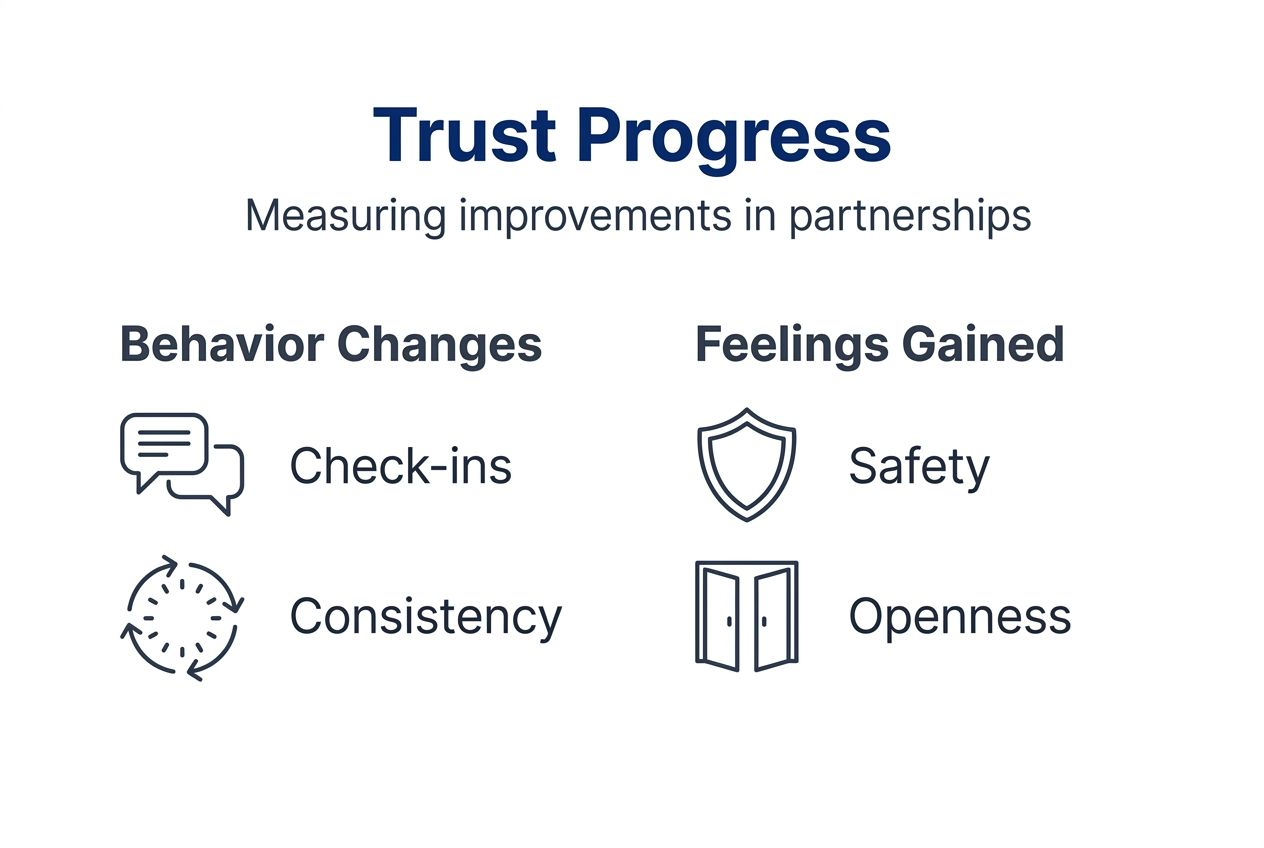
Progress isn’t linear. Expect setbacks triggered by stress, reminders of the original breach, or new conflicts. These setbacks don’t mean failure; they’re opportunities to practice your new skills and demonstrate resilience. How you handle setbacks often matters more than avoiding them entirely.
Summary and next steps
Rebuilding trust requires commitment, consistency, and often professional support. The process follows clear steps that produce measurable results when implemented faithfully.
Key actions for trust rebuilding:
- Assess emotional readiness and mutual commitment before starting
- Practice transparent communication through scheduled, honest conversations
- Validate your partner’s emotions without defensiveness or dismissal
- Establish accountability routines with consistent check-ins and follow-through
- Engage professional support through therapy, coaching, or structured programs
Qualified mental health professionals provide guidance that increases success rates significantly. They help you navigate difficult emotions, identify blind spots, and maintain accountability when motivation wanes.
Commit to the gradual process rather than expecting immediate results. Trust rebuilds through hundreds of small, consistent actions that demonstrate reliability over time. Each kept promise, each vulnerable conversation, and each validated emotion adds another brick to your relationship’s renewed foundation.
Begin with a readiness self-assessment where you honestly evaluate your emotional stability, willingness to be vulnerable, and commitment to the work ahead. Then explore professional counseling or coaching options that fit your needs and budget. The path forward exists; you simply need to take the first step with intention and hope.
How Mastering Conflict can help you rebuild trust
When you’re ready to strengthen your relationship with professional support, Mastering Conflict offers specialized clinical services designed specifically for couples navigating trust issues and conflict.
Our licensed counselors understand the complexities of rebuilding trust after betrayal, broken promises, or ongoing conflict patterns. Through evidence-based approaches, we guide couples toward transparent communication, emotional healing, and sustainable relationship restoration.
Convenient teletherapy counseling services connect you with expert support from wherever you feel most comfortable. Whether you need intensive couples therapy or prefer the flexibility of coaching, our team helps you choose the right approach by exploring coaching versus therapy differences based on your unique situation.
Take the confident next step toward rebuilding trust and creating the relationship you deserve.
FAQ
How long does it typically take to rebuild trust in a relationship?
Rebuilding trust generally requires 3 to 12 months of consistent effort, depending on the breach severity and intervention quality. Minor issues with highly motivated partners may resolve in 3 to 4 months, while complex betrayals involving multiple incidents often need 9 to 12 months or longer. This timeline allows for gradual emotional healing, behavior pattern changes, and the establishment of new reliability through repeated positive experiences.
What signs indicate that a couple is ready to begin trust rebuilding?
Key readiness indicators include both partners acknowledging the trust breach without excessive blame, demonstrating emotional stability during difficult conversations, and showing genuine willingness to be vulnerable and honest moving forward. Additional signs include mutual commitment to investing time and energy, managed mental health conditions, and the absence of active betrayal or dishonesty. When both partners can discuss the breach without immediate escalation and express hope for the relationship’s future, they’re likely ready to begin structured rebuilding.
Can trust be rebuilt without professional therapy or coaching?
Trust can be rebuilt through self-help approaches, particularly for mild breaches with highly motivated couples, though success rates average around 45% compared to 75% for professional therapy. Self-directed methods work best as supplementary support alongside occasional professional check-ins. For complex breaches involving mental health issues, severe betrayal, or entrenched conflict patterns, professional support significantly increases success likelihood by providing structure, accountability, and clinical expertise that coaching versus therapy comparison guides can help you navigate.
What are effective communication techniques to rebuild trust?
Effective techniques include scheduled daily check-ins for sharing feelings without judgment, active listening with reflection statements that validate emotions, and structured conversation exercises like the Gottman method’s “Dreams Within Conflict” approach. Use “I feel” statements rather than accusatory “you always” language, practice empathy by acknowledging your partner’s experience even when you disagree, and maintain transparency by proactively sharing information rather than waiting to be asked. Couples communication exercises provide practical frameworks that transform conflict into connection opportunities.
Recommended
- Rebuilding Trust After Betrayal: A Step-by-Step Process – Mastering Conflict
- Repairing After Infidelity: Steps to Rebuild Trust – Mastering Conflict
- How to Resolve Arguments Effectively and Rebuild Trust – Mastering Conflict
- Couples Therapy for Infidelity: Rebuilding Trust and Connection – Mastering Conflict