
Overcoming Defensiveness in Relationships: A Practical Guide

TL;DR:
- Overcoming defensiveness involves replacing automatic protective reactions with open, curious responses during conflicts and criticism. Building emotional resilience through regulation and self-awareness reduces reactivity, enabling honest communication and deeper relationships. Practical steps include body awareness, finding valid feedback, paraphrasing, and accepting partial responsibility to foster lasting change.
Overcoming defensiveness is defined as the deliberate practice of replacing automatic protective reactions with open, curious responses during conflict and criticism. When defensiveness takes hold in a relationship, it shuts down honest communication and replaces it with blame, denial, and emotional distance. The good news is that this pattern is not permanent. With the right emotional regulation techniques, a growth mindset, and consistent practice, both individuals and couples can learn to respond to difficult conversations with far more openness and far less reactivity.
What causes defensiveness and how does it affect relationships?
Defensiveness is a reflexive emotional reaction triggered by perceived criticism or threat, and it shows up in behaviors like denial, avoidance, and justification. Your nervous system reads feedback as danger, and your ego steps in to protect you before your rational mind has a chance to respond. This is not a character flaw. It is a survival mechanism that has simply been misfired in the wrong context.
The problem is what defensiveness costs you over time. When you consistently deflect accountability, your partner or loved one stops bringing concerns to you because they expect a wall, not a conversation. Trust erodes, emotional intimacy shrinks, and conflicts that could have been resolved in minutes stretch into recurring arguments. The Gottman Institute identifies defensiveness as one of the four most destructive communication patterns in relationships, alongside criticism, contempt, and stonewalling.
Recognizing your personal triggers is the prerequisite for any real change. Common defensive behaviors include:
- Denial: Flatly rejecting feedback without considering its merit
- Counter-attacking: Responding to a concern with a complaint about the other person
- Justification: Explaining your behavior so thoroughly that the other person’s feelings get buried
- Avoidance: Shutting down, changing the subject, or leaving the conversation entirely
- Minimizing: Treating the other person’s concern as an overreaction
Each of these behaviors signals that you have interpreted a conversation as a threat rather than an opportunity. Awareness of which pattern you default to is where managing defensiveness actually begins.
How does building emotional resilience help reduce defensiveness?
True emotional resilience is the learned ability to fully experience, process, and recover from difficulties rather than suppressing or avoiding them. This distinction matters enormously. Many people believe resilience means staying calm by pushing feelings down. That approach backfires because suppressed emotions resurface as defensiveness, irritability, or emotional shutdown at the worst possible moments.
Resilience includes five core components that directly reduce reactive defensiveness: emotional regulation, social support, realistic optimism, a clear sense of purpose, and self-efficacy. When these are developed together, you build the internal capacity to tolerate discomfort without immediately needing to defend against it. You can hear criticism and stay grounded rather than flinching into attack mode.
“Resilience is often misunderstood as suppressing emotion. True resilience is about fully experiencing and processing stress to build lasting capacity.” — Positivity.org
Two specific practices accelerate this development. First, naming your emotions precisely rather than just feeling overwhelmed. Saying “I feel embarrassed by that comment” instead of “I feel attacked” gives your brain a more accurate signal and lowers the perceived threat level. Second, adopting a growth mindset toward feedback. When you view criticism as information rather than judgment, your nervous system stops treating it as an emergency. Building emotional resilience through these practices is not a quick fix. Lasting resilience takes months of consistent daily effort, though many people notice meaningful improvements in emotional regulation within weeks of starting.
What practical steps can you take to reduce defensiveness in communication?
Reducing defensiveness in real conversations requires both body-level awareness and deliberate communication choices. These steps work for individuals and couples alike.

1. Notice your body before your mouth moves. Defensiveness begins physically with tight muscles, a clenched jaw, and rapid breathing before any words are spoken. When you notice these signals, pause. Unclench your jaw, slow your breath, and give your prefrontal cortex a few seconds to catch up with your amygdala. This single habit interrupts the automatic defensive cycle more reliably than any verbal technique.
2. Find the 5% of valid feedback. Even when you strongly disagree with criticism, therapists suggest searching for at least a small grain of truth in what you are hearing. This technique bypasses all-or-nothing thinking and lowers the emotional stakes of the conversation. You do not have to agree with everything. You just need to find one piece that is worth considering.
3. Paraphrase before you respond. Reflecting back what you hear prevents the misunderstandings that fuel defensiveness. Before defending yourself, say: “What I’m hearing is that you felt dismissed when I didn’t respond. Is that right?” This does two things. It confirms you understood correctly, and it signals to the other person that you are actually listening rather than loading your rebuttal.
4. Distinguish between being attacked and being expressed to. Most of the time, when a partner or friend raises a concern, they are expressing pain, not launching an assault. Asking yourself “Is this person trying to hurt me, or are they trying to be understood?” shifts your entire orientation from defense to curiosity.
5. Decide deliberately what actually needs a response. Discernment is critical here. Not every comment requires a rebuttal. Some things can simply be heard, acknowledged, and released. Choosing your battles is not weakness. It is a sign of emotional maturity and one of the most effective ways to be less defensive in daily life.
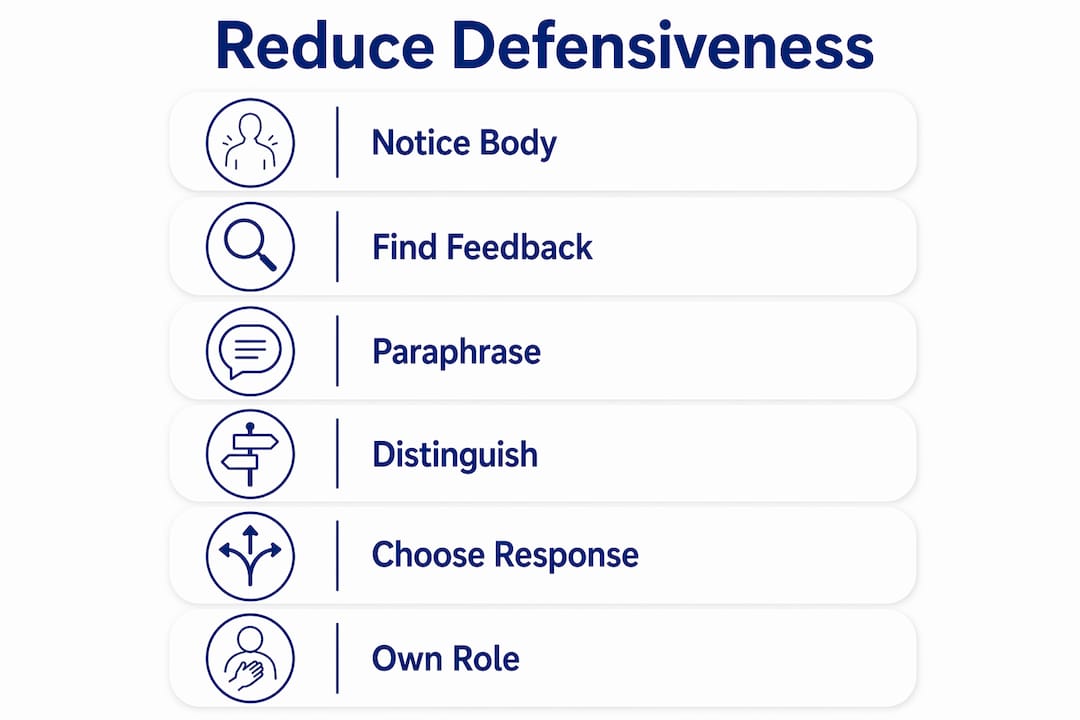
6. Take partial responsibility. Accepting your role in a conflict, even partially, is one of the most powerful antidotes to defensiveness. Saying “You’re right that I could have communicated that better” does not mean you are surrendering. It means you are prioritizing the relationship over being right.
Pro Tip: Set a two-minute rule during heated conversations. If you feel the urge to defend yourself, wait two minutes before speaking. Use that time to identify one thing the other person said that might be valid. This pause alone can change the entire trajectory of the conversation.
For deeper support on managing difficult emotions during conflict, consistent practice with these steps builds the communication muscle over time.
Common mistakes when trying to overcome defensiveness
Most people trying to reduce their defensiveness hit the same predictable obstacles. Knowing them in advance saves significant frustration.
- Trying to win the argument. When your goal is to prove you are right, defensiveness is almost guaranteed. Shift the goal from winning to understanding, and the entire dynamic changes.
- Calling out defensiveness directly during conflict. Naming someone as defensive typically triggers more defensiveness, not less. If you notice it in yourself, address it internally. If you notice it in a partner, pause the conversation rather than labeling their behavior.
- Suppressing emotions instead of processing them. Telling yourself to “just calm down” without actually working through the feeling stores the emotion for a later, louder explosion. Acknowledge what you feel, even privately, before re-engaging.
- Expecting fast results. Durable change in defensive patterns takes time. Many individuals notice emotional regulation improvements within weeks, but robust lasting resilience takes months of daily practice. Impatience with the process is itself a form of self-criticism that can trigger more defensiveness.
- Going it alone when the pattern is deep. Some defensiveness is rooted in early attachment wounds, trauma, or chronic stress that self-help strategies alone cannot fully address. Recognizing when professional support is warranted is not a failure. It is good judgment.
Pro Tip: After a conflict, spend five minutes journaling what triggered your defensiveness and what you wish you had said instead. This reflection practice builds the self-awareness that makes real-time change possible.
Developing conflict resolution skills alongside emotional regulation work accelerates progress significantly for most people.
Key takeaways
Overcoming defensiveness requires recognizing your triggers, building emotional resilience through consistent practice, and choosing curiosity over self-protection in every difficult conversation.
| Point | Details |
|---|---|
| Defensiveness is a survival response | It is triggered by perceived threat, not actual danger, and can be retrained with practice. |
| Emotional resilience reduces reactivity | True resilience means processing emotions fully, not suppressing them. |
| Physical awareness comes first | Noticing body tension before speaking is the fastest way to interrupt defensive reactions. |
| Find the 5% of valid feedback | Searching for minimal truth in criticism breaks all-or-nothing defensive thinking. |
| Partial responsibility is powerful | Accepting even a small role in conflict is the most direct antidote to defensiveness. |
What I’ve learned from working with defensive patterns in real relationships
After years of working with individuals and couples in conflict, the pattern I see most often is not malice. It is fear. People become defensive because somewhere along the way they learned that being wrong was dangerous, that criticism meant rejection, or that vulnerability was a liability. That learning made sense at some point. It just does not serve them anymore.
What I have found genuinely transformative is not any single technique. It is the shift in identity that happens when someone decides they are no longer a person who needs to protect themselves from feedback. That shift does not come from reading about it. It comes from practicing openness in small, low-stakes moments until it becomes the default response in harder ones.
Self-compassion is the piece most people skip. They want to stop being defensive, and then they beat themselves up every time they slip back into it, which creates a new layer of shame that makes the next defensive reaction more likely. The path forward is gentler than that. You notice the pattern, you name it without judgment, and you try again. That cycle, repeated consistently, is what actually builds lasting change.
The couples I have seen make the most progress are not the ones who fight the least. They are the ones who have learned to stay curious about each other even when it is uncomfortable. That curiosity is a choice, and it is one you can make starting today.
— Carlos
Ready to work through defensiveness with professional support?
If these strategies resonate but the patterns feel too entrenched to shift on your own, professional support can make a real difference.

At Masteringconflict, Dr. Carlos Todd and the clinical team offer individual and couples therapy specifically designed to address the emotional triggers and communication patterns that keep defensiveness alive. Whether you are working through recurring conflict in a relationship or building personal emotional regulation skills, the family and couples counseling programs provide evidence-based tools tailored to your situation. For those who prefer flexible access, teletherapy options are available so you can get support from wherever you are.
FAQ
What is defensiveness in communication?
Defensiveness in communication is a reflexive protective reaction to perceived criticism or threat, expressed through denial, justification, or counter-attacking. It prevents honest dialogue and blocks conflict resolution.
How long does it take to stop being defensive?
Many people notice improvements in emotional regulation within weeks of consistent practice, but durable, lasting change in defensive patterns typically takes several months of daily effort.
Can defensiveness damage a relationship?
Defensiveness erodes trust and emotional intimacy over time by signaling to the other person that their concerns will be met with resistance rather than openness. The Gottman Institute identifies it as one of the four most destructive communication patterns in relationships.
What is the fastest way to reduce defensiveness in the moment?
The fastest technique is a physical pause. Unclench your jaw, slow your breathing, and wait before responding. This brief interruption gives your rational mind time to engage before your defensive reaction takes over.
When should I seek professional help for defensiveness?
Seek professional support when defensiveness is rooted in trauma, chronic stress, or early attachment wounds that self-help strategies have not resolved, or when it is consistently damaging your most important relationships.
Recommended
- How to Resolve Arguments Effectively and Rebuild Trust – Mastering Conflict
- Dealing With Difficult People: Proven Strategies for Resolution – Mastering Conflict
- Communication Skills for Couples: Guide to Connection and Conflict Resolution – Mastering Conflict
- Dealing with Passive Aggression: A Step-by-Step Guide – Mastering Conflict