
Family Dispute Resolution Process: A Practical Guide

TL;DR:
- Family dispute resolution is a voluntary mediation process that helps families reach agreements outside court with a neutral third party. Different formats like joint, shuttle, remote, and lawyer-assisted mediation suit various conflict levels and safety needs. Mediation agreements need to be legally formalized to ensure enforceability and long-term effectiveness.
Family dispute resolution (FDR) is a voluntary process where a trained, neutral third party helps families communicate and reach agreements outside of court. Known formally as mediation, FDR covers parenting, financial, and property disputes. Family Dispute Resolution Practitioners (FDRPs) facilitate these sessions, and in countries like Australia, completing the family dispute resolution process is legally required before most parenting applications can be filed. In the UK, parties must disclose their alternative dispute resolution (ADR) status using an FM5 form before their first court hearing. Understanding how this process works gives you real control over the outcome.
What are the common methods used in the family dispute resolution process?
FDR is not a single format. Multiple session formats exist, including joint, shuttle, remote, and lawyer-assisted mediation, each suited to different conflict levels and safety needs.
Joint mediation places both parties in the same room with the mediator. This format works well when communication is strained but not hostile. The mediator sets ground rules, keeps the conversation focused, and helps both sides move from positions to interests.
Shuttle mediation keeps parties in separate rooms. The mediator moves between them, carrying proposals and managing the emotional temperature of the session. Shuttle mediation prevents verbal confrontations and keeps negotiations productive when direct contact would derail progress. This format is especially useful in cases involving a history of conflict or power imbalance.
Remote and video mediation has grown significantly as a practical option. Platforms like Zoom allow parties in different cities or states to participate without travel. This format reduces logistical barriers and can lower the emotional intensity of face-to-face sessions.
Lawyer-assisted mediation brings each party’s attorney into the room. Lawyer-assisted mediation reduces same-day negotiation collapses by giving parties immediate legal counsel on proposed terms. This is the format most likely to produce agreements that hold up long-term.
Other ADR methods like arbitration and collaborative law exist alongside mediation. Arbitration produces a binding decision from a neutral third party, similar to a private judge. Collaborative law involves both parties and their attorneys committing to resolve disputes without litigation. Both are more formal than FDR but less adversarial than court.
Pro Tip: If you feel intimidated by the other party, request shuttle mediation before your first session. You do not have to justify the request in detail. Your comfort directly affects the quality of the agreement you reach.
How does the legal framework influence the family dispute resolution process?
The legal requirements around FDR vary by country, but the direction is consistent. Courts increasingly expect parties to attempt mediation before filing applications.
In Australia, a section 60I certificate is required for most parenting applications under the Family Law Act. An FDRP issues this certificate after a genuine attempt at mediation. Exceptions apply in cases involving family violence, child abuse risks, or urgency. Without the certificate, the court will not accept the application.
| Jurisdiction | Requirement | Document | Exceptions |
|---|---|---|---|
| Australia | Attempt FDR before filing parenting application | Section 60I certificate | Family violence, urgency, child abuse |
| United Kingdom | Disclose ADR status before first hearing | FM5 form | Domestic abuse, urgency, child safety |
| Ontario, Canada | Encouraged but not always mandatory | Varies by case type | Court discretion applies |
In the UK, parties must file an FM5 form at least 7 working days before the first court hearing. The form documents whether ADR was attempted and, if not, why. Failure to engage without a valid reason can result in cost penalties. This requirement signals that UK courts treat mediation as a standard step, not an optional extra.
Agreements reached in mediation do not automatically carry legal weight. Mediated agreements require legal conversion into parenting plans, consent orders, or binding financial agreements to be enforceable. Verbal or informal settlements often lead to future disputes because neither party has a clear legal obligation to follow through.
Pro Tip: Always have a lawyer review any agreement before you sign it. A mediator cannot tell you whether the terms protect your legal rights. That is your attorney’s job.
What does a family mediator do and what should you expect?
A family mediator is a neutral facilitator, not a judge or legal advisor. Mediators cannot act as advocates or give legal advice to either party. Their role is to structure the conversation so both sides can hear each other and work toward practical solutions.
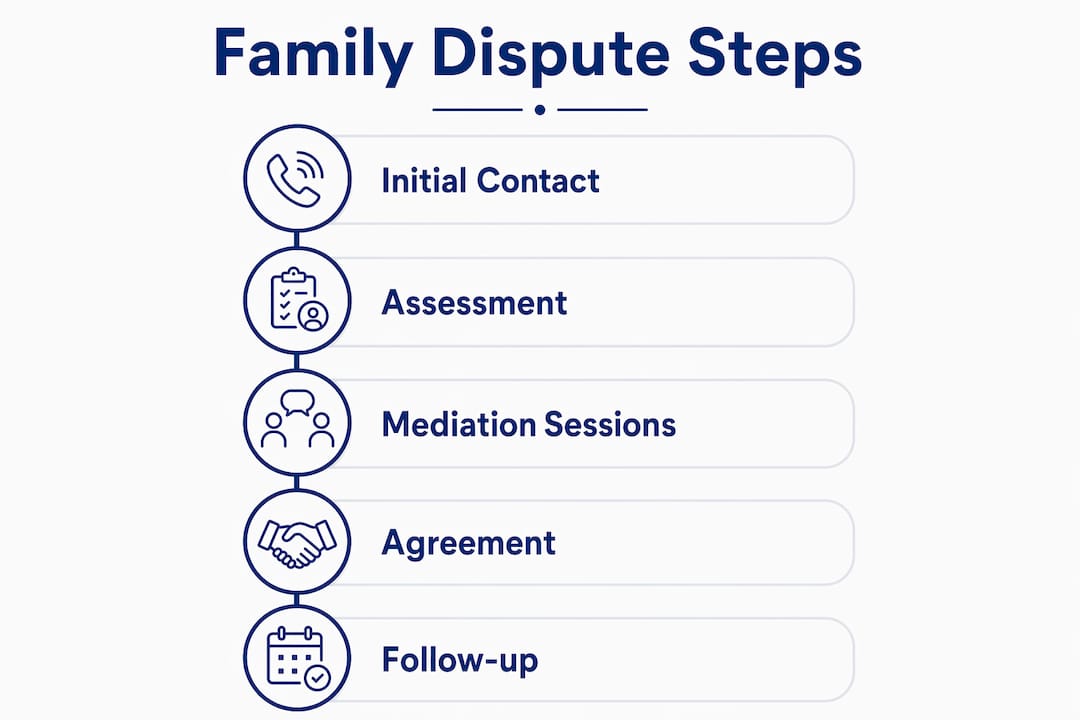
A typical FDR session follows a clear structure:
- Opening: The mediator explains the process, sets ground rules, and confirms confidentiality.
- Agenda setting: Both parties identify the issues they want to resolve.
- Exploration: The mediator asks questions to uncover each party’s underlying interests, not just their stated positions.
- Negotiation: Parties propose and respond to options, with the mediator keeping the dialogue on track.
- Agreement: If both parties reach consensus, the mediator documents the terms for legal review.
Child-inclusive practices are used in parenting disputes when appropriate. A trained child consultant may meet separately with children to understand their needs and report back to the mediator. This is not about putting children in the middle. It gives the mediator a clearer picture of what arrangements will actually work for the family.
“Family dispute resolution aims not to make parties ‘get along’ but to shift dialogue from adversarial posturing to practical, child-centered decision-making under neutral facilitation.” — Eckert Legal
One of the most common misconceptions is that the mediator will tell you what to do or validate your position. They will not. The mediator’s job is to keep the process fair and productive. Your lawyer’s job is to protect your interests. Confusing the two roles leads to frustration and poorly structured agreements.
Emotional and high-conflict cases require additional skill from the mediator. Experienced FDRPs use techniques like reframing, caucusing, and reality-testing to manage strong emotions without shutting down the conversation. If a session becomes unproductive, the mediator has the authority to pause or end it. Learn more about how trained mediators support families through these difficult dynamics.

How can families maximize the effectiveness of dispute resolution?
Preparation is the single biggest factor in whether mediation produces a durable agreement. Families who arrive informed and focused get better results than those who treat the session as a first conversation.
- Write down your priorities before the session. Separate what you need from what you want. Knowing the difference helps you make concessions without giving up what matters most.
- Gather relevant documents. Financial statements, school schedules, and medical records give the mediator concrete information to work with. Vague claims slow the process.
- Stay child-focused in parenting disputes. Frame every proposal around what works for the children, not what feels fair to you. Mediators respond better to child-centered language, and so do courts if the matter proceeds.
- Request shuttle mediation if you feel unsafe or intimidated. Power imbalances are real and they affect outcomes. Shuttle mediation controls communication in emotionally hostile settings, allowing sessions to continue productively.
- Document every agreement in writing before you leave. Memory fades and interpretations diverge. A written summary signed by both parties gives you a starting point for the formal legal document.
- Seek legal review before finalizing anything. Independent legal counsel during mediation identifies unworkable terms before they become binding commitments.
Common pitfalls include agreeing to terms under emotional pressure, failing to address how the agreement will be modified if circumstances change, and treating mediation as a one-time fix. Life changes. Parenting arrangements that work when children are young often need adjustment as they grow. Build a review mechanism into any agreement from the start.
The Ontario family law experience reinforces a key insight: ADR works best when participants treat it as a party-driven process where they retain control, not as a softer version of court. That mindset shift produces more satisfying outcomes than approaching mediation as a battle to win. For practical tools to improve communication before and after sessions, the Masteringconflict resource on conflict resolution for families covers specific techniques worth reviewing.
Pro Tip: Ask your mediator at the start of the session what happens if you cannot reach agreement. Knowing the next steps reduces anxiety and keeps both parties focused on finding a solution rather than posturing.
Key takeaways
The family dispute resolution process works best when participants arrive prepared, use the right session format for their conflict level, and convert any agreement into a legally binding document.
| Point | Details |
|---|---|
| Choose the right format | Joint, shuttle, remote, or lawyer-assisted mediation each suit different conflict levels and safety needs. |
| Know the legal requirements | Australia requires a section 60I certificate; the UK requires an FM5 form before the first court hearing. |
| Understand the mediator’s role | Mediators facilitate discussion but cannot give legal advice. Bring your own attorney for legal protection. |
| Formalize every agreement | Verbal settlements are not enforceable. Convert outcomes into parenting plans, consent orders, or binding financial agreements. |
| Prepare before each session | Written priorities, relevant documents, and a child-focused mindset produce more durable agreements. |
What I’ve learned from watching families navigate mediation
Most people walk into their first FDR session expecting the mediator to fix things. They want someone to hear their side and validate it. When that does not happen, they feel let down by the process before it has really started.
The shift I consistently recommend is this: stop thinking about what you deserve and start thinking about what you can live with. Those are very different questions. Mediation does not deliver justice in the way a court ruling might. What it delivers is a workable arrangement that both parties had a hand in creating. That ownership matters enormously for long-term compliance.
Emotional readiness is underrated. Families who have done some therapeutic work before mediation, whether through individual counseling or couples therapy, tend to communicate more clearly and make fewer reactive decisions. The mediation session is not the place to process grief, anger, or betrayal. Do that work beforehand so you can show up focused.
Legal support is non-negotiable, not optional. I have seen people sign agreements they later regretted because they did not have an attorney present to flag the problems in real time. The cost of legal advice during mediation is far lower than the cost of returning to court to undo a bad agreement.
Finally, view the process as a starting point, not a finish line. Families change. Agreements need to change with them. Build that expectation in from the beginning, and mediation becomes a tool you can return to rather than a one-time ordeal to survive.
— Carlos
Support for families navigating conflict and mediation
Mediation addresses the legal and practical side of family disputes. The emotional side requires its own attention.
Masteringconflict offers teletherapy counseling that fits around your schedule, whether you are preparing for mediation, processing a difficult session, or rebuilding communication after an agreement is reached. For men specifically, men’s counseling services provide a focused space to work through anger, communication patterns, and the stress that family conflict creates. If anger is affecting your ability to participate productively in mediation, an anger management assessment can identify specific areas to address before your next session. Combining therapeutic support with the mediation process consistently produces better outcomes for the whole family.
FAQ
What is family dispute resolution?
Family dispute resolution is a voluntary mediation process where a neutral third party, called a Family Dispute Resolution Practitioner, helps families resolve parenting, financial, and property disputes without going to court.
What does a family mediator do?
A family mediator facilitates structured conversations between parties to help them reach practical agreements. Mediators do not give legal advice or advocate for either side.
Is family mediation legally required before going to court?
In Australia, a section 60I certificate from an FDRP is required before filing most parenting applications. In the UK, parties must file an FM5 form disclosing their ADR status at least 7 working days before the first court hearing.
Are agreements from mediation legally binding?
Mediated agreements are not automatically enforceable. They must be converted into parenting plans, consent orders, or binding financial agreements to carry legal weight.
When should I request shuttle mediation?
Request shuttle mediation when direct contact with the other party feels unsafe, intimidating, or likely to derail productive conversation. The mediator can manage communication between separate rooms to keep the session moving forward.
Recommended
- Effective Conflict Resolution Steps for Couples, Families, and Professionals 2025 – Mastering Conflict
- Conciliation Conflict Resolution: A Practical Guide – Mastering Conflict
- Family Conflict Resolution Services: Transforming Relationships – Mastering Conflict
- Navigating Family Conflict for Positive Relationships – Mastering Conflict