
Self Regulation and Emotional Intelligence: 2026 Guide

TL;DR:
- Self-regulation in emotional intelligence involves consciously managing feelings and impulses rather than reacting automatically.
- Practicing this skill improves relationships, reduces stress, and can be developed through deliberate routines and strategies.
Self-regulation in emotional intelligence is defined as the ability to consciously manage your feelings and impulses rather than react to them automatically. It sits at the core of emotional intelligence, the framework psychologist Daniel Goleman identified as more predictive of life success than IQ alone. People who practice emotional self control make deliberate choices about how to respond, even under pressure. That ability shapes every relationship, every conflict, and every stressful moment you face. The good news: self-regulation is a trainable skill, not a fixed trait.
What is self regulation emotional intelligence, and why does it matter?
Self-regulation is the second pillar of Goleman’s emotional intelligence model, sitting directly after self-awareness. Self-awareness tells you what you feel. Self-regulation determines what you do with that feeling. Without it, emotions drive behavior on autopilot, which is why people say things they regret, shut down during arguments, or spiral under stress.
The importance of self regulation extends well beyond personal comfort. People with strong emotional self control handle conflict more constructively, recover from setbacks faster, and build more trusting relationships. Research confirms that structured programs targeting self-regulation produce measurable gains. A 7-week soft skills program produced large effect sizes (η² = 0.59–0.68) in emotional intelligence and self-regulation among adolescents. That scale of improvement, achieved in under two months, shows how responsive this skill is to deliberate practice.
Self-regulation also shapes how others experience you. When you manage your emotional reactions, people around you feel safer, more respected, and more willing to engage honestly. That dynamic is the foundation of every healthy relationship.
How does self-regulation work in the brain and body?
The brain runs two competing systems during emotional moments. The amygdala fires fast, triggering fear, anger, or anxiety before conscious thought kicks in. The prefrontal cortex, the brain’s executive center, applies reasoning, context, and judgment. Self-regulation is essentially the prefrontal cortex overriding the amygdala’s first response.

When stress is high, cortisol floods the system and temporarily weakens prefrontal function. That is why you say things under pressure that you would never say when calm. The amygdala hijack, a term Goleman coined, describes this moment when emotion bypasses rational thought entirely. Recognizing that this is a biological process, not a character flaw, is the first step toward managing it.
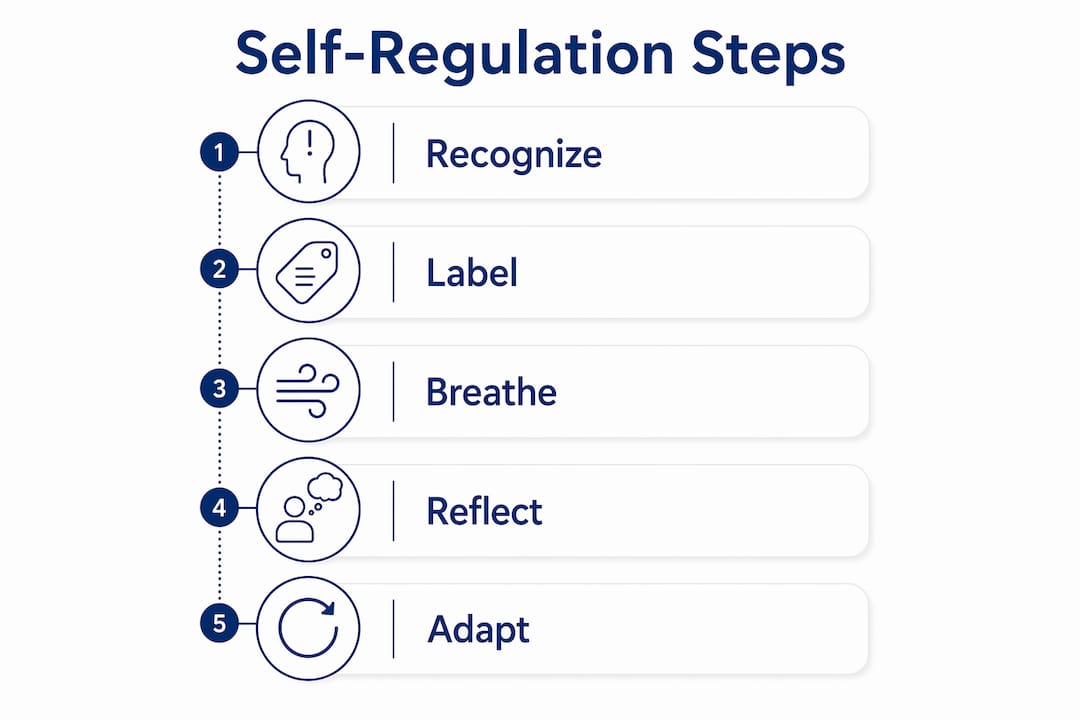
One of the most effective ways to engage the prefrontal cortex is affect labeling: simply naming what you feel. Labeling emotions like “I am frustrated” activates the brain’s self-control centers and reduces emotional intensity. It sounds almost too simple, but the neuroscience is clear. Naming the emotion shifts processing from the reactive amygdala toward the reflective prefrontal cortex.
The autonomic nervous system also plays a direct role. Slow, controlled breathing signals safety to the nervous system and lowers cortisol. The 4-4-8 breathing technique, inhale for 4 seconds, hold for 4, exhale for 8, repeated for five rounds, effectively calms acute stress responses. That exhale-heavy pattern activates the parasympathetic nervous system, the body’s natural brake pedal.
Pro Tip: Practice the 4-4-8 breathing technique before a difficult conversation, not just during one. Doing it proactively keeps your prefrontal cortex online when you need it most.
What are evidence-based strategies to strengthen self-regulation?
The most effective self-regulation strategies combine body-based and cognitive approaches. No single technique works for every situation, but the following methods have the strongest research support.
- Mindfulness practice: Trains sustained attention and reduces automatic reactivity by building awareness of thoughts and feelings without judgment.
- Cognitive reappraisal: Reframes the meaning of a situation to change its emotional impact. Instead of “this is a disaster,” you shift to “this is a challenge I can work through.”
- Affect labeling: Names the emotion out loud or in writing to engage the prefrontal cortex and reduce intensity.
- Trigger logs: Record the event, physical sensation, emotion, and narrative behind a reaction. Each entry takes under 60 seconds and builds the self-awareness needed to interrupt patterns.
- 4-4-8 breathing: Regulates the autonomic nervous system and reduces cortisol in real time.
The table below shows how these strategies differ by mechanism, best timing, and primary benefit.
| Strategy | Mechanism | Best timing | Primary benefit |
|---|---|---|---|
| Mindfulness | Attention training | Daily baseline practice | Reduces automatic reactivity |
| Cognitive reappraisal | Thought reframing | Mid-emotion, before peak | Changes emotional meaning |
| Affect labeling | Prefrontal activation | At onset of emotion | Lowers emotional intensity |
| Trigger log | Pattern recognition | After emotional episode | Builds self-awareness over time |
| 4-4-8 breathing | Nervous system reset | Acute stress moments | Calms physiological arousal |
Frequency matters more than intensity. Consistent daily practice over at least 7 days outperforms sporadic, high-effort sessions. That means five minutes of mindful breathing every morning beats a two-hour workshop once a month. Start with one or two techniques and build from there.
Pro Tip: Pair your trigger log with a specific daily cue, like your morning coffee or a commute, so it becomes automatic rather than something you remember only after a bad day.
Structured programs also accelerate growth. The soft skills program research cited earlier shows that combining emotional intelligence techniques within a curriculum produces gains far beyond what self-directed reading alone achieves. Working with a counselor or coach who structures your practice produces similar results for adults.
Why does flexibility in self-regulation strategies matter?
Using the same regulation technique for every emotional situation is like using a hammer for every home repair. It works sometimes, but often makes things worse. Regulation flexibility predicts mental health and relationship outcomes better than mastery of any single method.
The key is matching the strategy to the emotional context. High arousal states, like rage or panic, respond best to body-based grounding techniques: slow breathing, cold water on the face, or physical movement. Thought-driven distress, like rumination or catastrophizing, responds better to cognitive reappraisal or journaling. Strategy mismatch is one of the most common reasons people feel like “nothing works” for them.
Common pitfalls to avoid:
- Suppression: Trying to push feelings down or pretend they are not there. The “white bear” paradox shows that suppressing emotions often amplifies them. Tell yourself not to think about a white bear, and that is all you can think about.
- Late-stage intervention: Waiting until you are at peak emotional intensity before trying to regulate. Early intervention, like modifying a situation before it escalates, is far more effective than trying to suppress a full emotional reaction.
- Rigid reliance on one tool: Defaulting to the same technique regardless of context reduces its effectiveness over time.
Flexibility develops through self-awareness and emotional regulation practice together. The more you understand your own emotional patterns, the better you get at choosing the right tool at the right moment.
How can you apply self-regulation skills to improve relationships and manage stress daily?
Self-regulation in relationships comes down to one core skill: pausing before reacting. That pause, even two or three seconds, creates space for the prefrontal cortex to weigh in before your amygdala takes over. Here is how to build that pause into real situations.
- Name the emotion first. Before you respond in a conflict, silently label what you feel. “I am hurt” or “I am defensive” shifts your brain into reflective mode. This is affect labeling in practice, and it works even when no one else knows you are doing it.
- Use breathing to buy time. One round of 4-4-8 breathing takes about 16 seconds. That is enough time to lower your cortisol and prevent a response you will regret.
- Check your emotional triggers before high-stakes conversations. If you know a topic reliably sets you off, review your trigger log beforehand. Anticipating the emotion reduces its power.
- Repair after emotional episodes. Nobody regulates perfectly every time. When you do react poorly, own it directly. Say “I got overwhelmed and I said something I did not mean. I am sorry.” Validation and ownership rebuild trust faster than avoidance.
- Build a daily regulation habit. Five minutes of mindfulness, a breathing exercise, or a brief journal entry each morning primes your nervous system for the day. Consistent practice builds stronger neural connections between the brain areas responsible for emotion control, the same way physical training builds muscle.
Managing emotions effectively in daily life is not about being calm all the time. It is about returning to calm faster and choosing your responses more deliberately. The impact of self-regulation on behavior compounds over time. People around you notice, and your relationships reflect it.
Key Takeaways
Self-regulation is the core emotional intelligence skill that determines whether your feelings drive your behavior or you do.
| Point | Details |
|---|---|
| Self-regulation is trainable | Structured practice produces measurable gains in emotional intelligence within weeks. |
| Name emotions to reduce them | Affect labeling activates the prefrontal cortex and lowers emotional intensity immediately. |
| Match strategy to emotion type | Use grounding for high arousal and cognitive reappraisal for thought-driven distress. |
| Avoid suppression | Pushing feelings down amplifies them; acceptance-based approaches reduce emotional power. |
| Daily practice beats intensity | Short, consistent daily sessions build stronger regulation skills than sporadic effort. |
What I have learned about self-regulation after years in the room
Most people come to me believing self-regulation means staying calm. They think the goal is to feel less. That misunderstanding is the single biggest obstacle I see in clinical work.
The real goal is to feel accurately and respond deliberately. Emotions carry information. Anger tells you a boundary was crossed. Anxiety signals a threat, real or perceived. Sadness marks a loss. When you suppress those signals, you lose the data you need to navigate your life well. What I teach people is to receive the signal without letting it commandeer the wheel.
The other thing I notice consistently: people want to master five techniques at once. They read about mindfulness, cognitive reappraisal, trigger logs, and breathing all in the same week, and then practice none of them consistently. The research backs what I see clinically. One technique, practiced daily, produces more lasting change than five techniques practiced occasionally.
The most underrated skill in this whole area is the pause. Not a dramatic pause. Just two seconds of not reacting. That gap is where self-regulation actually lives. You cannot think your way into that gap. You have to practice your way into it, one small moment at a time.
If you are working on this, be patient with yourself. The brain is genuinely rewiring. That takes repetition, not perfection. And if you find yourself stuck, that is not a sign you cannot do this. It is a sign you need a guide, not a longer reading list.
— Carlos
Clinical support for managing emotions effectively
Knowing the techniques is one thing. Applying them when you are in the middle of a conflict, a panic response, or a relationship breakdown is another. That gap between knowledge and practice is exactly where professional support makes a real difference.

Masteringconflict offers clinical services designed to help you build emotional self-regulation skills within a structured, evidence-based framework. Whether you are managing stress, working through conflict in a relationship, or trying to break a pattern of reactive behavior, the clinical team at Masteringconflict provides personalized guidance grounded in real therapeutic practice. If you are unsure whether therapy or coaching fits your situation, the coaching vs. therapy page walks through the difference clearly. Support is available online, making it accessible regardless of where you are.
FAQ
What is self-regulation in emotional intelligence?
Self-regulation is the ability to manage your emotional responses and impulses deliberately rather than reacting automatically. It is the second pillar of emotional intelligence, following self-awareness, and directly shapes behavior, relationships, and stress management.
How does affect labeling help with emotional self control?
Naming an emotion, such as saying “I am frustrated,” activates the prefrontal cortex and reduces the intensity of the emotional response. This simple technique shifts brain processing from the reactive amygdala toward the reflective, reasoning centers.
What is the most effective self-regulation strategy?
No single strategy works best for every situation. Regulation flexibility, adapting your technique to the emotional context, predicts better mental health and relationship outcomes than relying on one method alone.
How long does it take to improve self-regulation skills?
A 7-week structured program produced statistically significant improvements in emotional intelligence and self-regulation with large effect sizes. Consistent daily practice, even in short sessions, accelerates skill development more than infrequent, intensive effort.
Why does suppressing emotions make them worse?
The “white bear” paradox demonstrates that actively trying to suppress a feeling often amplifies it. Acceptance-based approaches, where you acknowledge the emotion without acting on it, reduce its power more reliably than suppression.
Recommended
- Emotional Regulation in the Classroom: 2026 Guide – Mastering Conflict
- Emotional Regulation: Building Resilience in Relationships – Mastering Conflict
- Learning Emotional Regulation: Tools for Parenting Teens – Mastering Conflict
- Emotional Control: Practical Strategies That Actually Work – Mastering Conflict