Conflict Management Techniques PDF: Your Practical Guide

TL;DR:
- Conflict management involves resolving disputes in ways that minimize harm and produce workable results. Using structured PDFs based on research frameworks like TKI and PON can help develop flexible, situation-appropriate strategies. Combining these guides with active practice and professional support enhances effectiveness in personal and professional conflicts.
Conflict management is defined as the process of identifying, addressing, and resolving disputes in ways that minimize harm and produce workable outcomes. A well-structured conflict management techniques PDF gives you a portable, reusable framework you can apply before, during, and after difficult conversations. Whether you are preparing for a tough talk with a coworker, navigating a family dispute, or building conflict management skills training for a team, PDF resources organize evidence-based methods into steps you can actually follow. The Thomas-Kilmann Instrument (TKI) and Harvard Law School’s Program on Negotiation (PON) are the two most cited sources behind these guides, and understanding both gives you a serious advantage.
What are the core conflict management styles in PDFs?
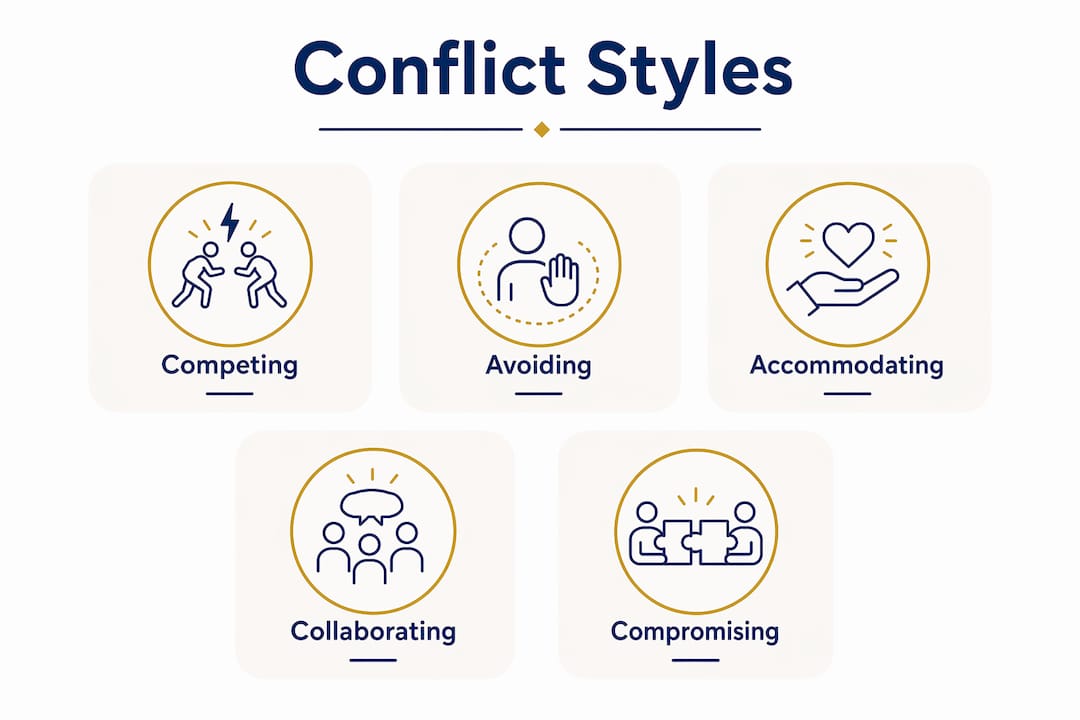
The five TKI-derived conflict management styles are the foundation of nearly every structured conflict resolution guide. Coursera identifies these five modes as competing, collaborating, compromising, avoiding, and accommodating. Each style sits on a grid with two axes: assertiveness (how much you push for your own needs) and cooperativeness (how much you consider the other person’s needs). That grid is what makes the TKI framework so useful in PDF format. You can see at a glance where each style falls and when to use it.
Competing is high assertiveness and low cooperativeness. It works when a quick, firm decision is needed, such as a safety issue at work. Collaborating is high on both axes and produces the most durable agreements, but it takes time. Compromising sits in the middle and works when both parties need a fast, fair split. Avoiding delays the conflict entirely, which is appropriate when emotions are too hot for productive talk. Accommodating prioritizes the relationship over the outcome, useful when the issue matters more to the other person than to you.
The biggest mistake people make with these styles is treating them as personality labels. Coursera advises using TKI styles situationally, pairing each with specific behavioral scripts rather than locking yourself into one mode. A person who always competes will damage relationships. A person who always accommodates will build resentment. The goal is flexibility.
| Style | Assertiveness | Cooperativeness | Best used when |
|---|---|---|---|
| Competing | High | Low | Urgent decisions, safety issues |
| Collaborating | High | High | Complex problems needing buy-in |
| Compromising | Medium | Medium | Time-limited, fair-split situations |
| Avoiding | Low | Low | Emotions are too high to talk productively |
| Accommodating | Low | High | Relationship matters more than the outcome |
Pro Tip: Before your next difficult conversation, write down which style you plan to use and why. That one step forces you to think situationally instead of reacting from habit.
What conflict resolution strategies work in evidence-based PDF guides?
The most effective conflict resolution strategies shift focus away from winning and toward understanding. Harvard PON’s guidance states that solutions come from understanding perceptions, managing emotions, and uncovering interests beneath stated positions. That distinction between positions and interests is critical. A position is what someone says they want. An interest is why they want it. Addressing the interest opens up solutions that a position-based argument never reaches.
PON outlines five core strategies that appear consistently across conflict resolution strategies PDF resources:
- Separate the people from the problem. Attack the issue, not the person. This reduces defensiveness immediately.
- Focus on interests, not positions. Ask “why” questions to get beneath the surface demand.
- Generate options before deciding. Brainstorm without judgment before evaluating solutions.
- Use objective criteria. Anchor agreements to external standards like market rates, legal precedents, or industry norms.
- Know your BATNA. Your Best Alternative to a Negotiated Agreement is your walk-away point. Knowing it gives you confidence without aggression.
PON’s workplace conflict guidance adds that reframing conflict as a shared problem reduces defensiveness and increases collaborative potential. That reframe is one of the most practical effective conflict management tips you can apply without any formal training. Shifting from “you did this to me” to “we have a problem to solve together” changes the entire tone of a conversation.
Pressure tactics complicate this picture. PON’s principled negotiation framework warns that threats and manipulative appeals are common in high-stakes disputes. The recommended response is not to match the pressure. Use objective criteria or, when necessary, walk away. Matching pressure with pressure escalates conflict. Responding with data and standards de-escalates it.
Pro Tip: Write your BATNA on paper before any negotiation. Seeing it clearly makes it easier to hold your ground without getting emotional.
How does the mediation process unfold in conflict management PDFs?
Mediation is a structured process where a neutral third party helps two or more people reach an agreement. PON’s mediation process outlines six steps that most PDF guides follow closely. Understanding these steps helps you prepare whether you are the mediator or one of the parties.
- Planning. The mediator meets separately with each party to understand the dispute and set ground rules before anyone sits together.
- Mediator introduction. The mediator explains their role, the process, and the rules for respectful dialogue.
- Opening remarks. Each party speaks without interruption. This step alone reduces the feeling of not being heard.
- Joint discussion. Both parties talk through the issues together, with the mediator guiding the conversation.
- Caucuses. The mediator meets privately with each party to explore options and test possible agreements without public pressure.
- Negotiation and agreement. The mediator brings both parties back together to finalize terms, which are then documented.
The mediator’s role during joint discussion is more specific than most people realize. Mediators repeat back what they heard and ask for clarification to prevent misunderstandings from hardening into blame cycles. This technique, sometimes called active listening or shuttle diplomacy in PDF guides, is what separates productive mediation from an argument with a referee. When emotions spike, the mediator slows the pace, reflects what was said, and redirects toward interests rather than accusations.
Pro Tip: If you are preparing for mediation as a participant, write a one-paragraph opening statement in advance. Focus entirely on your interests and the outcome you want, not on what the other party did wrong.

How to use printable conflict resolution PDFs for real-world application
Printable conflict resolution planners are the most practical format in the download conflict management guide category. Tandem Coach’s Conflict Resolution Planner is a well-known example that walks you through a structured pre-conversation process. The tool warns directly that vague goals like “I just want things to be better” leave both parties unsatisfied. Specificity is the difference between a resolved conflict and a repeated one.
A well-designed planner typically includes these steps:
- Describe the conflict clearly. Write what happened in factual terms, without blame language.
- Identify your interests. What do you actually need from this situation? Not what you want the other person to do, but what outcome would work for you.
- Set a measurable goal. “We will agree on a schedule by Friday” is measurable. “Things will be better” is not.
- Plan your opening statement. Write the first two or three sentences you will say. This reduces anxiety and prevents reactive openings.
- List de-escalation tactics. Decide in advance what you will do if the conversation gets heated. Options include taking a five-minute break, lowering your voice, or asking a clarifying question.
The most common misconception about these planners is that they are only for formal disputes. They work just as well for a difficult conversation with a family member or a performance review with a direct report. Specificity in conflict resolution goals is a gap that shows up across personal and professional settings equally. The planner format forces you to close that gap before you open your mouth.
Combining a planner with the conflict management skills covered in structured training produces better outcomes than either tool alone. The planner prepares your thinking. The training builds your instincts. Together, they give you both preparation and adaptability.
Pro Tip: Complete your conflict resolution planner at least 24 hours before the conversation. Distance from the heat of the moment produces clearer, more productive goals.
Key takeaways
Conflict management techniques PDF resources are most effective when you combine style awareness, interest-based strategies, mediation process knowledge, and structured planning before any difficult conversation.
| Point | Details |
|---|---|
| Use TKI styles situationally | Match your conflict style to the situation, not your personality, to avoid escalation. |
| Focus on interests, not positions | Ask why questions to uncover what each party actually needs beneath their stated demands. |
| Follow the six mediation steps | Planning, opening remarks, joint discussion, caucuses, and documented agreements produce durable outcomes. |
| Set measurable resolution goals | Vague goals leave conflicts unresolved; define specific, time-bound outcomes before any conversation. |
| Combine PDFs with active practice | PDF guides build knowledge; real conversations and training build the skills to apply it. |
What I have learned from years of working with conflict
Most people download a conflict management guide looking for a script. They want the right words to say. What they actually need is a shift in how they think about the conversation before it starts.
The TKI framework is genuinely useful, but I have watched people misuse it constantly. They take one assessment, decide they are a “compromiser,” and then compromise in situations that call for collaboration or even a firm competing stance. The style is a tool, not an identity. The best communicators I have worked with treat each conflict as its own situation and choose their approach accordingly.
The PON strategies around interests versus positions changed how I approach every difficult conversation, personally and professionally. Arguing to prove you are right almost always escalates the situation. Shifting to “help me understand what you need” opens doors that positional arguments slam shut. That one move, asking about interests instead of defending positions, is worth more than any script.
Printable planners are underused. People feel they are too structured or too formal for everyday conflicts. That resistance is exactly why conflicts repeat. Writing down your goal, your opening statement, and your de-escalation plan takes ten minutes. It saves hours of circular argument. If you are serious about improving your conflict resolution skills, start there. Use the conflict resolution strategies you learn from guides, then practice them in low-stakes conversations before the high-stakes ones arrive.
— Carlos
Conflict management support beyond the PDF
PDF guides give you a strong foundation, but structured support accelerates real change. Masteringconflict offers conflict management training courses that build on the frameworks covered in self-study guides, with practical application built into every session.
For those who want personalized support, Masteringconflict provides teletherapy counseling that is accessible from anywhere, making it easy to work on conflict and communication skills without rearranging your schedule. Anger management classes, couples counseling, and individual therapy are also available for situations where a PDF is a starting point but not enough on its own. Dr. Carlos Todd and the Masteringconflict team bring clinical, evidence-based methods to every session. Booking is available directly through the site.
FAQ
What is a conflict management techniques PDF?
A conflict management techniques PDF is a structured document that outlines frameworks, strategies, and steps for resolving disputes effectively. Common examples include TKI style guides, PON strategy summaries, and printable conflict resolution planners.
Which conflict style is most effective?
No single style is most effective in every situation. Collaborating produces the most durable agreements, but competing, compromising, avoiding, and accommodating each serve specific circumstances depending on urgency and relationship priority.
How do I use a conflict resolution planner PDF?
Complete the planner at least 24 hours before the conversation by describing the conflict factually, identifying your interests, setting a measurable goal, writing your opening statement, and listing de-escalation tactics you will use if emotions rise.
What is principled negotiation in conflict resolution?
Principled negotiation is a method developed at Harvard that focuses on interests rather than positions, uses objective criteria to evaluate options, and recommends walking away from pressure tactics rather than matching them.
Can PDF guides replace professional conflict management training?
PDF guides build knowledge and prepare you for specific conversations, but they do not replace the skill-building that comes from structured training or clinical support. Combining both produces the strongest outcomes.
Recommended
- Conflict Management Skills: Enhancing Therapy Outcomes – Mastering Conflict
- Conflict Management Training Courses: Skills for Real Life – Mastering Conflict
- Conflict in the Workplace: Strategies That Actually Work – Mastering Conflict
- Master Conflict Resolution Skills for Real-Life Success – Mastering Conflict