
Conflict Management in the Workplace: A Manager’s Guide

TL;DR:
- Effective conflict management helps organizations turn workplace disagreements into opportunities for growth and improvement.
- It relies on early intervention, structured escalation, and a collaborative approach to resolve issues and build trust.
Conflict management in the workplace is defined as the intentional process of reducing the negative effects of disagreements while using conflict to improve organizational learning and performance. Most managers treat conflict as a problem to eliminate. The more effective approach treats it as data. When handled well, workplace conflict reveals broken processes, unmet needs, and leadership gaps that would otherwise stay hidden. This guide covers the core styles, practical steps, and real challenges that professionals face when handling conflict at work.
What is conflict management in the workplace, and why does it matter?
Conflict management is not the same as conflict avoidance. Avoidance delays the problem. Conflict management addresses the root cause and steers the outcome toward something productive. The standard industry term for this practice is “conflict management,” and it sits within the broader field of organizational behavior and dispute resolution.
Unresolved conflict damages productivity and morale, but when managed well, it drives innovation and collaboration. That distinction is the entire argument for investing in conflict management skills. A team that can disagree constructively is more creative and more resilient than one where tension goes underground.
The Thomas-Kilmann Conflict Mode Instrument and the SHRM tiered escalation process are the two most widely referenced frameworks in this field. Both treat conflict as a manageable process, not a personality problem. That framing matters because it shifts responsibility from blaming individuals to fixing systems.
What are the main conflict management styles and how do they differ?
The Thomas-Kilmann Conflict Mode Instrument identifies five primary styles, each defined by two dimensions: assertiveness (pursuing your own concerns) and cooperativeness (addressing the other party’s concerns). No single style is universally correct. The right choice depends on the situation, the stakes, and the power dynamics involved.
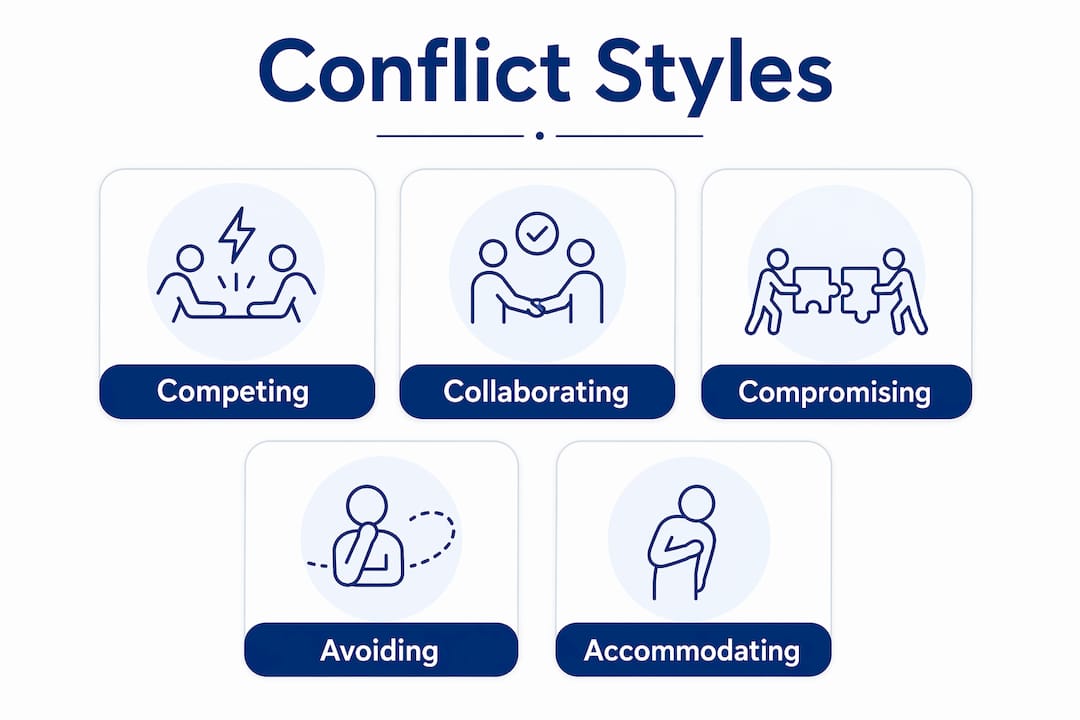
Here is how the five styles compare:
| Style | Assertiveness | Cooperativeness | Best used when |
|---|---|---|---|
| Competing | High | Low | Quick decisions are needed or safety is at risk |
| Collaborating | High | High | Long-term relationships and complex problems require a win-win |
| Compromising | Medium | Medium | Both parties have equal power and a workable middle ground exists |
| Avoiding | Low | Low | The issue is trivial or emotions are too high to engage productively |
| Accommodating | Low | High | Preserving the relationship matters more than winning the point |
Most managers default to either avoiding or competing, depending on their temperament. Both extremes create problems over time. Avoiding lets resentment build. Competing damages trust. The collaborating style produces the best long-term outcomes but requires the most skill and time.
Pro Tip: Match your style to the situation, not your comfort zone. A manager who only knows one style is like a surgeon who only owns one tool.
The collaborating style works best for conflicts involving team structure, role clarity, or resource allocation. The competing style is appropriate when a policy violation requires a firm response. Compromising works well in budget negotiations where both sides have legitimate claims.
How to effectively implement conflict management in the workplace
The SHRM tiered escalation process provides a clear structure for handling conflicts at the right level. The tiers move from informal resolution to formal intervention only when necessary.
The four tiers work as follows:
- Open-door policy. The two parties attempt to resolve the issue directly. This is the fastest and least disruptive path.
- Management involvement. A direct manager facilitates a structured conversation. The goal is resolution, not judgment.
- HR consultation. Human resources steps in when the conflict involves policy, discrimination, or power imbalances.
- Formal mediation or legal review. A neutral third party mediates when internal resolution has failed. Legal consultation applies to serious violations.
Effective organizations emphasize internal mediation over expensive external arbitration. That preference saves time, preserves relationships, and keeps institutional knowledge inside the organization.
Beyond the escalation structure, six steps define the core conflict management process:
- Diagnose the conflict. Identify the actual issue, not just the surface complaint.
- Generate alternatives. List possible resolutions before committing to one.
- Choose a resolution path. Select the approach that best fits the situation and the relationship.
- Plan the implementation. Assign clear responsibilities and timelines.
- Implement the plan. Execute with transparency so both parties see the process as fair.
- Assess the outcome. Review whether the resolution held and what it revealed about the underlying system.
Three skills make this process work: active listening, emotional intelligence, and communication clarity. Active listening means reflecting back what you hear before responding. Emotional intelligence means recognizing when your own reactions are distorting your judgment. Communication clarity means separating facts from interpretations when you speak.
Pro Tip: Intervening early prevents escalation. A five-minute conversation on day one is worth more than a formal mediation session on day thirty.

Managers who adopt a facilitator role rather than a judge role influence conflict outcomes more effectively without appearing biased. That distinction matters because perceived bias is one of the fastest ways to lose credibility during a conflict intervention. You can also explore conflict resolution steps that apply across professional and personal contexts.
Common challenges in workplace conflict management and how to overcome them
The biggest barrier to effective conflict resolution is not aggression. It is egocentrism. People’s sense of fairness is skewed by their own perspective, which makes neutral third-party facilitation critical in many situations. Each party genuinely believes they are being reasonable. That belief is the obstacle.
Three other challenges show up consistently:
- Confusing incidents with interpretations. A colleague missing a deadline is an incident. “She doesn’t respect my time” is an interpretation. Conflicts often arise from emotional interpretations rather than facts. Managers who focus on motivations rather than just the presenting issue resolve conflicts faster and more durably.
- Fear of appearing biased. Managers often delay intervention because they worry about being seen as taking sides. That delay costs more than the risk. Delayed intervention leads directly to productivity loss and morale decline.
- Reactive HR-only systems. Organizations that rely entirely on HR to handle conflict create a bottleneck. Employees learn to avoid reporting issues until they become formal complaints.
Pro Tip: Dispute system design builds conflict resolution capacity at the lowest level of the organization. When employees can resolve issues peer-to-peer, trust stays intact and retaliation risk drops.
Building that capacity requires training, not just policy. Managers need practice with empathy in conflict resolution before they face a real situation. Reading a policy document does not prepare anyone for a charged conversation.
What are practical strategies to promote a positive work environment?
Effective conflict management does more than prevent damage. It actively builds the conditions for better work. Collaborative win-win approaches that rely on emotional intelligence mark the most effective conflict management. They also create the psychological safety that teams need to take risks and share honest feedback.
Specific strategies that improve workplace culture through conflict management include:
- Treat conflict as a signal, not a threat. When a team member raises a concern, that is an opportunity to fix something before it breaks. Leaders who respond with curiosity rather than defensiveness model the behavior they want to see.
- Use conflict to challenge the status quo. Disagreement about how work gets done often reveals outdated processes. A structured conflict conversation can surface better methods faster than a formal process review.
- Build conflict management into leadership development. Managers who receive training in conflict management skills handle team tension more confidently and with less collateral damage.
- Integrate conflict resolution into HR policy. Policies that define escalation paths, protect reporters from retaliation, and require documented follow-up create accountability at every level.
- Recognize resolution as a leadership skill. Organizations that reward managers for resolving conflicts well, not just avoiding them, shift the culture over time.
A workplace wellness strategy that includes conflict management training produces measurable gains in team cohesion and retention. Addressing employee health and conflict together reflects how closely psychological safety and physical wellbeing are connected.
Key Takeaways
Conflict management in the workplace is most effective when it combines early intervention, structured escalation, and a collaborative mindset that treats disagreement as an opportunity rather than a threat.
| Point | Details |
|---|---|
| Define conflict management correctly | It is an intentional process to reduce harm and improve performance, not just a way to stop arguments. |
| Use the right style for the situation | The Thomas-Kilmann model offers five styles; collaborating produces the best long-term outcomes. |
| Intervene early | Delayed intervention leads to productivity loss, morale decline, and higher turnover. |
| Address interpretations, not just incidents | Most conflicts stem from emotional readings of events; probe motivations to resolve them durably. |
| Build systemic capacity | Dispute system design at the peer level prevents escalation and preserves organizational trust. |
Conflict management is a leadership skill, not a last resort
After working with professionals and organizations for years, the pattern I see most often is this: managers wait too long. They hope the conflict will resolve itself. It almost never does. What actually happens is that the tension goes underground, performance drops, and by the time anyone calls for help, the relationship damage is significant.
The other misconception I encounter regularly is that conflict management means keeping the peace. It does not. It means creating the conditions where honest disagreement can happen without destroying the relationship or the team. That requires emotional intelligence, not just good intentions. Managers who develop emotional intelligence skills handle conflict with far more precision than those who rely on authority alone.
The leaders I have seen handle conflict best share one trait: they are genuinely curious about what is driving the other person’s behavior. They ask questions before they draw conclusions. That posture, more than any specific technique, is what separates effective conflict managers from ineffective ones. Conflict avoidance is not a neutral choice. Every time you delay, the cost compounds.
— Carlos
How Masteringconflict supports your conflict management development
Knowing the theory is one thing. Applying it under pressure is another. Masteringconflict offers clinical services designed to help professionals and managers build real conflict resolution capacity, not just awareness.
Dr. Carlos Todd, a licensed clinical mental health counselor and psychologist, leads evidence-based programs that address the emotional and relational dimensions of workplace conflict. Whether you need individual coaching, clinical supervision, or structured conflict resolution training, Masteringconflict provides personalized support grounded in clinical practice. Professionals in North Carolina, South Carolina, Florida, and beyond access these services online. If conflict is affecting your team’s performance or your own leadership effectiveness, professional guidance makes the difference between managing symptoms and resolving root causes.
FAQ
What is conflict management in the workplace?
Conflict management in the workplace is the intentional process of reducing the negative effects of disagreements while using conflict to improve team performance and organizational learning. It involves structured approaches like the Thomas-Kilmann model and SHRM’s tiered escalation process.
What are the five conflict management styles?
The Thomas-Kilmann Conflict Mode Instrument identifies competing, collaborating, compromising, avoiding, and accommodating as the five primary styles. Each is defined by the balance between assertiveness and cooperativeness.
What are the most effective ways to resolve conflict in the workplace?
Collaborative approaches that combine active listening, emotional intelligence, and early intervention produce the most durable resolutions. Structured escalation from direct conversation to formal mediation keeps conflicts at the lowest appropriate level.
Why do managers struggle with handling workplace conflict?
Egocentrism distorts each party’s sense of fairness, and managers often fear appearing biased if they intervene. Delayed intervention consistently leads to greater productivity loss and morale decline than early engagement would have caused.
How does conflict management improve workplace culture?
Effective conflict management builds psychological safety, which allows teams to take risks and share honest feedback. Organizations that treat conflict as a signal rather than a threat use disagreement to improve processes and strengthen team cohesion.
Recommended
- Conflict in the Workplace: Strategies That Actually Work – Mastering Conflict
- Conflict Management Training Courses: Skills for Real Life – Mastering Conflict
- Conflict Management Skills: Enhancing Therapy Outcomes – Mastering Conflict
- Coping With Workplace Conflict: Practical Steps for Resolution – Mastering Conflict