
Emotional Regulation in the Classroom: 2026 Guide

TL;DR:
- Emotional regulation is crucial for classroom safety and learning, as it affects both students and teachers. Building shared emotional vocabulary and practicing regulation skills during calm moments help foster a supportive social environment. Sustained programs and teacher self-regulation lead to fewer behavioral issues and measurable improvements in student well-being.
Emotional regulation in the classroom is the ability of educators and students to recognize, manage, and respond to emotions in ways that support learning and social connection. This is not a soft skill layered on top of academics. It is a physiological prerequisite for cognitive function, and research confirms that the nervous system must feel safe before the brain can learn. Frameworks like RULER, implemented in over 5,000 schools, and the Zones of Regulation give educators concrete tools to build that safety. This guide covers what works, why it works, and how to put it into practice starting this week.
What is emotional regulation in the classroom?
Emotional regulation in the classroom is the process by which both teachers and students manage their internal emotional states to stay engaged, connected, and ready to learn. The clinical term is emotional self-regulation, and it sits at the center of social-emotional learning (SEL). When a student cannot regulate, the brain’s executive functions go offline. Attention, memory, and problem-solving all drop.
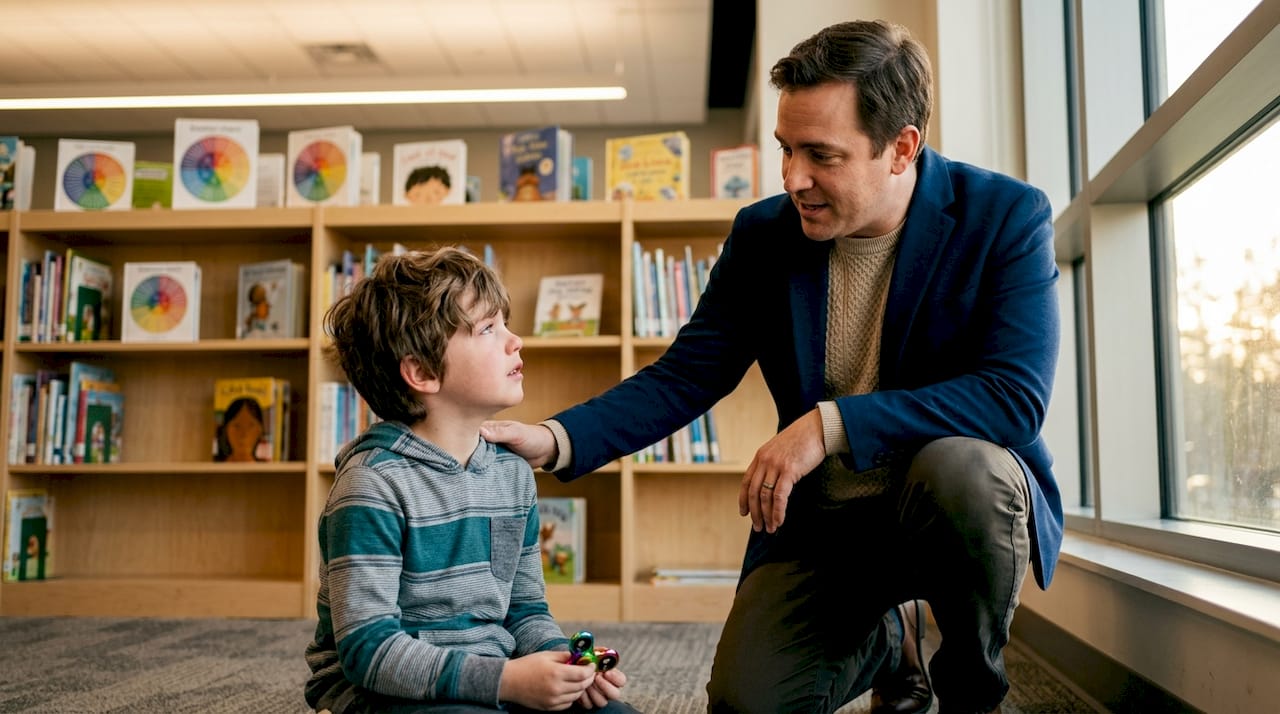
The key insight most educators miss is this: behavioral outbursts signal communication, not defiance. A child who flips a desk is not choosing to be difficult. That child’s nervous system has exceeded its capacity. Treating the behavior as a compliance failure misses the cause entirely.
Classroom emotional management therefore requires two layers. The first is student emotional awareness, meaning students can name and understand what they feel. The second is teacher modeling, meaning adults demonstrate regulation in real time. Both layers must be present for the system to work.
What is co-regulation and why does teacher emotional health matter?
Co-regulation is the process by which a calm, regulated adult helps stabilize a dysregulated child’s nervous system. It is not a technique. It is a biological mechanism. Children’s brains literally synchronize with the emotional state of the adults around them.
The data on this is striking. Teacher burnout accounts for more than 50% of the difference in student morning cortisol levels. Cortisol is the body’s primary stress hormone. Elevated cortisol in students means reduced working memory, lower frustration tolerance, and more frequent behavioral incidents. A burned-out teacher is not just struggling personally. That teacher is physiologically raising the stress level of every student in the room.
This is why adult-first regulation approaches like Conscious Discipline place teacher emotional health at the center of classroom management. The logic is direct: you cannot co-regulate a child if you are dysregulated yourself. Adult emotional state is the single most significant factor shaping the emotional climate of a classroom.
Practical implications for educators include:
- Name your own emotions aloud. Saying “I’m feeling frustrated right now, so I’m going to take three slow breaths” models the exact skill you want students to develop.
- Build a personal regulation plan. Identify your personal stress triggers before they escalate in front of students.
- Use transition moments. The walk between classrooms or the two minutes before students arrive are opportunities to reset your own nervous system.
- Seek institutional support. Teacher well-being is a school-wide responsibility, not a personal problem to solve alone.
Pro Tip: Before your students arrive each morning, spend 60 seconds doing slow, controlled breathing. Research on morning routines shows this simple practice lowers your baseline stress response and sets a calmer tone for the entire class.
“Emotional regulation is not about enforcing compliance. It is about creating nervous system safety so students can access their own cognitive capacity.” — Breathe for Change
Which classroom frameworks teach emotional regulation best?
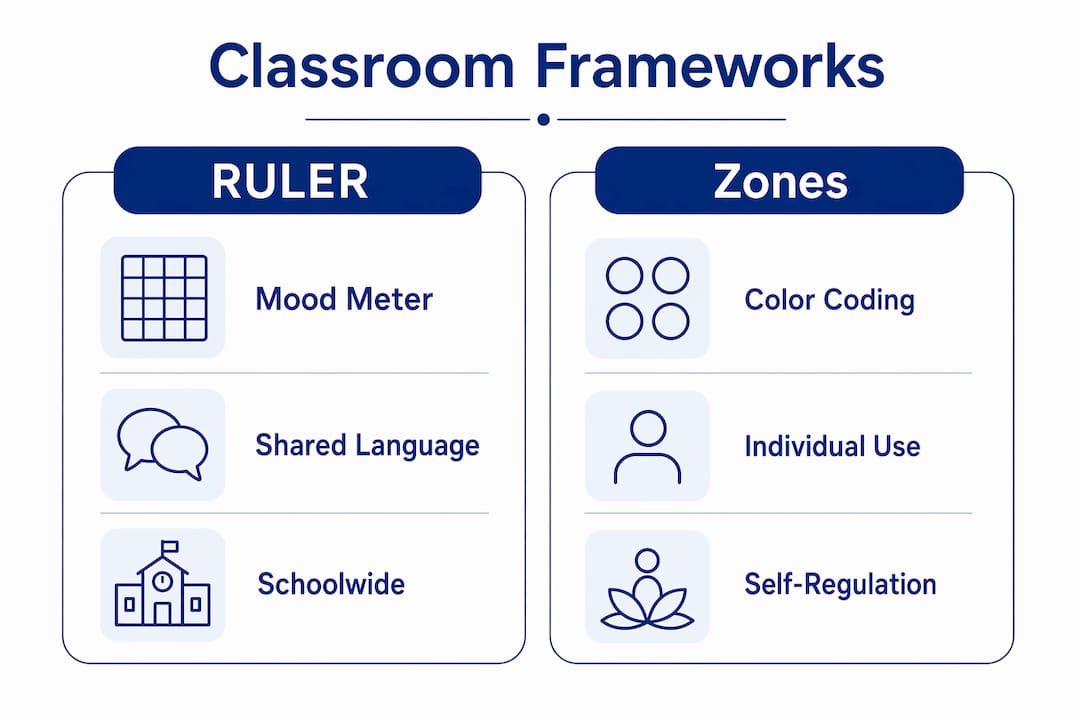
Two frameworks dominate evidence-based practice in American schools: RULER and the Zones of Regulation. Both build student emotional awareness through shared language. The difference lies in scope and application.
RULER, developed at the Yale Center for Emotional Intelligence, is a schoolwide approach. The acronym stands for Recognizing, Understanding, Labeling, Expressing, and Regulating emotions. RULER is used in over 5,000 schools across the United States and internationally. Its core tool is the Mood Meter, a color-coded grid that helps students identify the energy and pleasantness of their current emotional state. RULER works best when adopted at the school or district level because it creates a shared emotional vocabulary across all classrooms and grade levels.
The Zones of Regulation is a curriculum designed for individual classroom use. It organizes emotions into four color-coded zones: blue (low energy, sad), green (calm, focused), yellow (heightened, anxious), and red (intense, out of control). Students learn to identify which zone they are in and which tools help them return to green. The Zones framework is especially effective with younger students and those with sensory processing differences.
| Framework | Core method | Best for | Scope |
|---|---|---|---|
| RULER | Mood Meter, shared vocabulary | Schoolwide SEL integration | District or school level |
| Zones of Regulation | Color-coded emotional categories | Individual classrooms, K-8 | Single classroom or grade |
| Conscious Discipline | Adult self-regulation first | Teacher professional development | Staff training focus |
Shared emotional language is the common thread across all three. When a student can say “I’m in the yellow zone” instead of acting out, the teacher can respond with a targeted tool rather than a disciplinary reaction. That shift alone changes the classroom dynamic.
Pro Tip: Pick one framework and use it consistently for at least one full semester before evaluating results. Inconsistent use is the most common reason these programs underdeliver.
How to teach emotional regulation skills effectively
Teaching emotional skills requires a counterintuitive timing rule: practice during calm moments, not during crises. Complex regulation strategies taught during meltdowns are ineffective because the brain cannot absorb new learning when it is in a stress response. Skills must be rehearsed when students are regulated so they become automatic when emotions spike.
The following practices are supported by research and practical classroom experience:
- Model emotions authentically. Name what you feel and what you do about it. Students learn regulation most effectively by watching a trusted adult do it in real time.
- Use simple empathy statements during high arousal. “I can see you’re really upset” is more effective than “Can you tell me what happened?” A dysregulated brain cannot process complex questions.
- Teach deep breathing as a daily practice. Box breathing (four counts in, hold four, out four, hold four) takes 90 seconds and measurably lowers heart rate. Practice it every morning, not just during conflicts.
- Incorporate movement breaks. Short physical activity resets the nervous system and improves focus. Even two minutes of stretching between lessons produces measurable attention gains.
- Create a calm-down corner. Stock it with sensory tools: stress balls, weighted lap pads, noise-canceling headphones. The goal is self-directed regulation, not isolation or punishment.
- Use emotional check-ins at the start of class. A simple thumbs up, thumbs sideways, thumbs down check-in takes 30 seconds and gives you real-time data on where your students are emotionally.
- Teach emotional vocabulary explicitly. Use picture cards, feeling wheels, or the Mood Meter daily. Students who can label emotions with precision regulate them more effectively.
Mindfulness in education does not require a dedicated curriculum. A 60-second breathing exercise before a test, a body scan during a transition, or a gratitude moment at the end of the day all count. The research supports frequency and consistency over duration.
Pro Tip: Role-play emotional scenarios during morning meeting when students are calm. Practicing “what would you do if you felt really angry at recess?” in a low-stakes moment builds the neural pathways students need when the real situation hits.
How do you measure the impact of emotional regulation programs?
Measuring the impact of classroom emotional management programs requires looking beyond test scores. The clearest early indicators are peer relationship quality, frequency of behavioral incidents, and teacher-reported classroom climate.
Structured programs produce real results. A 12-week emotional literacy program with 24 sessions significantly improved positive social skills and emotional interaction in young children aged 48–60 months. That finding matters because social skills at age four predict academic engagement at age eight. Early investment compounds. SEL programs produce significant behavioral and academic gains across hundreds of thousands of students, confirming that scale does not dilute effectiveness.
Sustainability requires more than a one-time training. Use this framework to build lasting practice:
| Sustainability strategy | What it looks like in practice |
|---|---|
| Ongoing staff training | Monthly 30-minute team check-ins on emotional regulation practices |
| Emotional check-in routines | Daily student check-ins embedded in morning meeting |
| Community involvement | Parent workshops on co-regulation and emotional vocabulary at home |
| Data tracking | Monthly review of behavioral referrals and teacher climate surveys |
Teacher well-being is not optional infrastructure. Schools that invest in emotional support strategies for staff see lower turnover, fewer behavioral incidents, and stronger student outcomes. The return on that investment is measurable within one academic year.
Pro Tip: Track behavioral referrals monthly and compare them term over term. A downward trend in referrals is one of the clearest early signals that your emotional regulation program is working.
Key Takeaways
Emotional regulation in the classroom works when teachers regulate first, frameworks are applied consistently, and skills are practiced during calm moments rather than crises.
| Point | Details |
|---|---|
| Co-regulation starts with the teacher | Teacher burnout raises student cortisol; adult emotional health directly shapes classroom climate. |
| Use proven frameworks consistently | RULER and Zones of Regulation build shared emotional language that reduces behavioral incidents. |
| Practice skills during calm moments | Regulation strategies taught during crises do not stick; rehearse them daily when students are settled. |
| Measure beyond test scores | Track peer relationships, behavioral referrals, and classroom climate to gauge program impact. |
| Sustain through institutional support | Monthly staff training and daily check-in routines are what turn a program into a culture. |
What I’ve learned after years of working with emotional dysregulation
Most educators I work with arrive believing emotional regulation is something you address after the real work of teaching is done. That belief is the problem. You cannot teach a child whose nervous system is in survival mode. The prefrontal cortex, the part of the brain responsible for reading, math, and reasoning, goes offline under stress. Academics become irrelevant until the nervous system feels safe.
The second thing I’ve seen consistently is that teachers underestimate their own influence. Your emotional state is not private. Students read it in your voice, your posture, and your pace. When you are regulated, the room regulates with you. When you are not, no framework or curriculum will compensate. This is why I always say: the adult is the intervention.
What actually works in practice is simpler than most programs suggest. Name your emotions. Use short, warm statements when students are upset. Build predictable routines. Practice breathing every single day, not just when things go wrong. The emotional regulation skills that hold up under pressure are the ones practiced hundreds of times in calm conditions.
The educators who see the biggest shifts are not the ones who implement the most elaborate programs. They are the ones who show up regulated, model authentically, and stay consistent. That is the work. It is not glamorous, but the evidence is clear.
— Carlos
Professional training for educators on emotional regulation
Educators who want to go deeper on classroom emotional management need more than a one-day workshop. Masteringconflict offers professional training programs built around evidence-based emotional regulation, conflict resolution, and personal resilience for school professionals.

The courses at Masteringconflict address the full picture: teacher self-regulation, co-regulation techniques, de-escalation strategies, and building emotionally safe environments. Whether you are a classroom teacher, a school counselor, or an administrator building a schoolwide program, the training is designed for real-world application. Educators working with children and teens will also find resources on managing anger outbursts that translate directly to classroom practice.
FAQ
What is emotional regulation in the classroom?
Emotional regulation in the classroom is the ability of students and teachers to recognize, manage, and respond to emotions in ways that support learning. It includes skills like naming emotions, using calming strategies, and co-regulating with a trusted adult.
What is co-regulation and why does it matter for teachers?
Co-regulation is the process by which a regulated adult stabilizes a dysregulated child’s nervous system. Teacher burnout accounts for over 50% of the variation in student stress hormone levels, making teacher emotional health a direct academic issue.
What is the RULER approach to emotional regulation?
RULER stands for Recognizing, Understanding, Labeling, Expressing, and Regulating emotions. Developed at the Yale Center for Emotional Intelligence, it is used in over 5,000 schools and builds shared emotional vocabulary across entire school communities.
When should emotional regulation skills be taught?
Emotional regulation skills should be taught and practiced during calm moments, not during emotional crises. The brain cannot absorb new strategies when it is in a stress response, so daily low-stakes practice is what builds lasting capacity.
How do you measure whether an emotional regulation program is working?
Track behavioral referrals, peer relationship quality, and teacher-reported classroom climate monthly. A structured 12-week program showed significant gains in social skills and emotional interaction, confirming that consistent, structured programs produce measurable results.
Recommended
- Learning Emotional Regulation: Tools for Parenting Teens – Mastering Conflict
- Emotional Regulation: Building Resilience in Relationships – Mastering Conflict
- Emotional Control: Practical Strategies That Actually Work – Mastering Conflict
- Dealing with Difficult Emotions: Mastering Your Reactions – Mastering Conflict