
Coping with Isolation: Strategies That Actually Work

TL;DR:
- Coping with isolation involves using immediate techniques like the 4-7-8 breathing method and long-term strategies such as CBT and self-compassion practices. Recognizing loneliness as a biological signal for connection needs and proactively creating social opportunities help build emotional resilience. Professional support, including therapy and telehealth options, offers effective tools for overcoming persistent feelings of disconnection.
Coping with isolation is defined as the intentional use of psychological, behavioral, and lifestyle practices to restore your sense of connection and protect your mental health. Chronic loneliness affects 33% of adults and carries health risks comparable to smoking 15 cigarettes daily. That statistic means loneliness is not a minor inconvenience. It is a clinical-level threat. The good news is that evidence-based tools like Cognitive Behavioral Therapy (CBT), the 4-7-8 breathing technique, and apps like MoodKit and Woebot give you real, tested ways to push back. This guide walks you through each one.
What tools and mindset support coping with isolation?
Dealing with loneliness starts before you take any action. It starts with how you think about loneliness itself. Loneliness is a biological signal of an unmet need for connection, not a character flaw or personal failure. Treating it as information rather than shame changes everything. That shift in perspective is the foundation every other strategy builds on.

Quick relief vs. long-term practices
Not every tool works on the same timeline. Some give you relief in minutes. Others build capacity over weeks. Knowing which is which prevents frustration.
| Technique | Type | Time to effect |
|---|---|---|
| 4-7-8 breathing | Quick relief | 5 minutes |
| Journaling | Medium-term | Days to weeks |
| CBT (MoodKit, Woebot) | Long-term | Weeks to months |
| Nature exposure | Quick to medium | 30 minutes daily |
| Pet companionship | Long-term | Ongoing |
The 4-7-8 technique is simple: inhale for 4 seconds, hold for 7, exhale for 8, and repeat four times. Five minutes of this practice calms your nervous system during acute loneliness episodes. It works because slow exhalation activates the parasympathetic nervous system, which dials down the stress response.
For longer-term support, CBT-based apps like MoodKit and Woebot help you identify and reframe the distorted thoughts that make isolation feel permanent. CBT produces moderate to high effect sizes in loneliness reduction across age groups. That means it works for teenagers, working adults, and retirees alike.
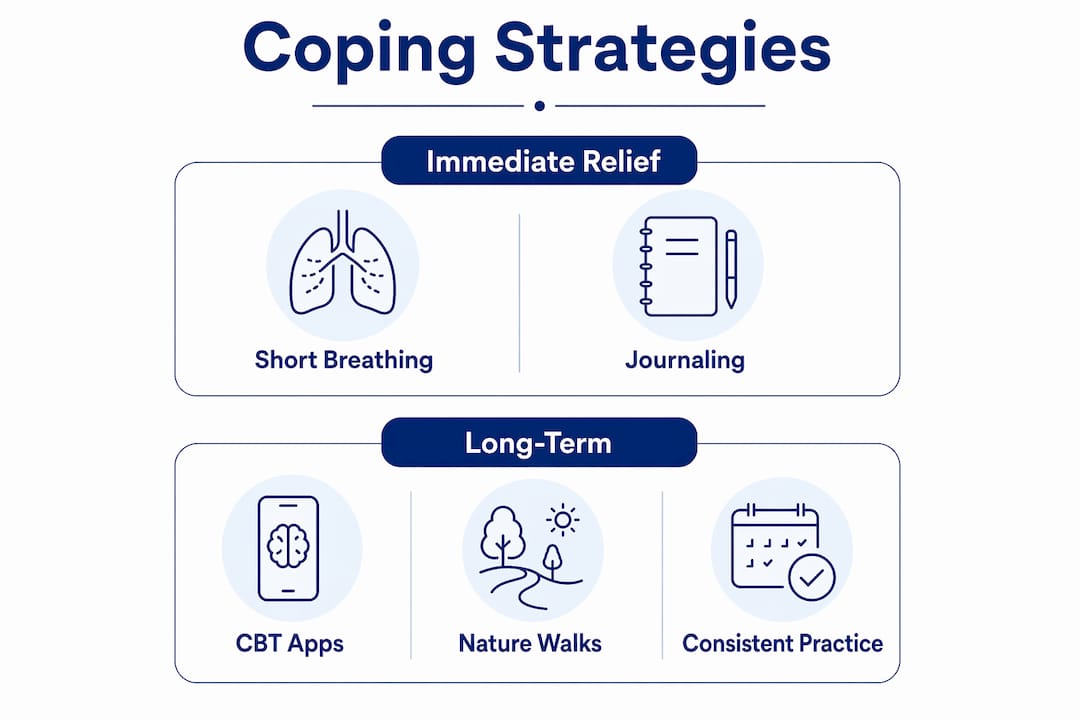
Lifestyle supports round out the toolkit. Nature exposure reduces stress hormones by 12–20%, which is why a daily 30-minute walk outdoors is not optional advice. It is a physiological intervention. Adopting a pet or volunteering at a shelter increases oxytocin and builds daily routine, two factors that directly counter the drift that isolation creates.
Pro Tip: Before downloading any app or starting a new habit, write one sentence describing how your loneliness feels right now. That baseline makes progress visible and keeps you motivated when change feels slow.
How to reduce feelings of isolation step by step
Managing social isolation requires a sequence, not a scatter of random tactics. Each step below builds on the one before it.
- Acknowledge loneliness without judgment. Name what you are feeling out loud or in writing. Suppressing it amplifies it. Saying “I feel lonely right now” is not weakness. It is the starting point for every effective intervention.
- Identify your type of loneliness. Loneliness varies by type, including existential, societal, and psychological. Existential loneliness is a sense of fundamental aloneness even in crowds. Societal loneliness comes from feeling disconnected from your community or culture. Psychological loneliness is rooted in attachment patterns and past relationships. Each type calls for a different response, so getting specific matters.
- Use mindful breathing for acute episodes. When loneliness spikes suddenly, the 4-7-8 technique gives your nervous system a reset. Pair it with stress reduction exercises for a fuller toolkit during high-intensity moments.
- Build intentional social connections. Creating community as an adult requires entrepreneurial effort because adult social circles tend to be closed. You have to create or join groups on purpose. Meetup.com, faith communities, volunteer organizations, and hobby clubs are all proven entry points. Showing up once is not enough. Consistency is what converts acquaintances into genuine connections.
- Develop your social skills actively. Social confidence is a skill, not a fixed trait. Practice starting conversations with low-stakes interactions: a neighbor, a barista, a coworker. Each small exchange builds the neural pathways that make deeper connection easier over time.
- Upgrade your communication medium. Text messages create the illusion of connection without the emotional substance. Voice calls and video calls reduce isolation more effectively than text because they carry tone, warmth, and presence. Call instead of texting whenever you can.
Pro Tip: Schedule one voice or video call per week with someone you care about. Put it on your calendar like an appointment. Spontaneous connection is great, but scheduled connection actually happens.
How does emotional resilience help you sustain progress?
Overcoming feelings of isolation is not a one-time fix. It requires building the emotional capacity to sit with discomfort without running from it. Sitting with uncomfortable emotions mindfully builds long-term coping strength. Avoiding discomfort through distraction, binge-watching, or scrolling social media gives temporary relief but erodes your tolerance for being alone.
Self-compassion builds greater emotional resilience than forcing social engagement before you are ready. Self-compassion has three components: treating yourself with kindness, recognizing that suffering is part of shared human experience, and holding your pain in mindful awareness rather than dramatizing or suppressing it. These three moves together reduce the shame spiral that makes loneliness worse.
Journaling and cognitive reframing are the daily practices that make self-compassion concrete. Writing about your feelings externalizes them, which creates psychological distance and makes them easier to examine. Cognitive reframing, a core CBT skill, means replacing thoughts like “I will always be alone” with “I am working on building connection right now.” The shift is small on paper. The effect on mood is significant.
Daily habits that build emotional resilience over time include:
- Writing three sentences in a journal each morning about how you feel
- Spending 30 minutes outdoors without your phone
- Practicing the 4-7-8 breathing technique before bed
- Identifying one distorted thought per day and rewriting it
- Calling one person per week instead of texting
These habits do not require large blocks of time. They require consistency. Small daily actions compound into genuine resilience over weeks and months.
What common challenges come up when dealing with isolation?
Even with the right tools, setbacks happen. Knowing what to expect prevents discouragement from derailing your progress.
| Challenge | Root cause | Practical solution |
|---|---|---|
| Fear of social rejection | Past negative experiences | Start with low-stakes interactions; normalize awkward pauses |
| Feeling lonely despite socializing | Psychological loneliness, not situational | Focus on depth of connection, not frequency |
| Over-reliance on social media | Seeking stimulation without real contact | Replace 30 minutes of scrolling with one phone call |
| Avoidance of new social settings | Anxiety about performance | Lower expectations; go to observe, not to impress |
| Resistance to professional help | Stigma or uncertainty about therapy | Start with a single consultation to reduce the unknown |
Fear of awkwardness is one of the most common barriers to re-entering social spaces. Embracing natural conversation pauses rather than fearing them reduces performance pressure and makes interactions feel safer. Silence in conversation is not failure. It is a normal part of human exchange.
Feeling lonely despite being around people is a sign of psychological loneliness, not situational isolation. The fix is not more social events. It is deeper, more honest conversations with fewer people. Quality of connection matters far more than quantity of contact.
When isolation persists despite consistent effort, professional support is the right next step. Emotional regulation skills developed in therapy give you tools that self-help resources alone cannot fully provide. Seeking help is not a sign that you have failed. It is a sign that you are taking your mental health seriously.
Key takeaways
Coping with isolation requires combining immediate relief techniques like the 4-7-8 breathing method with longer-term practices like CBT, self-compassion, and intentional social connection.
| Point | Details |
|---|---|
| Loneliness is a biological signal | Treat it as information about an unmet need, not a personal flaw. |
| Quick relief tools exist | The 4-7-8 breathing technique calms your nervous system in five minutes. |
| CBT reduces loneliness measurably | Apps like MoodKit and Woebot deliver moderate to high effect sizes across age groups. |
| Self-compassion outperforms distraction | Sitting with discomfort mindfully builds resilience faster than avoidance. |
| Voice beats text for connection | Phone and video calls reduce isolation more effectively than text messages. |
What I have learned about loneliness that most guides miss
I have worked with hundreds of people navigating isolation, and the pattern I see most often surprises people: the individuals who struggle longest are not the ones with the fewest social opportunities. They are the ones who are hardest on themselves for feeling lonely in the first place.
There is a quiet shame that surrounds loneliness in American culture. We treat it as evidence of something wrong with us. That shame is the real obstacle, not the lack of friends or the empty calendar. When someone finally gives themselves permission to say “I am lonely and that is okay,” the work of building connection becomes possible. Before that moment, every strategy feels like an indictment.
The other thing I push back on is the idea that connection requires a perfect social setting. Creating community as an adult is genuinely hard. Adult social circles are often closed, and waiting for an invitation that never comes is a recipe for prolonged isolation. The people who make progress treat social connection the way a small business owner treats customer acquisition: proactively, consistently, and without taking rejection personally.
Small steps done consistently beat grand gestures done once. One phone call per week. One new group attended twice. One journal entry each morning. These are not dramatic. They are the actual path.
— Carlos
Ready to get professional support for isolation and loneliness?
Isolation does not always resolve on its own, and there is no reason to navigate it without support. Masteringconflict offers clinical therapy services designed to address loneliness, emotional regulation, and the deeper patterns that keep people disconnected. Whether you are dealing with situational isolation or a longer pattern of psychological loneliness, working with a licensed counselor gives you tools that go beyond what any app or article can provide.

For those who prefer to work from home, teletherapy options make it easy to access professional support without the barrier of travel or scheduling conflicts. Masteringconflict serves clients across North Carolina, South Carolina, Florida, and internationally through online sessions. Booking a consultation is the first concrete step toward lasting change.
FAQ
What is the difference between loneliness and isolation?
Isolation is an objective lack of social contact, while loneliness is the subjective feeling of disconnection regardless of how many people are around. You can feel lonely in a crowd and feel content while physically alone.
How quickly can coping strategies reduce loneliness?
Quick relief techniques like the 4-7-8 breathing method work within five minutes. Longer-term strategies like CBT and self-compassion practice typically show measurable improvement over several weeks of consistent use.
Does social media help or hurt when you feel isolated?
Social media creates the illusion of connection without the emotional substance of real contact. Replacing 30 minutes of scrolling with a single voice or video call produces a stronger reduction in feelings of isolation.
When should I seek professional help for loneliness?
Seek professional support when loneliness persists despite consistent effort, interferes with daily functioning, or accompanies symptoms of depression or anxiety. A licensed counselor can provide CBT and other evidence-based interventions tailored to your specific situation.
Can pets genuinely reduce loneliness?
Yes. Pet companionship increases oxytocin and builds daily routine, both of which directly counter the drift and disconnection that isolation creates. Volunteering at an animal shelter provides similar benefits without the long-term commitment of ownership.
Recommended
- Emotional Control: Practical Strategies That Actually Work – Mastering Conflict
- Coparenting Communication Tips That Actually Work – Mastering Conflict
- Dealing With Difficult People: Proven Strategies for Resolution – Mastering Conflict
- Dealing with Loneliness in Marriage: Reconnect and Revitalize – Mastering Conflict