
Anger as a Depression Symptom: Expert Guide (2026)

TL;DR:
- Anger is a common but often overlooked symptom of depression, especially in men and adolescents.
- Neurochemical and psychodynamic factors explain how depression can manifest as irritability and hostility.
- Recognizing and treating depressive anger improves mental health, relationships, and overall quality of life.
Depression does not always look like crying in a dark room. For many people, it shows up as a short fuse, constant irritability, or explosive outbursts that seem to come from nowhere. Neurochemical imbalances contribute to this kind of depressive anger, making it a real clinical symptom, not just a personality flaw. If you or someone you love has been struggling with rage, resentment, or frustration alongside low mood, you are not alone and you are not broken. This guide will walk you through the science, the signs, and the strategies that actually work.
Table of Contents
- How anger appears as a symptom of depression
- Underlying mechanisms: Neurobiology vs. psychology
- Practical signs, effects, and quality-of-life impact
- Therapeutic strategies: Evidence-based treatments and coping tools
- A fresh perspective: Why anger deserves as much focus as sadness in depression
- Get personalized support for anger symptoms of depression
- Frequently asked questions
Key Takeaways
| Point | Details |
|---|---|
| Anger is a major depression symptom | Irritability and frustration often signal depression, especially in men and adolescents. |
| Multiple causes drive angry depression | Neurochemical imbalances and repressed anger both play key roles in anger symptoms. |
| Suppressing anger worsens quality-of-life | Hiding anger reduces psychological and social well-being for those with depression. |
| Evidence-based therapies help | CBT, DBT, EFT, and SSRIs all tackle anger linked to depression effectively. |
| Actionable coping tools exist | Techniques like mindfulness, deep breathing, and self-compassion can disrupt cycles of anger and improve daily life. |
How anger appears as a symptom of depression
Most people picture depression as overwhelming sadness or a loss of interest in life. That picture is incomplete. Anger, irritability, and hostility are just as common, and they are far more likely to be missed or mislabeled.
The overview of depression and anger is more connected than most people realize. On the neurobiological side, depression involves disruptions in serotonin and dopamine, two brain chemicals that regulate mood and impulse control. When these systems are off balance, the brain becomes less equipped to manage frustration. Small stressors feel enormous. Patience disappears. Anger becomes a default response.
From a psychodynamic perspective, anger turned inward is one of the oldest explanations for depression. The idea is that when people cannot express anger outwardly, it gets redirected at the self, feeding shame, self-criticism, and low mood. This cycle is especially common in people who grew up in environments where expressing anger was unsafe or discouraged. Understanding repressed anger is often a key step in breaking that cycle.
Here is something that surprises many people: men and adolescents are significantly more likely to express depression through anger rather than sadness. Research confirms that masculine depression externalizes as anger in ways that clinicians often miss. A teenage boy who is constantly picking fights or a man who is irritable and aggressive may be experiencing a depressive episode, not just a bad attitude.
Common signs that anger may be a depression symptom:
- Frequent irritability that feels disproportionate to the situation
- Road rage or overreaction to minor inconveniences
- Passive-aggressive behavior or emotional withdrawal
- Explosive outbursts followed by guilt or shame
- Chronic resentment with no clear cause
- Physical tension, clenched jaw, or headaches tied to frustration
| Population | How depression often appears |
|---|---|
| Women | Sadness, tearfulness, fatigue |
| Men | Irritability, hostility, risk-taking |
| Adolescents | Anger, defiance, social withdrawal |
| Older adults | Somatic complaints, low energy |
Statistic worth noting: Studies show that anger and irritability appear in roughly 50% of people with major depressive disorder, yet these symptoms are underreported because patients and clinicians alike focus on sadness as the defining feature.
Underlying mechanisms: Neurobiology vs. psychology
Understanding how anger shows up in depression is one thing. Understanding why it happens gives you real leverage for change. Two major frameworks explain this connection, and they are not mutually exclusive.
On the neurobiological side, serotonergic dysfunction (meaning reduced serotonin activity) increases a person’s sensitivity to perceived threats and lowers their threshold for anger. Neurochemical dysfunction and repressed anger both play measurable roles in how depression expresses itself. This is why antidepressants, particularly SSRIs that boost serotonin, can reduce irritability alongside low mood.
On the psychological side, psychodynamic theory offers a compelling lens. Sigmund Freud originally proposed that depression is anger turned against the self. Modern psychodynamic research has built on this, showing that people who cannot access or express anger adaptively are more vulnerable to depressive episodes. Psychodynamic insight into the anger-depression cycle remains one of the most clinically useful frameworks available today.
“Anger is not the enemy of healing. Unexpressed anger is.”
Different therapies target these mechanisms in different ways:
| Therapy type | Primary mechanism targeted | Key technique |
|---|---|---|
| CBT | Cognitive distortions | Thought restructuring |
| Psychodynamic | Repressed emotion | Insight and processing |
| EFT | Adaptive vs. maladaptive anger | Emotional awareness |
| DBT | Emotional dysregulation | Skills building |
Emotionally focused therapy (EFT) makes an important distinction between adaptive anger, which signals a real boundary violation and motivates healthy action, and maladaptive anger, which is driven by old wounds and keeps people stuck. Learning to tell the difference is a skill, and it is teachable.
Pro Tip: If you find yourself feeling angry without a clear reason, try asking yourself: “Is this anger about right now, or is it about something older?” That one question can interrupt a reactive cycle and create space for reflection.
The depression and anger management theories behind these approaches are not just academic. They directly shape how therapy is structured and how quickly people see results.
Practical signs, effects, and quality-of-life impact
With theories understood, let’s focus on real-world impact, because anger tied to depression does not stay in your head. It spills into your relationships, your work, and your body.

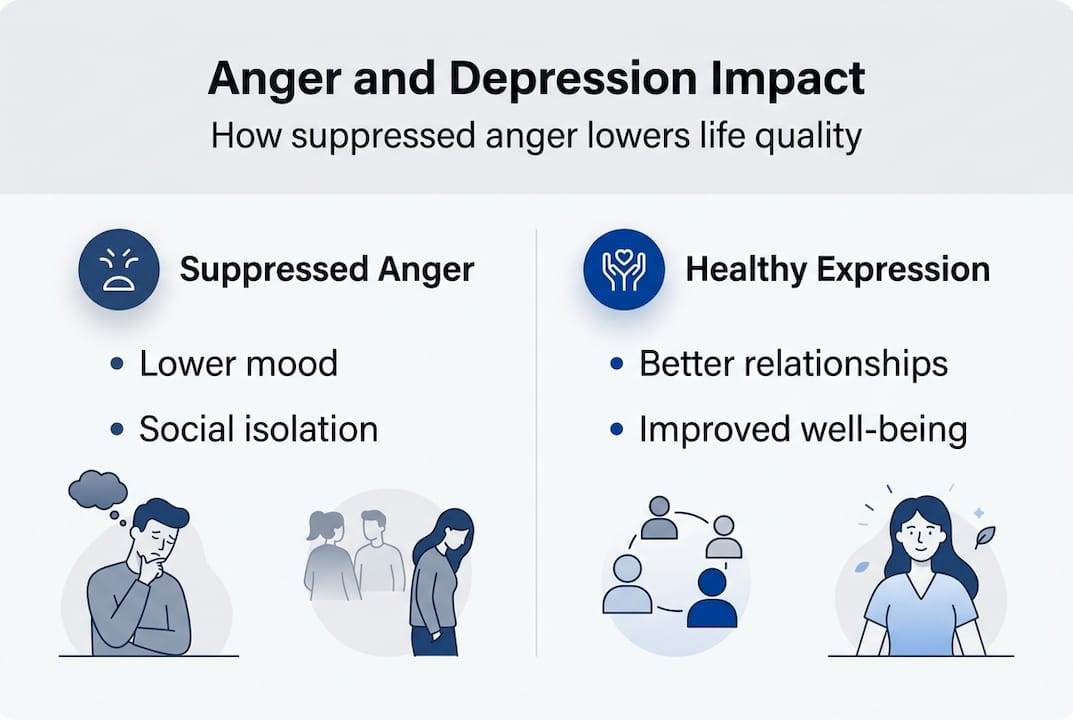
Anger suppression mediates reduced quality-of-life in people with depression. That means the more you bottle up anger, the worse your psychological and social functioning becomes. It is not a character issue. It is a measurable clinical outcome.
For men specifically, masculine depression links to somatization and anger-hostility, meaning the body often carries what the mind will not say. Chronic headaches, muscle tension, digestive problems, and fatigue can all be physical expressions of suppressed anger in a depressive context.
How anger symptoms show up in daily life:
- At work: Difficulty collaborating, frequent conflicts with colleagues, reduced productivity
- In relationships: Emotional withdrawal, frequent arguments, partners feeling like they are walking on eggshells
- In the body: Tension headaches, jaw clenching, elevated blood pressure, disrupted sleep
- Internally: Guilt after outbursts, shame cycles, lowered self-esteem
The symptoms and management of depressive anger are closely tied to how quickly a person seeks help. Early identification matters. When anger is recognized as a depression symptom rather than a character flaw, people are more likely to engage with treatment and less likely to experience relationship breakdown or job loss as a consequence.
Pro Tip: Track your anger episodes for one week. Note the time, trigger, intensity, and what you did afterward. Patterns often reveal whether anger is situational or tied to a deeper mood state. This simple log can be a powerful tool to bring to your first therapy session.
Using anger reduction techniques in relationships early can prevent the compounding damage that happens when depressive anger goes unaddressed for months or years.
Statistic worth noting: Research indicates that individuals who suppress anger score significantly lower on social quality-of-life measures compared to those who express anger in healthy, regulated ways.
Therapeutic strategies: Evidence-based treatments and coping tools
Clearly, anger can disrupt daily life. So what actually helps? The good news is that several well-researched approaches target both depression and anger at the same time.
Step-by-step framework for getting started:
- Recognize the pattern. Identify whether your anger feels reactive, chronic, or tied to low mood periods.
- Choose a therapy model. CBT, DBT, psychodynamic, and EFT all address anger in depression, just through different doors.
- Consider medication if needed. SSRIs address both mood and irritability for many people.
- Build a daily self-regulation practice. Mindfulness, breathing exercises, and compassion-focused self-talk are evidence-based starting points.
- Seek professional support. A trained counselor can help you move faster and more safely than self-help alone.
CBT and STPP are equally effective for depressive anger, even in people with trauma histories. That is a significant finding because it means you have real options, not just one path. EFT and antidepressants address both the emotional and neurochemical dimensions of anger in depression, making them especially useful when symptoms are severe.
Self-help strategies that support therapy:
- Mindfulness for anger reduces reactivity by building awareness before the outburst
- Diaphragmatic breathing activates the parasympathetic nervous system and lowers physiological arousal
- Compassion-focused self-talk interrupts shame cycles that fuel both anger and depression
- Anger management exercises build the specific skills needed to respond rather than react
Pro Tip: Before trying to “fix” your anger, spend one week simply noticing it without judgment. Awareness without reaction is the foundation of every effective anger management approach.
For a structured starting point, evidence-based anger management strategies and individual therapy for anger reduction offer clear, clinically grounded pathways. You can also explore anger management tips for practical day-to-day tools while you build toward deeper work.
A fresh perspective: Why anger deserves as much focus as sadness in depression
Here is something the mainstream mental health conversation does not say loudly enough: focusing almost exclusively on sadness as the face of depression is leaving millions of people undiagnosed and unsupported.
When depression screening tools ask primarily about low mood and loss of pleasure, they miss the person who is furious, hostile, and exhausted but not visibly sad. In men and adolescents, depression manifests more as anger, and those individuals are far less likely to receive a correct diagnosis or appropriate treatment.
At Mastering Conflict, we see this regularly. People come in labeled as having anger problems, relationship issues, or behavioral concerns, when what they actually need is depression treatment. The anger is not the disorder. It is the signal.
Challenging this assumption matters because therapy outcomes improve dramatically when anger is recognized as a legitimate depression symptom rather than a separate problem to manage. Recognizing anger symptoms in men and teens as depression changes the entire treatment approach, and it changes lives.
Anger is not just bad behavior. It is often a red flag that something deeper is hurting. Treating it that way is not just more compassionate. It is more effective.
Get personalized support for anger symptoms of depression
If this article has you thinking “this sounds like me,” that recognition is worth acting on.

At Mastering Conflict, we offer anger management classes designed for people who are dealing with exactly this kind of emotionally complex anger. Our emotional health courses provide structured, evidence-based tools you can start using right away. And if you want one-on-one support, our teletherapy for depression and anger connects you with a licensed clinician from wherever you are. Whether you are a man, a teen, or anyone who has felt confused by your own anger, we have resources built specifically for you. You do not have to figure this out alone.
Frequently asked questions
Can anger be a primary symptom of depression?
Yes, especially in men and adolescents, anger and irritability may be the chief symptoms of depression rather than sadness. Masculine depression externalizes as anger in ways that are frequently overlooked during standard screening.
What therapies help with anger symptoms linked to depression?
CBT, DBT, psychodynamic therapy, and emotionally focused therapy all offer effective support; antidepressants may also reduce irritability. CBT, STPP, EFT, and SSRIs each target different aspects of the anger-depression connection.
How can I manage anger at home if I have depression?
Mindfulness, deep breathing, compassion-focused self-talk, and cognitive restructuring are practical starting points. Self-management techniques like these work best when paired with professional guidance for lasting change.
Is anger suppression harmful for people with depression?
Yes, suppressing anger in depression reduces psychological and social quality-of-life and worsens overall distress. Anger suppression lowers quality-of-life in measurable ways across multiple life domains.
When should I seek professional help for anger symptoms?
Seek help if anger becomes frequent, intense, affects your relationships or work, or you feel unable to manage it on your own. Early intervention consistently leads to better outcomes than waiting until the situation reaches a crisis point.
Recommended
- How Anger Affects Relationships: A 2025 Guide to Healthy Change – Mastering Conflict
- Best Ways to Manage Anger: Proven Tips for 2025 – Mastering Conflict
- Anger Warning Signs: How to Recognize and Respond Early – Mastering Conflict
- Anger Management Tips That Actually Work (2025)
- Why Naming Your Feelings Helps — The Caia Journal
- Depression After Moving – Shepherd International Movers